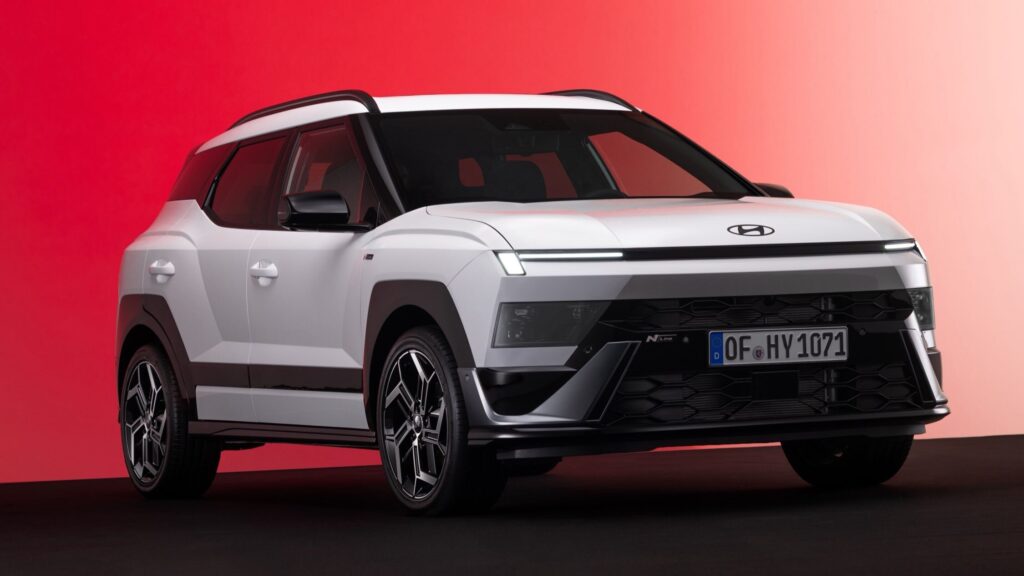
- Hyundai’s new Bayon looks like a shrunken 2027 Tucson.
- A 1.6-liter hybrid engine is available for the first time.
- Luxury tech includes ventilated seats and dual screens.
The world is full of forgettable baby SUVs and crossovers, but Hyundai’s Bayon is done with being one of them. The Kona’s little brother debuted in 2021, but an all-new incarnation dropped at this week’s Paris Motor Show, and it’s determined to finally cause the Ford Puma a sales headache.
A radical design overhaul that addresses the old model’s lack of street presence is one of its key weapons. Hyundai attempted to toughen up the original Bayon with a 2024 facelift, but the new one goes much further with a completely new look inspired by the ‘Art of Steel’ design language that shapes the latest Tucson revealed earlier this year.
Related: Hyundai Is Working On Both An Ioniq 4 And An Ioniq 7
Tucson influences are clear in the hockey stick-shaped daytime running lights, the elevated hood line, boxy fender flares and the model name script spelled out in giant letters below the Hyundai badge on the trunk. Tick the N Line trim box ─ available for the first time ─ and you get the sporty body kit seem in these pictures, plus 18-inch wheels, twin tailpipes, and special N interior details, like red stitching and metal pedals.
The Bayon looks much bigger than than the old one as a result of those macho exterior changes, and it should also feel bigger inside thanks to a small, but welcome 0.8-inch (20 mm) wheelbase stretch to 102.4 inches (2,600 mm). Dual 12.3-inch screens are optional, as are big-car options such as surround view parking cameras, ventilated seats and a panoramic roof.
Hyundai’s Digital Key 2, which allows drivers to use their phone to open and start the car, is available as well as a Bose premium sound system, and it’s good to see a proper bank of physical buttons on the console. The climate control buttons are the touch-sensitive types, but they look like they’ll be a pain to use. Worse yet, the Bayon seems to miss out on Hyundai’s new Pleos operating system.
Trail Pretender
It also misses out on an all-wheel drive option. All Bayons are front-wheel drive, so don’t be misled by the rugged posturing. The base engine is an 89 horsepower (90 PS), 1.0-liter, four-cylinder T-GDI motor with a choice of six-speed manual transmission or seven-speed dual-clutch automatic. You can graduate to a 114 hp (115 PS) version of the same setup with the exact same transmission options if you like, and you probably will like. The zero to 62 mph (100 kph) time falls from a yawning 14.1 seconds to a more tolerable 10.8 seconds with the upgrade.
But the big change here is the availability of a true hybrid for the first time. We know the 1.6 HEV makes 136 hp (138 PS), comes only with a six-speed dual-clutch automatic, and that you can adjust the amount of brake regeneration from the steering wheel shift paddles. The hybrid hardware also eats into the trunk space, Hyundai confirms, but curb weight and performance figures are still TBC.
The Bayon hits European Hyundai dealers in early 2027, but it will once again be off-limits to America, where the Kona remains the smallest Hyundai option.
Hyundai