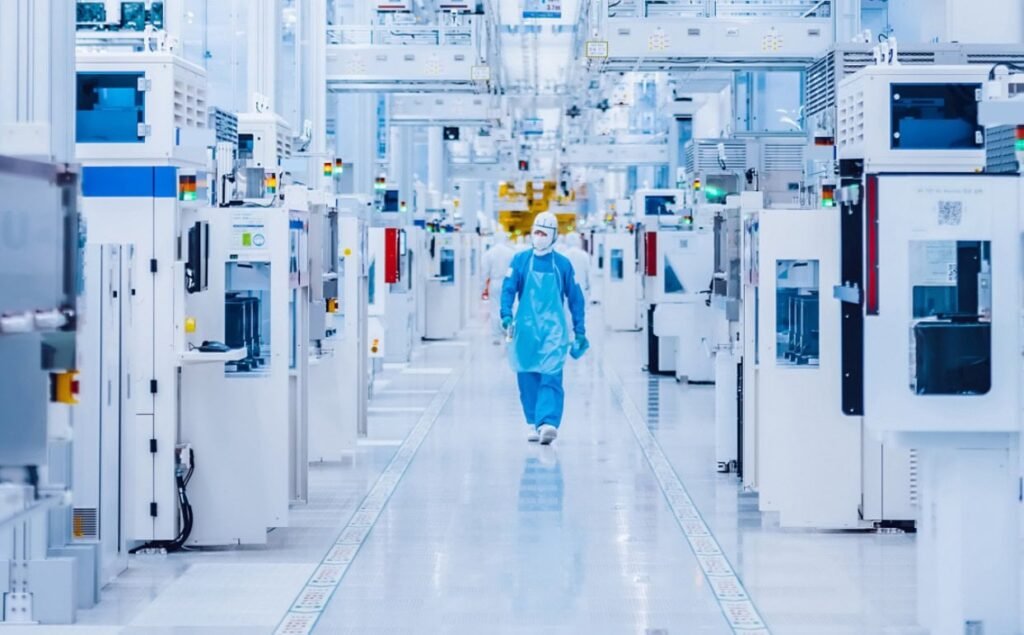

You know the AI race has entered a whole new level when the biggest tech companies on the planet start panic buying hardware five years ahead of time. Samsung Electronics has already locked up nearly 80% of its next-year memory chip capacity through long-term supply agreements. Tech giants like Nvidia, Google, and Microsoft are leading the charge, locking down High-Bandwidth Memory (HBM), standard DRAM, and NAND flash to keep their massive data centers running. That leaves everyone else quietly fighting over the remaining 20%.
From quarterly spot deals to massive cash prepayments
According to a report by the Korea Economic Daily, this shift completely upends decades of semiconductor buying habits. For years, chipmakers relied on short-term quarterly contracts and spot pricing. Now, supplier bargaining power has skyrocketed. Samsung is followed by rivals like SK Hynix, Micron and Kioxia which are signing multi-year contracts that go beyond five years with annual rolling extensions.
To guarantee their spot in line, AI buyers are agreeing to terms that used to be unthinkable. Standard five-year contracts now routinely require 20% to 25% cash prepayments upfront. Plus, contracts are backed by strict mandatory purchase clauses that force clients to pay even if they cancel. Chipmakers are already taking those huge upfront cash infusions to fund the construction of new fabrication plants (via IT Home).
Spilling over into power grids, cooling, and PC gear
This buying frenzy isn’t stopping at memory chips either. The rush for long-term supply agreements is rippling across the entire AI hardware supply chain. Samsung Electro-Mechanics is finalizing a 700 billion won ($507 million) deal with Delta Electronics for ceramic capacitors (MLCCs), while LG Innotek negotiates FC-BGA substrate contracts. Meanwhile, LS Cable has signed five-year deals with Meta and Google, HD Hyundai Electric is locking down transformer orders, and LG Electronics scored a 5 trillion won ($3.7 billion) chiller contract with US infrastructure firm Air.
For everyday PC builders, this server-first focus means consumer DDR5 kits, graphics memory, and SSDs could face tighter supply or stickier pricing. But as Seoul National University professor Choi Woo-young points out, this strategy cuts both ways. If the AI boom ever slows down, overextended chipmakers could face massive defaults or be forced to renegotiate those rigid five-year deals.
The post Samsung Memory Is Nearly Sold Out for Next Year as Big Tech Is Panic Buying appeared first on Android Headlines.