Reuters
- OpenAI’s new AI agent built me a website in five minutes, but I couldn’t share it.
- My Dot performed way better on a more complex work task, though.
- Corporate IT limitations make AI agents feel less magical, and OpenAI is being cautious.
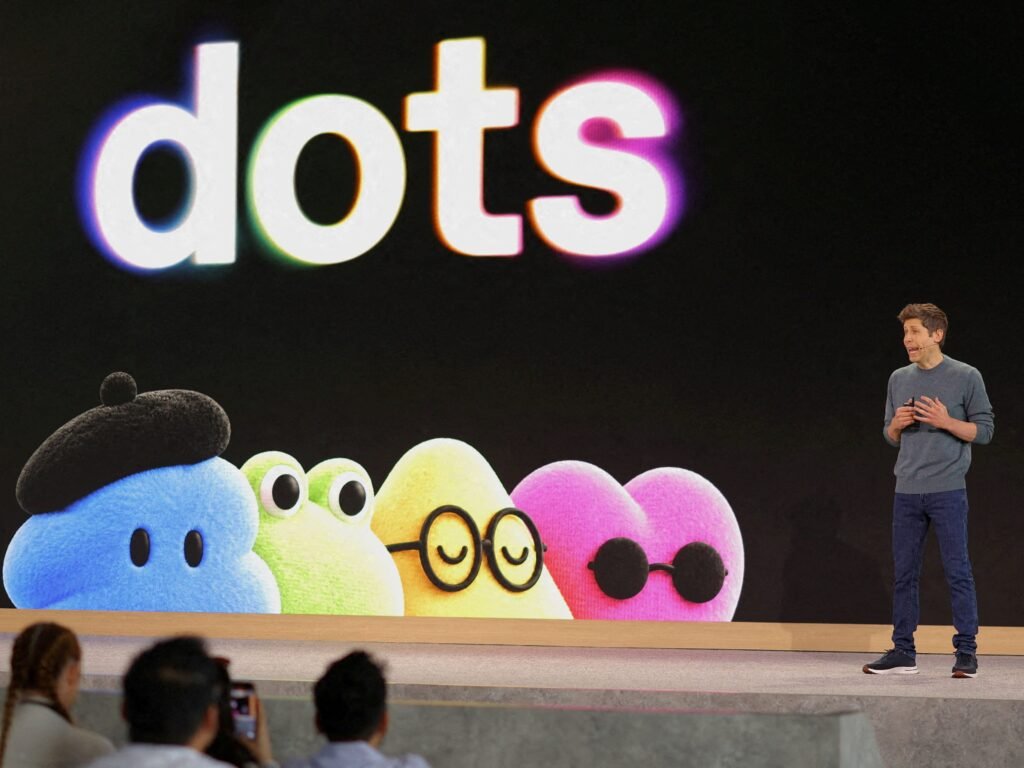
I attended a training at OpenAI‘s office in San Francisco recently. It was all about Dots, the company’s new AI agent offering.
I sat in a room with about 30 other tech journalists, OpenAI PR reps, and a developer rep. Alexander Embiricos, the Dots product lead, popped in too.
If you had the correct ChatGPT account, at least a Pro subscription, your Dot was there waiting. Mine was because Business Insider has an enterprise account.
I fired mine up and called it alidot, with a cute wise owl as the avatar.
Then… we had to think of something to do with our Dot. This is the challenge for a bunch of journalists who are not the most technical people on the planet — even tech journos.
A website!
I decided to have alidot make a website that I’ve been thinking about doing for years. My wife is obsessed with strange deaths, especially when the person dying has done something silly and knows it. She regularly finds news on these unfortunate and regretful endings, and I’ve always thought she should create a Tumblr-style site to collect the gruesome yarns.
But, you know, we’ve been busy bringing up kids and doing work and stuff. So, I never got around to it. Thank god because making a website is so easy now.
I put alidot to work with this request:
“Search the web for strange deaths that happen in the real world. especially when the person has time to regret having done something stupid or silly. For instance, going down a chimney to spy on your former partner and getting stuck and dying in the chimney. That was a real story, btw, from a few years ago. Keep track of all these and check that they are real. Then add them to the website and keep it up to date. Style it like a Tumblr page on this topic.”
Alidot replied: “I’ll research verified cases and build a Tumblr-style site with source links. It will take a few minutes, and I’ll send the link when it’s ready. I’ll stick to documented facts rather than guessing what someone felt before they died.”
About five minutes later, the website appeared: “Strange Endings” went live with six source-checked cases, including the chimney story, in a Tumblr-style feed.
“Update endpoint”
“It’s private to you; you can ask me to change sharing. Automatic updates aren’t enabled yet because access to the site’s update endpoint is blocked,” alidot explained.
I have no idea what an “update endpoint” is, and I don’t care. What I do care about is being able to show my wife this hilarious site we’ve always joked about — and for her to share it with her friends.
So I asked alidot to make the website public. After about a minute, it came back with disappointing news.
“I checked: this site’s workspace doesn’t allow public links or invitations to people outside the workspace, so I couldn’t make it public. It’s still private. Your workspace admin would need to enable external sharing first.”
Translation: Business Insider’s IT department is being sensible smart and cautious about what employees can do with AI agents, even inside our official ChatGPT Enterprise service.
Alistair Barr/OpenAI
This is the type of workplace complexity that makes enterprise tech hard to break into, even for an AI company as hot as OpenAI. It’s also what makes existing enterprise tech products sticky and lucrative.
Unlike in consumer tech, switching is hard. Every new thing must run through a busy IT department that is usually consumed with keeping all your company’s existing technology together. The last thing your IT colleague wants to hear is, “Hey, can you make my Dot work? Something about an ‘update endpoint’ maybe? Lmk!!”
Dot did better here
The IT approval bottleneck is one of several gnarly workplace issues that may slow AI diffusion across the economy. This is the idea that technology spreads at different rates across companies and societies.
The AI optimists expect everyone to embrace this powerful new thing quickly, while, in the real world of corporate IT, things move at glacial speed.
Here’s another example. This one illustrates the limitations but also what’s possible after you whittle away at technical workplace hurdles.
During the Dots training, I asked Embiricos if i could get alidot to use a newsletter publishing tool we rely on at work. My editor currently handles this tricky tool and it would be great to have alidot whip through this task, leaving my editor with more time to actually edit. It basically involves cutting and pasting stuff from a Google Doc into a complex web form. Exactly the type of busy work that AI should handle.
So, I asked the OpenAI executive, if I showed alidot the written instructions for this web-based newsletter tool, could my new AI agent get it done?
Yes, Embiricos told me. But it I would likely need my employer to approve this type of access, including password-security questions.
On Friday, I got the go-ahead and linked my Dot to several of our workplace applications. Then, I asked the agent to review the how-to training guide for using the newsletter tool, and told it to try a test run.
I gave it an old version of my AI Insider newsletter, in the form of Google Doc, and told it to input all the content into the relevant parts of the newsletter tool.
alidot sent a little pop-up bubble that I clicked on to add my password for this newsletter tool. Then, it walked me through the Okta two-factor authentication process, where I looked up a temporary six-digit code on my phone and shared that with the AI agent.
Saving hours a week
It logged in on my behalf and got to work. About five minutes later, it sent a link to the test newsletter draft. I looked it over and shared it with my editor.
He said the draft was “95% good.” Almost all the content was in the correct place. That included photos, a chart, and all the web links.
This could save us several hours a week, going forward, leaving us more time for actual reporting and editing.
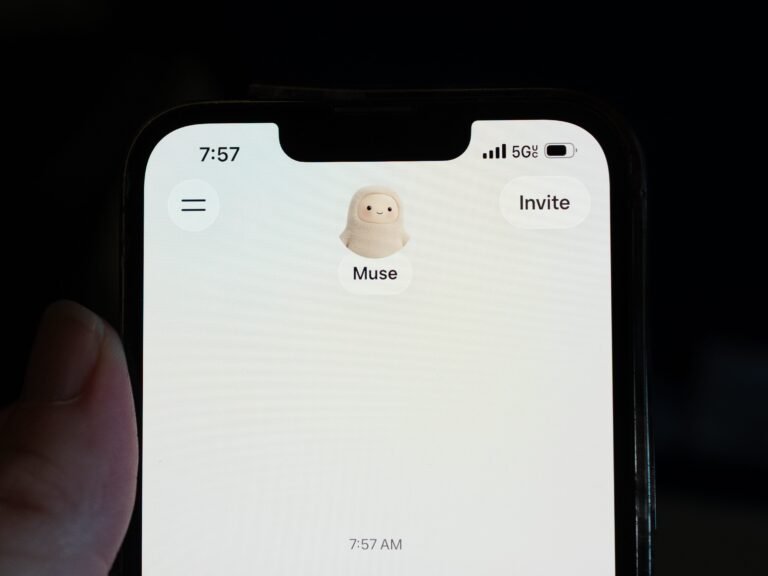
This didn’t feel as magical as Meta’s new Muse agent. But that offering exists in the magical world of consumer web experiences, while alidot must maneuver through the corporate IT thicket.
A careful approach
I emailed OpenAI about all this and a spokesperson noted that if I’d set up Dot on a paid personal ChatGPT account, the website I made would have been easy to set live.
They didn’t comment much further. But during the training session, Embiricos said OpenAI deliberately launched Dots in the more restrained environment of corporate technology. All these awkward guardrails are a good, natural way to keep OpenAI’s new AI agents under control while people try them out.
Once this technology has been in use for a while and OpenAI sees it operating safely, the company plans to release these AI agents into more parts of the digital world. Ultimately, the company wants to integrate this agent capability into ChatGPT for everyone, he explained.
It’s a careful approach. But this also means that the launch of Dots has a bit less magical than Meta’s Muse.
Sign up for the AI Insider newsletter here. Reach out to me via email at abarr@businessinsider.com