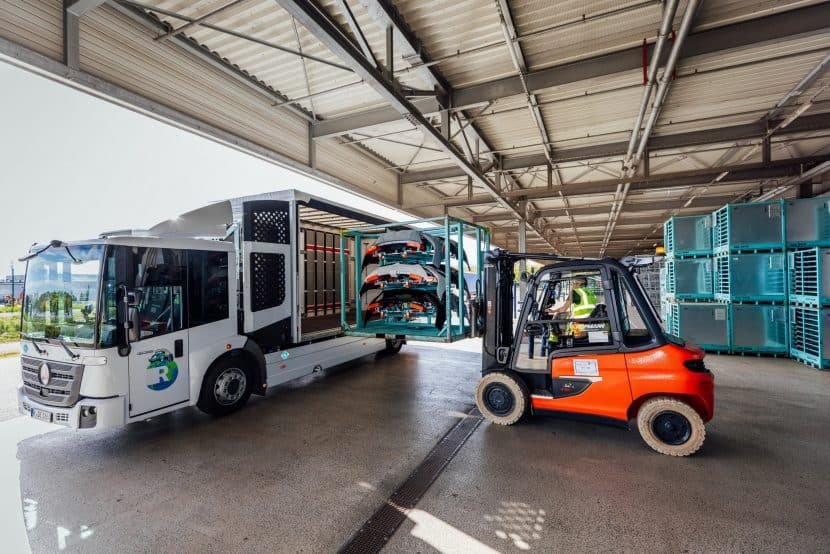
BMW is once again proving that its definition of “technology openness” is considerably broader than just offering the umpteenth electric car alongside a crop of gas, diesel, and plug-in hybrids. The German automaker has started testing a hydrogen combustion-engine truck at its Leipzig plant, giving us the rather amusing sight of a BMW facility using a truck from its sworn enemy. Of course, the press release conveniently leaves out the part where it should say this is an Econic 1835 built by Mercedes-Benz Trucks.
While the 18-ton truck comes from BMW’s main domestic rival, its hydrogen combustion engine was developed by DEUTZ, hence the company’s logo where you’d normally expect to find the three-pointed star. Rudolph Logistics operates the vehicle, and TEAL Mobility provides the hydrogen refueling infrastructure. BMW is testing the whole package in real-world logistics operations as part of the HyCET research project.
The truck is currently delivering parts to BMW’s Technology Exterior Components division at Leipzig, where it supplies components used to make things such as bumpers and spoilers. In a second phase, BMW plans to use it to deliver those exterior components to vehicle assembly on a just-in-time basis. The company will also test the truck on longer routes and in three-shift operation around the plant.

Diesel-Like Performance
And there’s a reason BMW is bothering with hydrogen combustion when battery-electric trucks are already a thing. The hydrogen engine uses a piston-engine design based on diesel technology. The company claims it delivers diesel-like performance and robustness under high loads and during dynamic driving. It’s also significantly less sensitive than a fuel-cell system to variations in hydrogen quality, which can help ensure greater availability.
Beyond hydrogen’s greener credentials, BMW sees other advantages, including potentially lower costs and quick refueling. That’s particularly interesting for trucks that rack up high mileage, operate multiple shifts, or can’t afford to sit around waiting for a battery to charge.
This isn’t BMW’s first rodeo with hydrogen trucks, either. The company has already been testing fuel-cell trucks as part of the European H2Haul project. Two Iveco S-eWay Fuel Cell trucks have been operating between Leipzig, Landsberg, and Nuremberg for about a year, giving BMW real-world experience with a completely different hydrogen propulsion solution.
BMW is deliberately testing both technologies at the same time rather than betting everything on one. The fuel-cell trucks and hydrogen combustion trucks can use the same routes and refueling infrastructure, allowing BMW to compare them under similar conditions. The goal is to figure out which technology makes the most sense for each type of logistics operation.


Remember The V12 7 Series Hydrogen?
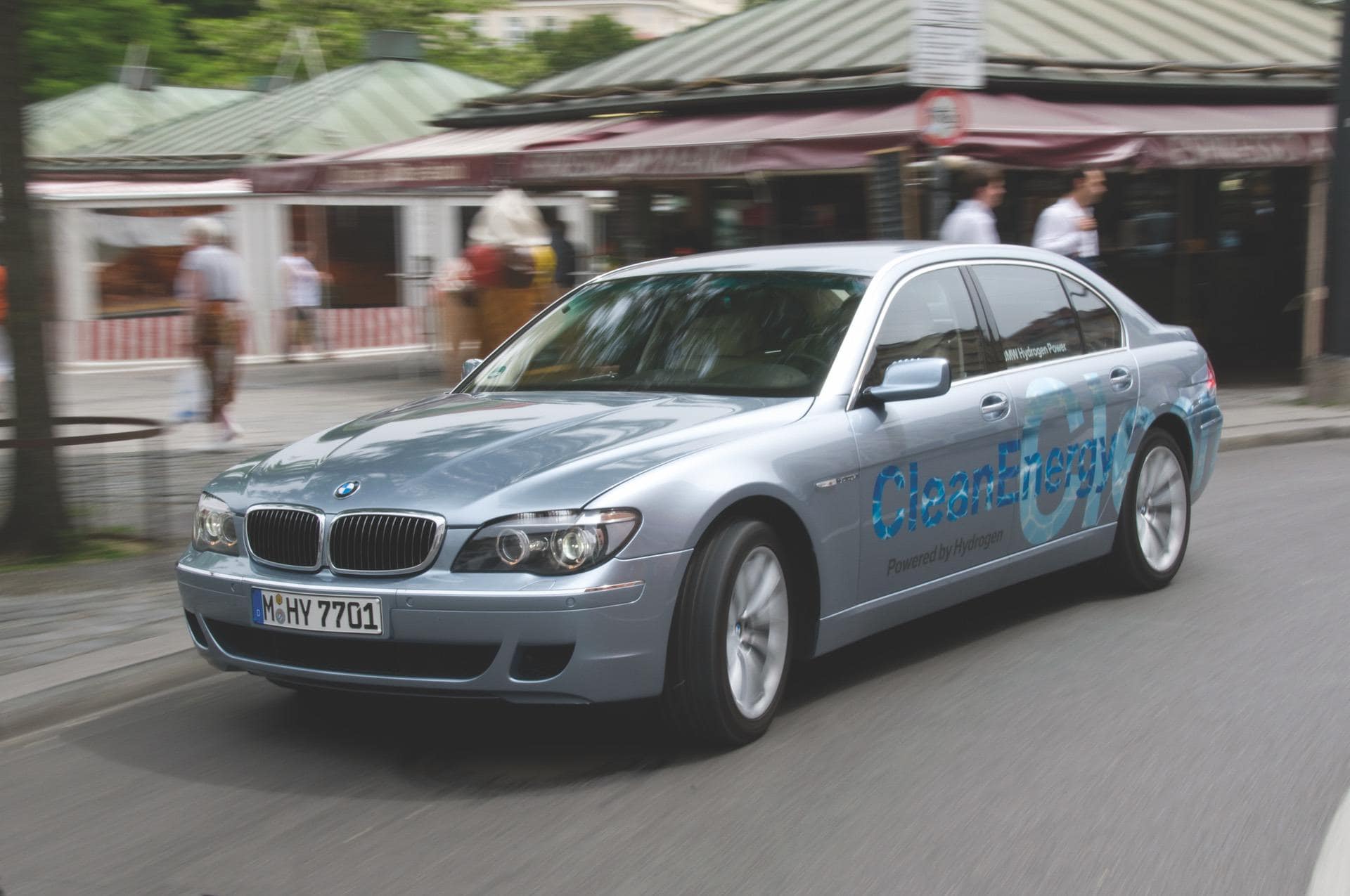
BMW’s fascination with burning hydrogen inside a conventional engine goes back much further than these trucks. Two decades ago, the company introduced the Hydrogen 7, essentially a 7 Series with a 6.0-liter V12 capable of running on both hydrogen and gasoline. The engine produced 260 horsepower and could propel the big sedan to 62 mph in 9.5 seconds before hitting 143 mph (230 km/h).
BMW built the Hydrogen 7 in limited numbers, with nearly 100 cars taking part in a test program. It was an absolutely bonkers solution to the emissions problem for its time, combining a giant V12 with hydrogen technology and a massive hydrogen tank. BMW eventually moved away from hydrogen combustion in favor of fuel cells, but the company clearly wasn’t ready to give up on the idea altogether.
BMW’s First Hydrogen Production Car Is Inching Close

Today, BMW’s hydrogen strategy looks very different. The company plans to launch its first series-production fuel-cell vehicle in 2028, the iX5 Hydrogen, based on its next-generation technology developed with Toyota. At the same time, it’s using hydrogen in factories and logistics, including fuel-cell forklifts and tug trains at Leipzig and hydrogen-powered logistics equipment elsewhere in its production network.
So while a hydrogen-powered Mercedes truck doing BMW’s dirty work sounds like the setup for a joke, there’s actually a serious engineering exercise happening here. BMW wants to find the right powertrain for the right job rather than blindly electrifying everything. For trucks that run hard all day and need to refuel quickly, hydrogen could still have a role to play.
And if BMW eventually puts a hydrogen combustion engine back into a 7 Series, please give it a V12 this time. We can dream.


First published by https://www.bmwblog.com