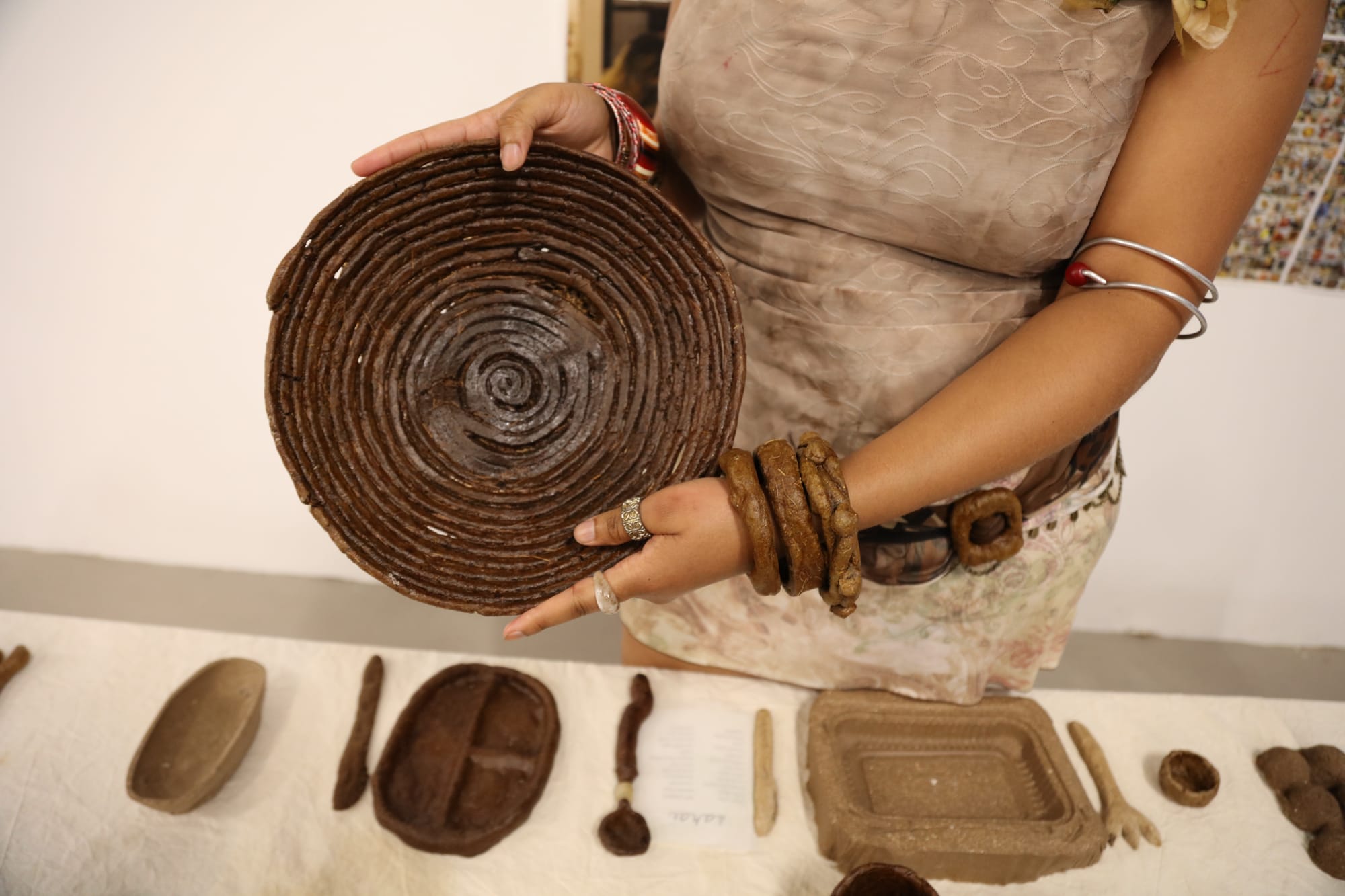
After a summer of never-ending heatwaves and natural disasters exacerbated by the climate emergency, it’s clear that immediate, systemic work is necessary to mitigate the human impact on our world. Environmental advocacy is top of mind for many artists, some of whom confront the issue directly in their work and activism. In a community biology lab in Brooklyn, one group of artists is doing their part by exploring renewable, biodegradable art materials as an alternative to the synthetic options readily available in stores.
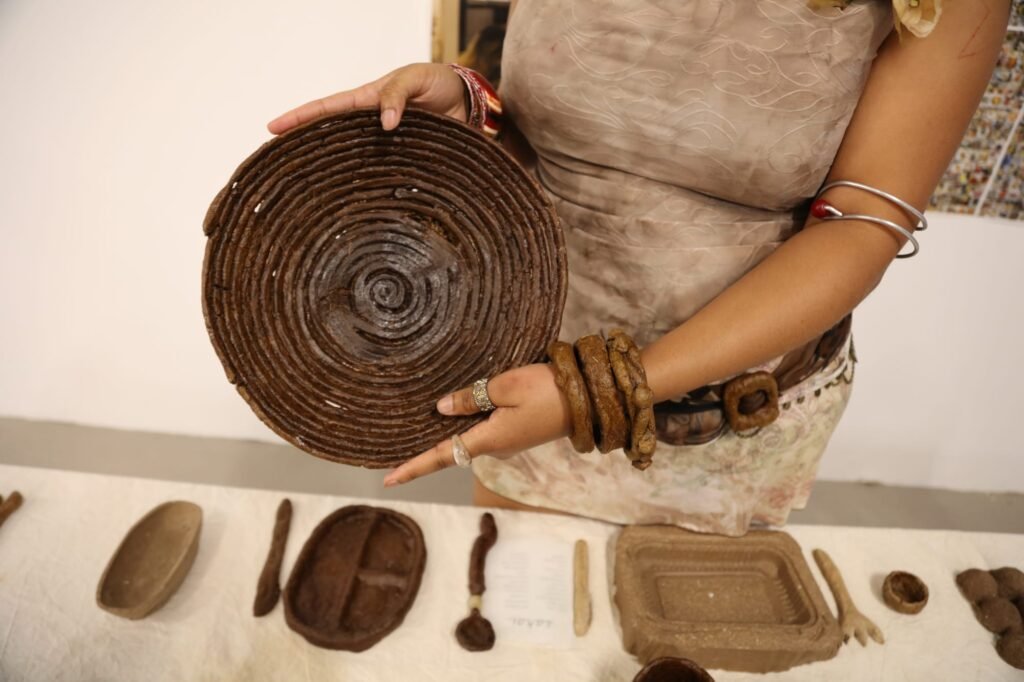
In Source Material: Genspace Biomaterials Studio BioArt Exhibit, a three-day show at Flux IV in Queens during Climate Week, artists from Sunset Park’s Genspace lab centered the artistic potential of natural pigments, algae yarn, and alternative clays. Such substitutions needn’t be one-to-one swaps; instead, natural materials can unlock new creative challenges and shift our relationships to art objects and processes at large.
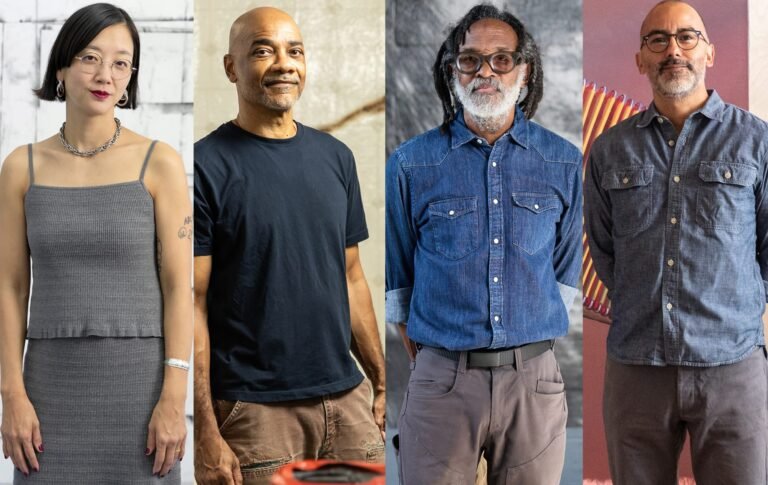
Below, four artists working with Genspace share their visions for a more sustainable future of art-making rooted in local ecosystems, scientific inquiry, and community collaboration.
Becca Rodriguez: Natural Pigments
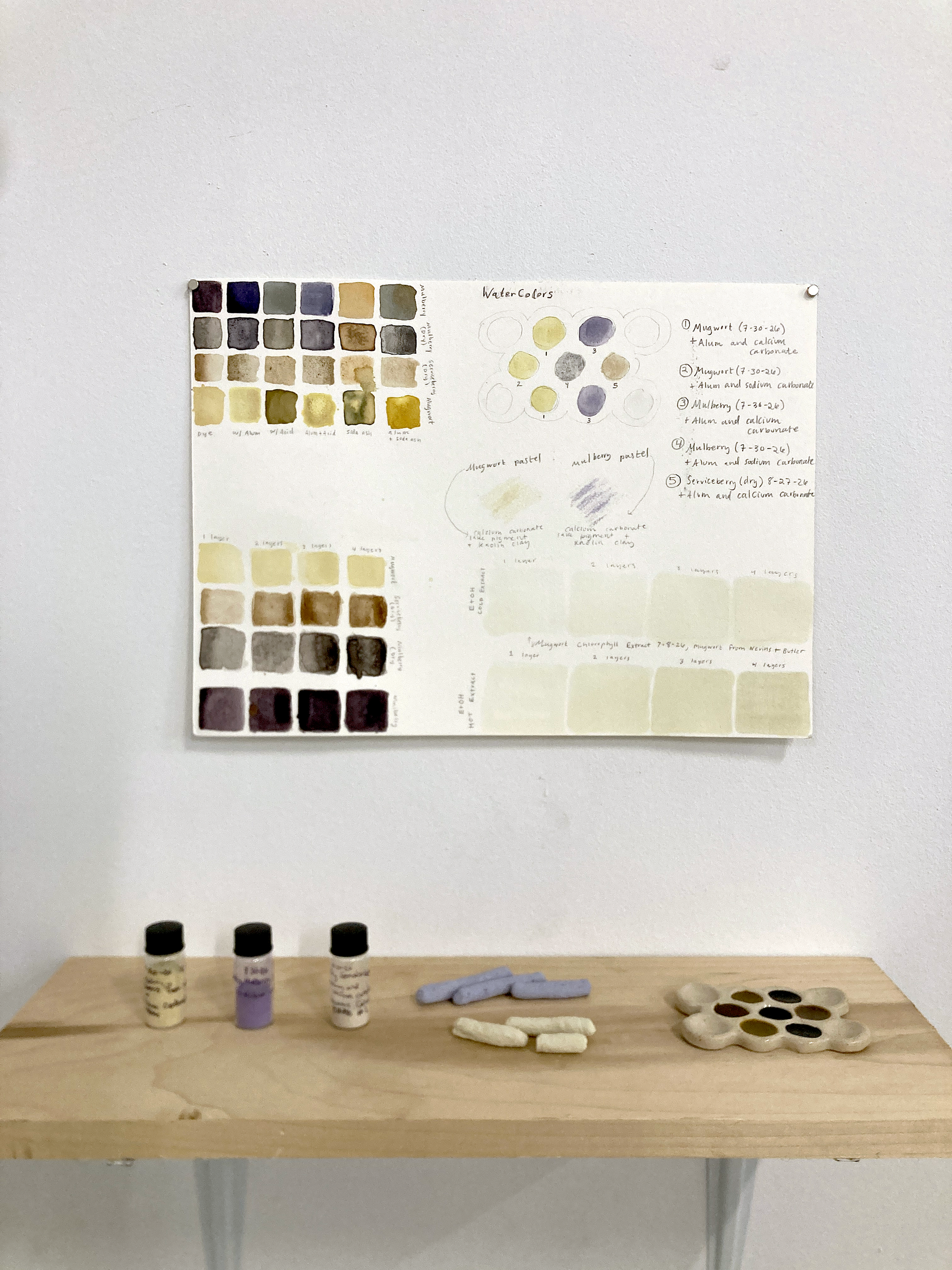
Before the development of synthetic dyes and paint tubes in Europe in the 19th century, artists sourced colors from the plants, animals, and minerals around them. While some natural colorants — such as the indigo plant, cochineal beetle, or turmeric root — may be more familiar to artists today, there are thousands of organic sources of color. Some pigments and techniques are rich with symbolic and cultural meaning, especially in Indigenous communities and artistic traditions throughout the Global South.