Founded in 1992, Rosetta Stone has long taken advantage of technological advances to deliver language learning to customers in the comfort of their own homes.
Early on, that technology was the CD-ROM; the company’s yellow-boxed software packages were a familiar sight in malls and airports across the country. They promised immersive, interactive language learning modeled on how children learn, rather than dry study with grammar books and static audio recordings. In 2013, Rosetta Stone shuttered its brick-and-mortar locations to focus on digital delivery, as users increasingly gravitated toward cloud-based learning. Over time, the company also shifted toward subscriptions rather than one-time software purchases.
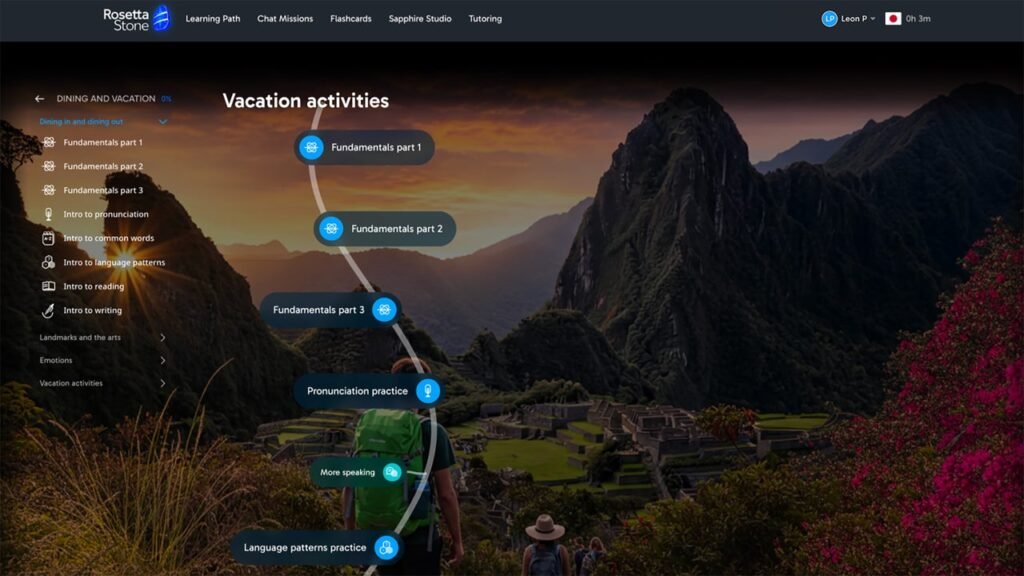
Now, in 2026, Rosetta Stone is aiming to reinvent itself again. Its newest version, called Rosetta Stone Sapphire, emphasizes the mobile experience without sacrificing the depth the company says has long helped it attract and retain learners.
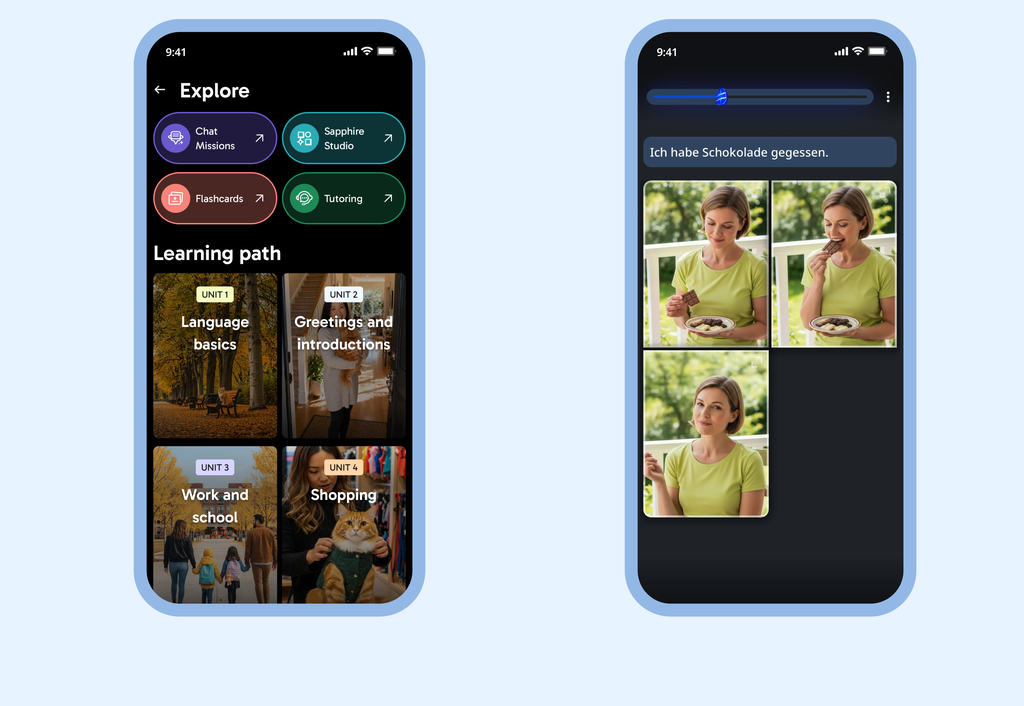
“We’ve thought really hard about how people use their devices today, what kinds of tools do they expect,” says Ansh Juneja, senior product manager at Rosetta Stone. Luckily, he says, trends in app development, including an emphasis on images and video, align with the way Rosetta Stone has sought to communicate how language is used in practice.
“A lot of modern interfaces rely heavily on videos and images, and Rosetta Stone Sapphire also relies heavily on videos and images,” he says.
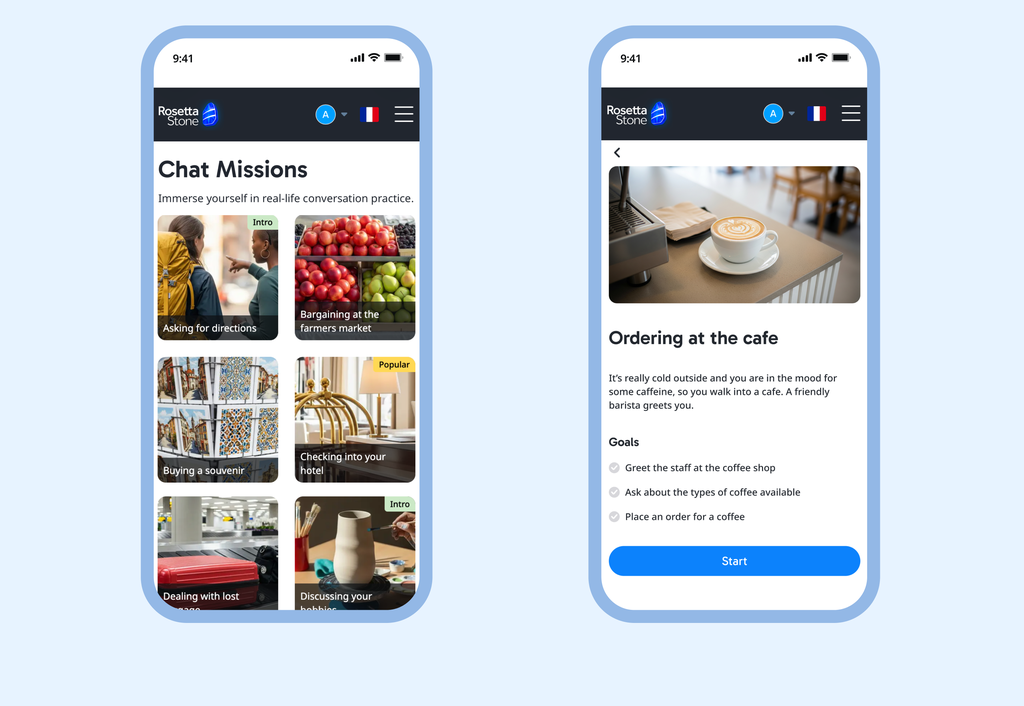
The new version, which is available through a $19.99-per-month subscription, or $13.25 per month when purchased annually, includes artificial intelligence features like “Chat Missions,” which let users practice their language skills in simulated scenarios like booking a restaurant reservation or navigating a professional meeting. A new collection of hundreds of topical sets of digital flashcards can also be useful for practicing a particular kind of conversation or squeezing in a quick study session on the go.
More broadly, the software has been streamlined for mobile use, making it easier to progress through lessons without repeatedly clicking “next” buttons or navigating menus, Juneja says. The Rosetta Stone team even focused on making the software operable with one hand, trying to account for how people actually use their phones.
Many of the new features seem likely to help Rosetta Stone appeal to fans of newer language-learning apps like Duolingo.
But Juneja says Rosetta Stone is still intended to be a premium product for users interested in longer, immersive study sessions and an experience designed to help them actually speak a new language. Rosetta Stone was acquired in 2021 by IXL Learning, an educational software company that is the parent of online learning tools like Dictionary.com and the tutoring marketplace Wyzant. In August, IXL’s CEO, Paul Mishkin, emphasized the company’s desire to deliver learning experiences that “actually work.”
Existing features like Rosetta Stone’s TruAccent pronunciation training tool remain, and a subscription includes access to all 25 languages supported by the software. That can keep some customers using Rosetta Stone for years as they continue studying one language or move on to others.
“We kind of see Rosetta Stone as something you have to support you along your language learning journey for life,” Juneja says.
Older versions of the software are still supported for existing users, but Juneja says the company has seen an uptick in signups and usage since launching Sapphire first in the United States, then internationally, earlier this year, though he declined to provide specific numbers. Overall interest in language learning also appears to have risen around the FIFA World Cup, he says.
The new software also offers more customization through its Sapphire Studio feature, which enables users to create customized sets of flashcards and other game-like learning tools, as other language-learning companies increasingly offer their own adaptive AI tools.
But Rosetta Stone still offers real-time sessions with certified, live tutors, who can provide feedback and answer questions with a human touch.
“That part will probably never change,” Juneja says. “In terms of what’s really an effective way to learn a language, I think interacting with people is always going to be a part of it.”