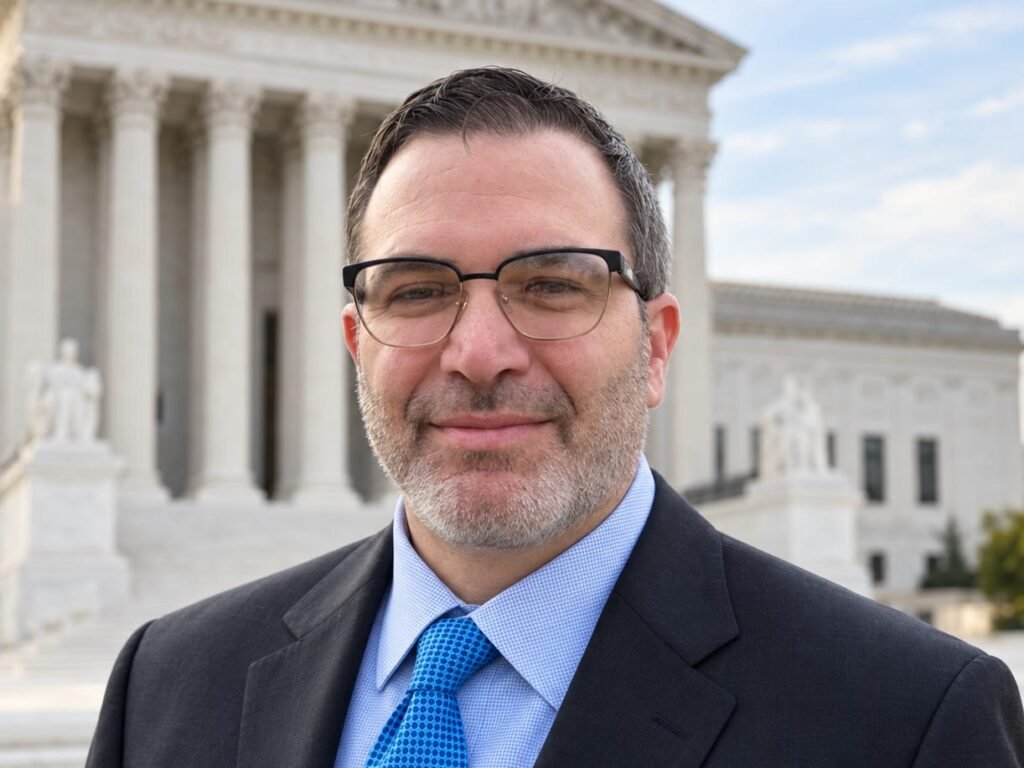
Ron Masciantonio
- Ron Masciantonio left the corporate world and started his own law practice.
- Masciantonio said AI training has been a fulfilling and useful additional revenue stream.
- He also said AI training has made him a better lawyer.
This is an as-told-essay based on a conversation with Ron Masciantonio, who previously was executive vice president and general counsel at Five Below. He founded his own practice, Masciantonio Law, and does specialist AI training through the company Micro1. This story has been edited for length and clarity.
I’ve been practicing law for over 25 years and was most recently the general counsel and executive vice president at Five Below, a retailer with about 2,000 stores nationwide.
I left at the end of last year after about seven years. I was ready to do something different. After leaving, I started my own private practice, where I provide legal services to entertainers and small businesses, and I also manage recording artists who make pop and R&B music.
I was introduced to AI training after recruiters contacted me seeking people with legal expertise. When my practice started to hit the ground running a few months ago, and I was looking for more revenue opportunities, I decided to interview and sign up with Micro1.
I’ve been doing this for about a couple of months and see it as a tremendous opportunity to augment my practice. It’s also intellectually fulfilling.
The work feels more academic, scientific, and creative. I come from corporate environments where we wake up every day looking at the stock price and the prior day’s sales and reacting, and this is about making something that will endure and be improved over time.
I’m teaching AI how lawyers make decisions
Lately, I’ve spent between 20 and 30 hours a week training AI. It ebbs and flows depending on what’s happening in the rest of my practice. I can see weeks when I’ll go up to 40 hours and weeks when I’m doing 10 to 20 hours.
A huge advantage of the work is that it’s asynchronous. If you have a solo practice and you’re operating on hourly or on single engagements, you’re going to have gaps in your work. AI training is fantastic to fill those gaps. One morning, I might start working for a client, then shift to Micro1 work, and then shift back to more client work.
For me, AI training is like a mentoring activity. It’s just that the AI is the mentee.
The tasks varied, but my initial tasks included creating a couple of scenarios. For instance, I created a contract between two research organizations using forms I had used in the past. I made sure there were some unique issues and created a context document that stated each side’s goals and what they’re trying to achieve.
Then we take a side and mark up the contract the same way we would in a real-life situation. We also translate the key issues and create a rubric so that the AI can understand what the red lines mean. The goal is for the AI to eventually have a benchmark and be able to do the work itself.
AI can be taught to redline a contract today. The problem is that it may not understand the core issues and may negotiate too hard. It may care about things I wouldn’t usually care about, given my years of experience.
The projects pay an hourly rate, but there is often task-based compensation as well. At Micro1, my hourly rate can be $200 for a project, but a specific task in the project, like creating a contract packet, might have a 3x multiplier. The magic is that if you can do those tasks more efficiently, you can increase your effective hourly rate, so you are rewarded if you do the task a little faster and do it right.
Training AI has made me a better lawyer
After so many years with a team of lawyers working for me, going back to redlining a contract and editing different kinds of agreements has regrounded me. You also really have to think through why you’re doing what you’re doing.
The legal profession has changed dramatically in the last couple of years. AI will continue to put a strain on the work available to younger lawyers and, in particular, paralegals, because certain relatively rote tasks can be handled by generative AI. We ought to train our younger lawyers to exercise their expertise and focus more on the law and reviewing, and less on rote tasks.
In the short term, there could be fewer opportunities, but I think in the long term, there will be better opportunities for more impactful work, which is what we all want.
Aside from people thinking I’m already crazy for leaving the corporate world, I’ve heard a little bit of, “Oh, you’re training your replacement.” But I view it differently.
Generative AI exists and is giving advice right now. If anything, as lawyers, I think we have an ethical obligation to make sure that the advice is right. I view this as an opportunity to help get more things right in the world than wrong, and if that’s inconsistent somehow with being a lawyer, then I must not have paid attention when I took my oath.