The Floating City celebrates the unique creative world of glass – be it forged, blown, molten, opaque, clear, crystal, heavy or light, worn, hung, mounted, displayed, shimmering, illuminated, or merely seen.
There is never less than a lot to do in Venice. The world’s largest and most influential art biennial continues through to mid-November from its May opening. Every other year, it swaps that with the global architecture expo. Then there’s the city’s ageless maze of paths, bridges, and canals to wander, leading to churches and palaces bulging with Renaissance mastery, Byzantine flair, and Venetian Gothic exuberance. All this before mentioning the recent Hollywood and world cinema invasion for the film festival, and for the focus of this article, the tenth edition of Venice Glass Week.
Glass is thought to have been first invented as a byproduct of metalworking, using its inherent heat and sand. This dates back to 3,500 BCE. It wasn’t until the relatively more recent eighth century that Venice was regarded as a site of glassmaking. Within a few hundred years, the craft was banished to the island of Murano – too many disastrous furnace fires had spread across San Marco.
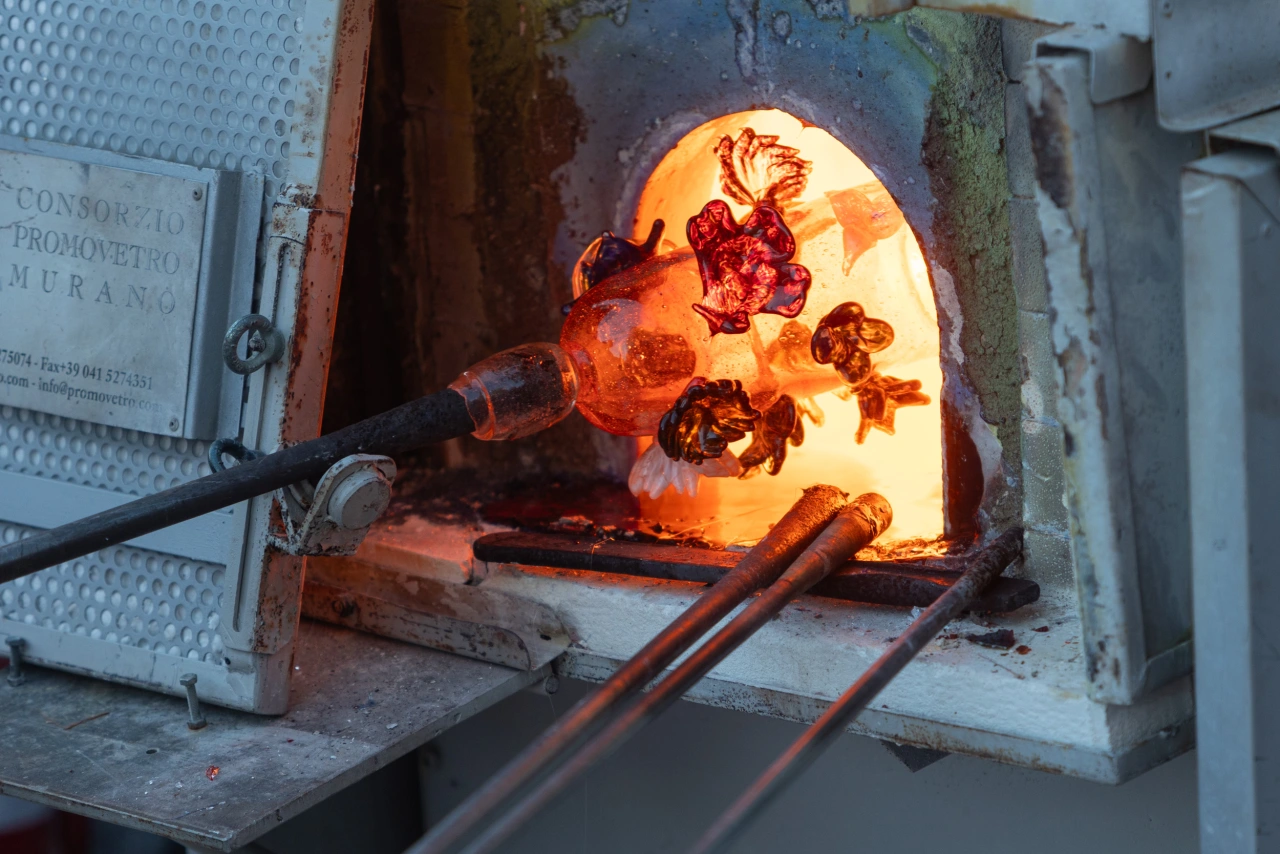
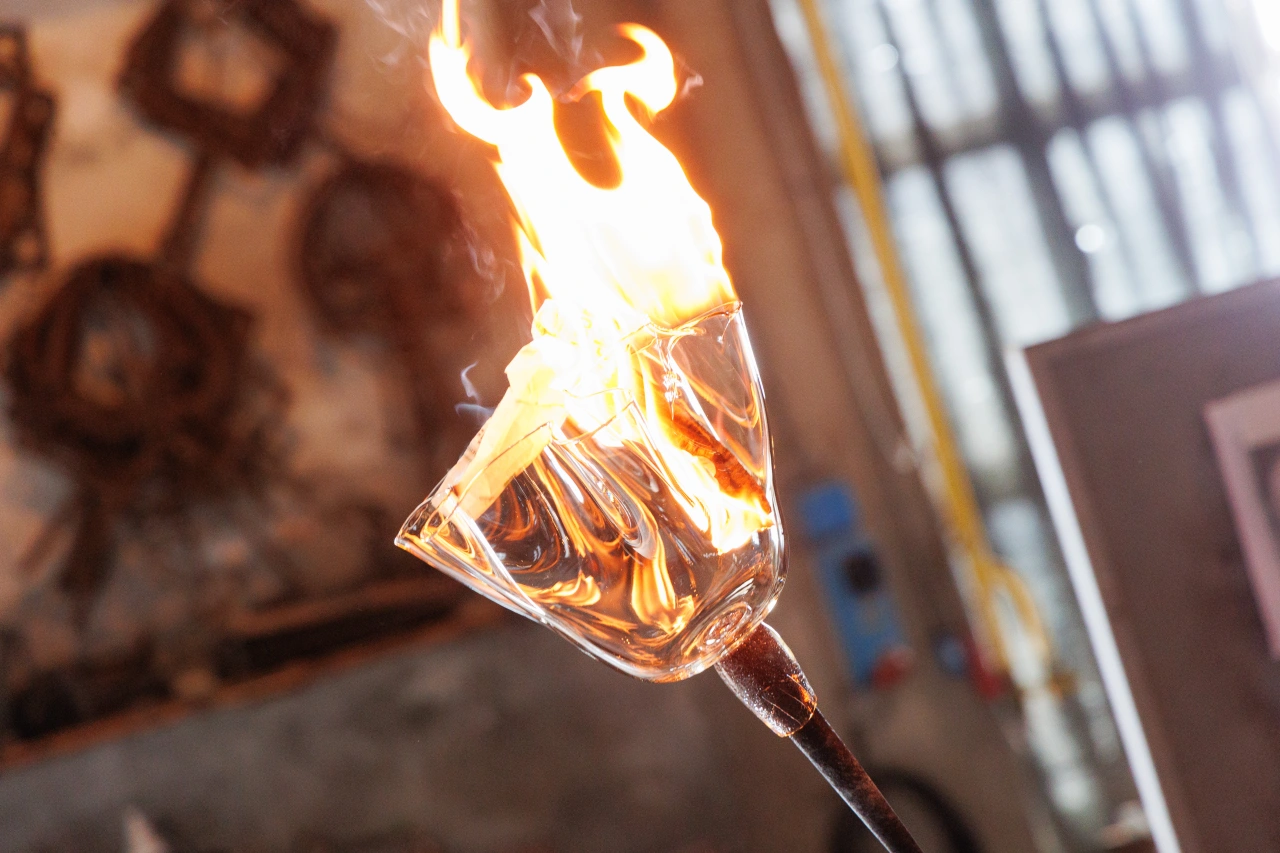
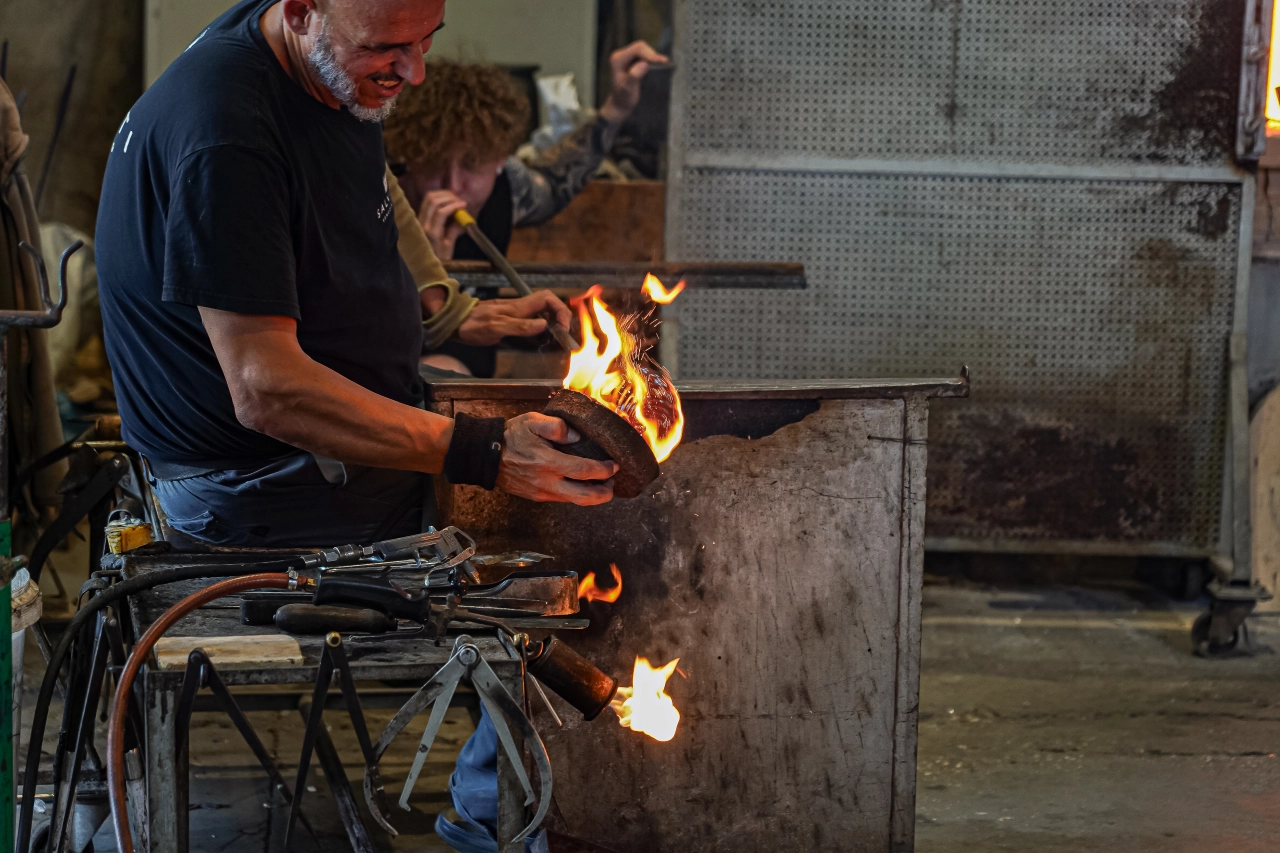
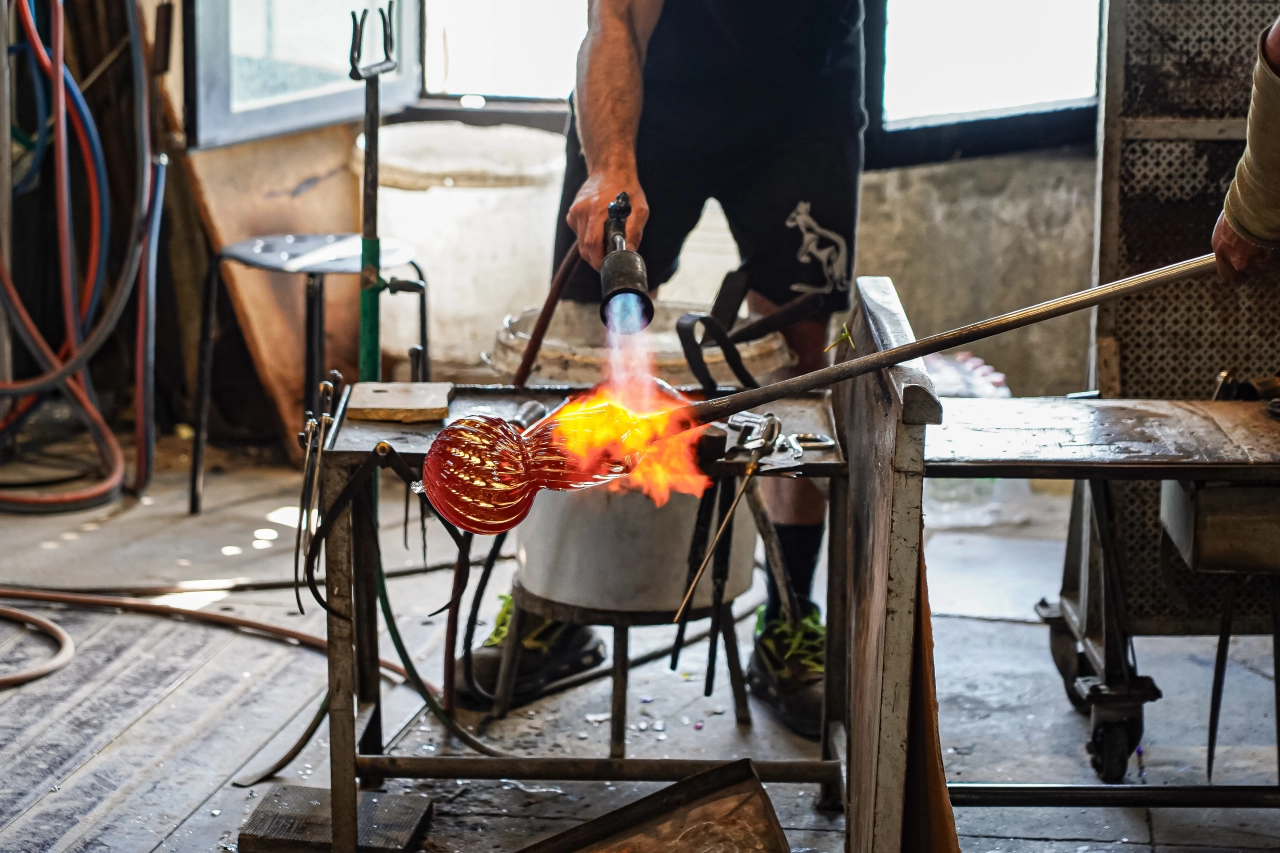
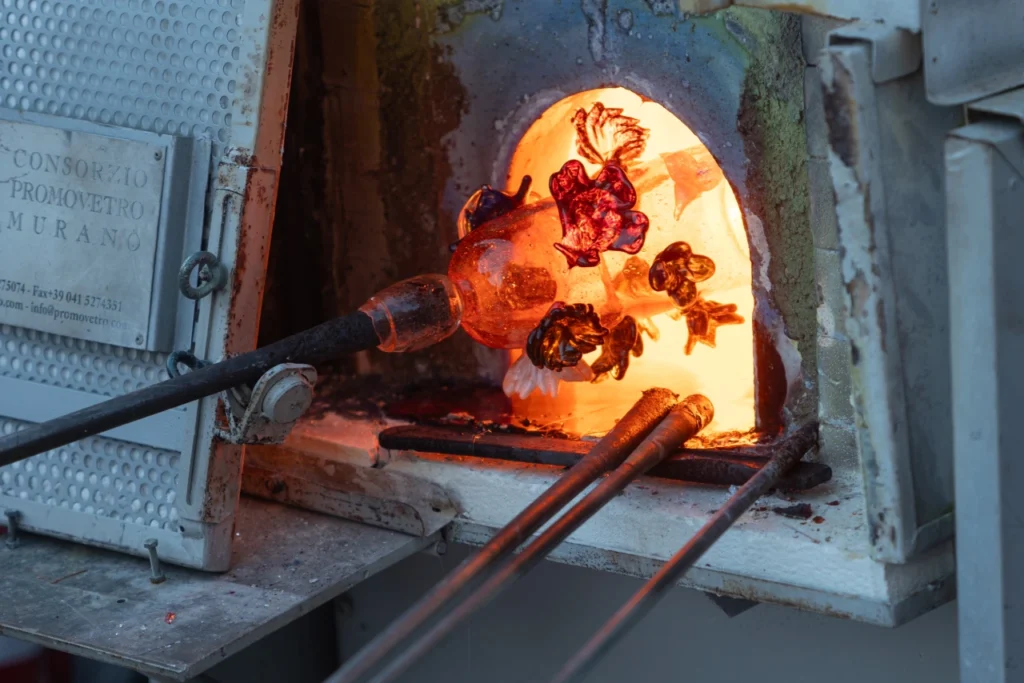
Bringing things right up to the present day, Murano now hosts around thirty glass factories employing 900 people. Artisans work with molten glass for varying designs, several unchanged for decades, contemporary concepts, and most excitingly of all, wonderful new collaborative commissions – challenging both the craftsmen and the limitations of the materials themselves.
Murano glass should not be presented as a souvenir or simple decorative craft. It should be presented as art, design, technical experimentation and living cultural heritage.
Arguably the most high-profile of Venice Glass Week’s staggering 236 events and 140 venues is Murano Illumina il Mondo. It is held until November 1st in the fantastically grand St Mark’s Square. Some five million tourists traverse this space each year. Even if only a small proportion notice the temporary illuminations under the ornate Procuratie Vecchie, it will still be the season’s big-ticket event. The installation is the culmination of a dozen bespoke chandelier projects, each a collaboration between various international designers and Venetian glass furnaces, in turn, creating a modern version of the famed Venetian tradition, the chandelier.
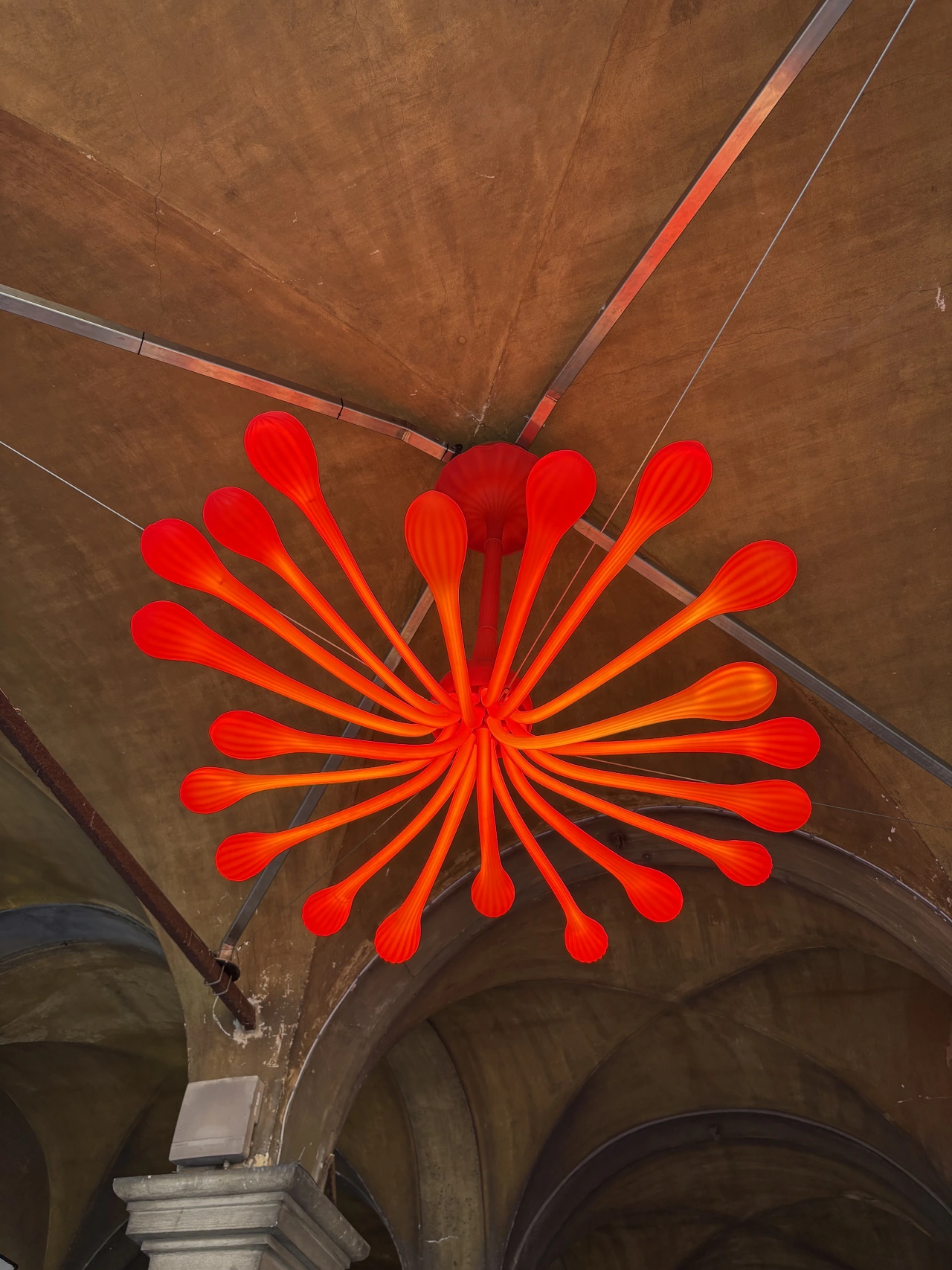
Sir Norman Foster, the nonagenarian founder of Britain’s largest architectural practice, Foster + Partners, has partnered with Salviati, a foundry established in the mid-nineteenth century. Choosing a strong orangey-red finish, achieved through four layers of coloured, white, and clear glass, the inspired collaboration has forged the asymmetric, octopus-tentacle-inspired Hydra Chandelier. Taking cues from sketches of local seafood and lagoon creatures, several aspects of the design directly go against established logic, such as the arms facing upward instead of down. And when considering the weight of glass, the structural supports are as important as any visual flourish. The design has been thought so successful, pleasing both the craftsmen and Foster, that a larger commission of multiples may follow suit, should you have the considerable budget and suitable hanging space.
Others involved in this installation include Welsh contemporary artist Cerith Wyn Evans, working with Idea Murano, a newer studio set up a decade ago; his more recognisable white neon winds Japanese letter forms around an older Murano chandelier. His, like Foster’s and the other ten collaborations, have all been realised through the coordination of Matteo Silverio, acting not merely as curator but production coordinator – matching designer with craftsman and furnace, and shielding the ancient architecture from harm. Chief amongst these concerns was curtailing the artistic excitement of using blown glass as a material. All too quickly, many creatives’ ambitions resulted in impossibly weighty designs. Glass is heavy; at just a millimetre thick, a square metre weighs 2.5kg.
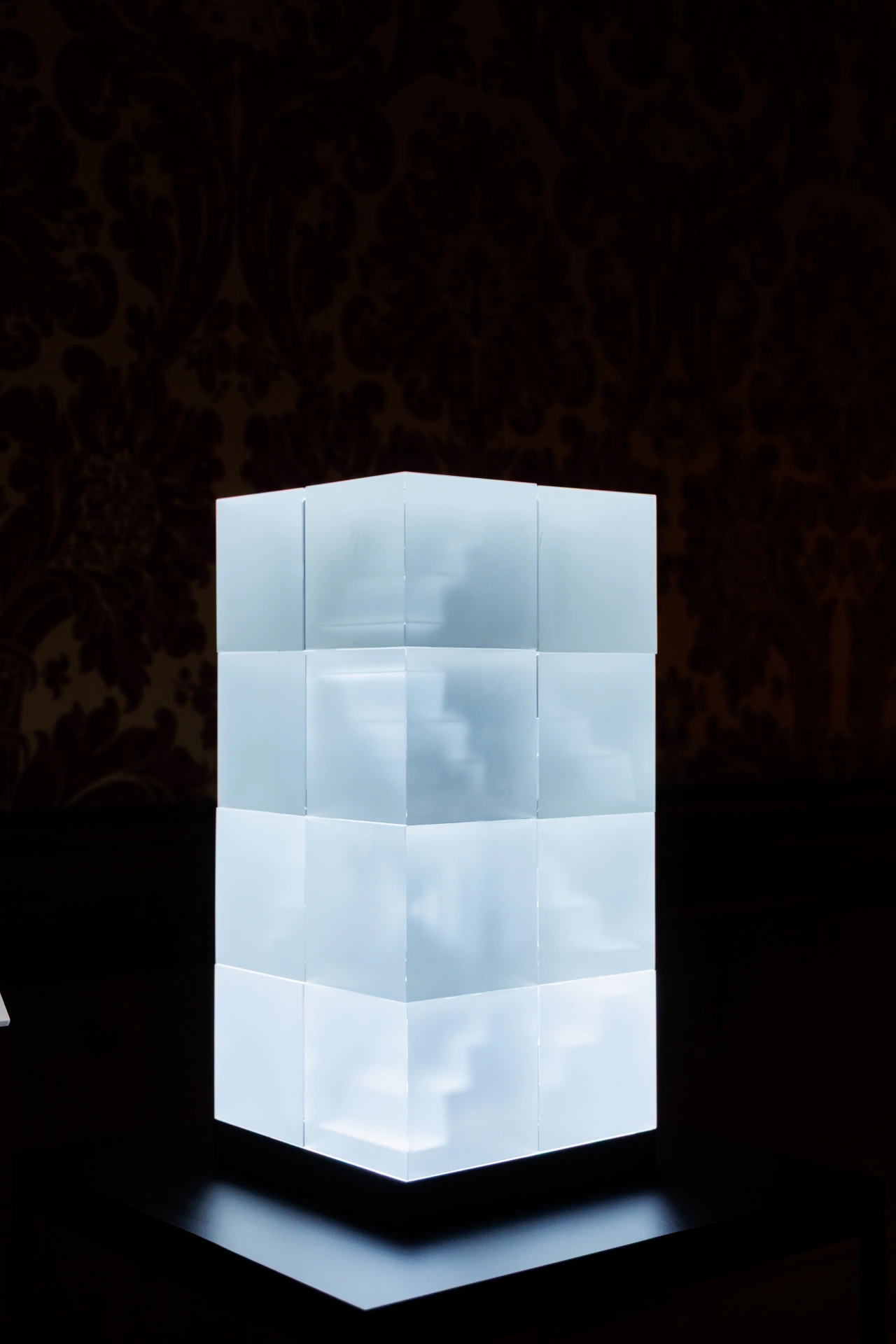
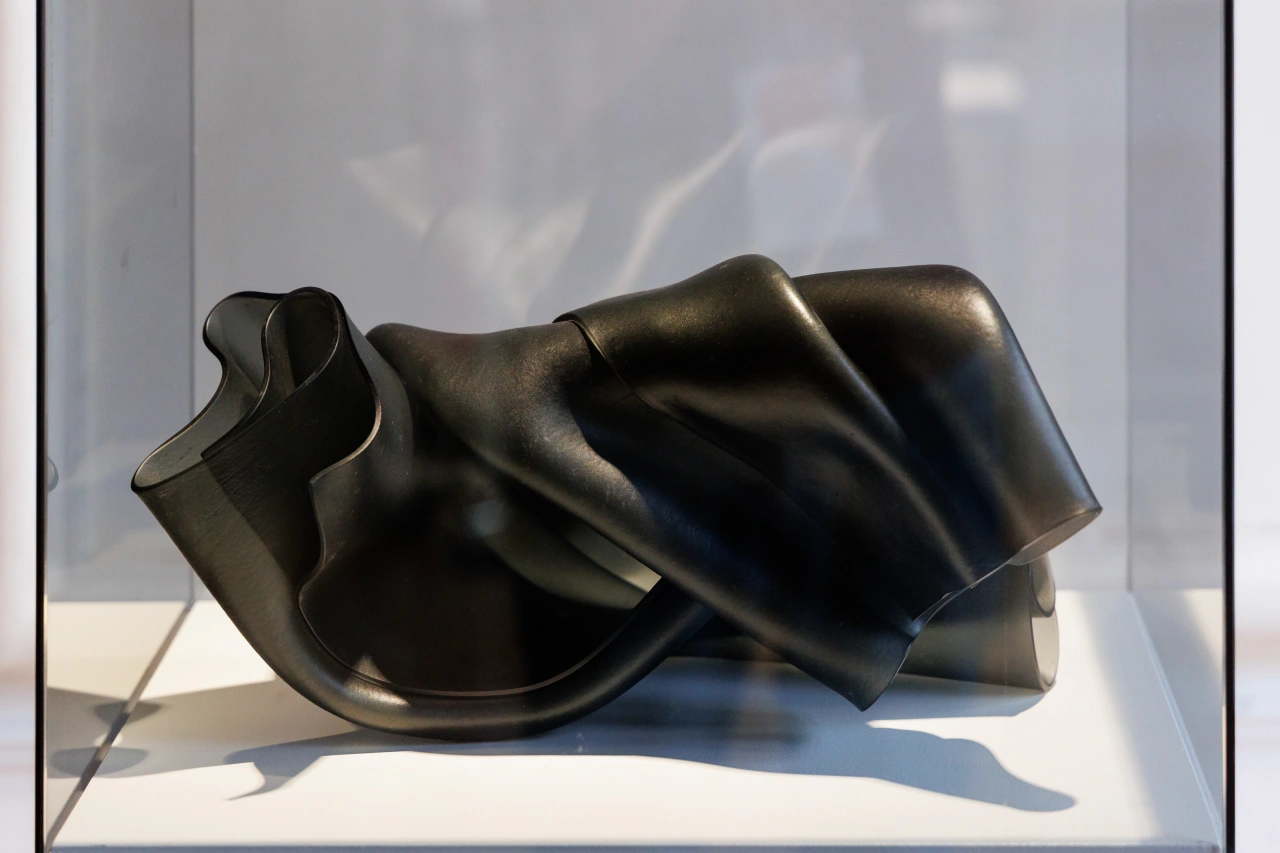
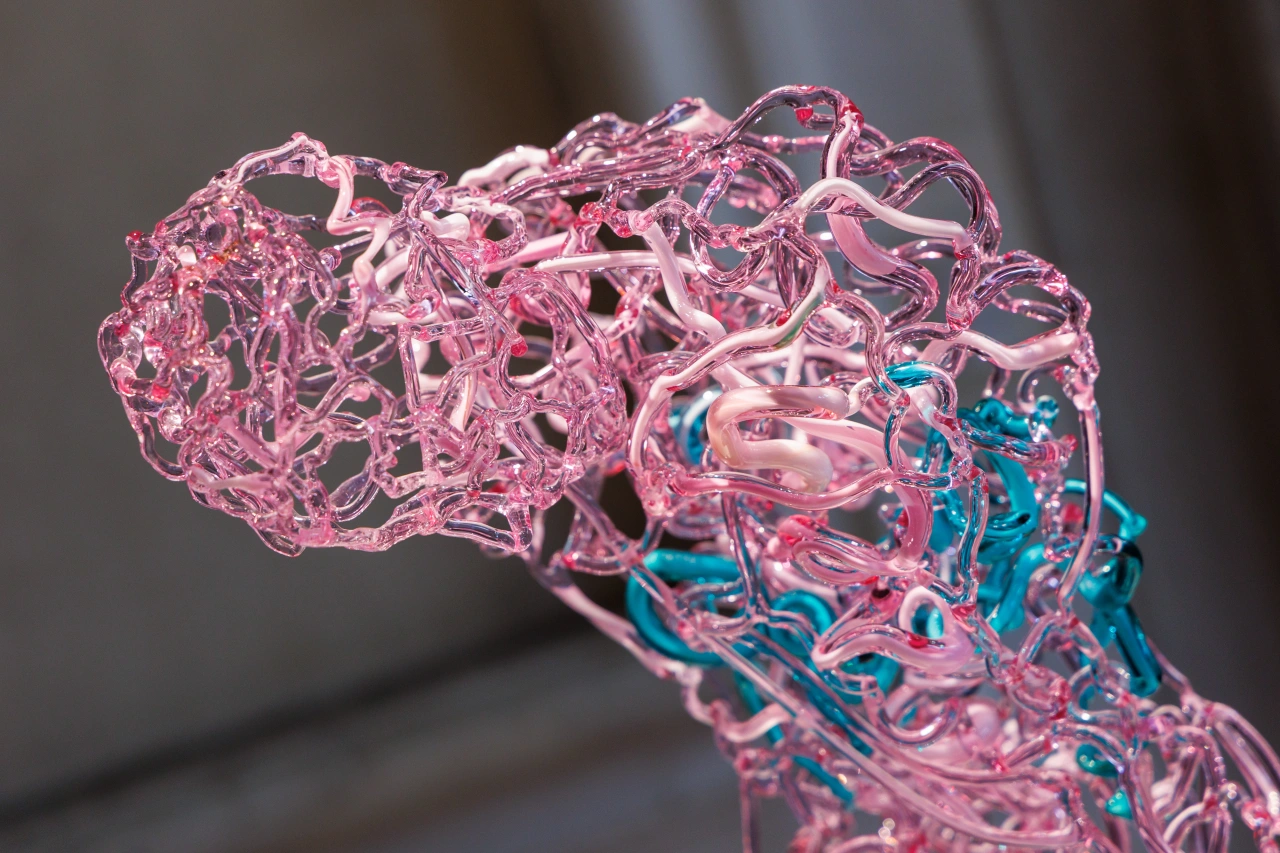
While for most of us, glass is either looked through or drunk from, the festival’s two central sites are more extraordinary and experiential. The Venice Glass Week HUB by Generali exhibition at Palazzo Morosini brought together 50 international artists and their work in striking settings. It contained works that could be worn, interacted with via VR, pieces that were so delicate their installation must have caused great anxiety (even walking past some, you held your breath), and imaginative vases, too sculptural in themselves to ever place something as obvious as a flower in.
This year, the Premio Arterìa award went to Marzena Krzeminska for her work Emotion. The work was praised for “Freeing Polish glass from its traditional decorative dimension and transforming it into an authentic sculptural language.” Its bending, controlled collapse, and material perception all contributed to a ‘great expressive intensity.’
The jury also awarded a Special Recognition to Eve Koha for Oblivion, recognising “The great technical complexity of the work, which reveals a remarkable command of glass’s expressive and structural possibilities, consistently approached from a contemporary perspective.”
Another piece worthy of attention was a shimmering heavy glass coat of 800,000 coloured beads. Dutch artist Floor Kasper’s wearable glass took more than two and a half years to string together and represents travel and change.
Meanwhile, the Venice Glass Week HUB Under35 introduced a younger cohort to the Fondazione Bevilacqua, behind St Mark’s Square. Here, 40 young Italian and emerging international glass artists were shown. More experimental than their senior peers, the exhibition offers an overview of what’s going on in the wider world of glass art today.
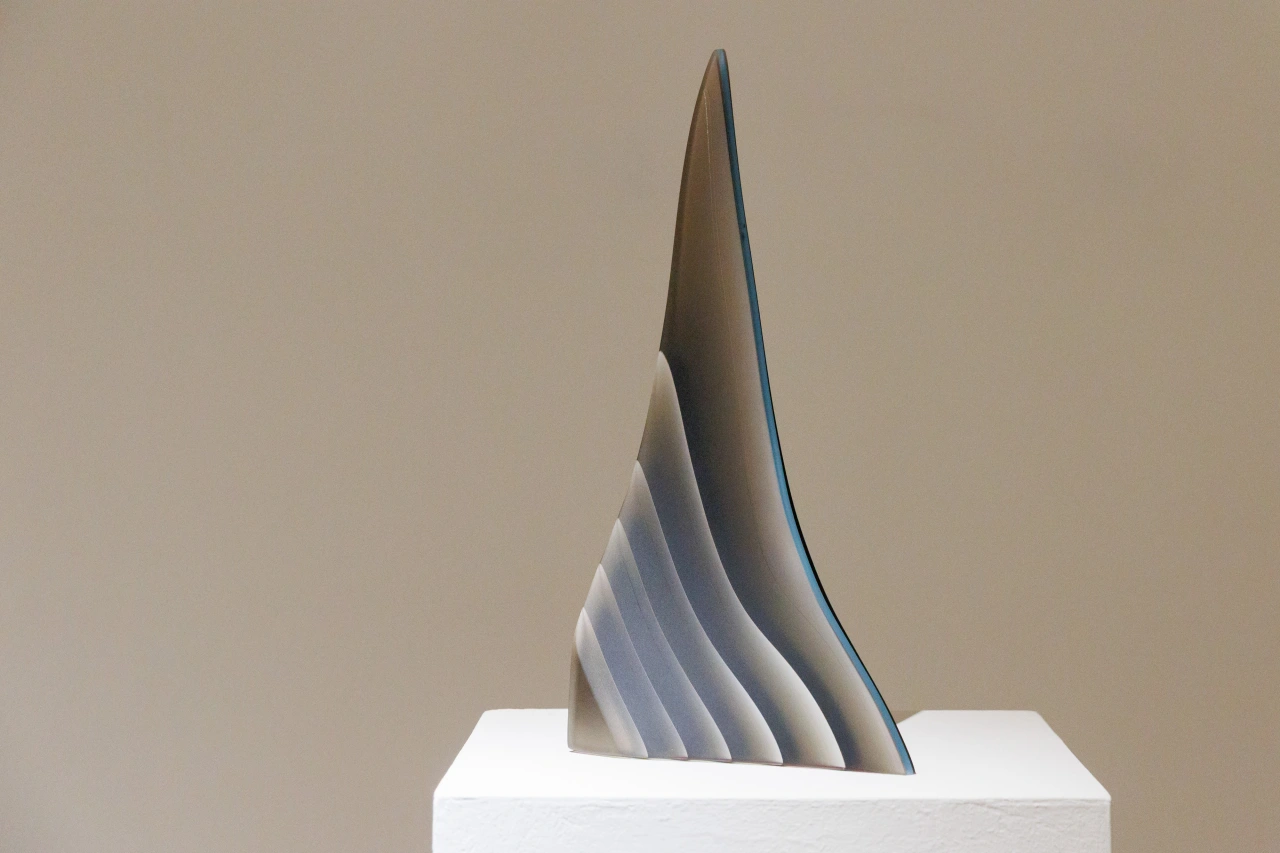
Hungarian artist Boldizsár Lukácsi was awarded the Premio The Studio – Corning Museum of Glass for their piece Crystal Charge. It’s a wave-like piece that rewards a slow circuit of the work. As light shines through it with varying intensity, a sense of movement is achieved by looking through the glass itself. The prize, also selected by a jury, includes a residency at the Corning Museum of Glass in New York.
Various themes inform the works. Time and matter, chaos and order, the body, public space, water and memory all appear in exhibition texts more than once, but what unites them in a way that is sometimes lacking in broader contemporary arts is the artisan skill involved. Glass is tricky to handle. It’s confounding; its ways take time to learn, its creation involves extreme heat and labour – this is not a creative place only of concepts. These are realisations of celebrated craftspeople. Whether decisions have been made carefully, or happy accidents and whims have, in part, carried the designs, these pieces all carry hundreds, if not thousands, of hours of experience.
Philanthropist and glass champion, David Landau, suggests that “Murano glass should not be presented as a souvenir or simple decorative craft. It should be presented as art, design, technical experimentation and living cultural heritage.” It is this ethos that drives the festival. Against a climate of falling sales and interest in Murano glass a decade ago, the event has turned the tide, increasing footfall around the island and productivity throughout the region. More glassware is being created and bought, more collectors are invested in the culture, and the sprawling festival proves the industry is in rude health.
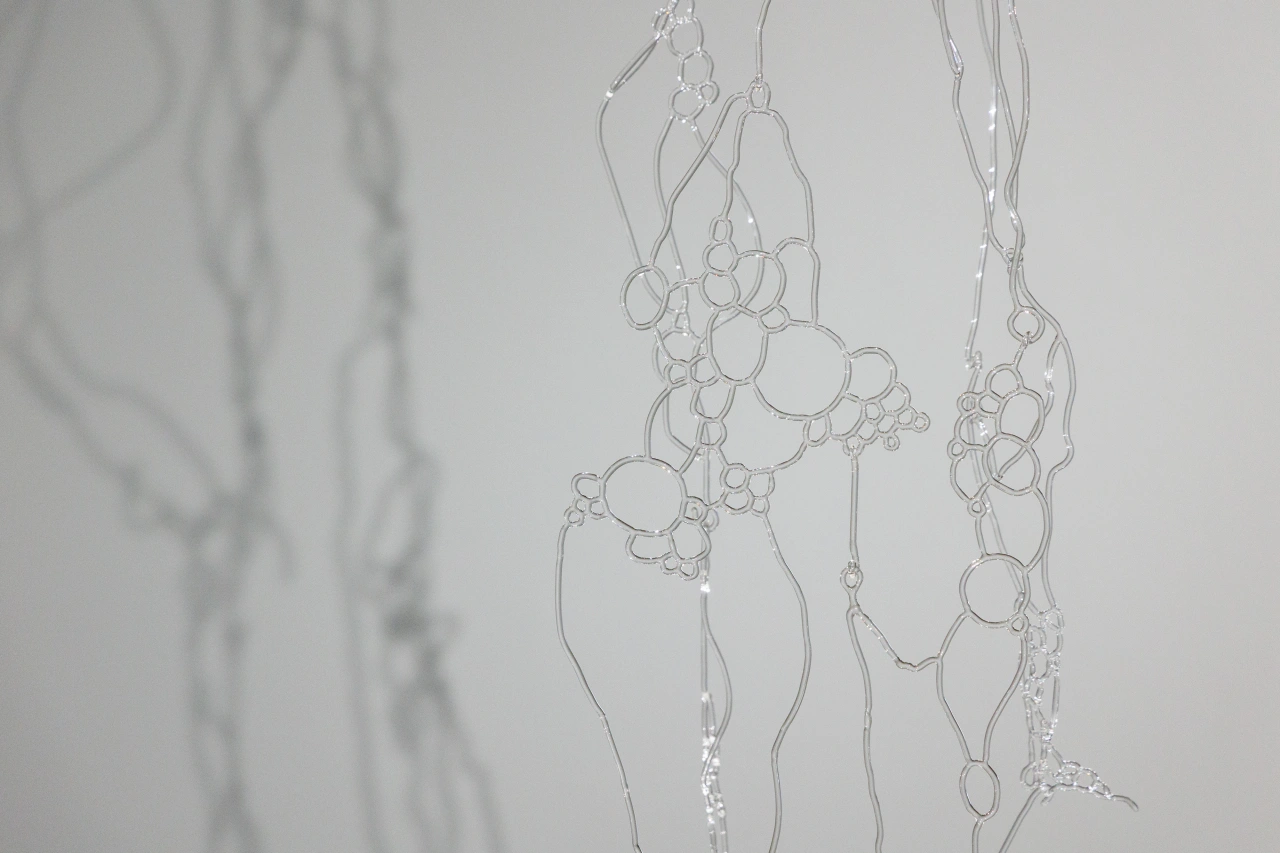
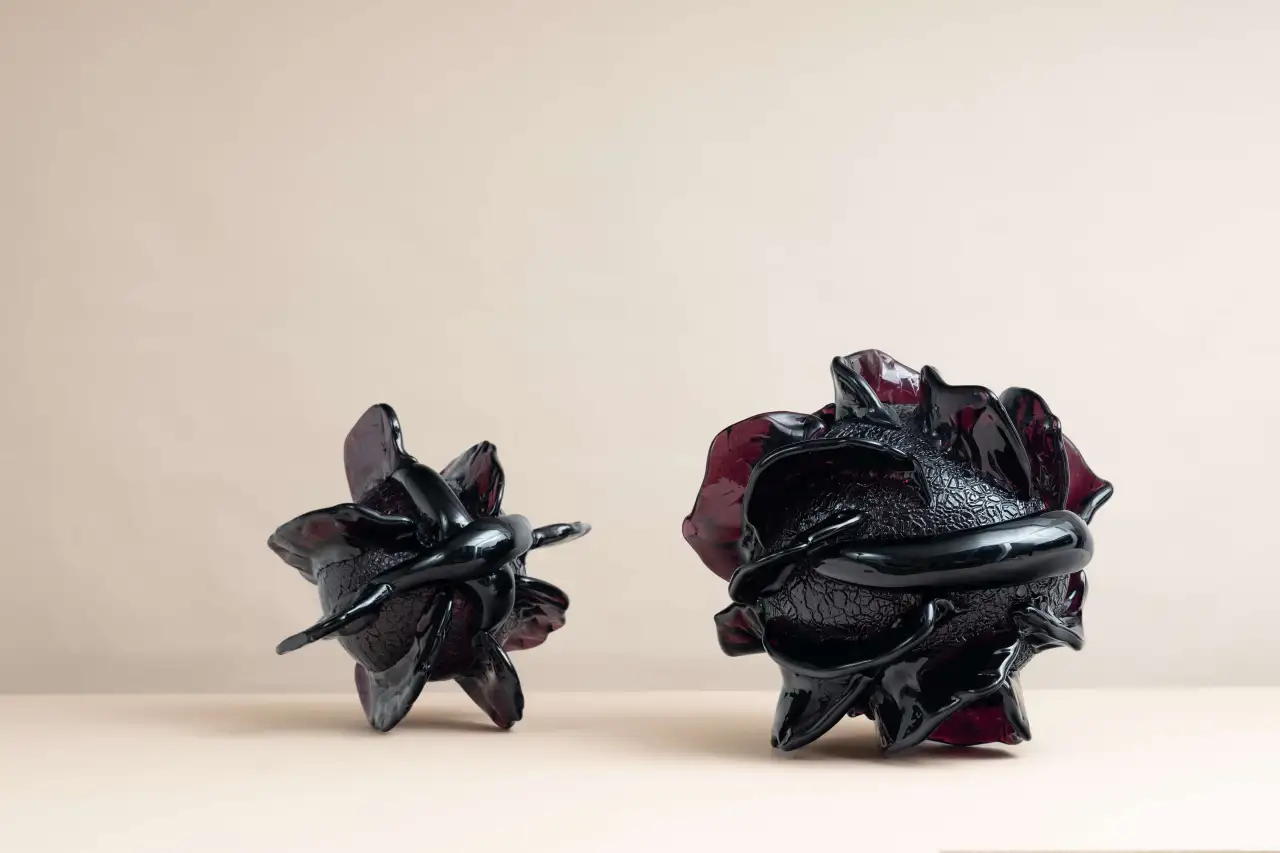
A boat ride away, on San Giorgio Maggiore, yet another festival is currently being held in The Floating City. This year’s edition of Homo Faber (meaning ‘man the maker’) is titled An Island of Light, and heralds Es Devlin as artistic director. Among a vast presentation of international craftspeople and specialisms, glass features significantly, and local artist Michela Cattai is showing her ContemporaryMateria, 2026 collection. Widely exhibited internationally, her works are crafted by Murano masters, still a very traditional male role, consisting of blown organic forms with fin-like appendages. Her use of opacity and transparency has been particularly celebrated.
They also serve as a great analogy for the festival as a whole. The Venice Glass Week is a wonderful celebration of form and material. It is an excuse to wander one of the world’s most unique cities, and wonder at the beauty around each corner. Sculptural glass objects reward slow, close looking. They harbour hidden truths that reveal themselves in changing light, like the city that hosts this celebration; this is truly Italy’s heart of glass.