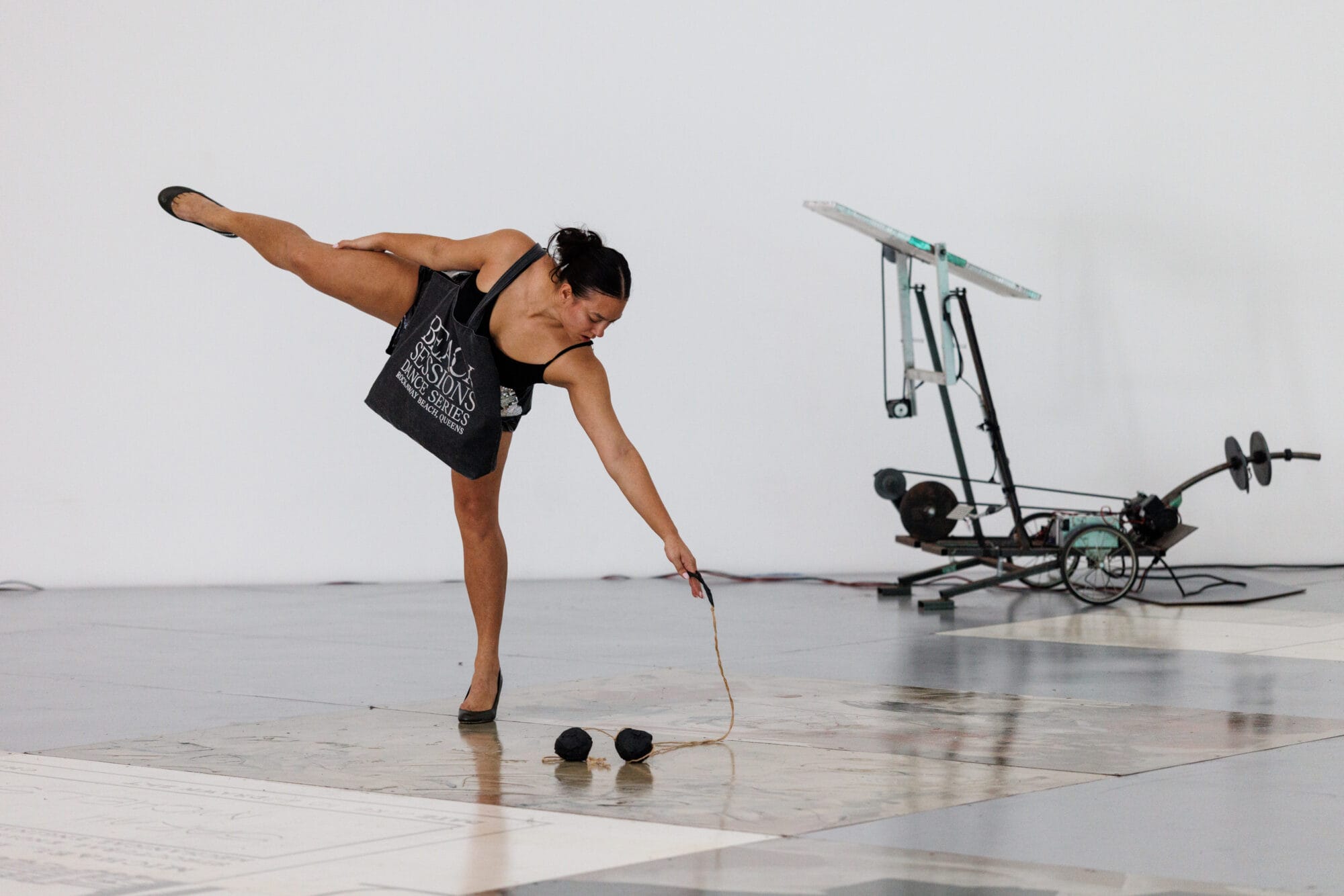
What does it mean to make a life in dance? Sometimes it just means not having any money — as in the white duffel bags emblazoned with the words “Dance | Debt” carried everywhere by the dancers in Sarah Michelson’s nowhere, which will be performed daily at the Museum of Modern Art through October 11. Like a lot in Michelson’s universe, the bags are pointedly direct in a way that disarms as much as it withholds. There’s a charm to the implicit self-effacement that, like oil in water, is agitated by the reality that you’re looking at a highly stylized object within a highly stylized landscape. (The French luxury fashion house Maison Margiela is thanked in the project acknowledgments.)
The performer Juli Brandano described nowhere as “essentially a 25-day dance.” I attended seven performance hours across the dance’s first two days, and bore witness to a slippery haberdashery of objects, sound, projection, and movement that consistently resurfaced in new variations. The stuff of a life in dance is everywhere you look, in a way much in keeping with a choreographer known for stealing from no one more than herself. In nowhere, Michelson’s autocannibalism is on steroids — the very first note I took reads “the endless self-referential tunnel/wormhole/abscess/parade.” We sit on stools wrapped in tape branded with the names of two theaters most associated with Michelson’s work. Parts of the marbled floor are taken from her work “4,” performed at the 2014 Whitney Biennial. Projected dancers, objects, and images waft across the atrium walls like seltzer bubbles from the water of Michelson land, including a cartoon Nicole Mannarino doing split jumps and squats, just as she did in the very same atrium space 14 years ago for Michelson’s “Devotion, Study #3” (2012).
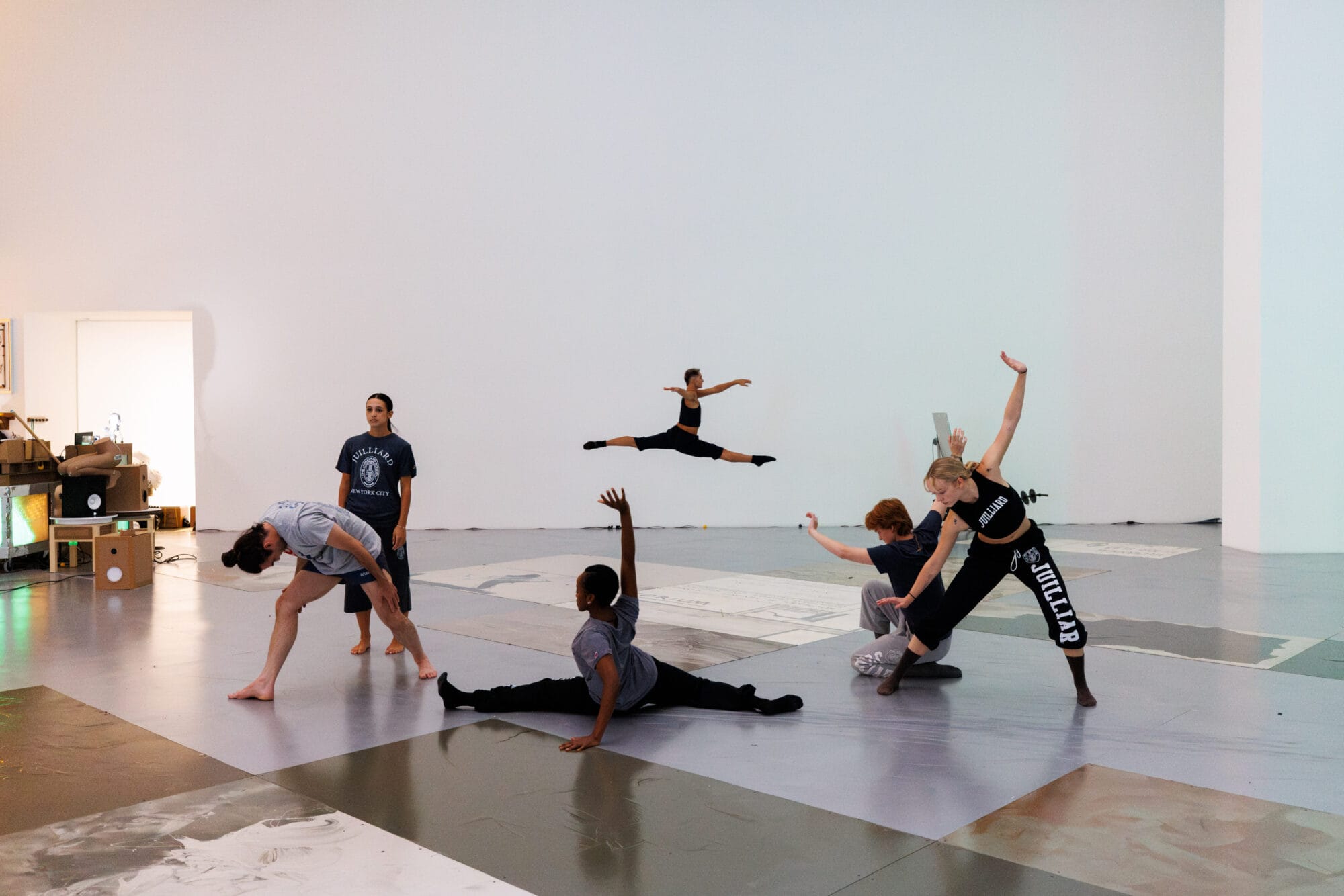
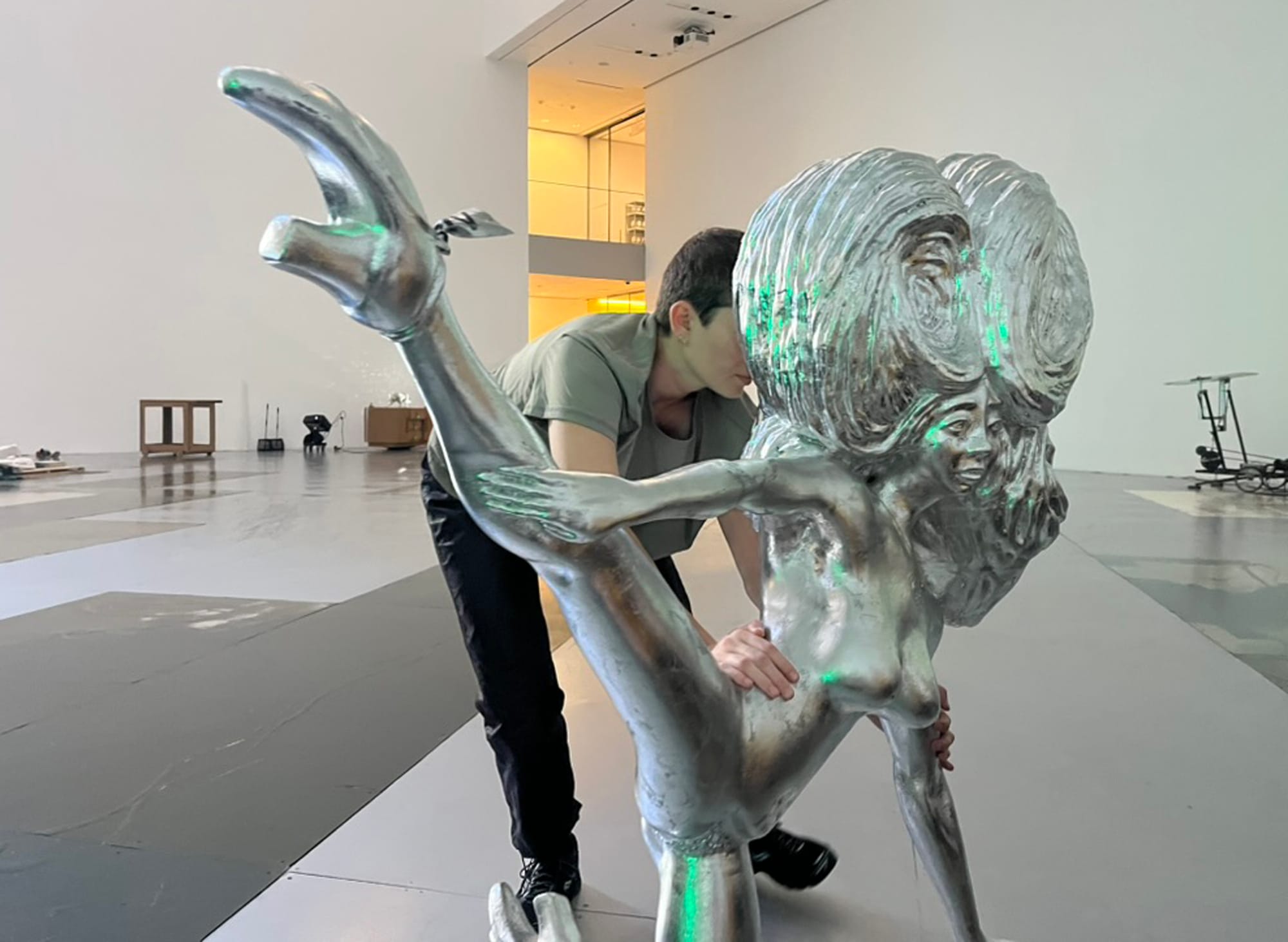
Asking what is new about nowhere is maybe not the point. Certainly, there are things this writer hasn’t seen before: Michelson herself, pressed against the wall in a lackadaisical, soupy dance of joints and limbs, as a hidden machine shoots ping-pong balls at her. Or when performers Lauren Bakst and Juli Brandano appear wheeling two large silver sculptures of women dancers, legs outstretched. Like Degas’s ballerinas respun for the 21st century — at times quite literally, as Bakst and Brandano spin the sculptures to the soundtrack of Dolly Parton’s “9 to 5” — these sculptures gleam with challenging questions about dance and dancers. Their showgirl hair and bodacious bodies evoke the way dancers have been rendered as sexual objects since time immemorial; unlike Degas’s ballerinas, who retreated furtively to a backstage salon haunted by horny male benefactors, Michelson’s silver women tell it like it is.
One wears a necklace that spells out “cunt.” The other bears a tattooed heart bearing the words “RIP Steve Paxton.” They’re totems to dancers, whom Michelson elevates with a near-spiritual reverence, while also demanding of them a grueling, almost sadomasochistic commitment to difficulty and repetition. It’s all fetish play, but delicately so: The effort is never brandished in our faces. It is simply hard work. Dancer John Hoobyar, engaged in a series of never-ending forward rolls and then a series of never-ending jumps, never lets us see his face; never lets us transform his toil into a magisterial portrait of suffering. Instead, it’s something else. Something stranger.
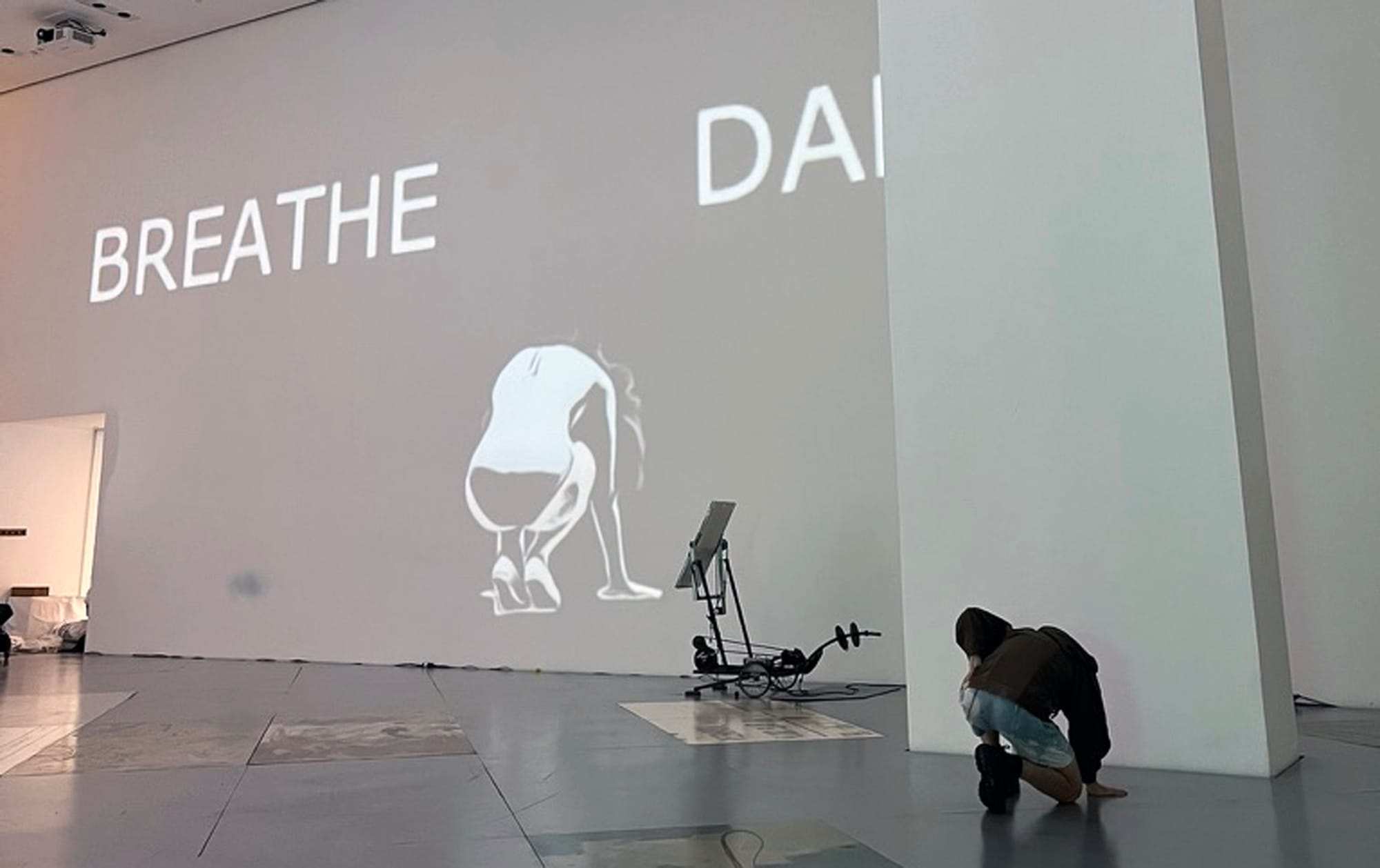
Choreographer Alexa West told me Michelson is in her “meta period.” nowhere is not a dance about dance; it’s about a lifetime of making dances with dancers, including this brief stop at the Museum of Modern Art. Michelson talks to the audience frequently, often explaining what is happening, but never explaining why. The logic of nowhere is both completely transparent and totally impenetrable, and hovers in a kind of affective flaccidity that doesn’t let you interpret it in any one way. Unlike Sontag, Michelson is not against interpretation; she is simply beyond it. nowhere seems pointedly disinterested in how its audience digests it, and whether or not this is a problem may depend on where you sit. When I brought the lighting designer Adam Silverman along for an afternoon, he frequently turned to ask me, “Is she pulling our leg?” Indeed, nowhere feels like a cosmic joke. The butt of the joke is nowhere to be found — is it us? Is it MoMA? — but there are butts aplenty, cast as sculptures that revolve slowly in the periphery. There’s also a fake cigarette smoked with all the passion of a dead fish.
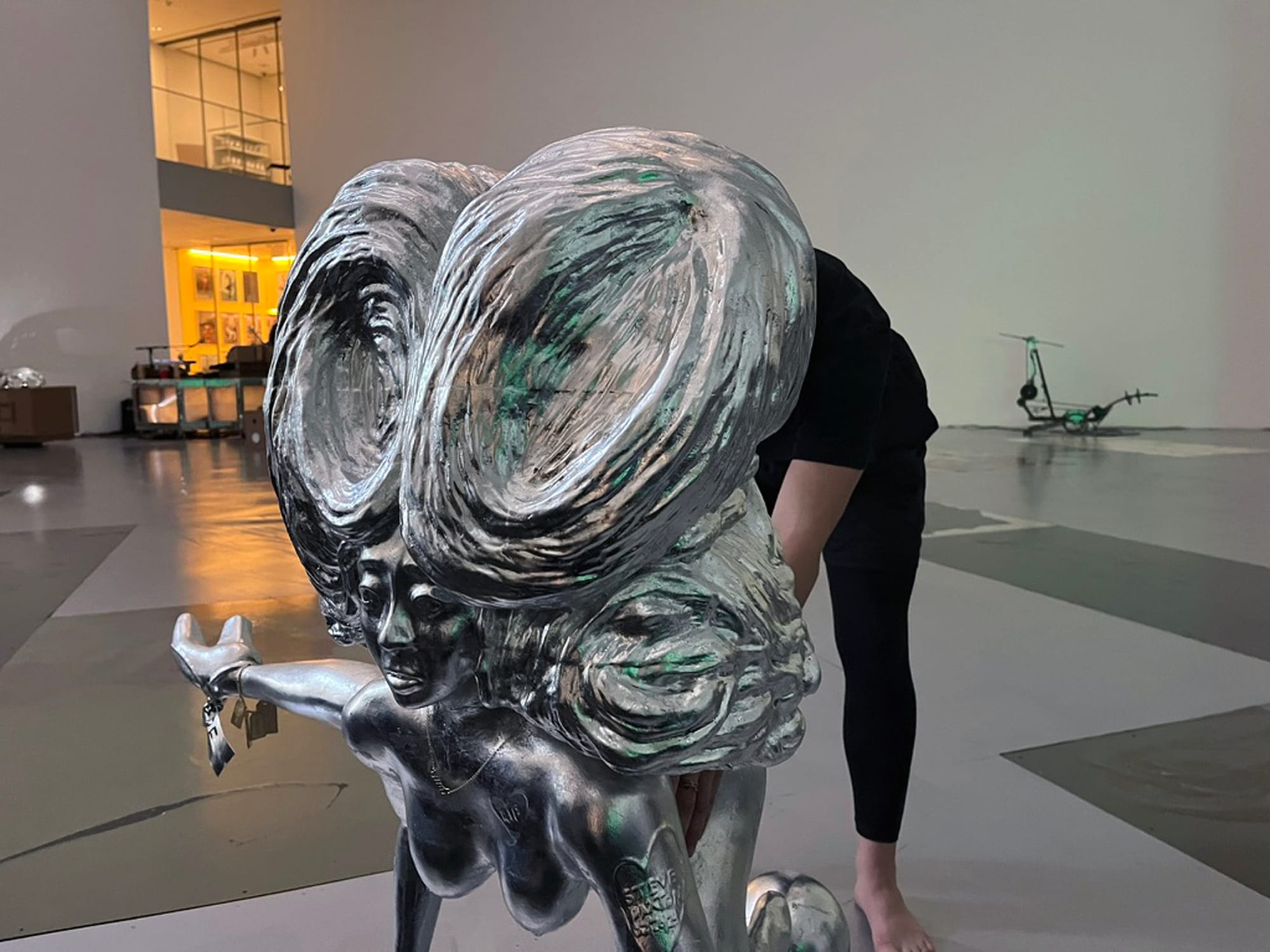
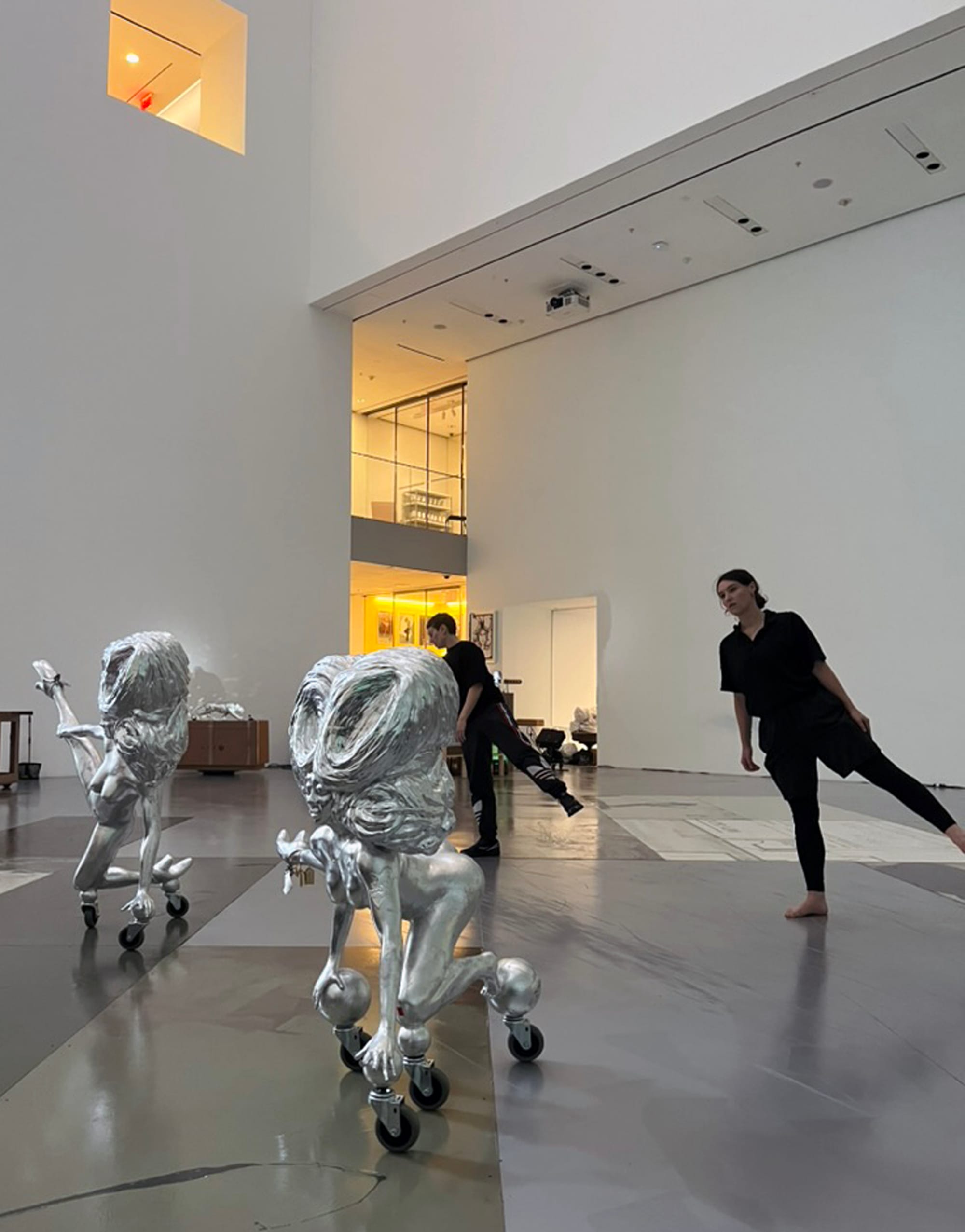
Left: Juli Brandano in Sarah Michelson, “nowhere” (2026); right: Lauren Bakst and Juli Brandano (left to right) in Sarah Michelson, “nowhere” (2026)
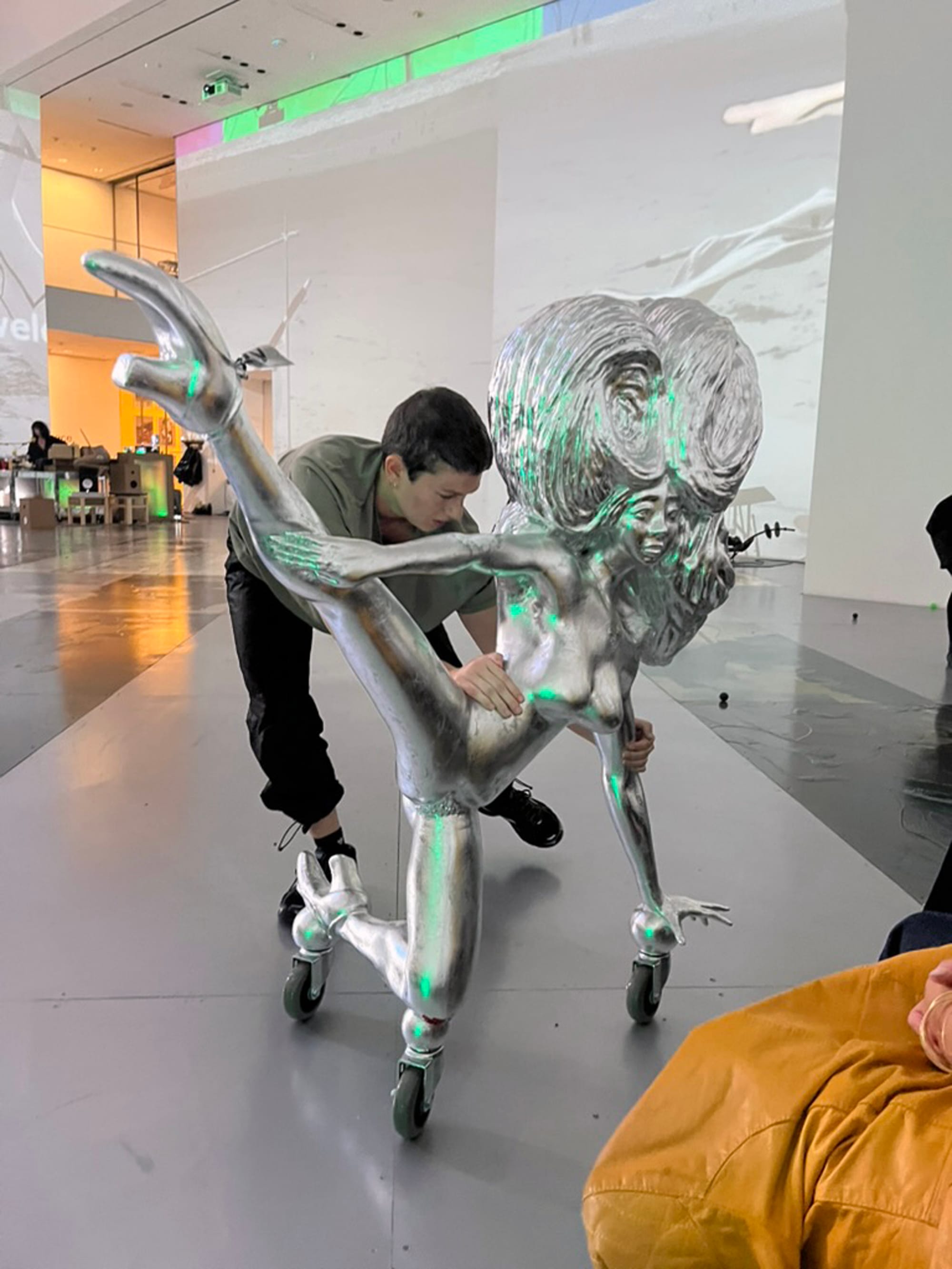
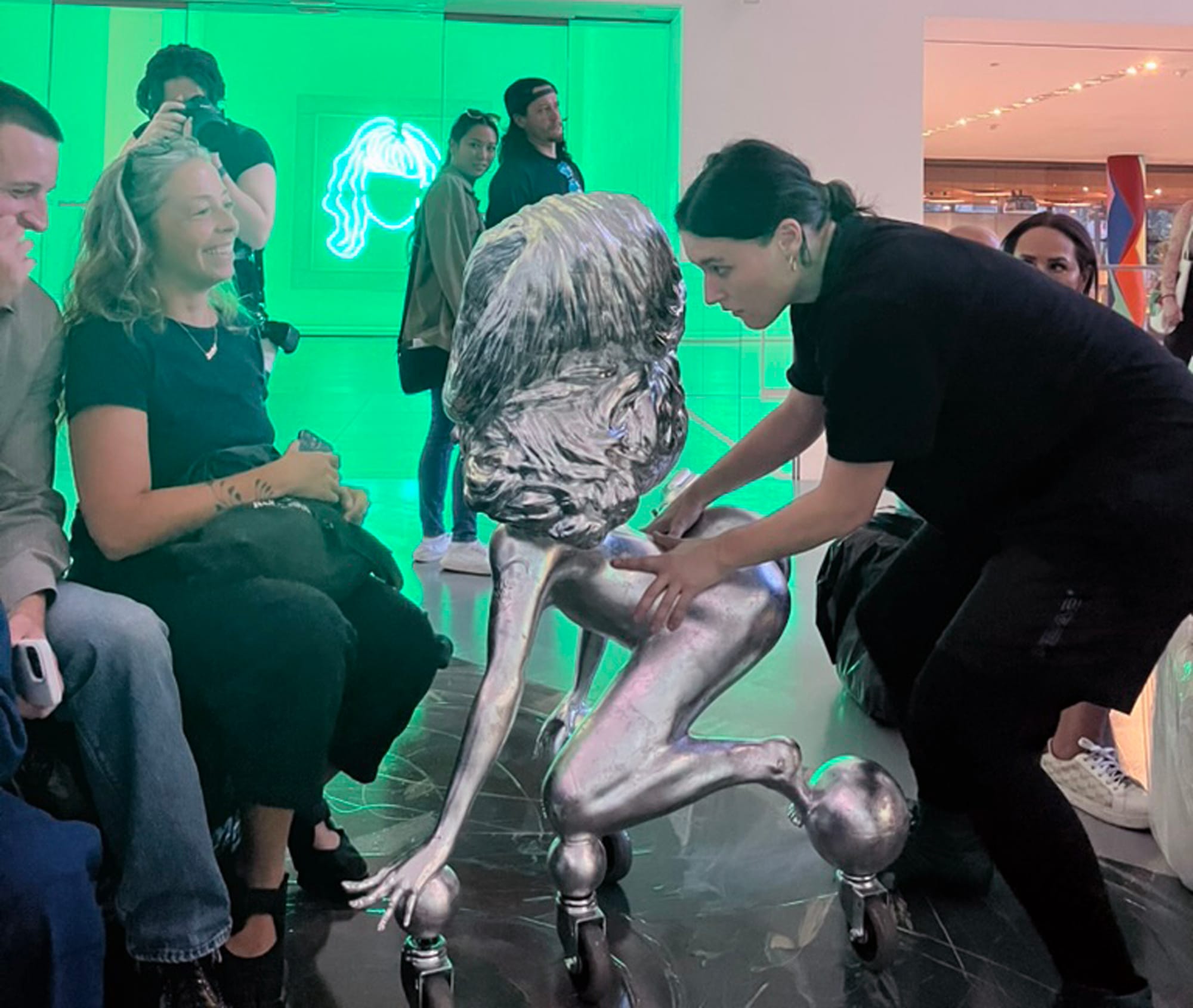
Left: Lauren Bakst in Sarah Michelson, “nowhere” (2026); right: performer Juli Brandano with audience members
It will be interesting to observe how nowhere embraces or resists change across its 25-day lifespan. The work distends time, with some actions left for us to chew on until the gum has lost its bite and its juice, and others that depart almost immediately, sweet in the knowledge of their being missed. It’s a temporal system that leaves you feeling both relaxed and curiously hooked, anxious about making even a brief trip to the bathroom in case you miss something fun. Michelson’s cunning and ambition are evident in the devilish grace with which she choreographs both the time of nowhere as well as its motley assemblage of actors.
I left thinking that perhaps nobody will be able to soak in the entirety of this mammoth dance except Michelson herself — a constant presence, a recalcitrant yet loving lodestar. Perhaps, for a choreographer notorious for maintaining her privacy and secrecy, it’s her way of dealing with the hyperpublic nature of the Marron atrium. Thousands will see the dance, but only she will really know it. Is this the final joke? In any case, Michelson is there, sitting right in front of me, and I have never seen a smile so beatific. She turns around and asks me, “so what do you think?”
Sarah Michelson: nowhere continues at the Museum of Modern Art (11 West 53rd Street, Midtown, Manhattan) through October 11. The exhibition was curated by Ana Janevski and Martha Joseph with Sibia Sarangan, and produced by Kate Scherer and Olivia Rousey.