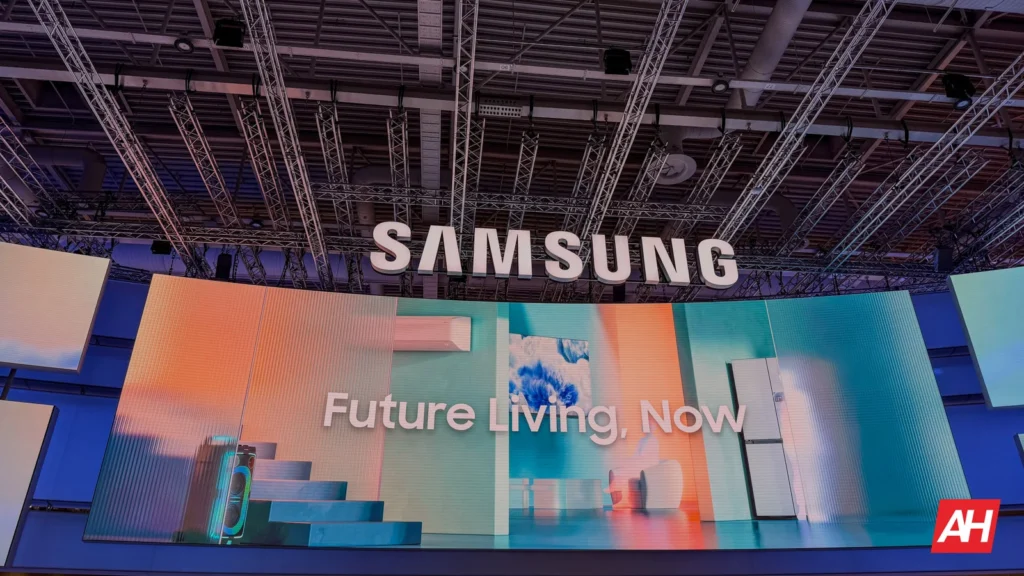

6G is going to be the next generation in mobile connectivity. Obviously there are going to be massive improvements in terms of speeds, but there’s more to 6G than just faster downloads. It can be used to actually physically sense people in an area, and together with Verizon, Samsung has successfully run a trial on that piece of 6G technology.
Samsung, Verizon successfully trial 6G technology
For those unfamiliar with what we’re talking about, we’re referring to Integrated Sensing and Communication (ISAC). This is actually going to be part of 6G and what it does is that it uses wireless signals to identify potentially crowded areas. And working together with Verizon, Samsung ran a successful 6G trial using existing infrastructure.
According to Samsung, “In the ISAC trial, Samsung integrated commercial AI-powered vRAN and vCore with an ISAC application, deploying them on its Network in a Server (NIS) — an end-to-end software-driven edge-AI platform that consolidates all network functions and accelerated compute into a single server. This allowed the ISAC trial to leverage connectivity from a 5G network without the need for any additional equipment.”
They also used a CBRS radio unit using 40MHz of spectrum mounted on a Verizon Cell-On-Wheels setup. This acted as a sensing receiver to capture channel variations from nearby 5G smartphones. Then, with Samsung’s NIS, it analyzed the signals to generate a crowd density heatmap.
So, what’s the point?
Like we said earlier, 6G is going to be more than just about faster internet connectivity. With technologies like ISAC, 6G can help in other ways. For instance, the heatmap it generated can be used by carriers to determine how crowded an area is and optimize network performance. For instance, it could redirect bandwidth from less crowded areas to more crowded ones.
It could also come in handy for event organizers trying to get an idea of crowd distribution. Attendees to events might also be able to use it to find areas that are less congested. There are also security applications, like identifying potential risks of overcrowding for better crowd control.
That being said, it could be a while before 6G hits the market. Some, like Qualcomm, estimate that it could arrive by 2028, but we’ll have to wait and see.
The post Samsung, Verizon 6G Trial Shows Networks Doing More Than Just Connecting appeared first on Android Headlines.