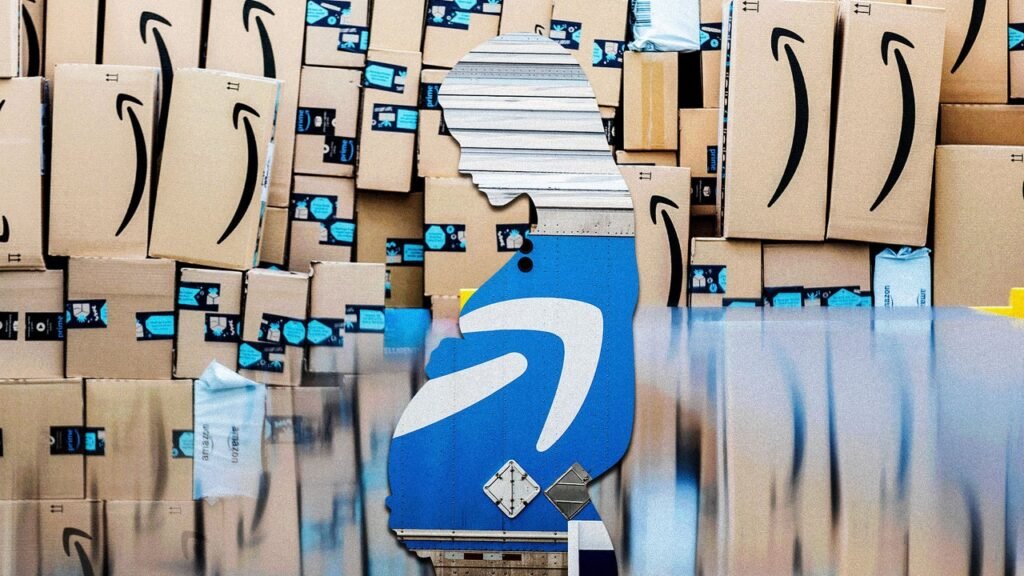
Amazon is once again under fire for its work policies, this time with a new class-action lawsuit filed against the retail giant on Tuesday that alleges the company has failed to make basic workplace accommodations for its pregnant employees.
The lawsuit, filed in a Brooklyn federal court, alleges that the Seattle-based company has engaged in a systematic and company-wide failure to accommodate pregnant workers and deliberate policies of retaliation against those workers. The four named plaintiffs, all of whom were formerly employed at Amazon warehouses in New York, detail instances in which they claim they were denied work accommodations and subsequently disciplined or fired for terminated or retaliated against during their pregnancies.
The Pregnant Workers Fairness Act, which was signed into law by President Joe Biden in 2022 and went into effect in 2023, is key to this proposed nationwide class-action lawsuit. That legislation requires employers to provide “reasonable accommodations” for qualified employees affected by pregnancy, childbirth, or related medical conditions.
The new lawsuit alleges that Amazon’s policies violated the law in two ways—by requiring a pregnant worker to provide a doctor’s note before the company will provide even basic accommodations and by failing to account for legally protected pregnancy-related breaks. The plaintiffs are represented by Emery Celli Brinckerhoff Abady Ward & Maazel, LLP, a civil rights law firm, and A Better Balance, a nonprofit advocacy organization, both of which have previously been involved in legislation against the retail giant.
“As our lawsuit details, Amazon regularly violates the law. Under its policies, pregnant workers are not protected, and they face retaliation for exercising their rights,” Debbie Greenberger, a partner at Emery Celli Brinckerhoff Abady Ward & Maazel, LLP, said in a statement. “Too often, pregnant women working at Amazon warehouses have to risk their health or their pregnancy just to do their jobs.”
An Amazon spokesperson told Fast Company the company conducted “thorough” internal reviews of each of the cases referenced in the lawsuit and noted that some of the details laid out in the suit contain inaccuracies and omit important details, without providing specifics. The company also noted that in the past year, 99.9% of pregnancy accommodation requests have been approved.
“Ensuring the health and well-being of our employees is one of our greatest responsibilities, and we strive to provide a safe and supportive environment for everyone, which includes supporting tens of thousands of employees with pregnancy accommodations each year,” Kelly Nantel, an Amazon spokesperson, said in a statement to Fast Company.
AMAZON’S POLICIES UNDER SCRUTINY
Amazon states on its website that it has a mission to be “Earth’s most customer-centric company, best employer, and safest place to work.” But a long list of lawsuits and other complaints over the years have contested the latter two points, in particular.
There are currently dozens of open cases against the company with the National Labor Relations Board and the Equal Employment Opportunity Commission (EEOC) for a broad range of alleged violations against workers. And the new lawsuit is hardly the first time that its treatment of pregnant workers has come under scrutiny.
In October 2025, New Jersey filed a civil rights lawsuit against Amazon, alleging it systematically violated state civil rights and pregnancy protection laws across its fulfillment centers, while New York made a similar complaint in 2022 that the company engages in discrimination against pregnant workers by denying them reasonable accommodations.
Earlier this year, the EEOC determined that Amazon had violated both the Pregnant Workers Fairness Act and the Americans with Disabilities Act. In February, the commission determined that the company had discriminated against Jennifer Hatch, one of the plaintiffs in the class-action lawsuit, by failing to provide her with pregnancy-related accommodations.
That same determination noted there was “reasonable cause” to believe the company had likewise discriminated against “a nationwide class of female warehouse associates” since 2023. The three other plaintiffs in the lawsuit similarly filed complaints against Amazon with the EEOC.
A BIGGER THREAT
As the new lawsuit notes, the four plaintiffs are likely indicative of a bigger problem with how Amazon treats its pregnant workforce. The suit seeks reforms of Amazon’s policies on behalf of the plaintiffs and a class of “similarly situated workers,” as well as compensation for past and ongoing violations of the law.
The number of affected workers will likely go up as word spreads about the possible class-action lawsuit and the filing notes that A Better Place fielded calls from “dozens” of pregnant Amazon employees in 2025 who said the company had denied them basic accommodations. So far this year, nearly 200 Amazon workers have called the organization’s free helpline, as president Inimai Chettiar told USA TODAY.
While Amazon may be the focus of this lawsuit, it’s not an isolated incident and speaks to what’s at stake if critical protections for pregnant workers are rolled back, according to Chettiar.
“It actually sits inside a larger pattern of policy and rhetoric aimed at narrowing women’s roles and pushing them out of the workforce and back into a domestic role,” she told USA TODAY.


