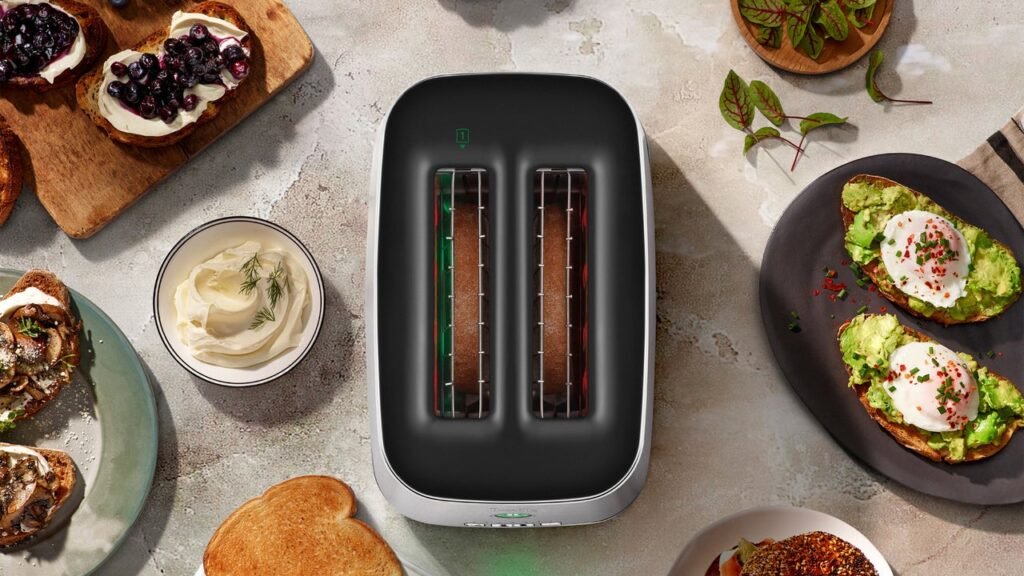
After 10 years of design and development, the appliance maker Breville has just released a $300 toaster that the company believes will revolutionize the category. The Eye Q Auto Toaster, now hitting stores in the U.S., rethinks the core process behind making a piece of toast. Instead of applying heat for a set amount of time, Breville’s Eye Q toaster uses optical sensors and advanced algorithms to see when bread has been toasted just the right amount.
For Breville, an Australia-based company that has been making kitchen appliances for almost a century, this proved to be an unexpectedly complicated paradigm change. “We don’t mind a challenge, but if somebody had said to me it’s going to take 10 years to develop a toaster at the beginning of this project, I would have thought, you’re crazy, we shouldn’t do it,” says Tom Groundes-Peace, Breville’s senior global category manager and head of research.
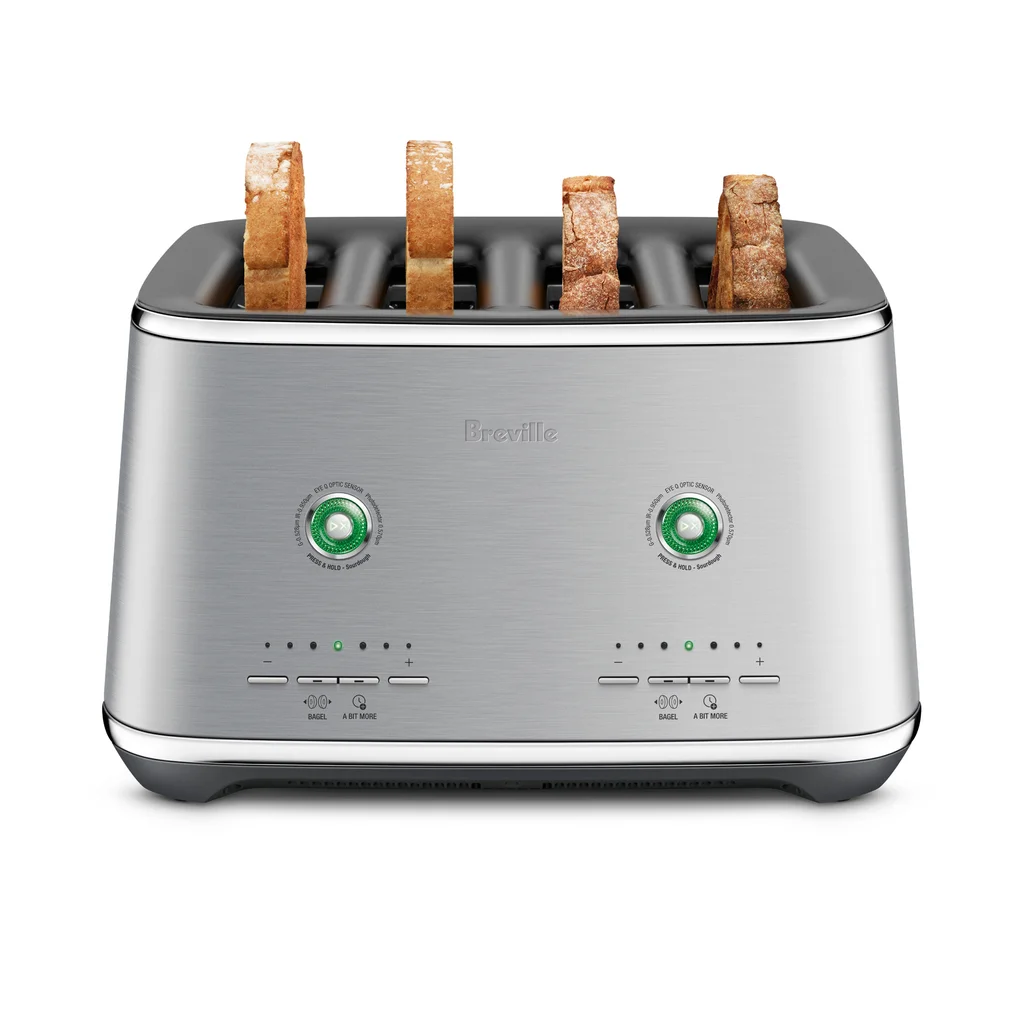
But the company couldn’t stop thinking about the inherent shortcomings of traditional toasters. “Every toaster in the world up until this point has just used time as its proxy for toasting,” Groundes-Peace says. Timing a toast only works, however, if what you’re toasting is always the same. According to Breville’s research, many homes toast multiple kinds of breads in a given week or day, from white to wheat to bagels to sourdough. “Different bread, different amounts of time,” Groundes-Peace says.
The look test
Toasting may be the bare minimum of culinary acts, but Breville’s product designers have been working for decades to make even this simplest of kitchen tasks easier for people. The company introduced the “A bit more” button in 2007, which puts undertoasted bread back in the heat for another 30 seconds. In 2016 it created a toast type selector, with preset toasting times for different breads.
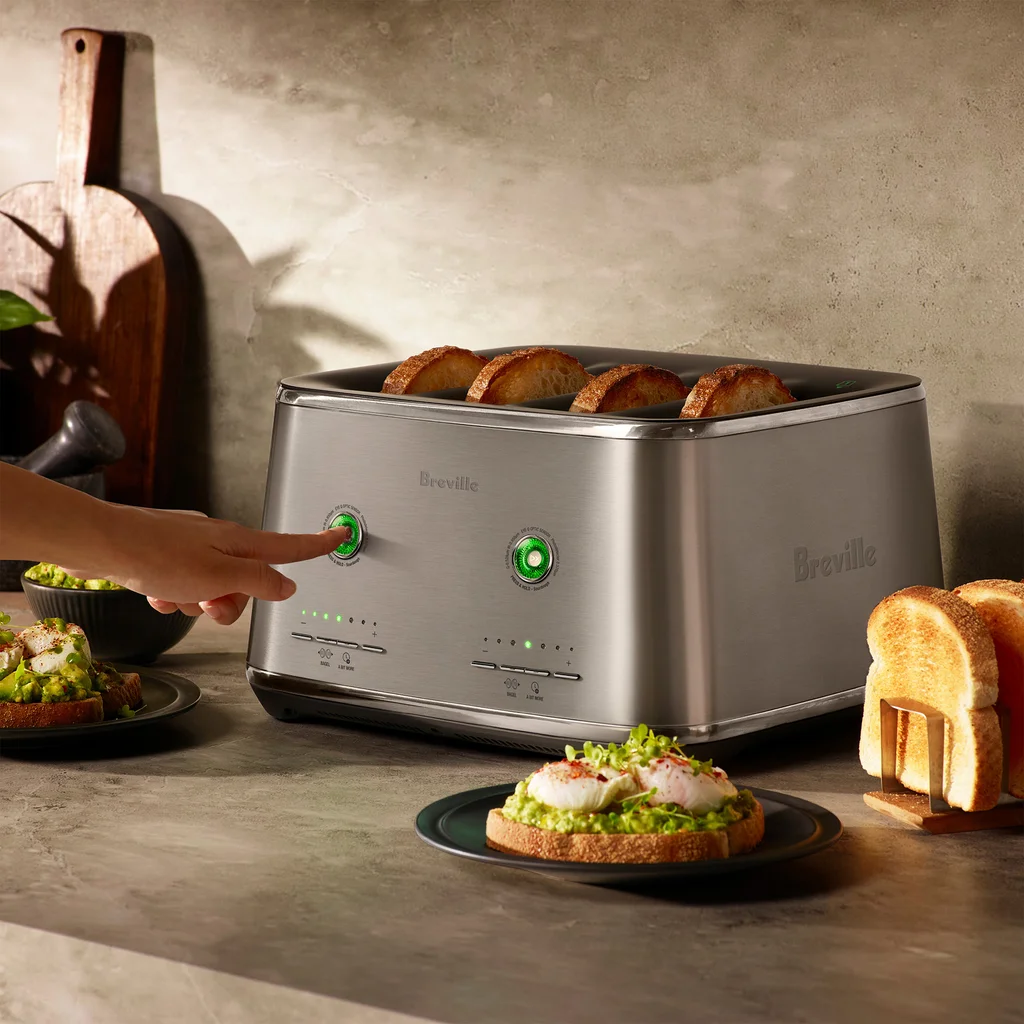
But even these advancements in toasting couldn’t match the ultimate test for toastedness. “How do you check that your toast is done? You look at it and you go, is that brown enough, or do I want to toast it a little bit more?” Groundes-Peace says. Breville wanted to bring that look test into the toaster itself.
So, a decade ago, the company set out to create a toaster with its own set of eyes.
How the Breville Eye Q toaster works
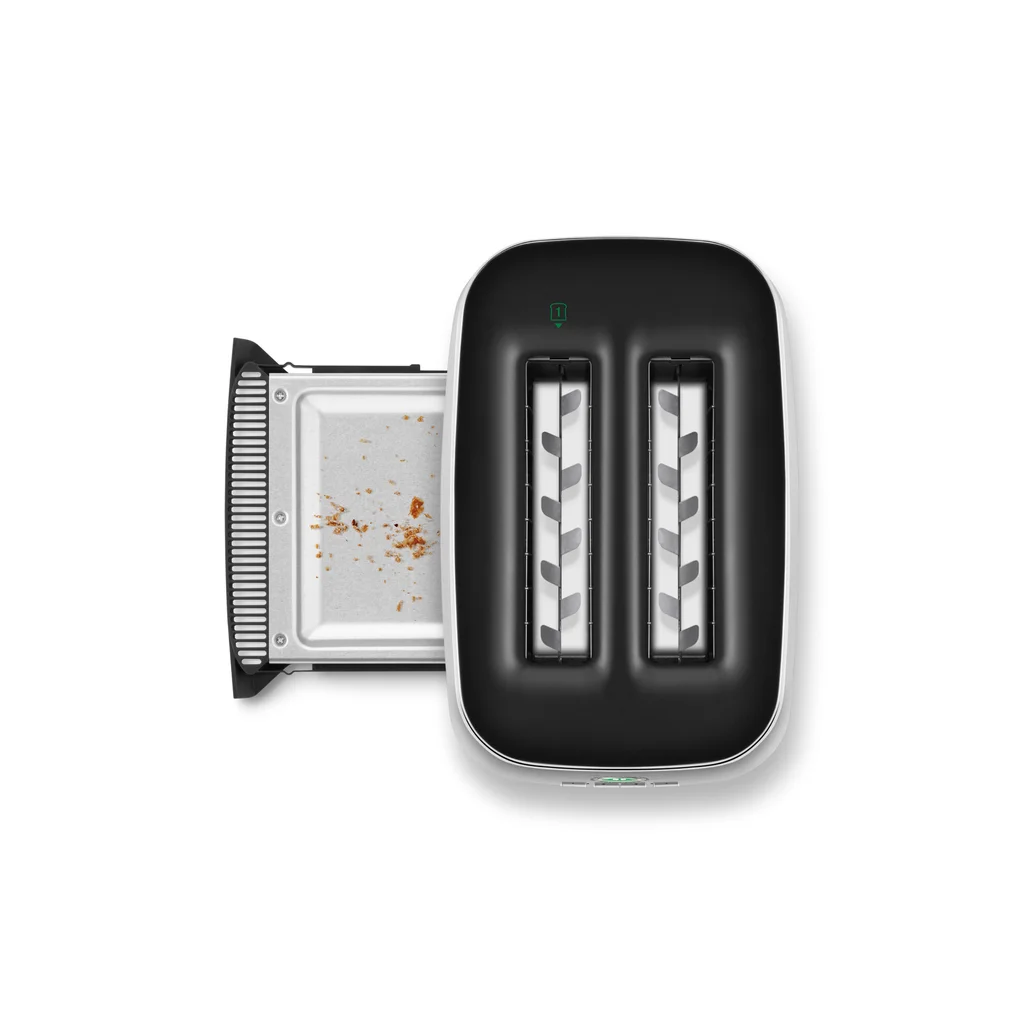
The Eye Q toaster has two optical sensors built inside its shell. Tucked between one side of the toaster and the heating element, two small sensors peek through tiny rectangular holes at the bread as it sits at the bottom of the toasting cavity. Green lights flash 10 times a second through those holes, bouncing light and infrared wavelengths off the bread and back to the sensors, which measure the rate of color change in the bread. The toaster has seven built-in darkness settings, and the sensor data feeds into specially developed algorithms that know when the amount of color change is enough.
Thousands of data points may seem like overkill for toast, but Groundes-Peace says the difference between a perfectly toasted slice of bread and a burnt one can be measured in moments. “If you don’t catch it quick enough, if you’re not reading the data quick enough, you miss the target and it burns,” he says.
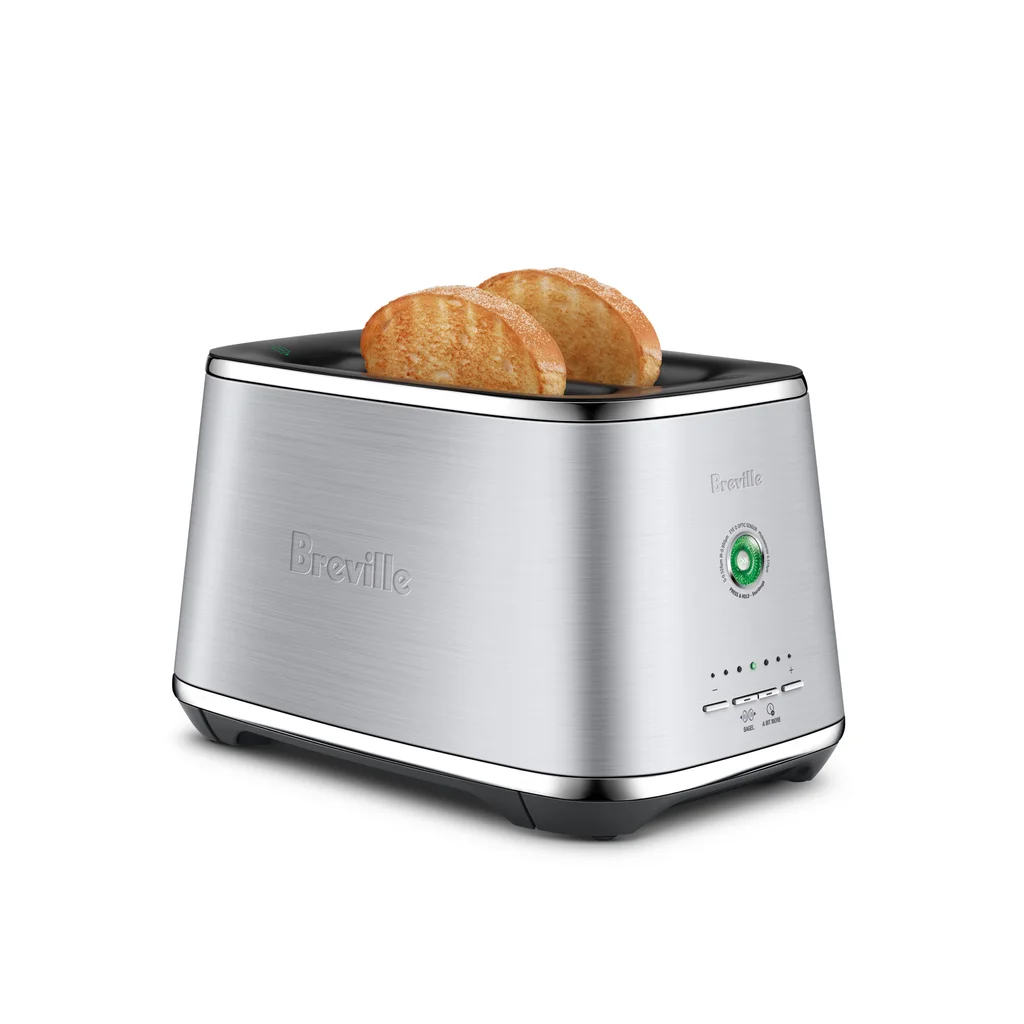
Using a borrowed Eye Q Auto Toaster that Breville had mailed to me, I toasted a spectrum of breads and bagels, from a pale sourdough to a seeded multigrain to a grainy bagel. Trying the lightest, middle, and darkest settings, the various breads came out browned but not burnt. The interface is simple, with only a few setting buttons and a large start/stop button. The one slight upturn in the learning curve is remembering to use the correct slot for a single-piece toast session, because the sensors are situated on one side of the toaster. The only overtoast I experienced was when a thick bagel got jammed on its way to the bottom of the toaster, apparently misaligning with the sensor view and staying down long enough to get thoroughly singed. Even easy toast can sometimes be hard.
A decade in the works
Getting to this point was a roller coaster. Breville decided early on that optical sensing was the ideal way to build a new kind of toaster, but couldn’t find the hardware to do it. “There’s lots of optical sensors in the world. There were no sensors in the world to detect bread color change. Like, that’s not a thing,” Groundes-Peace says.
Breville’s engineers had to work directly with manufacturers to develop a sensor that could do the very specific job of tracking the tiny changes in the shade of a slice of sourdough or pumpernickel. “We also said to the sensor manufacturers, oh yeah, by the way, we’re also going to put it in a super-hot environment and toast it 10,000 times,” Groundes-Peace says. “That sounds ridiculous and impossible.”
They finally got the sensor they needed. Breville’s industrial designers slotted it into a case as close to the size of a typical toaster as possible, and by about 2021, the company was almost ready to send it off for mass production.
But with sensors and circuit boards, and the heatshields needed to protect the tech, the resulting toaster was bigger and heavier than the company really wanted. “The problem with that is it takes too long to heat up, too long to toast. It was too expensive, and it wasn’t delivering great toast outcomes,” Groundes-Peace says. “We were about to press the go button on making 10,000 of these. And then we just said, look, guys, it’s not there.”
The project went back to the drawing board, with set goals of cutting costs by 40%. An expensive dial interface was cut, and replaced with a minimal array of simple buttons. Breville pushed suppliers to streamline and trim costs. Materials within the toaster were brought down to the minimum without sacrificing its ability to toast.
Planting a flag
Now, after a decade, the final product is out. “There’s a big army of people behind this,” Groundes-Peace says. “Collectively, I think there’s a sense of pride.”
All that time developing the Eye Q toaster is an investment in the company’s future. “We believe sensing toasters are the way to go. So we will be leaning into that in future product development,” Groundes-Peace says. That could result in a wider range of optical sensor toasters, including some at lower price points.
For now, Breville is hoping this new approach to toasting will help it make the Eye Q Auto Toaster the new standard in this part of the kitchen appliance marketplace. “If there’s such a thing as a flagship toaster, this is it,” Groundes-Peace says.