An Electric Pioneer Faces Challenges
After the Tesla Model S helped bring electric mobility to a wider audience, Porsche introduced its first modern production EV, the Taycan, for the 2020 model year. The Taycan pioneered 800-volt production-car architecture, later adopted by the related Audi e-tron GT, enabling faster DC charging and lower electrical losses than 400-volt systems such as the one used by the Model S. Today, however, the nameplate faces challenges amid softer EV demand in some markets. Reports even suggest production could end by 2030, though the company has said it has no plans to discontinue the EV, at least in the short term.
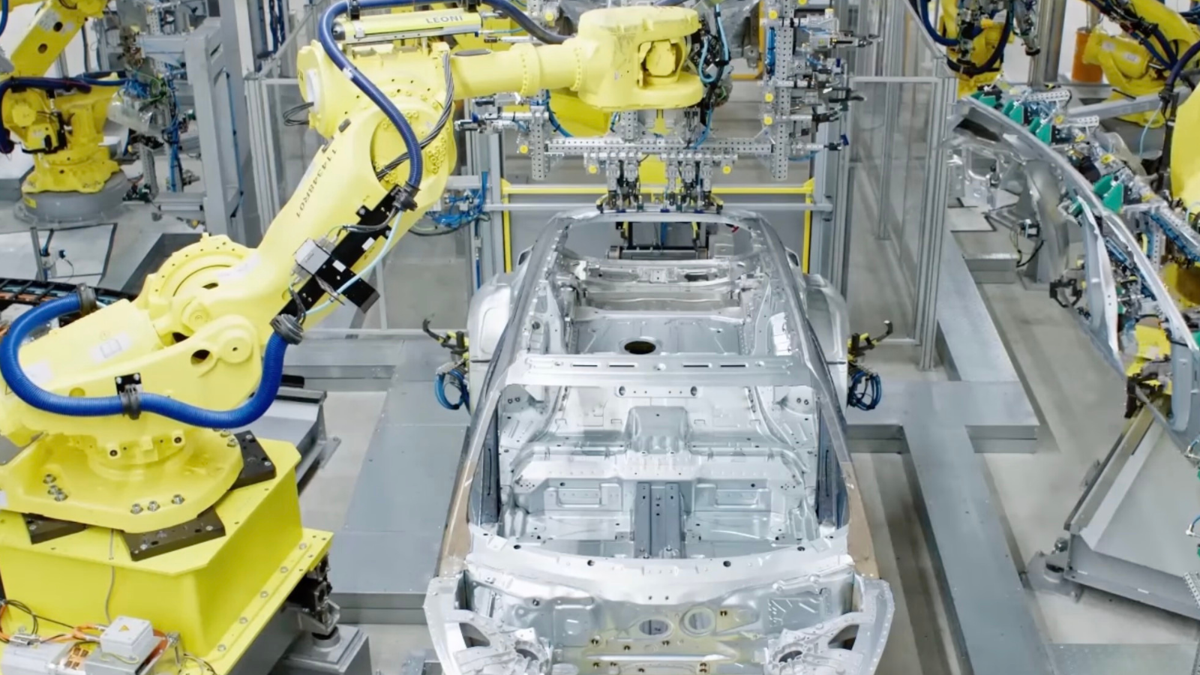
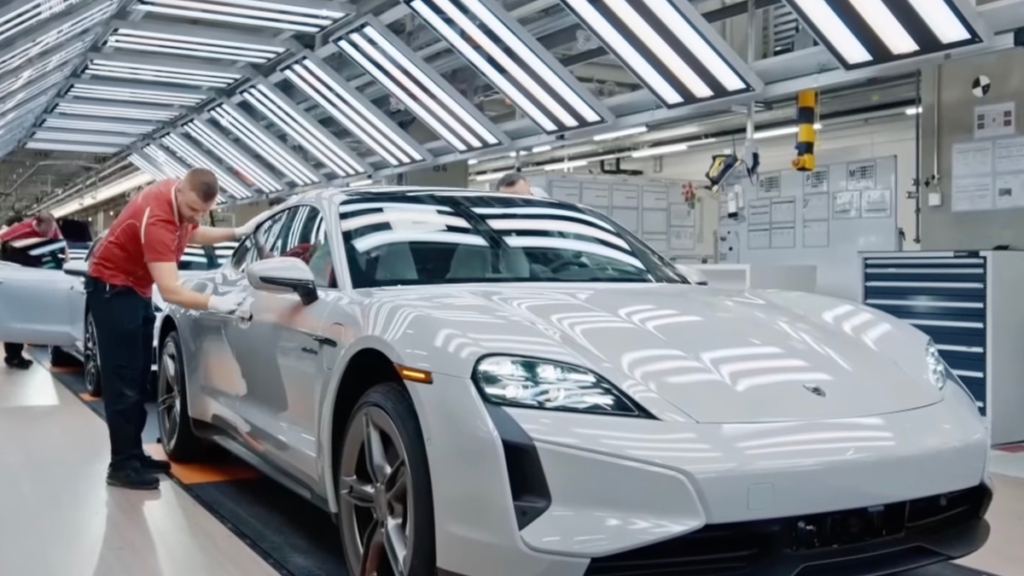
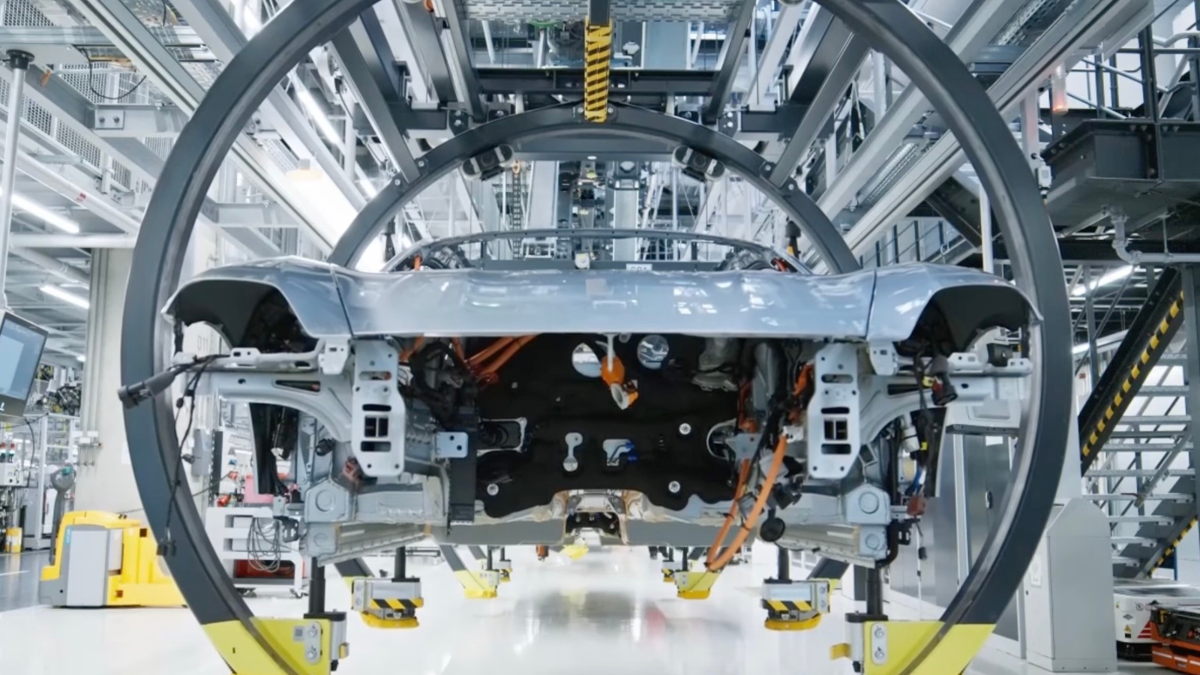
With the Taycan continuing for now, it remains in production at the Zuffenhausen plant in Germany, where the brand’s most iconic sports car, the 911, is also built. FRAME on YouTube has provided a glimpse of Taycan production, showing how the automaker has adapted its manufacturing operations for the modern EV slugfest.
A Factory Built for the Electric Age
Porsche opened an advanced, multi-story factory in 2019 designed for the Taycan. The Zuffenhausen facility uses an approximately 2,950-foot-long covered conveyor bridge across several streets to transport painted bodies and drive components. It combines automation with a human workforce, while driverless transport systems move vehicles between assembly stations.
The Taycan’s permanently excited synchronous motors use rectangular copper wires bent into rigid U-shapes instead of conventional round wires. This “hairpin” construction allows the copper to be packed more densely into the stator. For the 2027 model year, the lineup continues to include a high-output dual-motor setup delivering up to 1,019 horsepower with launch-control overboost in the Turbo GT models.
However, the Taycan, Taycan 4, and Taycan 4S all get a bigger battery as standard: the previously optional 105-kWh Performance Battery Plus pack. The U.S. lineup also loses the Sport Turismo and Cross Turismo wagon variants for 2027.
Given the high-voltage components, workers wear certified rubber electrical-insulating gloves for protection.
Electric Performance, With a Porsche Price Tag
The 2027 Porsche Taycan starts at $111,900, excluding destination charges. Meanwhile, the Taycan Turbo GT starts at $243,700, with the track-focused Weissach Package available at no additional cost. It shaves a tenth of a second off the claimed 0-to-60-mph time, bringing it to 2.1 seconds with launch control.
Since the Taycan’s introduction in 2019, Porsche has expanded its EV lineup to include all-electric versions of the Cayenne and Macan. An electric successor to the 718 is also still in development, despite earlier reports suggesting the project could be canceled.