- All-new Mitsubishi Pajero debuts as a flagship cross-country SUV.
- It pairs a diesel engine with a Triton-derived ladder frame chassis.
- Sales start in Thailand ahead of a global rollout to 100 markets.
After a long hiatus, Mitsubishi has introduced a new generation of the Pajero, reviving one of the most iconic off-road nameplates with rich rally heritage. Positioning the model as its global flagship and describing it as a cross-country SUV, the Japanese automaker combines rugged underpinnings with modern tech and an upmarket cabin.
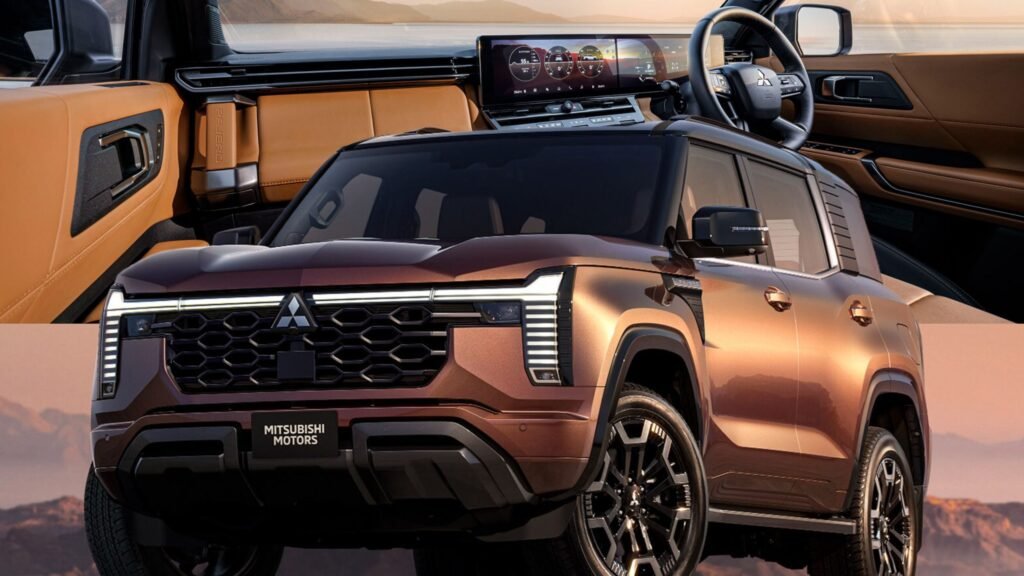
The new Pajero measures 4,920 mm (193.7 inches) long, sized to compete against the Toyota Land Cruiser 250 Series. The exterior has a boxy stance with modern styling features including T-shaped LEDs, large skid plates, squared off wheel arches, side gills with Pajero lettering, a textured C-pillar hugging the roof, and a sculpted tailgate. Color options include the pictured Armor Copper Metallic and a new Phantom Blue Metallic with gold highlights.
More: Mitsubishi Is Finally Making A Pickup For America, But Not On Its Own
The cabin has a three-row, seven-seater layout taking advantage of the 2,870 mm (113.0-inch) wheelbase. It is characterized by upmarket looks, featuring soft-touch materials and optional Camel-toned leather upholstery with black inserts and delicate stitching.
On the tech front, the center piece is the dual 14.3-inch displays mounted in a single panel (12.3-inch display on lower trim levels), with 16 background themes and a digital Multi Meter display referencing the triple gauges of older Pajero generations. The latter will show off-road telemetry data including altitude, compass heading, temperature, pitch/roll angles and more.
More: Mitsubishi’s Cheapest, Oldest Sedan Just Got A Lancer Evo-Inspired Grille
Mitsubishi gave emphasis on sound insulation with acoustic glass and additional measures, promising that occupants will be able to converse naturally at highway speeds and other “high-noise conditions”. Furthermore, the Pajero is fitted with a Yamaha audio system featuring 12 speakers, dual amplifiers, and noise compensation technology.
Safety equipment includes eight airbags, the MI-PILOT ADAS suite, and a 3D Multi Around Monitor featuring a virtual under-floor camera view.
Rugged Underpinnings And “Clean Diesel”
The SUV is based on the ladder frame chassis of the Triton, albeit with a model-specific suspension giving it a more refined ride. This includes an independent double-wishbone front suspension and a five-link rigid rear axle tuned with insights from Mitsubishi’s Dakar Rally engineering programs. Off-road capability is supported by 230 mm (9.1 in) of ground clearance, a 30.4-degree approach angle, a 22.6-degree breakover angle, and a 25.8-degree departure angle.
More: Mitsubishi’s Toughest Triton Yet Ships With A Shovel Bolted To The Roof
Under the hood lies a 2.4-liter diesel engine with a single variable geometry turbocharger. The company has yet to reveal the output of the non-electrified powertrain but confirmed it generates 480 Nm (354 lb-ft) of torque or a slightly lower 470 Nm (347 lb-ft) rating for “select specifications”. In the future, the diesel is expected to be joined by electrified powertrain options.
Power is transmitted to all four wheels via a “newly developed” eight-speed automatic gearbox paired with a standard 4WD system. The latter features Mitsubishi’s Super-All Wheel Control (S-AWC) technology with Active Yaw Control (AYC) and seven terrain modes.
Production And Market Availability
Production of the new Mitsubishi Pajero will take place in Thailand, next to the Triton. Initial market launches are set for Thailand, Japan, and Australia during by the end of March 2027. These will be followed by a wider rollout to 100 global markets in Southeast Asia, Latin America, and the Middle East.
More: Mitsubishi Is Coming For The RAV4 With A Compact Pajero
While Mitsubishi has confirmed that the Pajero will be sold as the Montero in certain export markets, no decision has been made regarding a U.S. launch that might follow at some point in the future.
Besides the flagship cross-country SUV, Mitsubishi plans to use the Pajero nameplate in other models, effectively turning it into a sub-brand. Members of the extended Pajero family will include a kei-sized offering for Japan and a compact SUV with rugged looks.