I’ve eaten at hundreds of restaurants over the years, reviewed my fair share of them, and sat through more “opening night” launches than I can count. For a long time, I assumed the story of a restaurant started with the menu. The chef’s vision, the tasting notes, the provenance of the burrata. That’s certainly the story most of us are fed as diners.
But after a few drinks with enough chef-owners, a different picture starts to emerge. there is more to this than just the food. I had once considered opening a small restaurant with some friends. After a few chats, we realised that even though we loved food, we knew too little about running a restaurant business and the pitfalls were many.
In 2026, the median cost of opening an independent restaurant in the UK and similar markets sits around the equivalent of £280,000-£300,000, with the middle range spanning roughly £130,000 to £560,000 depending on concept, size and location. That’s an enormous spread. And having now heard the sums from the people actually signing the cheques, I can tell you that where you land in that range has far less to do with your cooking than with everything happening off the plate.
The Concept Comes Before the Cooking
Every restaurant that’s actually gone the distance, in my experience, started with a concept that had been properly nailed down, not just daydreamed about over a bottle of Malbec. Cuisine, service style, pricing, who you’re actually trying to feed. One chef-owner I spoke to, who runs a small neighbourhood place told me: “Everyone wants to talk about the food first. I wish more people had asked me about my spreadsheets before they asked about my cultured butter.”
A proper business plan is what puts real numbers against the fantasy before the big cheques start going out. Fast-casual concepts tend to run from around £270,000 to £660,000, whilst full-service sit-down restaurants often land somewhere between £390,000 and £1.2 million. Where you funding comes from will determine if you have enough cash flow to get started and to keep going.
Food trucks and ghost kitchens sit at the other end of the scale, sometimes launching for as little as £8,000 to £60,000. Several food entrepreneurs told me that this was a sensible, low-cost way to test a concept before betting the house on bricks and mortar.
Choose the right location

And then there’s the location itself. I’ve watched genuinely brilliant chefs and kitchens fail simply because nobody walked the streets first. Like the recent closure of Tom Brown and Brad Carter’s, Island, after just one year. He is a super talented chef and his food is brilliant but sometimes that doesn’t translate to bums on seats.
Falling in Love With the Wrong Space
As a food writer, I’ve walked into rooms with gorgeous exposed brick and hopeless kitchen flow and rooms that look plain from the pavement but run like clockwork behind the pass. When comparing restaurants for lease, the location is one of the most important factors. Footfall, parking, who your neighbours are and proximity to the tube are issues that can make or break your restaurant business.
A quick-service spot wants commuters drifting past, a destination restaurant can thrive somewhere a little harder to find, tucked away in a part of town for people to find and easy transport options for both diners and staff can matter a great deal.
What surprised me most was how much a “second-generation” unit can save you. A previous tenant’s old kitchen setup, working stoves with hood ventilation and grease traps can slash renovation costs dramatically, sometimes down to £65,000-£120,000 for a quick-service concept.
Then there’s the lease itself, which nearly every owner I’ve spoken to describes as more fraught than any supplier negotiation. Base rent is only one line in a much longer conversation. It’s so easy to fixate on that single figure while glossing over maintenance responsibilities, improvement allowances and renewal terms. Rent typically runs 5-10% of total sales for a healthy operation, for working out whether a prettier, pricier unit might actually pay for itself through better visibility. There is another unexpected benefit of the right location. One of my friends had an Asian restaurant on Wardour Street in Soho. In the last few years, the value of his lease increased so much (over £2m) that it was more valuable to sell that than the profits the restaurant could generate.
Designing for the Diner, Not Just the Instagram Shot

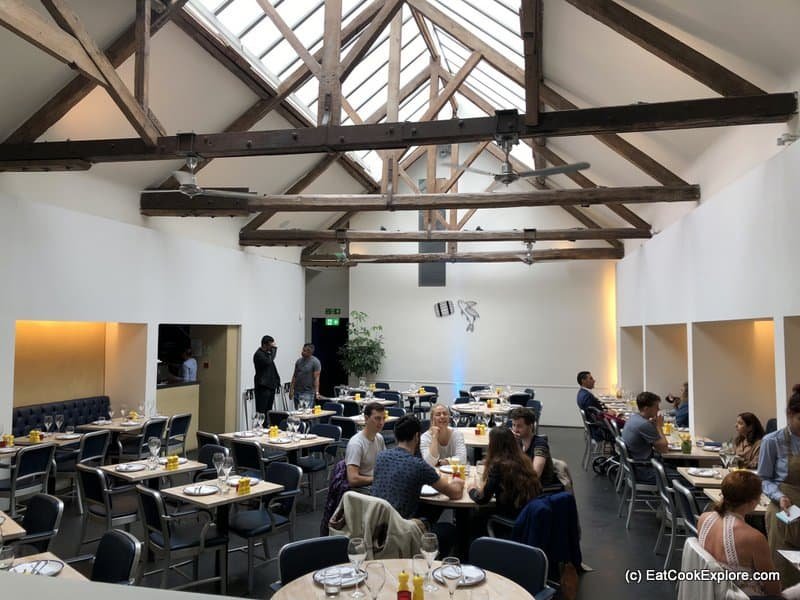
This is the bit that is more relevant to me as a regular punter and it’s where I’ve seen the most avoidable mistakes. A dining room can be dazzling and still feel wrong the moment you sit down. Too loud, too tightly packed, the dark lighting doing nobody’s dinner any favours. One owner told me she redesigned her seating plan three times before opening, chasing that fine line between “cosy enough to linger” and “so tightly packed a proper Friday-night crowd attracts more diners.”
Behind the scenes, the kitchen layout matters just as much, even though diners never see it. I’ve watched enough Kitchen Nightmares to know a bit about commercial kitchens. It’s not remotely glamorous, working out where the walk-in fridge sits relative to the pass, but it’s the decision that determines whether your starter turns up in twelve minutes or twenty-five. And increasingly, the tech stack has to be set from day one rather than bolted on afterwards. POS systems, online ordering, contactless payments. “Retrofitting the wiring for card machines after you’ve already plastered the walls is a special kind of misery I wouldn’t wish on anyone.”
The Unglamorous Paperwork Nobody Reviews
None of this makes it into a five-star review, but licensing, food safety permits and health inspections have to be squared away before a single dish is served and requirements shift depending on the borough, let alone the country.
Fire safety and accessibility aren’t optional extras tacked onto a checklist, they’re the baseline that keeps everyone in the room safe, and getting to them early tends to save owners from the last-minute scramble that pushes launch dates back by weeks.
Construction delays can have unforeseen cascading effects on your launch. One missed inspection derails three milestones you assumed were unrelated. As one put it to me, “permits always take longer than you think, even after you’ve already padded the timeline for permits taking longer than you think.”
The Team Makes the Room

As a food writer/diner, I’ll admit I used to credit the kitchen for a brilliant evening and blame the floor for a poor one. Spend enough time talking to owners and you realise the two are inseparable. Staff shape the guest experience every bit as much as the food does. Especially more so on a chaotic Saturday night when the kitchen’s slammed and it’s the front of house holding the room together. Firstly, finding enough experienced staff for your new place is getting trickier now in London. Secondly, staff training has to happen before opening night, not improvised live in front of paying customers. Hospitality is not an easy game.
Reliable suppliers matter too, and having more than one on the books buys a bit of cushion for the inevitable hiccup. And behind the founding team, documented procedures for inventory, sanitation and daily routines make training easier as new staff come on board. As with most businesses, getting your operations right and you are will be in control and avoid unnecessary costs, in case of any bumps on the road.
Soft Openings: The Reviews That Never Get Written
Most new restaurants in London start off with a soft opening. This is when food bloggers and influencers are often invited to preview the menu and the new place. It’s the dress rehearsal for the team, a chance to run the full show for a smaller, more forgiving crowd before the paying crowd turns up. On the CODE app, soft launches usually offer discounts during the first week for others in the hospitality industry.
Most chefs will keep the menu deliberately tight during this phase, since a full menu on day one tends to produce more errors and makes it far harder to work out what’s actually gone wrong. Inviting friends, family and neighbouring business owners tends to work brilliantly as they will give you the real feedback and it builds goodwill.
Marketing and PR matters too, of course, though every owner I’ve spoken to stressed keeping budgets modest relative to turnover. They typically budget around 3-6% of sales once the doors are properly open. Having a good social media presence will also build buzz early and bring you to a new audience.
Before the Doors Open
Whatever the concept, nearly every restaurateur I’ve talked to describes some version of the same final walk-through before opening night. Staff schedules confirmed, inventory checked, kitchen equipment tested, fridges inspected, booking systems working, card machines tested, front-of-house materials ready, deliveries confirmed and one last briefing with the whole team before the doors open to the public.
The Bottom Line, From Someone Who Just Eats There
Opening a restaurant is a far bigger, messier undertaking than any menu ever lets on. From financing, permits, construction to staffing, a hundred small decisions stacked on top of each other long before a single table is laid. And for what it’s worth, the fear that’s supposed to keep people up at night is often overstated. That well-worn claim that 90% of restaurants fail in their first year has no credible source behind it and has been thoroughly debunked. Actual first-year failure rates sit closer to 17% and some newer tracking methods put it as low as 0.9%.
Next time you’re in a new restaurant, sit at a table admiring the lighting and the plating, spare a thought for the spreadsheet, the lease negotiation and the soft-opening service that you’ll probably never see on Instagram. The owners who plan the room and the systems with the same care they pour into the menu, in my experience, are the ones still standing and still buzzing, years down the line.