The American Home of X
Since BMW announced plans for its first U.S. factory in Spartanburg, South Carolina, in 1992, the facility has undergone significant changes. Production began in 1994 with models such as the E36 3 Series, but the plant now focuses on the brand’s “X” SUV lineup – a strategic move given the strong demand for that type of vehicle in the U.S. It also serves global markets and is recognized as the largest U.S. automotive exporter by value.
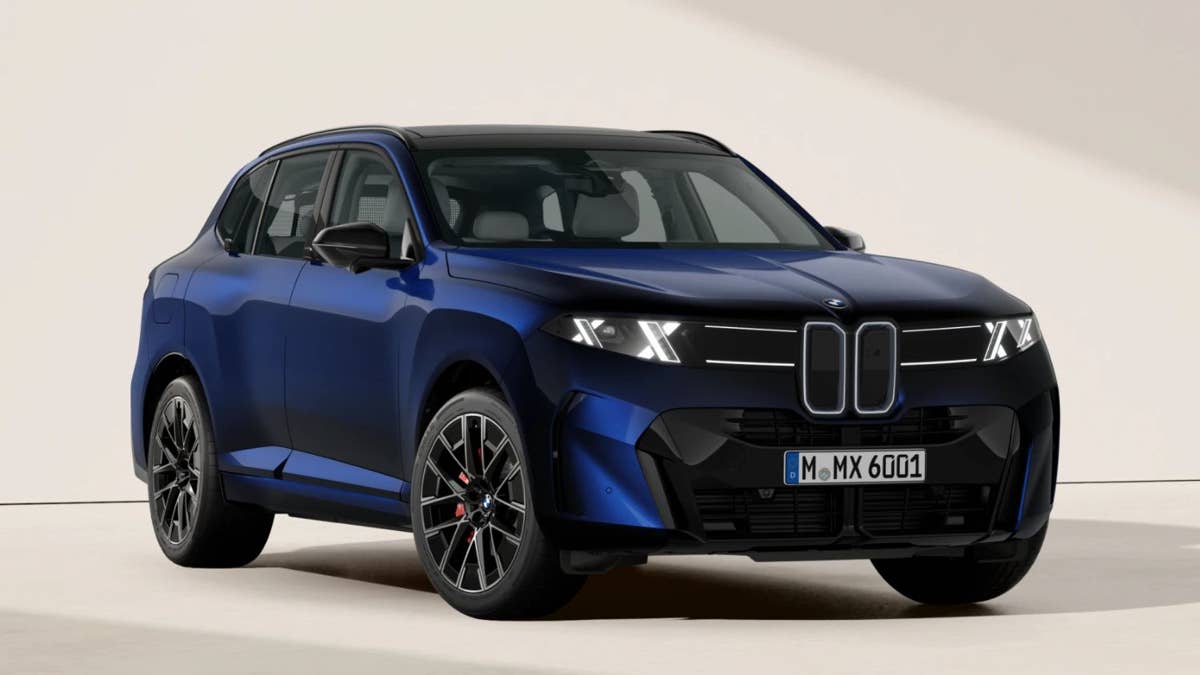
BMW’s Neue Klasse era has also reached the plant through the new X5 (G65), which incorporates its design language and technology. A walkaround from FRAME on YouTube shows how the X5 – the Bavarian automaker’s answer to the Audi Q7 and Mercedes-Benz GLE – is made, from the stamping shop to final assembly.
Where the X5 Starts Flat
In the stamping shop, automated Schuler servo presses use massive dies to shape flat metal blanks into body panels such as hoods and side frames. Robots quickly move each panel between stations, while scanners and factory specialists check for defects and dimensional accuracy.
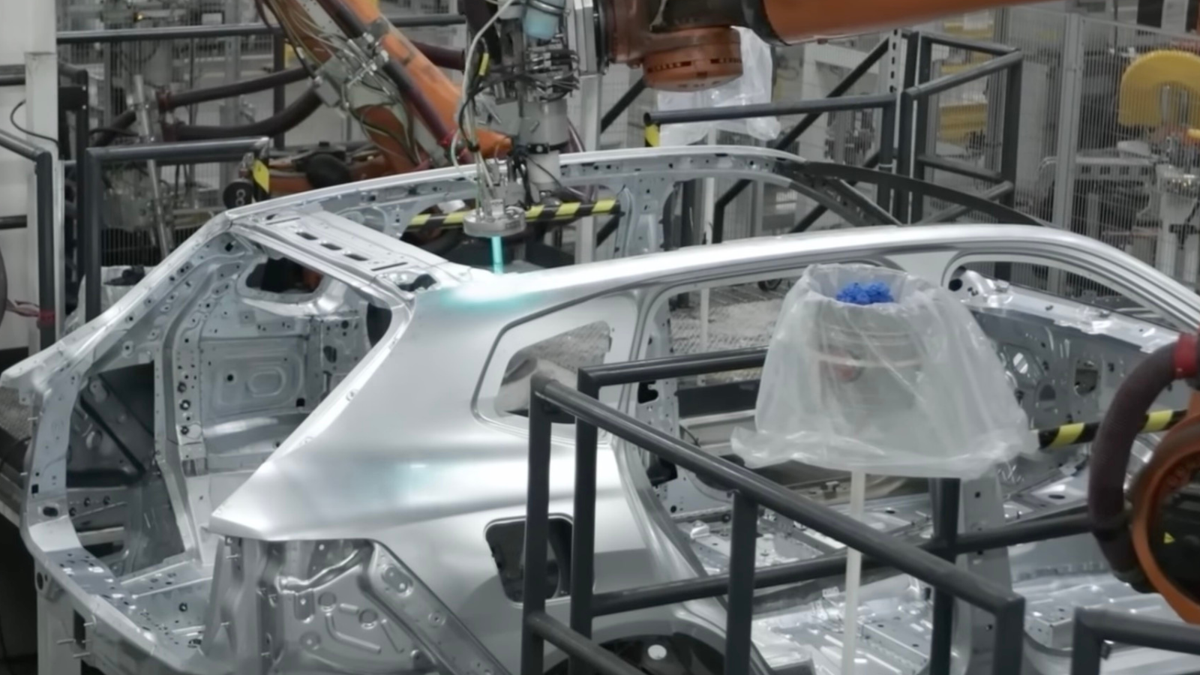
From there, the panels enter the highly automated body shop, where more than 2,000 robots clamp, weld, and assemble the vehicle’s structure. Although BMW has deployed humanoid robots at several plants to assist workers, none were seen during this walkaround. Resistance spot welding joins the metal without the dramatic sparks typically associated with welding, though other stations use arc welding, where sparks are more visible. The completed body-in-white is then measured by automated optical systems before moving to the painting area.
Rust protection begins with an electrocoat dipping process, which rotates the body to ensure the coating reaches every cavity. Robots then apply sealant, primer, and paint, followed by visual and tactile checks in a brightly lit inspection tunnel.
In final assembly, the painted body meets its powertrain at the so-called marriage station. The U.S.-spec X5 will initially be available as the X5 40 xDrive, powered by a 3.0-liter turbocharged inline-six gasoline engine with 48-volt mild-hybrid assistance, producing 394 horsepower. Plug-in-hybrid and all-electric versions will follow by 2027.
Technicians install the interior, doors, glass, wheels, fluids, and badges before final inspections, including a vehicle evaluation by a BMW test driver.
How the X5 Lineup Stacks Up
The base X5 40 starts at $69,800, while the all-wheel-drive X5 40 xDrive costs $72,100. Meanwhile, the X5 50e xDrive PHEV starts at $77,500. It sits below the all-electric iX5 60 xDrive, which starts at $79,800. The EV produces 570 horsepower and offers an estimated range of up to 435 miles, based on preliminary BMW testing using EPA procedures.
Other models produced at the Spartanburg plant include the X3, X6, X7, and XM. The X4 was also built there, but production ended in 2025. A fully electric successor is reportedly scheduled to enter production at the automaker’s Debrecen plant in Hungary in late 2026.
BMW