
A version of this post originally appeared in Eater Today, which spotlights the freshest news and stories from across the food world every day. Subscribe now.
Recently, after I wrote about the tedious nature of making reservations these days, several readers emailed me to express similar feelings and to share their own booking-related gripes. For many of them, these have culminated into the same interaction: Instead of dealing with the whole reservations-platforms rigamarole, they were going old-school for bookings, they told me, by building relationships with general managers and servers in hopes of getting a business card with some information that might offer an easier (or just more direct) in.
It feels anachronistic, in our modern QR-code, app-for-everything moment, but these are the touchpoints we long for now: a real person, a direct line; the possibility of being seen as a diner with loyalty and even idiosyncrasies, whether it’s a habit of saying “thank you” slightly too much or a tendency to finish a glass of water with astonishing speed, rather than just another faceless name on the backend of a reservations platform.
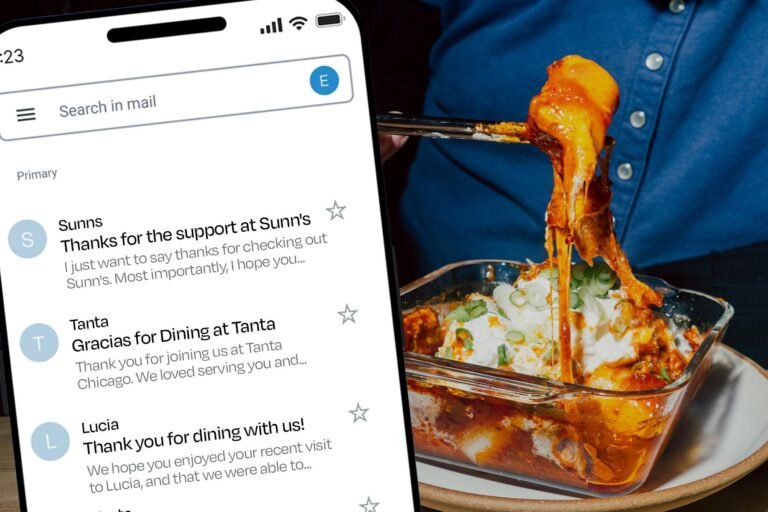
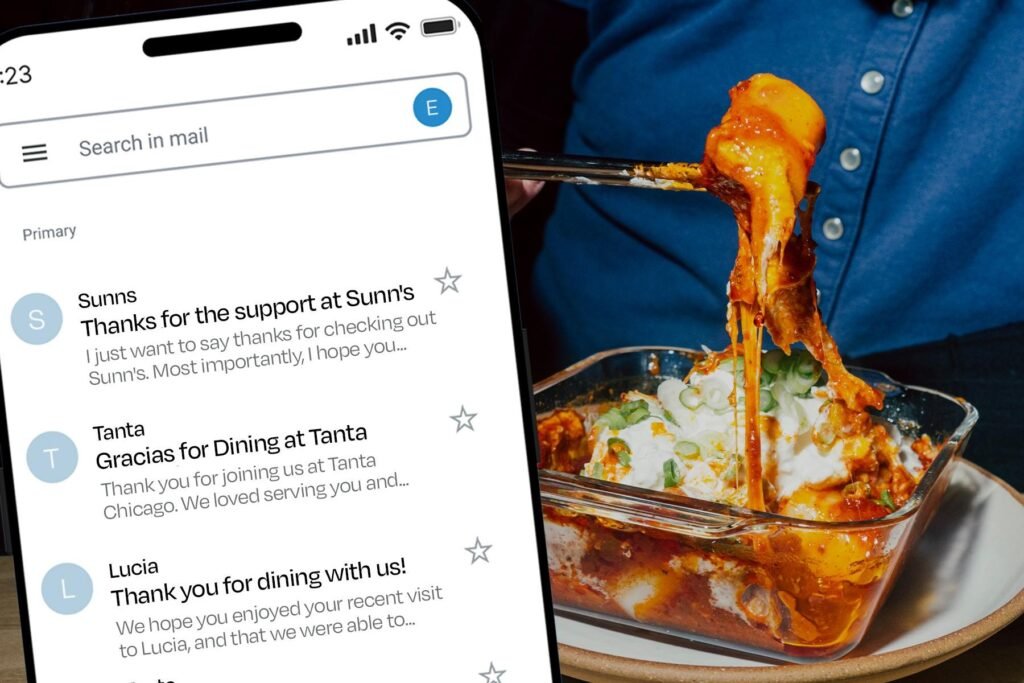
Of course, in our post-tech world, this kind of olive branch has also gone digital: Those gestures of goodwill and relationship building have been automated. Consider the New York City banchan destination Sunn’s. After I dined there, I found an email in my inbox two weeks later. “Hey ,” said the email.
“I just want to say thanks for checking out Sunn’s,” it read. “Most importantly, I hope you had a nice time, if not, definitely let me know!” The email offered me a discount code for wine delivery from Parcelle (a partner in Sunn’s), and then it dangled a more appealing carrot: the tantalizing promise of exclusivity. We have a text line, the email explained: “If you’re ever unable to find the table you need on Resy, shoot us a text.” (The restaurant is, proving my previous point, now on OpenTable.) It was not the rote, clinical, immediate “restaurant wants your feedback” follow-up that I expect after I dine at a Resy joint, but something with the illusion of being more personal. It was signed “Grant from Parcelle Wine.” As with any listserve blast, the errant space tipped me off that it was not, in fact, actually personalized but automated; still, it seemed more considered.
Readers telling me about their reservations gripes mentioned receiving similar emails, sometimes including personalized links for booking. “N/naka sent me [an] email [like that] after I’d dined there twice, but there was a gap of at least a couple years between the last time I went and [when I received] the email,” one reader in Los Angeles said. A Michelin-starred restaurant, it’s “famous for keeping careful track of all their diners so I wasn’t totally surprised,” the reader added. They’d gotten a similar one after dining at the more casual yet once very in-demand Pijja Palace.
After dining at Tanta, the Peruvian restaurant in Chicago, a colleague of mine received a similar email thanking her for her visit and offering her a special booking link for the future. Use it, the email promised, and she could get a complimentary chocolate mousse on a future visit. This was not some professional food writer exclusive, but seemingly an offer sent to anyone. Another colleague received a similarly fleshed-out yet clearly automated email after a meal at LA’s Lucia. It also offers a “direct booking link,” though it just goes to the restaurant’s main Resy page. The automation appears to be a feature of SevenRooms, through which Lucia also offers reservations. As with the manager dropping a business card at the table of guests who’d seemed to have an especially good time, the point of all this is to build regulars.
But while he encourages his managers to give their cards out, “I personally hate business cards,” says Cedric Nicaise of the NYC restaurant the Noortwyck. Often, they end up in the trash, and he thinks many people don’t actually end up using them, especially when they’ve had a good experience over a bad one that needs to be made right. For this reason, Nicaise has employed an AI-powered platform called Loyalist, which integrates with every interface on which a restaurant might find itself — reservations platforms, review platforms, event systems, and point-of-sale systems — and creates a single place through which he and his team can manage guest relationships, doing targeted follow-up.
While the examples I’ve listed above tend to focus on getting first-time diners to become second-time diners, Loyalist allows the Noortwyck to get hyper-specific. “If someone came for dinner and they were super nice, then we [can] reach out [via email]. But we also get alerts if it’s someone’s like, third visit in a short period of time, or if they give us a really positive review on Google,” Nicaise explains. “The system prompts us to be able to send them an email, and so it’s using technology to further personal connections.”
For Nicaise, the benefit of Loyalist is that it allows the restaurant’s staff to direct their energy and use it efficiently. It’s not sending an email blast about a new special or a menu change, but a way of showing appreciation and dedicated interest. The platform can, for example, prompt the Noortwyck’s staff that someone bought a cool bottle of wine and therefore might appreciate a personalized note about it. Or, through the platform, managers can identify which guests they met on a given night, then be prompted to send personalized emails to those guests after. Instead of simply casting the broadest net and seeing who it catches, “we want to make sure that people who are [the most] inclined to come back can come back,” Nicaise says.
As the great newsletter boom of the past few years would prove, inboxes are valuable territory. Still, even with all the competition there, an email promises more direct access to potential guests than something as free-range as social media. (It’s perhaps for this reason that Sunn’s has opted for that potentially less crowded field of the iMessage inbox with its additional text line.)
“The cost of acquiring a new diner is becoming higher than ever,” according to Maggie Tang, who started Loyalist after working in restaurants including Eleven Madison Park. With so many restaurants and the infinite scroll of social media, “someone’s trying to grab a diner’s attention at all times, and restaurants constantly want to fill seats, so I think restaurants are starting to focus more on how to retain existing diners.”
According to Tang, these personalized follow-up emails can also nudge diners who haven’t come back in a while, and on average, she says, 15 percent of guests who receive those book a reservation within 30 days of getting that email. As much as some restaurants want to be showy occasion spots, many are orienting themselves now around repeatability. Restaurants need regulars; emails, with their technology-enabled veneer of “this manager was just thinking about you,” might help them meet the moment.
The trick at some hard-to-get-into restaurants, I’ve been told, is to make a reservation with the host upon leaving your first meal there. They have access to the books, and the idea is that you’ve earned some goodwill by having already dined. But, if you’re shy or you forget, maybe a personalized email rewarding you for patronage will pop up in your inbox sometime after.