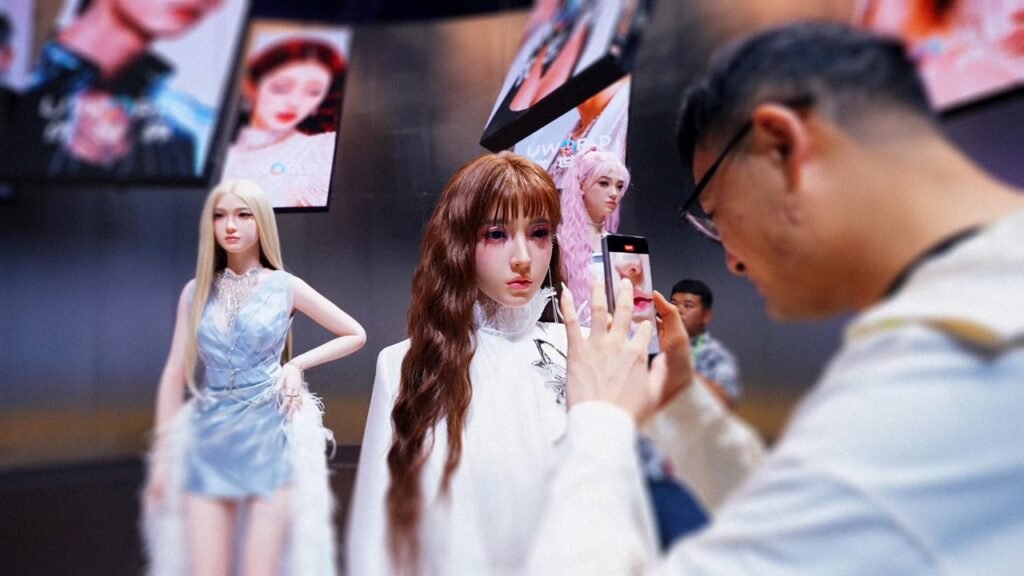
The Chinese robotics company UBTech has launched the U1, the first mass-produced ultrarealistic human robot. This marks the first time anyone has manufactured and sold a humanoid robot that actually resembles a human.
UBTech is framing the U1 as a human companion and believes the future of the robotics industry lies in providing emotional support. The company’s chief brand officer, Michael Tam, describes the human-robot companionship economy as “the first essential scenario in human history with unlimited emotional value, boundless companionship, and full-life-cycle coverage.”
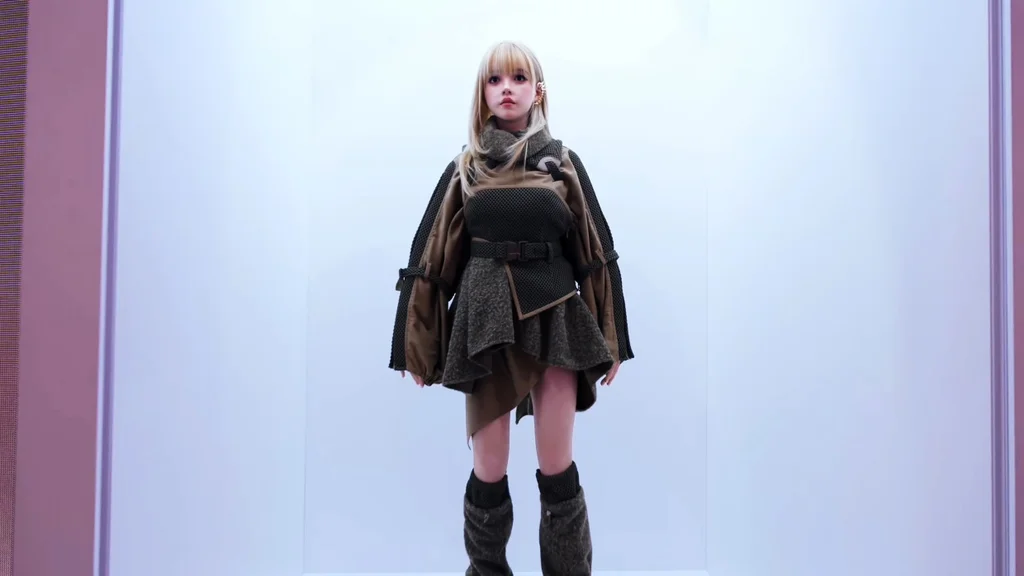
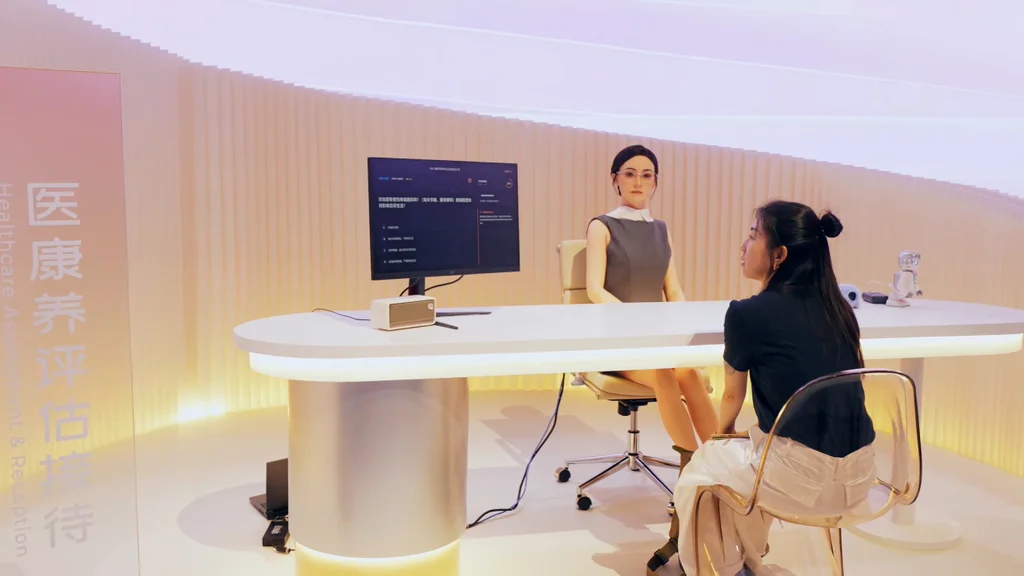
In a press release, the company said that 90 million people in China live alone, and spoke of hypothetical uses such as elder care, reception and hospitality, and “premium domestic service applications” (whatever that means).
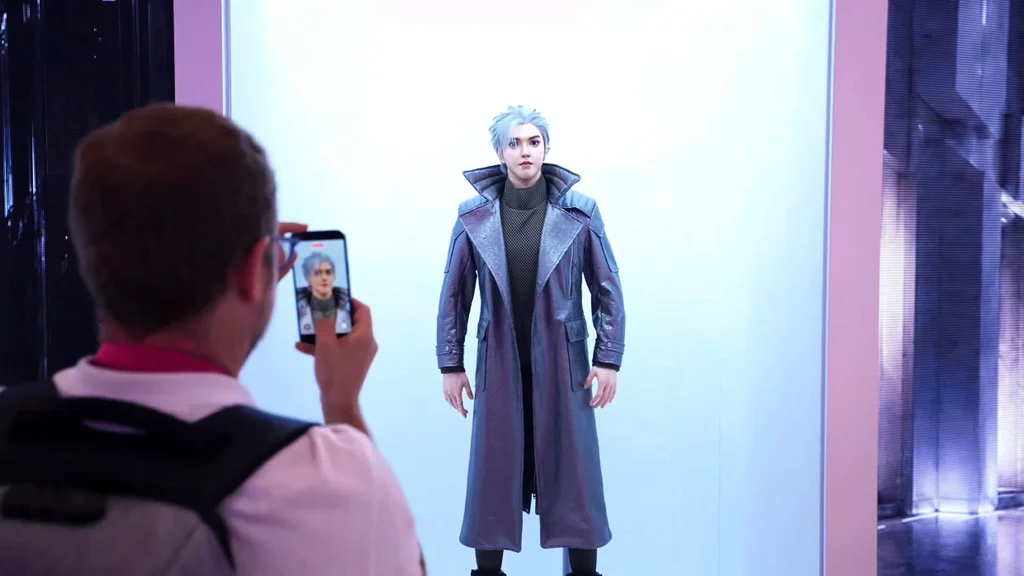
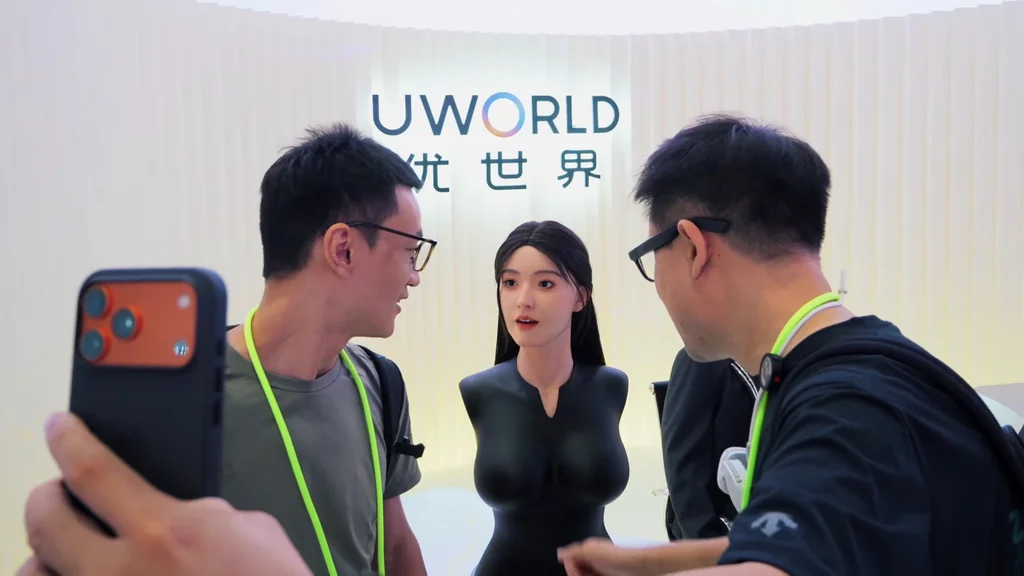
At last Tuesday’s launch in Shenzhen, representatives from the company touted the robot’s ability to hold conversations and maintain eye contact. It still has plenty of flaws—no one is actually mistaking this for a person—but think of it as Version 0.1 of the replicants from Blade Runner, an important leap for the future of embodied artificial intelligence.
A closer look at the U1
What we saw in Shenzhen last Tuesday is far from a perfect human robot. The U1 sits deep in what’s known as the “uncanny valley,” because the closer a machine gets to looking human, the more its flaws stand out, triggering an automatic sense of revulsion in your brain. It’s a byproduct of hundreds of thousands of years of evolution that makes our brain quickly notice anything that feels off.
The U1 has silicone skin (those who’ve touched it say it feels just like human skin, “but cold”). It’s able to pick up on the tone of your voice, and processes emotions without sending data to an external server.

But the illusion breaks during interactions. Critically, its joint movements still give away the motors hiding beneath that skin. Its physical abilities are limited, its muscles don’t move the way a human’s do, and its “emotional intelligence” is, at bottom, the product of pattern recognition and language-model prediction, not real feeling.
It won’t take hundreds of thousands of years for these robots to become androids indistinguishable from human beings, straight out of Philip K. Dick’s fiction. Yet, given the current objectives of the robotic industry, we may not see it in our lifetimes unless more companies bet on it.
The business of humanoid robots
The U1 isn’t a delivery robot, a tablet assembler, or a wheeled assistant like the ones already working the streets, hospitals, hotels, and factories across China for months now.
Right now, Chinese companies like Unitree or Xpeng and American corporations like Tesla or Figure AI are ignoring humanoids of this kind, focusing on more utilitarian designs. In fact, they are mostly ignoring the home market for the time being, designing robots with assembly lines and warehouses in mind.
This is because putting one of these robots in a house is far more complicated than deploying one in an industrial setting, where environments are controlled and tasks are repetitive. A home has furniture that moves around, objects scattered on the floor, and kids, elderly people, or pets the robot simply can’t afford to trip over.
There’s also the matter of human acceptance, a question with an answer that is far from settled.
A 2016 study found that a partially human-looking design was accepted by people already familiar with gadgets, but others didn’t like it at all. A 2025 study went further by tracking physiological signals, heart activity, skin conductance, and gaze, and found that human-like faces provoked stronger negative emotional reactions than robotic-looking ones. On the other hand, a human-sounding voice had the opposite effect, calming users and shaping a more favorable impression.
Regardless of these unknowns and difficulties, UBTech believes that many people will want these human-like robots, not for purposes like household chores but for companionship. After all, a robot will always be loyal to you, the company says.

The technical hurdles
To enter the market, robots will first have to depart the uncanny valley.
While these mass-produced androids may be the most realistic robots yet, watching them talk clearly shows how crude their movements are. The human face runs on 43 muscles, capable of producing an estimated 10,000 microexpressions. The subtle motion of facial muscles contracting and stretching are absent in the robot, and that level of detail will be required to truly behave like a human being.
According to Jiao Jichao, UBTech vice president and head of its humanoid robotics institute, “One of the biggest challenges was making the robot look and behave naturally after fitting complex mechanical systems into a human-sized body, as well as ensuring its facial expressions matched speech and emotion and that it could deliver consistent performance at scale.” Thousands of tightly packed components sit inside a single head, and not one of them can fall out of sync with what the robot is saying.

Professor Shoji Takeuchi’s team at the University of Tokyo grew actual human skin cells over a robotic face and got it to hold a smile, which points at some of the missing details.
“We identified new challenges, such as the necessity for surface wrinkles and a thicker epidermis to achieve a more humanlike appearance,” Takeuchi noted, adding that the fix requires “incorporating sweat glands, sebaceous glands, pores, blood vessels, fat, and nerves.”
And that’s just the physical side. The complexity of replicating the lip, tongue, and larynx motions to produce words (or just lip-synch to a synthetic voice) is still decades ahead. The software needed to run this may be closer than the hardware, as our understanding of how these muscles create expressions is good. Connecting the muscles to an AI as it simulates emotions, is an entirely different beast, however.
It is important to remember that the U1 is just the first alpha version of a humanoid robot. Yes, it is rough and far from the end goal, but it is commercially available and that’s a big development.
A robot customers actually want to buy
The product page on the JD.com online marketplace racked up more than a million views the moment preorders opened, UBTech claims. Zhou Jian, UBTech’s founder and CEO, confirmed at the U1 presentation event that reservations—which are limited till July 15—had already topped 13,000 units, backed by a refundable deposit of 3,000 yuan (about $442).
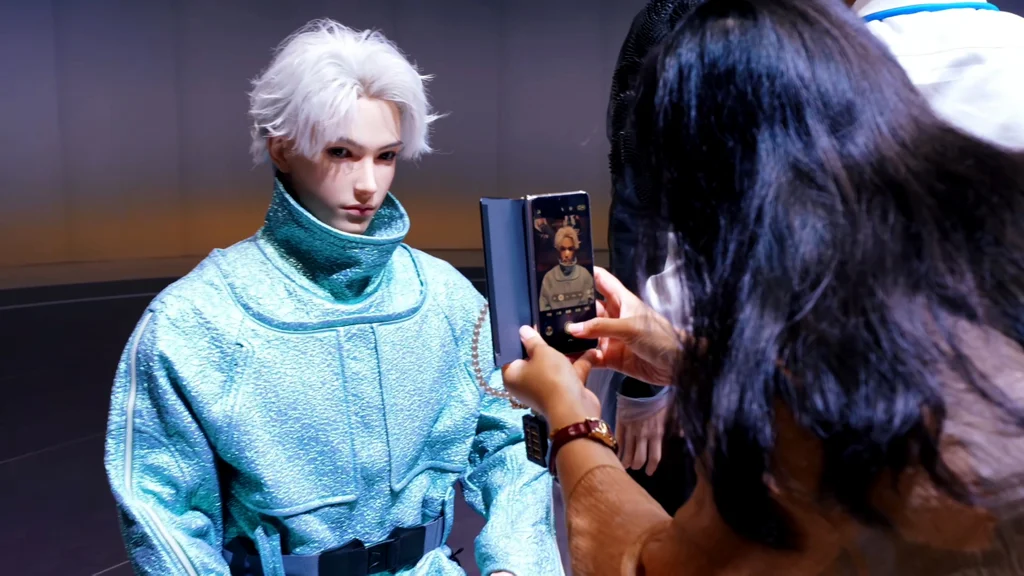
The company’s first version of this robot comes in female and male versions. The former standing 5 feet 6 inches tall, the latter 6 feet. Both feature 88 servomotors distributed across the body’s joints, plus a dual-pivot biomimetic neck structure that UBTech says can replicate roughly 90% of common human movements. Prices range from about $17,650 for the Lite version up to $146,000 for the Ultra, with a mid-tier Pro model in between for around $25,000.
The Lite ships as a compact, semitorso unit, while the Pro and Ultra are both full-body robots. The Ultra brings more advanced performance features and finish rather than a fundamentally different platform.
The company claims that your new robot companion will not spy on you. It doesn’t need an internet connection to read your emotions and act. A built-in chip handles everything on its own, inside the machine’s body. UBTech claims your personal data stays stored on the device itself rather than traveling to a server. In theory, that means your privacy stays protected. This is key in the home robotics market, where robots will be seeing and listening to you at all times. You don’t want hackers to be accessing your robot memories in a cloud space.
It remains to be seen what happens once early buyers unbox their companions when they start arriving to homes on September 15. The U1 is not pretending to be a replicant, however, and it’s not trying to completely replace a human. It’s the seed that wants to grow into that tree but, for now, it’s happy to stay still most of the time, giving a more human-like body to embodied AI.
Zhou believes these human-like robots will eventually become the standard way people interact with artificial intelligence, and he’s betting on it. If that bet is successful and the U1 catches on in China, it’s easy to imagine other companies jumping into that market too, pouring billions in to accelerate this field of robotics. That may get us much faster than anticipated to the world envisioned by Dick or, if you are more the optimistic type, Isaac Asimov. Perhaps even within our lifetimes.