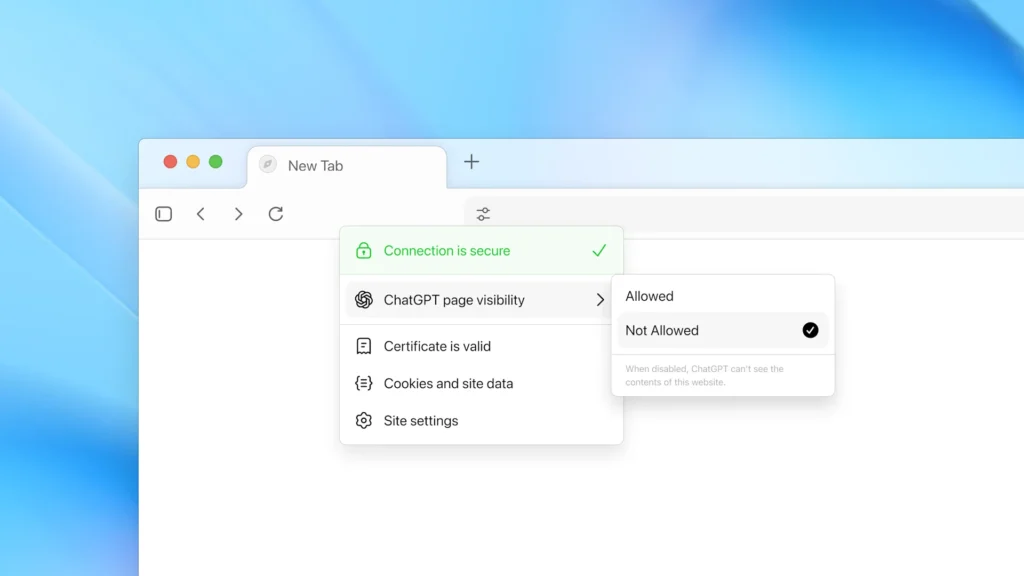

Tech companies love giving us new apps to experiment with, but they are equally quick to clean house when those tools outlive their usefulness. OpenAI is proving this point yet again by pulling the plug on one of its recent software experiments. For months now, the artificial intelligence pioneer has been following a strategy where side projects become less important. In line with this, OpenAI is officially discontinuing ChatGPT Atlas, its standalone desktop AI internet browser.
The announcement coincides with a massive software consolidation strategy. Instead of forcing users to manage multiple individual applications, OpenAI launched an all-new, unified ChatGPT desktop experience that bundles various services under a single roof. The “super app” even includes the heavy-duty coding assistant Codex and the brand-new ChatGPT Work productivity agent.
Mark your calendars for August
For users who integrated the Atlas browser into their daily workflow, the transition timeline is relatively short. OpenAI representative James Sun confirmed that the app is officially heading to the digital graveyard on August 9. Sun noted that the company plans to share additional migration information and transition guides directly through in-app notifications and email alerts over the coming days.
The Atlas browser initially arrived on Mac platforms in October. It offered users a dedicated window tailored specifically around conversational artificial intelligence. By April, the tech giant added a built-in browser feature to a separate, dedicated Codex app. Now, just months later, OpenAI is sweeping all of those scattered experiments off the table to make room for its all-in-one desktop environment. Let’s remember the firm also discontinued its Sora video generator this year.
Fewer apps, robust capabilities
Thankfully, losing the standalone browser doesn’t mean you lose the ability to browse the web with your digital assistant. The new flagship desktop app features robust, native browsing tools right out of the box, making a separate browser redundant.
Furthermore, OpenAI is continuing to support its official desktop extension for Google Chrome. This plugin allows users to enjoy deep AI integrations while staying inside their preferred ecosystem. This eliminates the need to adopt an entirely separate, standalone web browser just to chat with a model.
The Android Headlines Take
Sunsetting ChatGPT Atlas after less than a year on the market might look like a failure on paper. However, considering the current scenario of the AI industry, it is a necessary and pragmatic move. Building and maintaining a secure, modern web browser from scratch is an incredibly difficult, resource-heavy chore. Not only that, but catching up with other major names with decades of experience in the segment is a titanic task.
OpenAI has quickly realized that users don’t actually want to replace their primary browsers like Chrome or Safari just to use artificial intelligence features. And honestly, they’re right. After all, when looking for a web browser, practically no one thinks of the OpenAI name.
The post OpenAI Kills Off ChatGPT Atlas Browser to Focus on Its Unified Desktop Super App appeared first on Android Headlines.