It’s a Tuesday night, and outside my apartment, my neighbors are still gathering to set off the last Fourth of July fireworks, sip a cold drink, and enjoy some final celebratory barbecues. Inside, my fiancée and I are playing with Play-Doh.
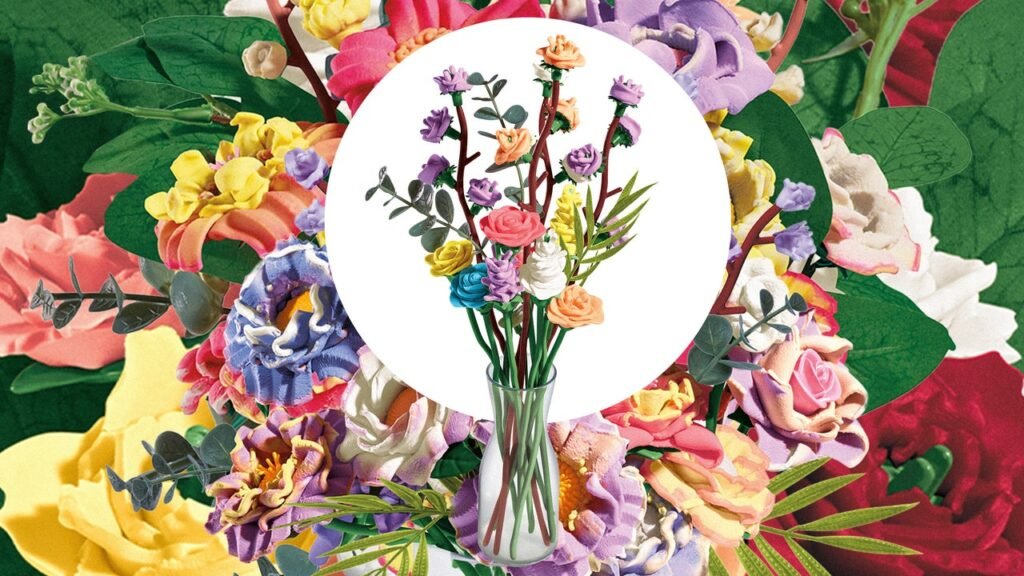
Before you judge us too much, this Play-Doh isn’t the same stuff that we all grew up swirling into snakes and accidentally leaving out on the counter. This is Blooms by Play-Doh, the brand’s first set purpose-made for adults in the 70-year history of Hasbro, the toy maker.
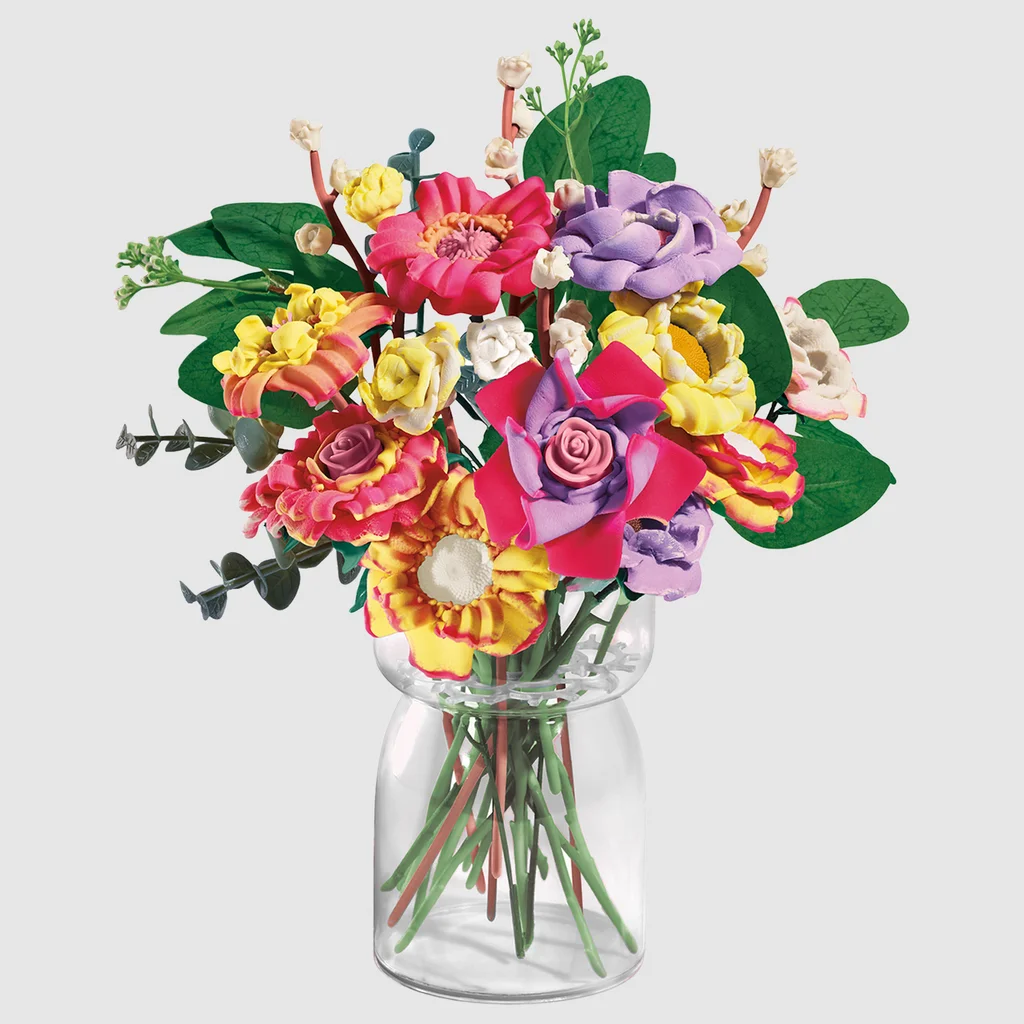
Blooms, which starts at $24.99 for a set, is one of Hasbro’s biggest swings into the “kidult” segment (the growing consumer base of adults investing in toys of their own) yet, and it follows a slew of similar moves by competitors like Lego and Mattel. Over the past several years, adults have become a key target audience for most of the world’s biggest toy companies—and they’re getting increasingly creative with how to draw that new base in.
With Blooms, Hasbro’s team demonstrates how clever product design and branding can elevate a toy that feels like it’s strictly for kids into something that even the least crafty of adults can enjoy.
How Hasbro is targeting kidults
Over the past few years, the stigma around adults pursuing hobbies previously reserved for children has markedly lessened—perhaps as a lasting ripple effect from the pandemic—and it’s transforming the wider toy economy.
According to a June report from the market research company Circana, the global toy industry grew 8% in 2026 to $123 billion in sales, marking what Circana calls an inflection point “as play evolves into a cross-generational, cross-category behavior.” While kids under 10 remain the market share majority, accounting for more than 65% of global toy sales, their share is gradually declining as older consumers grab a larger chunk of the pie. The fastest growth is coming from those 15 and older, who now represent almost 20% of total toy sales and whose spending has more than doubled since 2020.
One doesn’t have to look hard to find examples of how toy companies are playing to this shift. In the past few years, Mattel has doubled down on adult-centric releases like Lebron Barbies and Cybertruck replicas; while Lego has consistently churned out nostalgia-bait like a Gremlins-inspired set alongside artsy, display-ready renditions of works by artists like Keith Haring and Vincent Van Gogh.
Hasbro, which saw its revenue rise by 14% in 2025 after several consecutive years of decline, is similarly seeing returns from what it calls the “adults who play” segment. According to the brand, over 60% of its audience is 13 or older. In the first quarter of 2026, its largest revenue came from the card game Magic: The Gathering, which has a significant adult fan base. In addition to that existing property, Hasbro has invented several new ventures aimed specifically at adults, including drinking games like Monopoly Board Crawl, a collectors-edition animatronic of Grogu from Star Wars, and a series of board games made in collaboration with the popular romantasy series Fourth Wing.
With Blooms, Hasbro is taking that strategy and applying it to one of its most beloved products.
“As we started seeing this insight and talking to consumers about what this could look like, we realized that our big differentiator is the Play-Doh itself,” says Kate Fakonas, senior director of design and innovation for Play-Doh. “Our compound offers that tactile, squishy, really in-the-moment play that people love.”
New Play-Doh, new tools
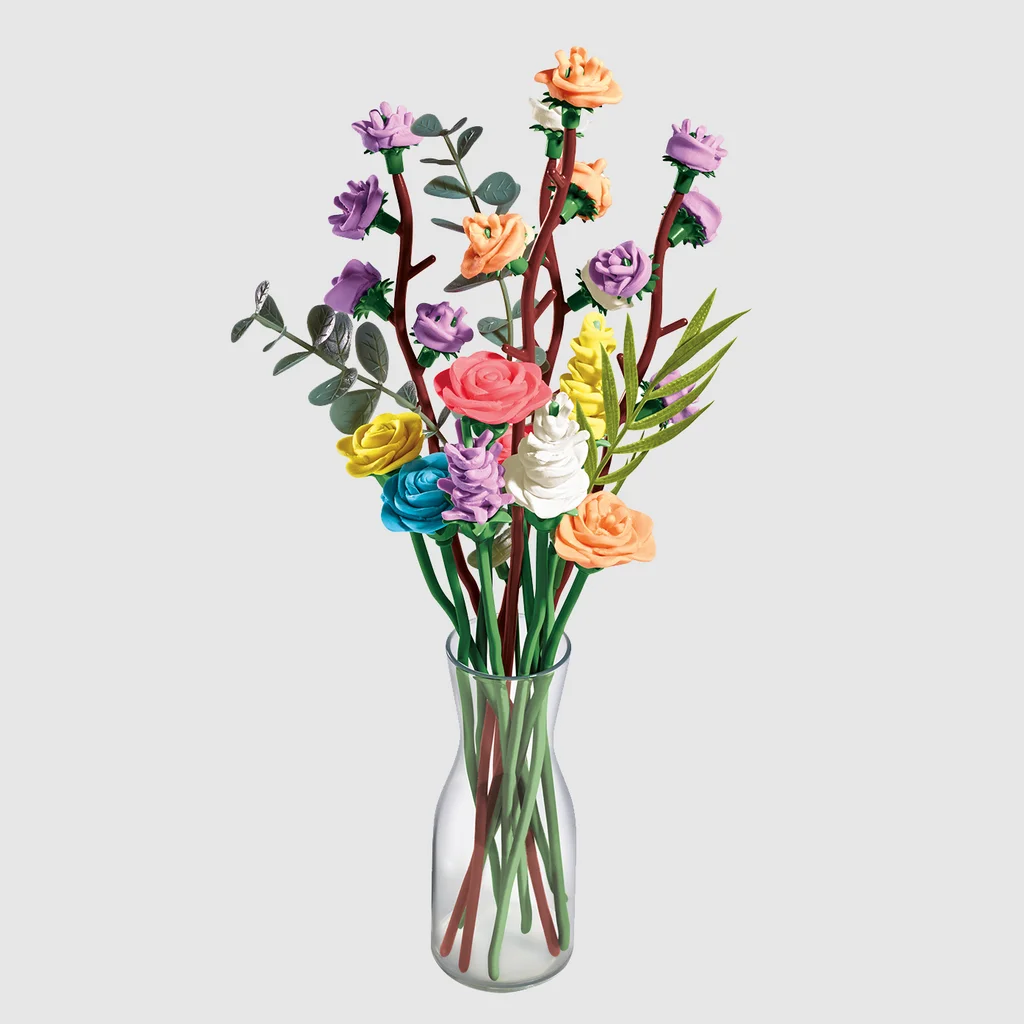
Play-Doh’s designers stumbled on the idea for Blooms while creating a flower caddy kit for kids.
“When we made the early prototypes, we were like, ‘Oh my gosh, these are actually incredibly realistic and beautiful,’ and they were surprisingly easy to do,” Fakonas says. “We started putting all of those pieces together and thinking about how that could shape this new Blooms by Play-Doh line.”
The idea, Fakonas said, was to create a displayable line of flower bouquets made out of Play-Doh. Once the concept made its way into early ideation phases, Fakonas says, the biggest challenge was making sure that the flowers were easy and intuitive to make. While surveying potential customers, one common theme she heard was that adults were looking for crafting options with less of an intimidating barrier of entry. With Blooms, she explains, the team wanted to build something accessible.
Initially, the team experimented with building bouquets out of traditional floral supplies, like wire adjustable stems and real display blocks. That experience helped the designers understand the obstacles that they’d face with their own flower-building system—namely, that making and adhering flower petals by hand can be fiddly, especially given their small size and the thinness of the dough. To counteract that, they created a system of purpose-built, Play-Doh flower-creating tools.
Smaller Blooms kits come with a mini rolling pin and two hand-rolled wheels, which create scalloped and rippled petals when guided over a sheet of Play-Doh. The larger kits are equipped with what Fakonas calls “stacks”: a system of components that fit together in a tube shape, through which users can push Play-Doh to extrude petals of all different shapes and sizes. With both kits, the petals are arranged and stacked on a series of custom plastic stems, and finished with a spray that preserves them.
The spray “helps seal the Play-Doh and give it that final touch that really says, this is for long-term display,” Fakonas says. “That shift from ‘make and remake’ to ‘make and display’ is really a huge accomplishment that I think the team spent a ton of time on to get right.”
An adult-centric rebrand
Once Blooms became a real product, Hasbro faced another challenge: persuading adults that they’re allowed to play with Play-Doh. The solution came down to the branding.
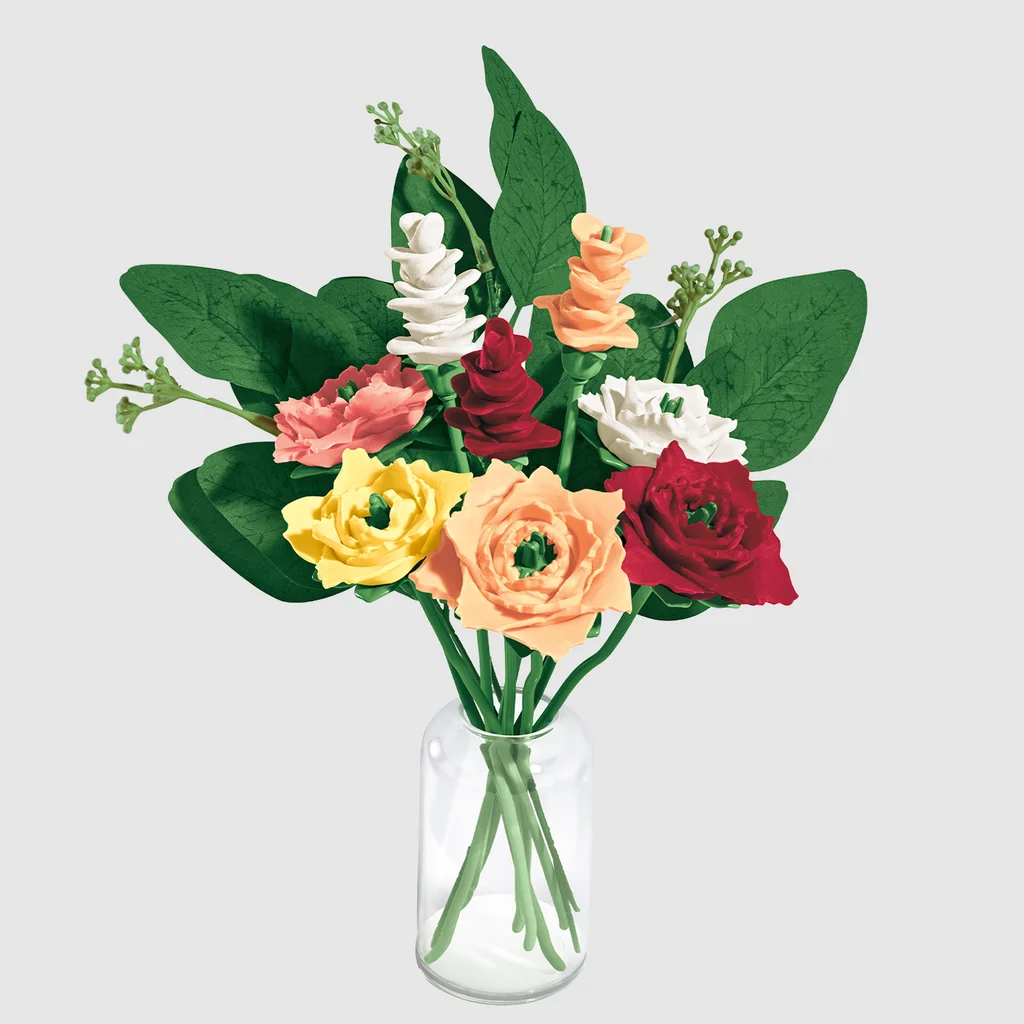
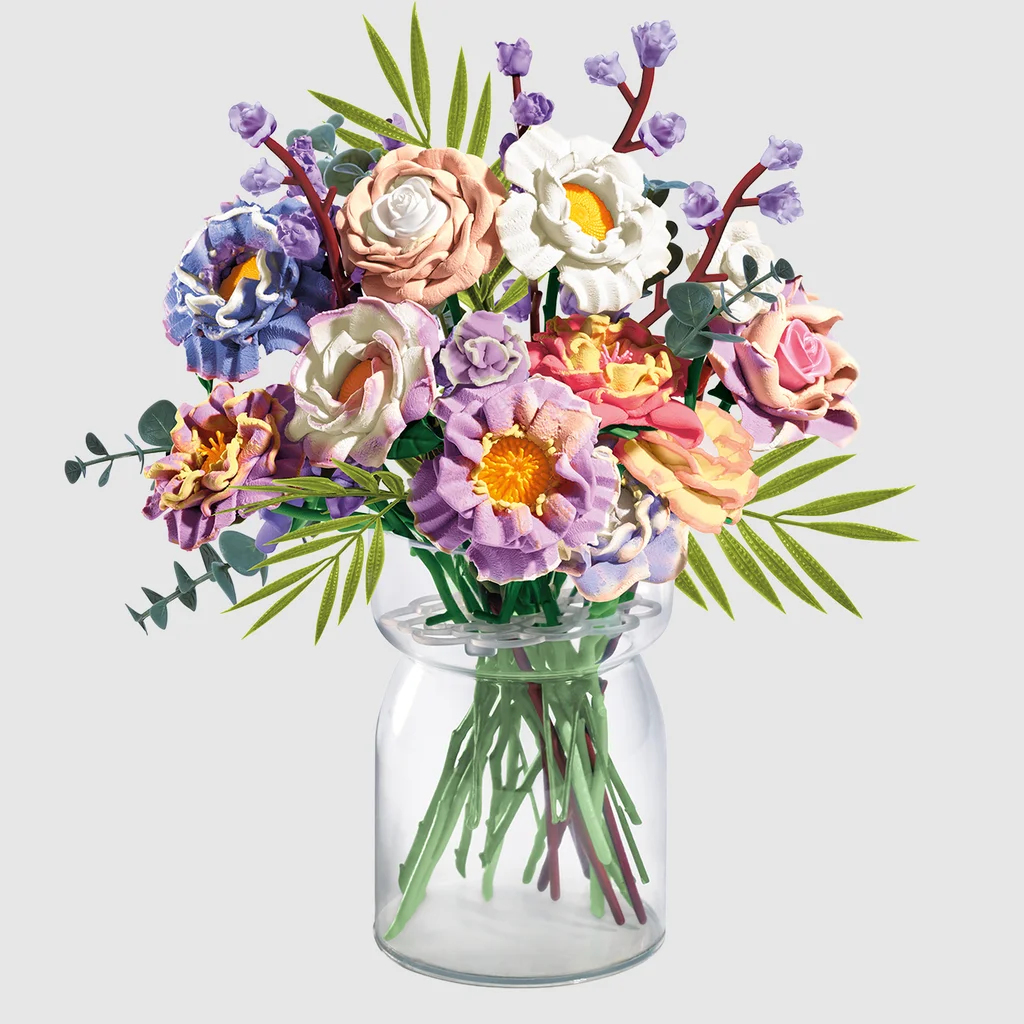
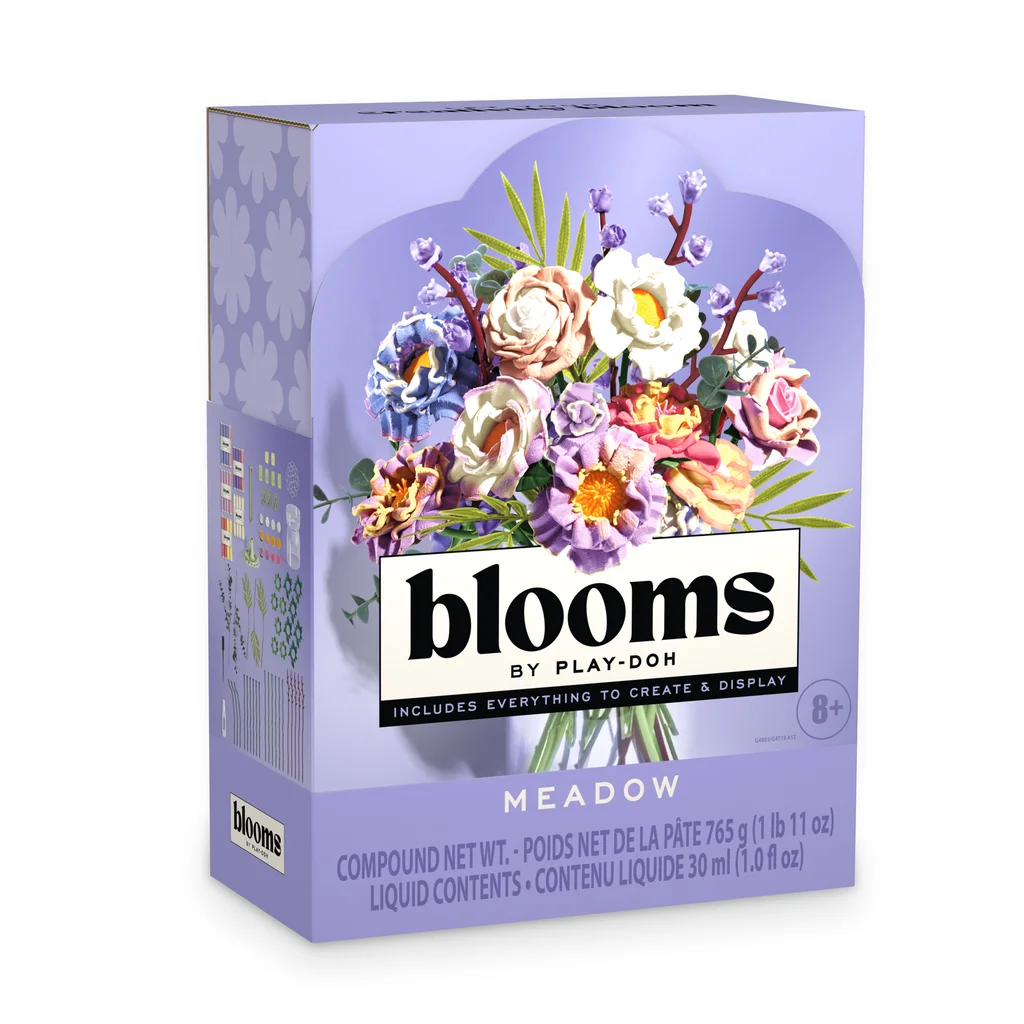
At first glance, the consumer might not even realize that Blooms is a Play-Doh product. Its packaging uses subtle, pastel colors that are a far cry from Play-Doh’s typical primary scheme, and its core wordmark is a chic, lowercase serif font with a subtle “by Play-Doh” tucked away on a secondary line. Even the product photos, which show colorful Blooms arrays, look nothing like a typical Play-Doh display.
“We really wanted the finished creation to be the hero,” Fakonas says. “When we market to younger ages, we show a lot of parts, pieces, and tools, because we want to signal the value that mom and dad might be looking for. You’ll see a radical departure on these Blooms packages, because the creation is the center shot.”
This adult-centered design thinking continues inside the package. Most notably, the Play-Doh itself has been taken out of its classic red-and-yellow container and reformatted into colorful tubes. The dough has even been scented with a fragrance made in collaboration with a fragrance house and designed for a subtle waft of fresh flowers.
Blooms is the same Play-Doh you knew as a kid, but with a new product and brand architecture, and Fakonas hopes that, eventually, it will represent a whole new chunk of the brand’s business.
“We do see this as the beginning of something that is going to live at the intersection across creativity, home decor, even lifestyle—Play-Doh can now be part of that world and that conversation for adults,” Fakonas says.