Born For Group B
Brands like Audi and Lancia may be the most remembered names from the infamous Group B era, but Ford also joined the slugfest. Perhaps because it never stood atop the Group B podium, the Blue Oval isn’t remembered to the same extent, but its campaign still paved the way for the RS200, a homologation special limited to just 200 road-going examples.
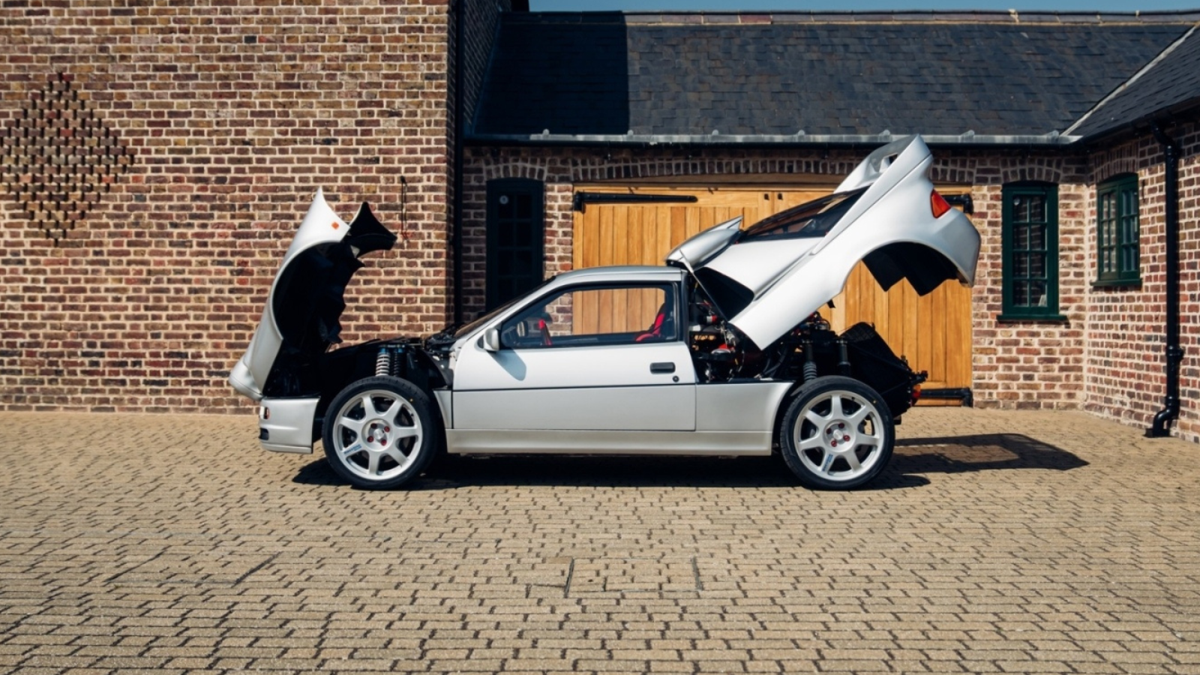
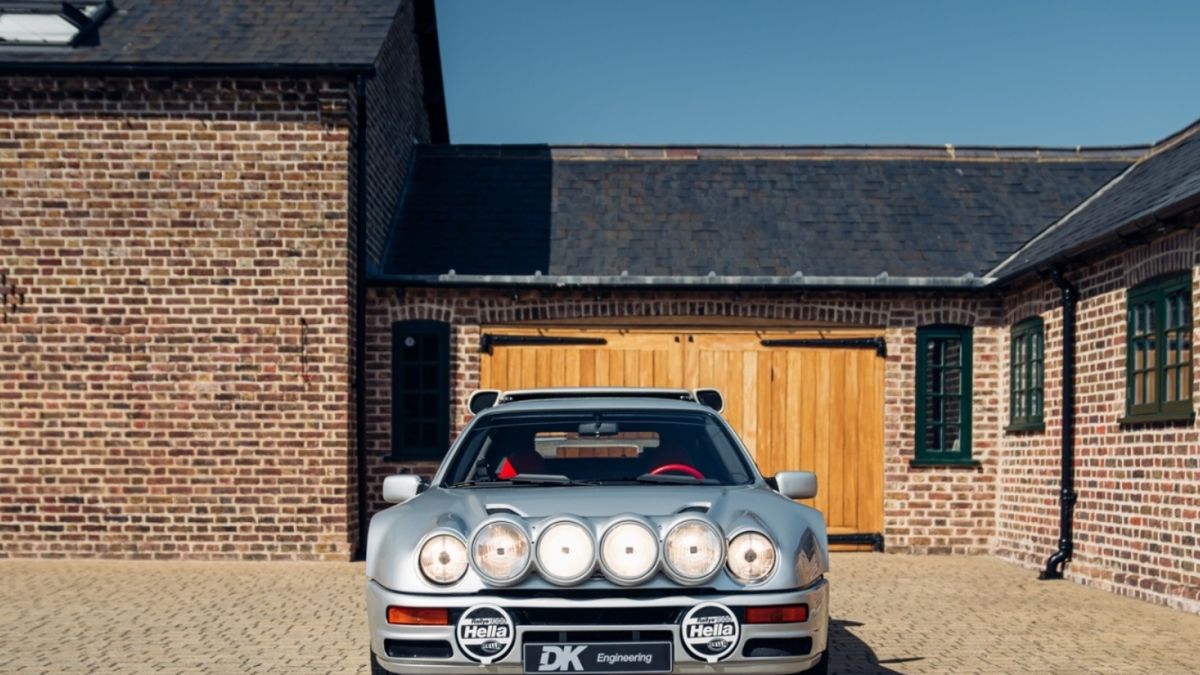
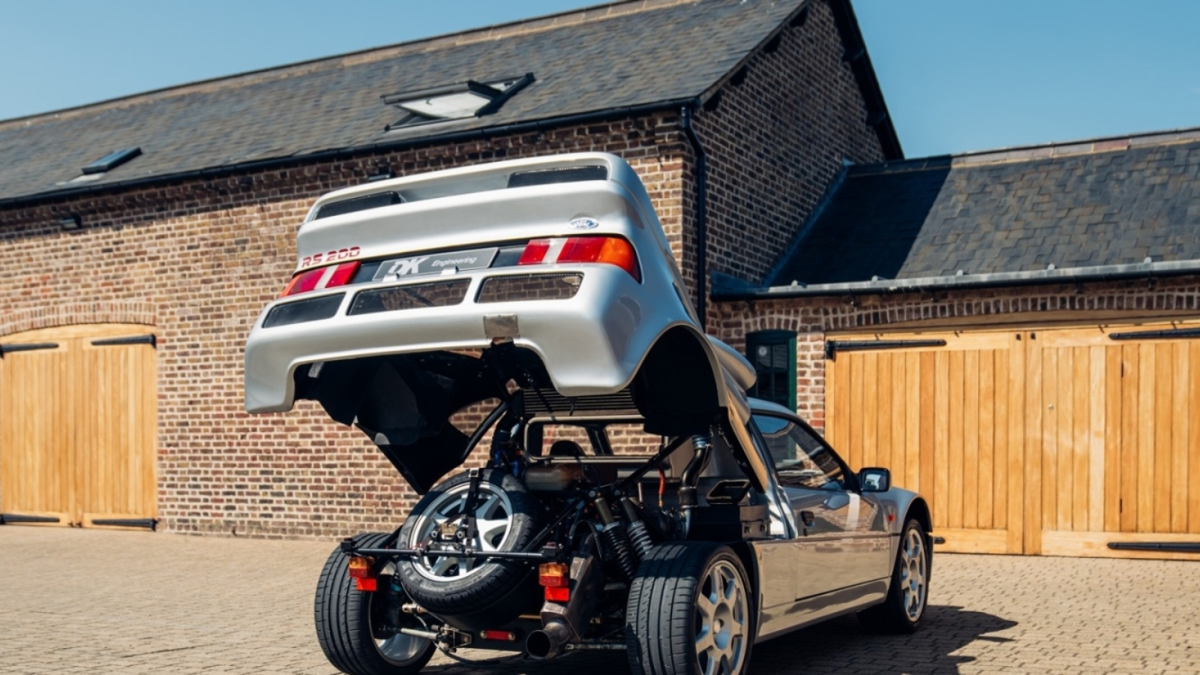
After Group B ended in 1986, Ford’s remaining RS200 factory inventory was later purchased by British firm R.T. Quaife Engineering. Those parts, including unbuilt tubs, body panels, and engines, helped create this unique 1998 RS200 listed by DK Engineering. It was assembled with Gordon Spooner Engineering, the company behind Ford’s factory rally cars, and built to Evo 2 specification, the more extreme version of the RS200.
Standing Apart
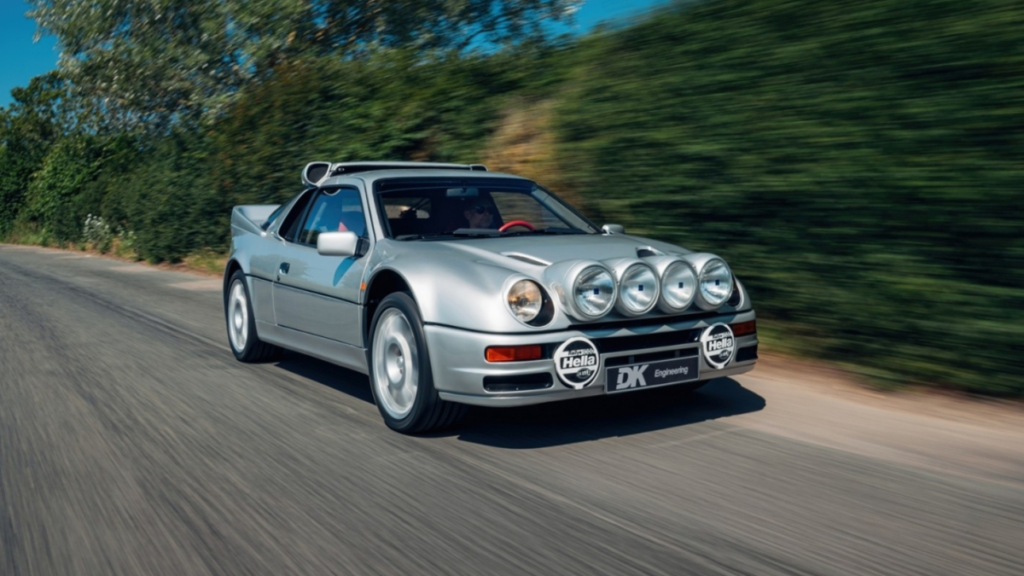
According to the listing, this example is understood to be the only RS200 finished in silver. It comes with 18-inch Raceline competition wheels, Hella 2000 lenses and covers, and the Evo-spec “bunny ears.” Inside, the cabin follows the standard configuration with red bucket seats and a red-rimmed steering wheel, though it gets upgraded carbon-fiber door cards.
The mid-mounted 1.8-liter turbocharged engine produces around 400 horsepower, sitting between the standard RS200’s 250 hp output and the more powerful Group B rally cars. That figure comes from revised camshafts and other motorsport-specification upgrades. While the listing mentions only a 5-speed manual gearbox, the car likely retained its all-wheel-drive system, a layout ideal for rallying. Audi also made the layout famous with the Quattro.
This RS200, which currently has 2,200 miles on the odometer, also received service work in preparation for the sale, including new high-pressure fuel pumps, a new alternator, a turbocharger rebuild, and other work costing £13,500, or roughly $18,400 at current exchange rates.
Rally Roots Run Deep
The asking price for this unique left-hand-drive rally special isn’t disclosed. It is also located outside London, making it a bit more difficult for interested American buyers to get, even if its age should make importation less complicated than it would be for a newer car.
That’s just the reality for many American buyers interested in Ford’s rally heritage, which has always been more prominent in Europe. In the U.S., the automaker’s image is more closely tied to pickup trucks like the F-Series. Looking ahead, the company appears to be leaning on its motorsports heritage with new rally-inspired models, including electric vehicles developed in collaboration with Renault. Again, however, those models are not expected to make their way stateside.