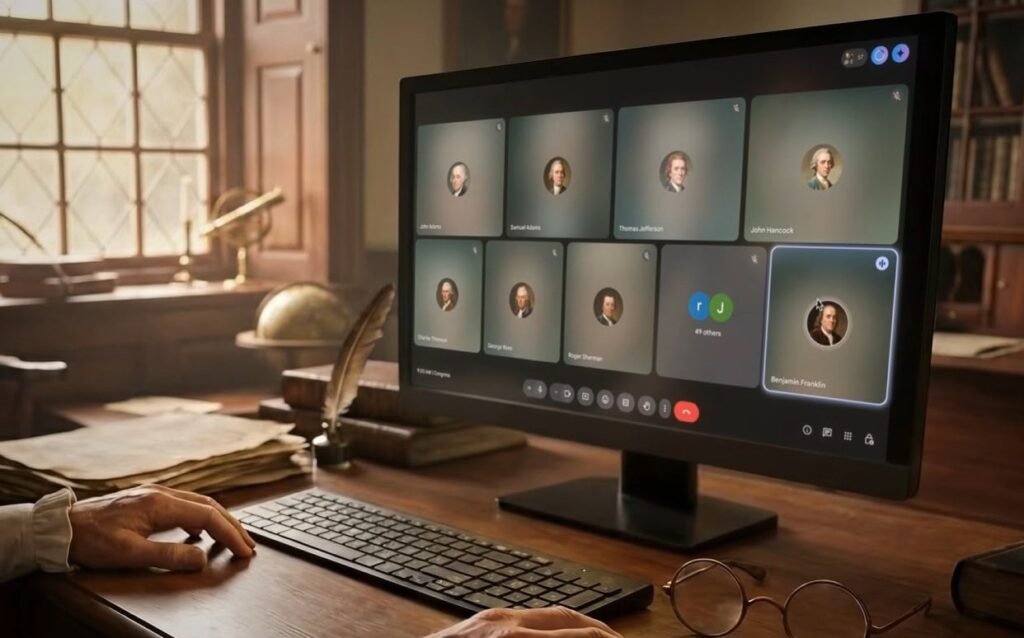

Tech marketing campaigns love a good “what if” scenario. However, Google’s latest promotional spot takes historical revisionism to a completely different level. To mark the United States’ upcoming 250th anniversary, the company launched a highly stylized commercial that drops modern productivity software right into the American Revolution. Carrying the tagline “Group project, but make it 1776,” the advertisement imagines the Founding Fathers ditching parchment and quills to draft the Declaration of Independence using Google Workspace and Gemini AI.
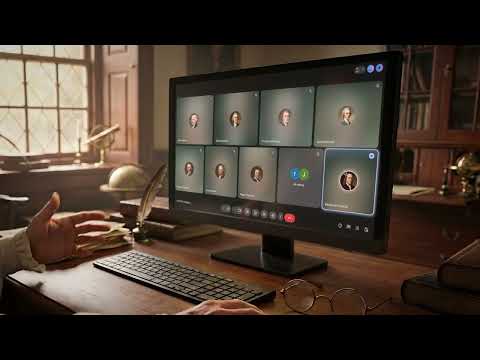
The ad features a largely off-screen Thomas Jefferson getting urgent text messages from Benjamin Franklin checking on the status of the draft. From there, the historical figures dive into a thoroughly modern workflow. They propose text edits via Google Docs suggestion mode, arranging a call through Google Calendar, and hosting a remote huddle via Google Meet where every single participant hilariously leaves their camera turned off. The corporate satire wraps up with electronic signatures and celebratory fireworks.
Gemini enters the revolution
Because this is a tech ad, artificial intelligence plays a distinct role in coordinating the revolution. The commercial shows the founders using Google’s generative video features and the “help me visualize” tool to mock up alternative designs for the national seal. Meanwhile, the Gemini assistant takes automatic transcription notes during their team meeting. In the final gag of the video, the historical figures even consult the AI chatbot for advice before rejecting a document edit-access request from King George III.
Google CEO Sundar Pichai promoted the campaign on social media, joking that the creative spot “puts the history in version history.” Structurally, the marketing team took careful steps to keep the tone lighthearted. The clip avoids suggesting that generative text could actually improve or replace the foundational wording of the historical document itself.
A sharply divided public response
Despite the lighthearted intent, the internet’s reaction split down the middle across different social platforms. On YouTube and Instagram, public comments leaned heavily toward the positive, with users praising the creative humor, the stylized visual aesthetic, and playful cameos.
However, the response on alternative networks like Bluesky shifted toward heavy skepticism. Multiple critics and academics labeled the premise tone-deaf, arguing that the marketing push misrepresents the reality of meaningful human work. Historian and CUNY professor Angus Johnston pointed out the internal contradiction of using a historic democratic breakthrough to promote automated corporate tools. Johnston noted that even within a fictional joke, it remains incredibly difficult to argue that automated algorithms are genuinely useful or ideal mechanisms for historic political organizing and deep human collaboration (via TechCrunch).
The Android Headlines Take
Outside of the criticisms regarding the scenario, this ad seems to show a course correction for Google’s marketing department. In the past, Google faced harsh backlash for advertisements depicting parents outsourcing heartfelt human interactions—like writing a child’s fan letter—to a chatbot. On the other hand, the new commercial shows AI as an assistant for mundane logistical tasks rather than the current creative core. Nobody wants a machine to write a declaration of freedom. However, having an AI transcribing a disorganized meeting or handling schedule conflicts demonstrates Google has finally realized that AI should be used to enhance human inspiration, not replace it.
The post Google Reimagines the Declaration of Independence with AI and The Internet Is Divided appeared first on Android Headlines.