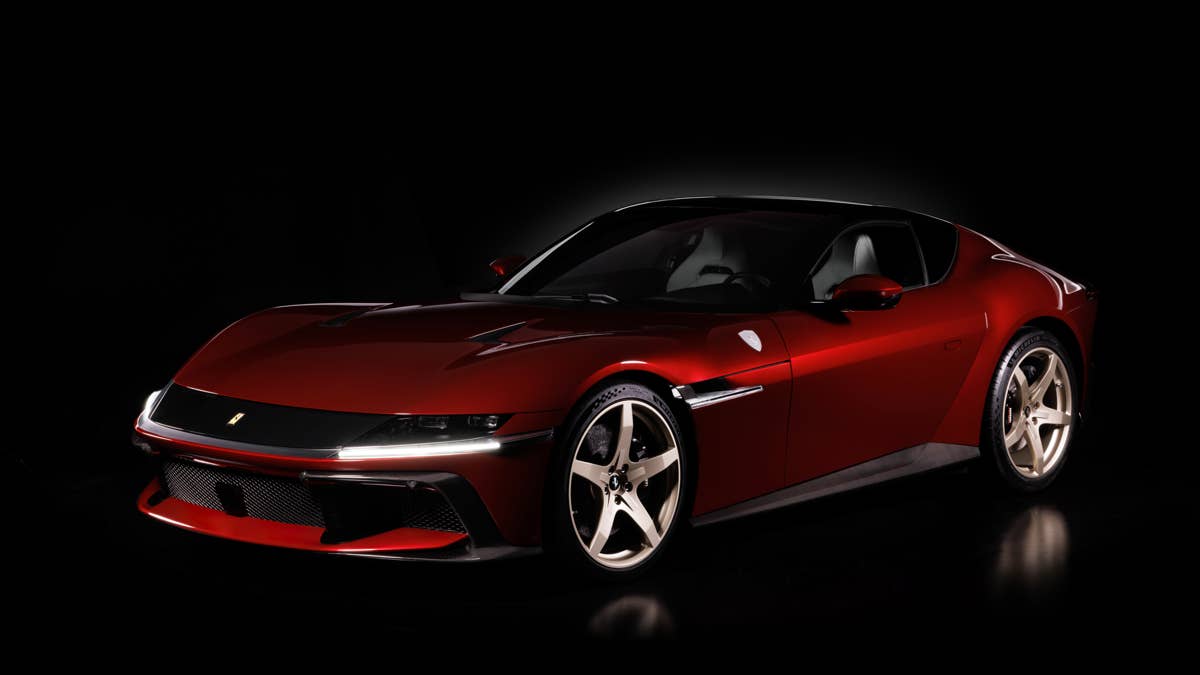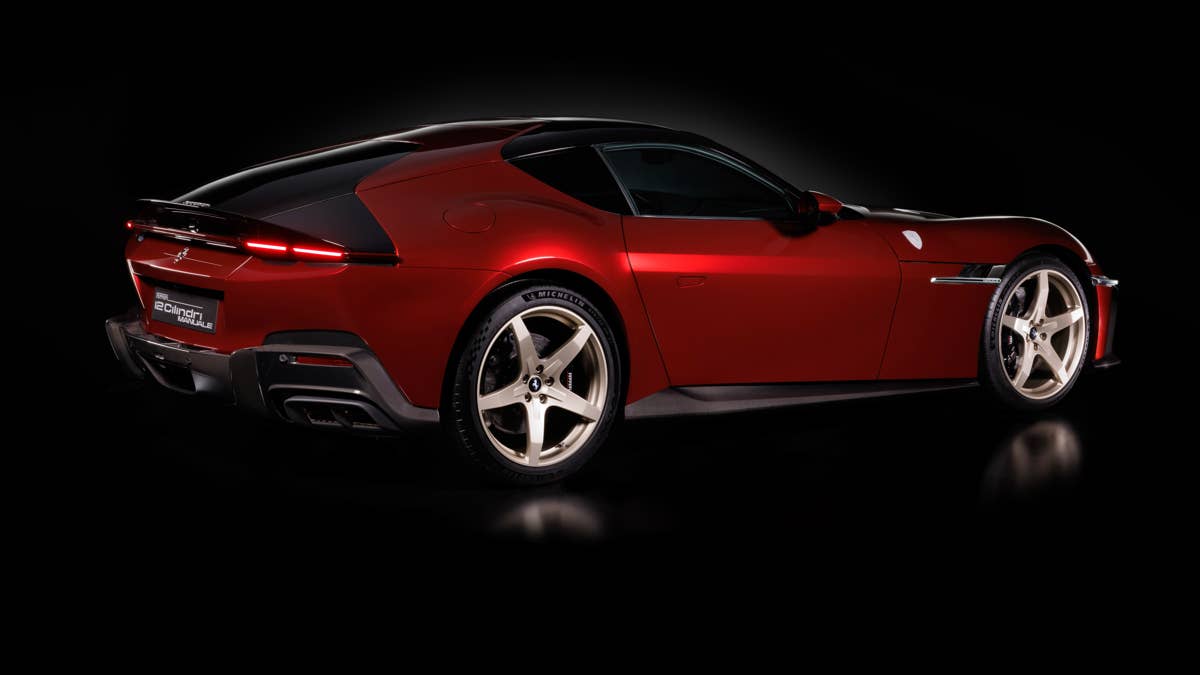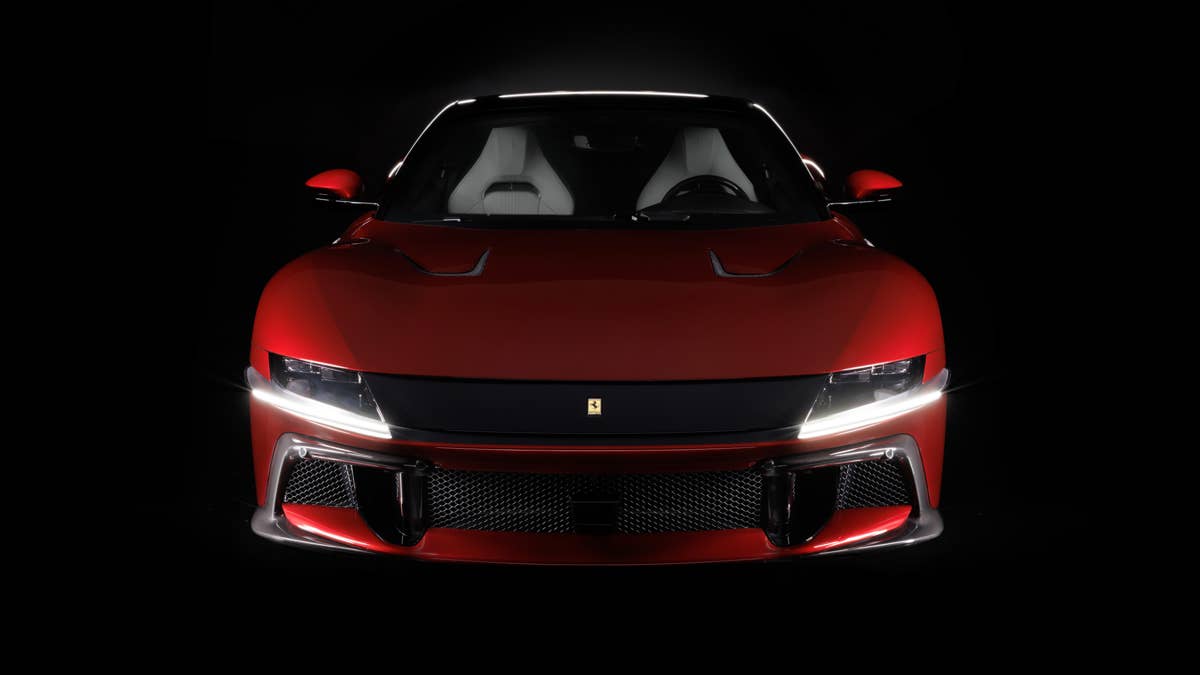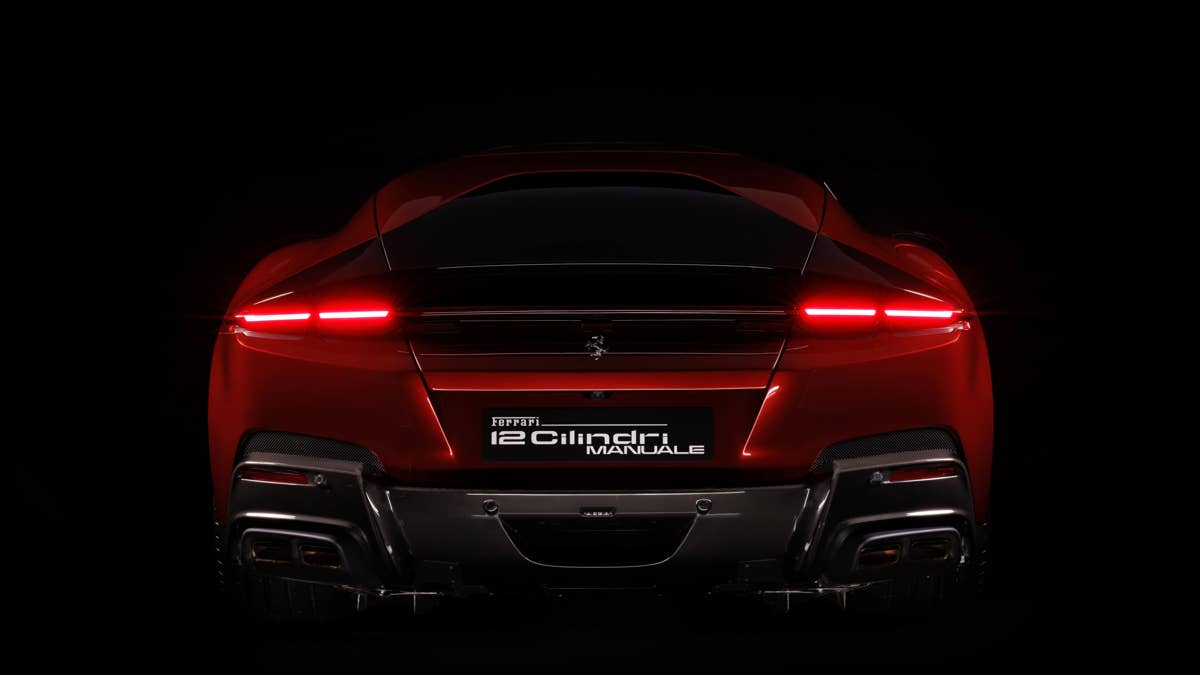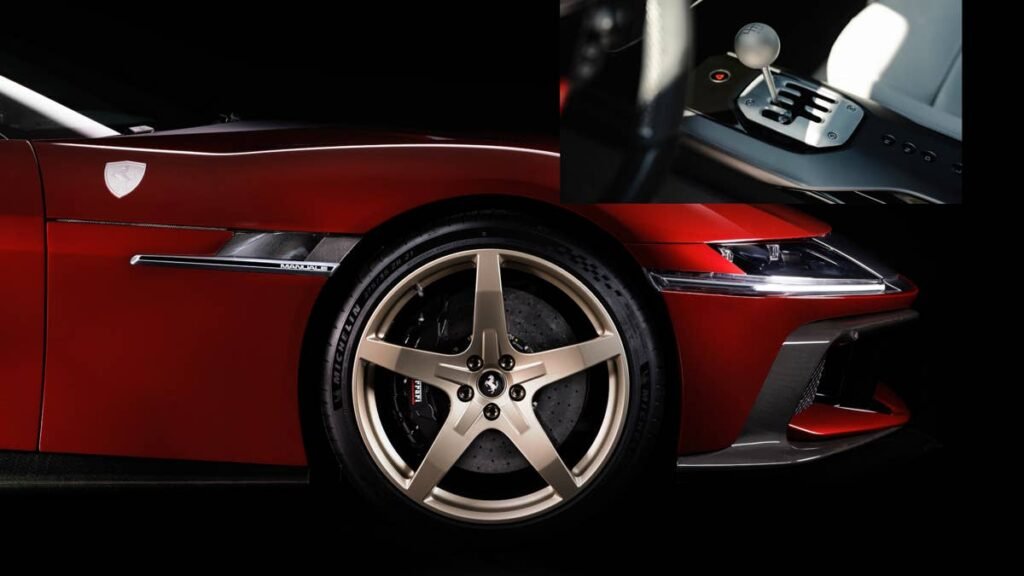
Not too long ago, Ferrari seemed completely averse to the idea of producing new manual transmission cars, though some hinted stick shifts could return in a highly limited form. Now, Maranello has made dreams come true, debuting the 12Cilindri Manuale. But there’s a twist. Like the mind-blowingly clever Koenigsegg CC850, Ferrari’s new manual transmission has no mechanical connection to the transmission driving the rear wheels, and what the 1,499 lucky buyers – referencing the displacement of the first Ferrari V12 in 1947 – will enjoy is actually the first six ratios of an eight-speed dual-clutch transmission. So, how does it work?
Ferrari Debuts New Manuale-By-Wire System
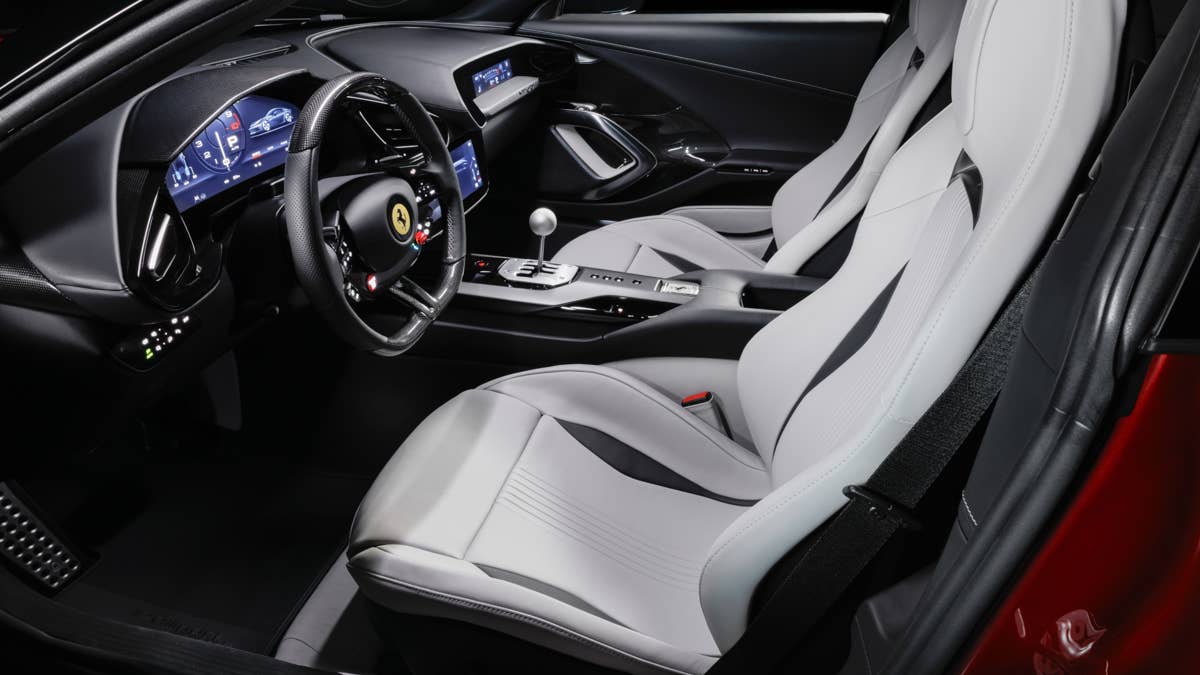
The new Manuale-By-Wire system was probably named at the end of a long day, or just before lunch (same thing in Italy, really), but it’s as analog an experience as possible, with Ferrari working alongside the team behind its Hypersail racing yacht to design a new shifter and clutch-by-wire system completely from scratch. It starts with machining a piece of solid high-strength steel to create a central rotating block, atop which the gear selector self-centers through a system of eccentric rollers. Real springs help deliver a sense of analog, mechanical feedback and resistance, and the same is true for the clutch pedal, which has a torque motor to deliver progressive levels of effort. When the pedal is depressed, the clutch pedal position sensor initiates the hydraulic actuation of the DCT’s clutch pack, allowing a gear to be selected. Ferrari has made the clutch sensitive enough that jerking or even stalling is possible, but to preserve the integrity of the transmission, the manual shift gates have lockouts to prevent a gear that is too low for the engine’s current engine speed from being selected. In other words, you won’t accidentally shift into 1st at highway speeds.
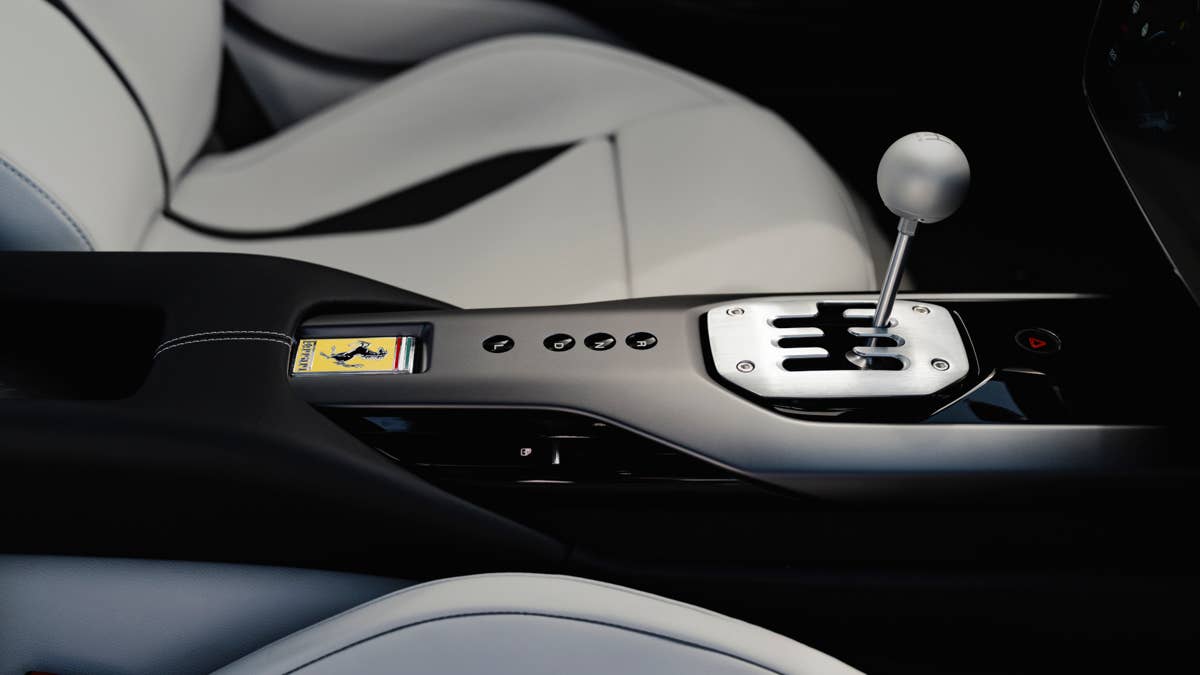
When in auto mode, which can be activated by pressing buttons on the transmission tunnel, the ball-shaped shifter’s H pattern illuminates in white, and when manual operation is active, it glows orange. You can also go from auto to a pre-selected gear by shifting into the chosen ratio, which activates a display on the cluster showing how high the engine’s revs will go. Let go of the clutch, and bang, you’re off in that gear. Unlike the CC850, you can’t spec paddles behind the steering wheel for a third means of interacting with the transmission, but we like that. A new Ferrari you can heel-and-toe in is a big deal, even if it’s actually an auto, and if you are offered a 12Cilindri Manuale and find a twisty road, you should enjoy the car’s unique character and relative rawness as often as possible; when you’re cruising, a regular auto mode is all you need anyway. Besides, if you want a paddle-shift experience, there are surely plenty of other Ferraris in your garage to satisfy that desire. Interestingly, this manual version is only 11 lbs heavier than the regular 12Cilindri, coming in at 3,450 lbs (dry weight).
Ferrari 12Cilindri Manuale Styling Changes: If You Know, You Know
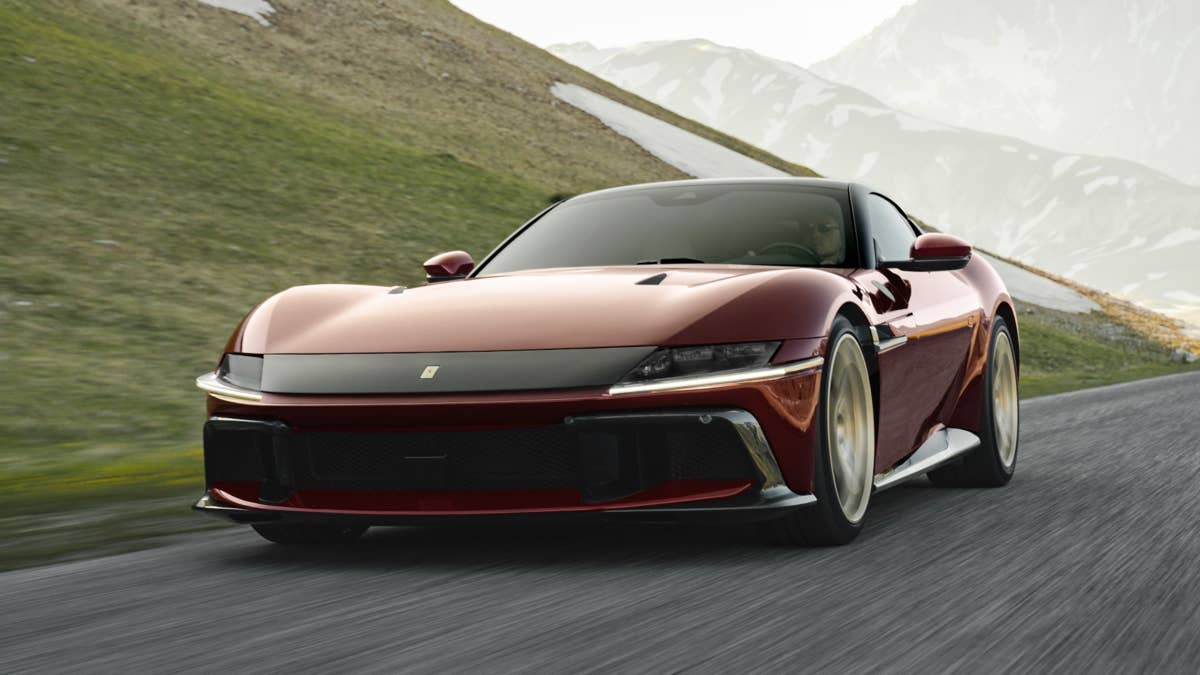
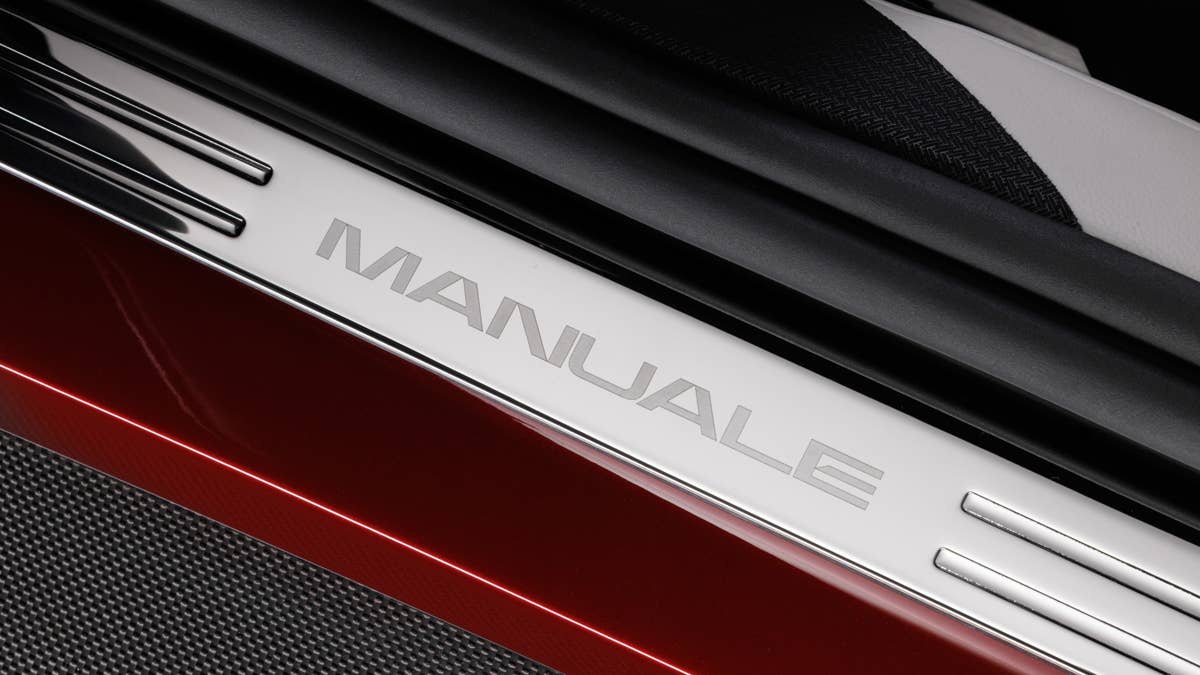
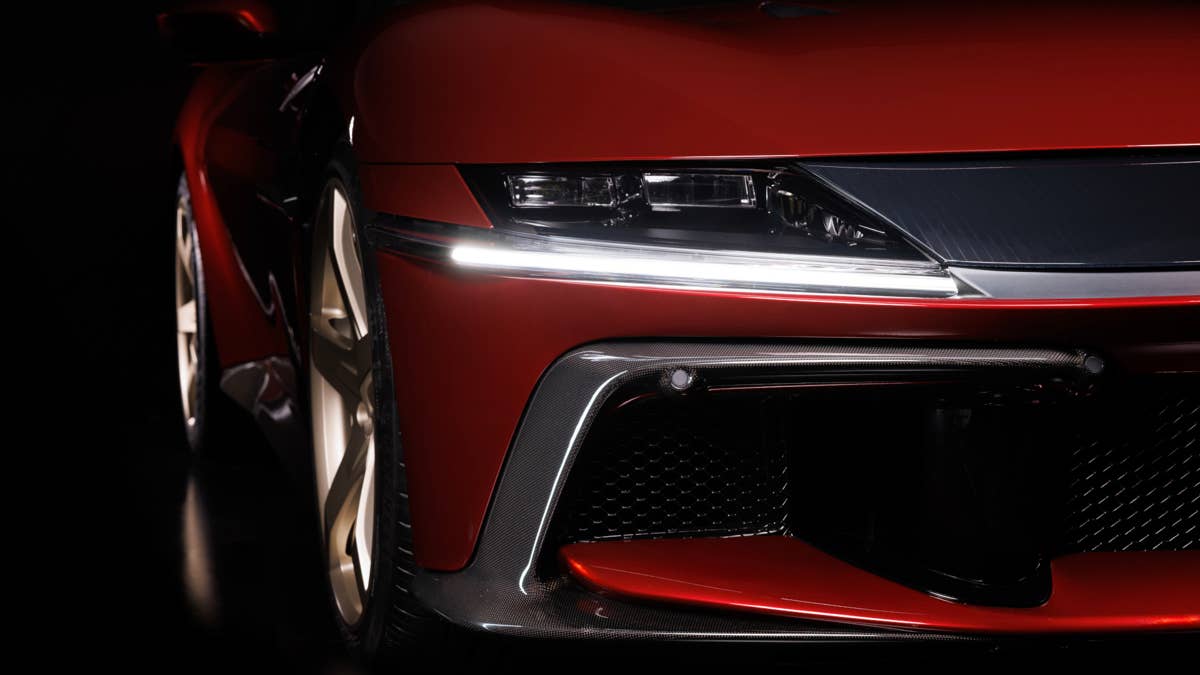
At first glance, the 12Cilindri Manuale looks no different from a regular 12Cilindri, and the engine is unchanged, with the 6.5-liter naturally aspirated (and non-hybridized) V12 still delivering 819 horsepower, still revving to 9,500 rpm, and still taking the car to a top speed north of 211 mph. Ferrari claims the regular 12Cilindri will do 0-2 mph in 2.9 seconds, and this Manuale variant is close behind at three seconds flat. But get close to one, and you’ll see there are several subtle refinements. Up front, the black mask now has a pinstripe finish paying homage to the 365 GTB4, and the motif is repeated on the moving rear wings. On the wings, the scudetto (shield) is embossed in a process normally undertaken for precious coins. You also get special forged alloy wheels (available in a choice of four finishes), and the standard aluminum door sills get a laser-engraved logo of the car’s name. Opt for carbon fiber here, and the logo is painted.
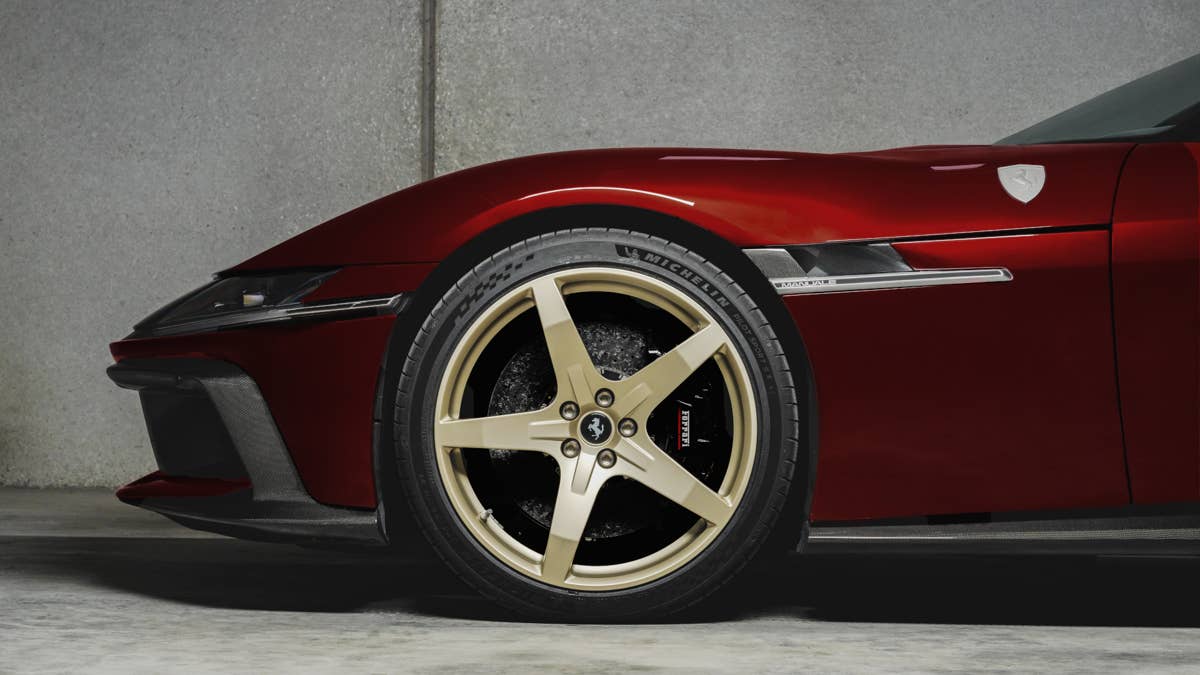
Speaking of customization, Comfort and Racing seats are available with six vertical grooves, a nod to the gated shift lever, and every car goes through the Tailor Made program, with a plaque in silver or carbon fiber between the seats confirming that. Customers can choose a livery that references the six-speed, and 25 iconic Ferrari colors are available, including the Rosso Rubino seen here, Argento Nürburgring (silver), Nero Daytona (black), Rubino Micalizzato (red), Rosso Dino (red), Giallo Montecarlo (yellow), Verde Zeltweg (green), Azzurro La Plata (light blue), Blu Pozzi (blue), Bianco Mille Miglia (white), and Viola Hong Kong (purple). It all depends on how much you’re willing to spend, and this limited edition is surely considerably costlier than the DCT version, which starts at around $465,000 and can balloon to almost three-quarters of a million dollars.
Autoblog’s Take
We love that Ferrari has found a way to revive the manual transmission, even if it relies on a DCT. While the limited production run means this 12Cilindri Manuale is only for the few, its existence shows Ferrari is willing to pivot to customer desires, and we have no doubt that the examples set by Koenigsegg and now Ferrari will inspire other automakers to resurrect or sustain manual transmission tradition. Hyundai, Ford, Subaru, and Porsche have all filed patents for similar technology, so if you don’t earn eight figures in a year, there’s still hope that trickle-down economics and technological convergence will mean you can enjoy a manual in other new cars before long. BMW said the end of the manual is nigh because it can’t keep up with the torque of turbocharged engines while delivering the required refinement, which is why the M2 CS didn’t get a manual and the M3 CS Handschalter is down on output compared to its auto sibling. But Ferrari has managed to rein in 500 lb-ft with this Manuale-By-Wire system, so perhaps the stick isn’t dead yet – it just needs a reinvention.