[Disclosure: AgFunderNews’ parent company AgFunder is an investor in Sylvarum]
Using non-thermal plasma or high voltage electrical charges on seeds to tackle fungal pathogens, improve germination, and boost crop yields is an intriguing new field in agtech. But is it ready for prime time?
It’s still relatively early days, with some firms that tried cold plasma once wary about taking another look, says Sylvarum. But the tech is advancing rapidly, and the proof points are now there, says the firm, which claims to have “the biggest plasma reactor to treat seeds in the world.”
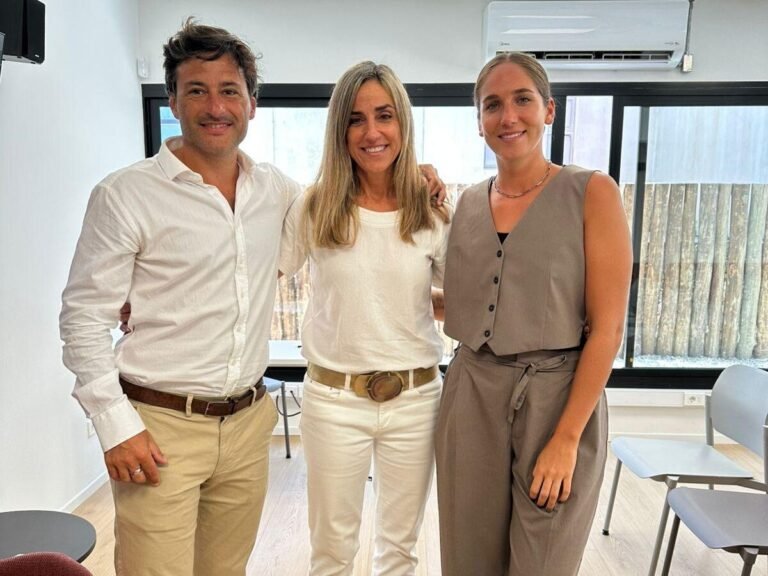
Founded in 2021 by Manuel Sobrino (COO) and Guadalupe Murga (CEO), Sylvarum has conducted pilot programs with leading seed and food industry players across Latin America, Europe, and the US, demonstrating faster germination, improved seed vigor, reduced dormancy, lower mycotoxin levels, and the successful recovery of seed lots previously considered unmarketable.
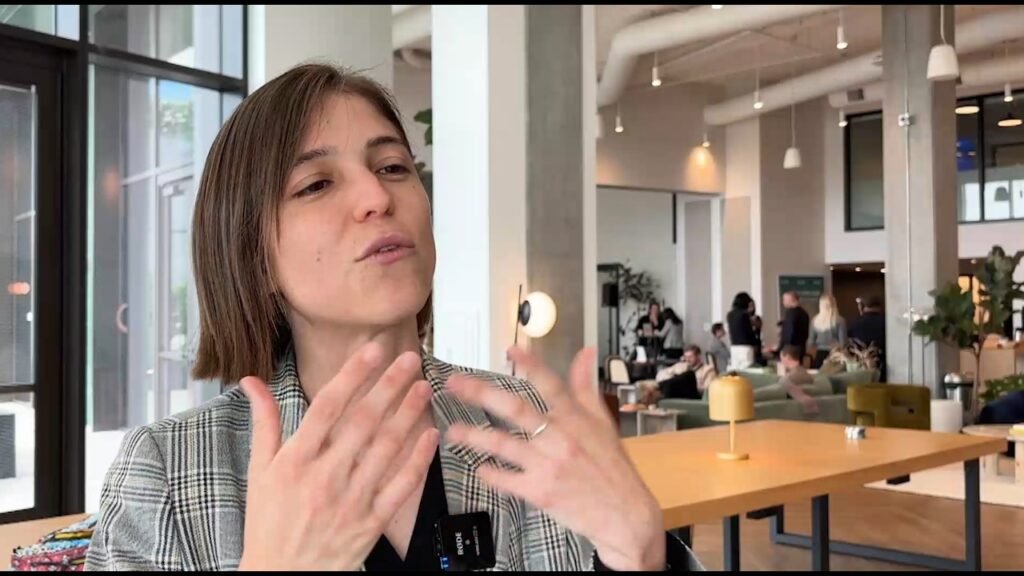
AgFunderNews (AFN) caught up with Murga (GM) at AgFunder’s AGM to discuss Sylvarum’s progress.
AFN: What is non-thermal plasma and how does it work on seeds?
GM: Plasma is the fourth state of matter, and to create it, we use high voltage electrical discharges to ionize gases and create reactive species. We can have combinations of different reactive species, ions, electrons, all of them together, and depending on that combination and the concentration, the mechanism of action will vary.
We talk about controlling seed-borne pathogens, improving the hydrophilicity of the seed, which triggers germination faster because [it makes the seeds] better at absorbing water, and the third one [mechanism of action] is a more complex one related to hormones.
Some of the reactive species we use are already signals inside the seeds, signaling specific processes like defensive processes and germination processes, and because of that we can also improve germination and defenses in the growth process of the plant in the field.
AFN: How advanced is the tech commercially?
GM: Plasma is complex, but there is a lot proven already. We have five seasons of working in the field, demonstrating the yield improvement and pathogen control effects. So we can already say that this is ready for commercialization, that this is ready in terms of the implementation of the technology and compatibility with other seed treatments, although it’s not a well-established technology.
There are now many teams, companies, and researchers working on non-thermal plasma technologies. But [what differentiates Sylvarum] is we have the biggest plasma reactor to treat seeds in the world, and we have unlocked the most challenging part of scaling this technology.
We can build a reactor that works continuously, and it can be integrated in the industry, and that’s also why we are targeting broadacre crops, open field crops like soybean, corn, barley, wheat, and not focusing on specialty crops.
Our technology was created inside the academic ecosystem. My co-founders have been working on this for 15 years, so we are licensing the IP from the universities. But we also have a lot of know-how, as how to treat the seed depends on the recipe. We are creating different plasmas, and you need to understand that some plasmas will be great for that seed, and some plasmas can kill them. Because of that, the most important part is not just the plasma reactor, but also the right recipe.
AFN: How transferable are learnings from one seed variety to another?
GM: It depends. It’s not just related to the seed, the variety, or the species, but also the ecosystem around that seed. Are you planting that seed in a different ecosystem? Are there new pathogens involved?
But when you have more data, you will be able to fine tune the recipe faster, and that’s why it took us five years to develop the first recipe. And now, in a few months, we can have a new recipe for a new variety with a new application, so it’s getting better.
Today, everything is about data. If you have enough data, you can do the process more efficiently.
AFN: How rapidly can you validate the tech and iterate? Do you need to wait until a crop is in the field?
GM: Most of the challenges we are trying to solve are related to seed quality, and we already have a lot of protocols to measure this in the lab. Depending on the seed, it can take a few days to measure germination and pathogen presence. And then if you want to validate the yield improvement, you go to the field.
AFN: What is your business model?
GM: Our technology is targeting seed companies in the broadacre crop space, and we’re talking about tons and tons of seeds per hour. There’s no way to offer that as a service because logistics will kill the math behind the business.
And because of that, the only way is to install our equipment in the middle of the process and be part of that process and not a bottleneck. That being said, we are designing a fee per ton business model where the seed company or processor pays us depending on the amount of seeds that we’re treating.
AFN: What is the ROI for the customer?
GM: Each seed we are working with has a different value in the market, so because of that, calculating or simplifying the ROI is really hard, but I can give you an example.
One specific problem we’re targeting is seed dormancy. Seed dormancy is a physiological evolution in nature. It’s amazing, it’s the way species survive in nature, but in the industry it’s a challenge, because some seeds, when you harvest them, they are not ready to germinate, and you just need to wait.
There is no solution in the industry for that, and for one of our clients, that represents a million dollars per year. So that’s a huge problem that doesn’t have a solution yet.
And with our technology, we can solve it in three times less time than just waiting, and because of that, we can charge them $2 per bag we are treating, and they are avoiding a million dollar loss. So that’s the kind of ROI you can calculate.
AFN: Seeds can be a vector for fungal pathogens, but they’re also in soil, so how useful is just treating the seeds?
GM: When you’re considering the effects of plasma related to pathogens, there are two different aspects to take into consideration. The first one is pathogens that are in the seed, so things like Fusarium and Phomopsis, they are seed-borne pathogens and we can control them. For [soil-borne] pathogens in the field, what we can offer is first a combination with chemicals or different biological treatments, because our technology is compatible with all of them.
But we are also acting as a priming process, which involves preparing the seed better for stressors and pathogens in the field. We are not going to eliminate or control the pathogen in the field, but we are preparing that seed to defend itself better.
AFN: How do regulators regard your technology?
GM: When you talk about regulations in our space, you need to consider three questions. The first one is, what are you claiming to generate with the technology? The second is are you generating any kind of residue in the seed treatment, and the third is are you genetically modifying the seed?
The answer to the first question is it depends. If you are considering this technology as a pesticide, then you move forward with the second and the third questions, and in both cases, the answer is no. We don’t generate any residue, and we don’t modify the genome of the seed, and because of that, there are no regulations, but just manufacturing practices we need to consider.
AFN: How much progress have you made?
GM: Our biggest milestones so far have been first creating the most scalable plasma reactor for this kind of seed treatment, and we are targeting tons per hour next year. And second, we are running seven active pilots with potential customers that are validating our technology, and targeting 10 by the end of this year.
We are working with the four principal crops in the industry: corn, sunflower, soybean, and wheat, and also barley, through collaborating with malters, so that’s another interesting application for our technology.
AFN: What’s the potential benefit of non-thermal plasma on the malting process?
GM: We are really good at germinating seeds, and malting is basically germinating barley seeds or other seeds, so we can accelerate the water absorption process, reducing steeping times and accelerate the germination process. We are basically trying to improve the productivity of their facilities.
AFN: What is the biggest challenge you’re facing?
GM: I would say that the biggest challenge as a company working in the plasma space is that some seed companies tried to implement plasma in the past and didn’t have a good experience. What I have to say about that is that if you tried plasma, it’s like saying I tried tea and I didn’t like it. What about the rest of the liquids, right?
You need to try more, and because of that, the first process, when you are onboarding a new client, is to do a screening of different treatments. You need to be patient, move forward and try different plasmas until you find the right recipe.
Further reading:
Fertilizer… without Haber Bosch: Can AI-optimized plasma make green ammonia cost-competitive?
The post 🎥 Can non thermal plasma seed treatment move from lab curiosity to broadacre reality? appeared first on AgFunderNews.