After having a baby, I never fully returned to the office. It was 2021, so remote and hybrid positions were the norm. When my maternity leave was up, returning to work didn’t seem like such a big deal. I was home. I could breastfeed. I was in sweatpants. What more could I want?
With my baby and nanny in my periphery, I revved up the ol’ computer and logged on from the comfort of my apartment. Business as usual. The only difference? A four-month-old dependent and postpartum depression (PPD). Maybe going back to work wasn’t as straightforward as I thought it would be.
Planning And Feeding With PPD
Originally, I saw the proximity to my baby during the eight-hour workday as a godsend. A lot of my struggles with PPD revolved around executive function. My brain could not get from point A to point B to point C when it came to the logistics of pumping, dumping, and everything in between. Nursing was easy. I didn’t have to plan, calculate, or freeze anything.
But it also positioned me as even more central than I already was within our new little family. Even if I had a long-scheduled meeting on my calendar, if my nanny approached with a wailing, hungry infant, there wasn’t anything I could do other than turn off my camera and pop out my boob.
Suddenly, even though I was “back at work,” I felt stuck at home again. Adjusting to the pace of work and the baby’s needs felt insurmountable. Instead of feeling relief when the nanny showed up, I felt dread. Feeding the baby, feeding myself, and being back at work all in the same 450-square-foot space was my own Inception.
I asked Allison Yura, LCSW, and a therapist trained in perinatal mental health, about creating boundaries with work and postpartum. She told me, “Working from home comes with many benefits, but many parents find it hard to focus on work when they hear their baby in the other room. Switching quickly from the parenting hat to the work hat can cause stress and confusion for some parents.”
Three Babes In A Trench Coat
Because our company became mostly remote, the first time I saw my coworkers after maternity leave was at a team lunch. At this point, PPD and I were pretty cozy. I had barely left the house, let alone socialized. So when I had to show up for an in-person lunch, getting dressed, wearing makeup, and heading up the subway steps all felt like play-acting.
I was three babies in a trench coat pretending to be a working woman. How could I not be found out? If one of my colleagues asked how I was doing, that meant they knew I was struggling, right? I felt like an alien in my body as I greeted people I’d known for almost a decade. I wanted to bang on the glass and cry for help, but I didn’t want to scare them away. When they asked, “How’s mom life?” I answered, “Great!”
I’m not alone, though. “It is common to feel that the postpartum depression, or the postpartum experience in general, has changed the way the world appears!” Yura tells me. “Integrating this new role as a parent can take time and may change the way you feel out and about in the world and interact with friends and family.”
Maybe I wasn’t three babies in a trench coat, but I was a new version of myself introducing myself to the world.
Masking In Plain Sight
I thought being in proximity to my baby while working would negate the rumblings of “mom guilt.” Quite the opposite. I felt more like a crazy ex-girlfriend, watching my nanny take my baby out for walks on beautiful sunny days as pangs of jealousy coursed through my veins. Irrational postpartum thoughts had me spiraling over time lost with my baby.
But in video meetings, I could easily snap into bright, cheery, competent mode. On the one hand, Yura tells me that work can be a break from the new postpartum reality — but is it sustainable? “Forty or more hours a week of masking can get tiring and will likely lead to a restraint collapse at some point,” she says.
That doesn’t mean masking is always bad. Sometimes it helped me get through the day. It gave me structure when everything felt chaotic and allowed me to show up for work even when I felt like I was unraveling. But the more convincing I was at acting fine, the harder it became for anyone — including me — to recognize how much I was struggling.
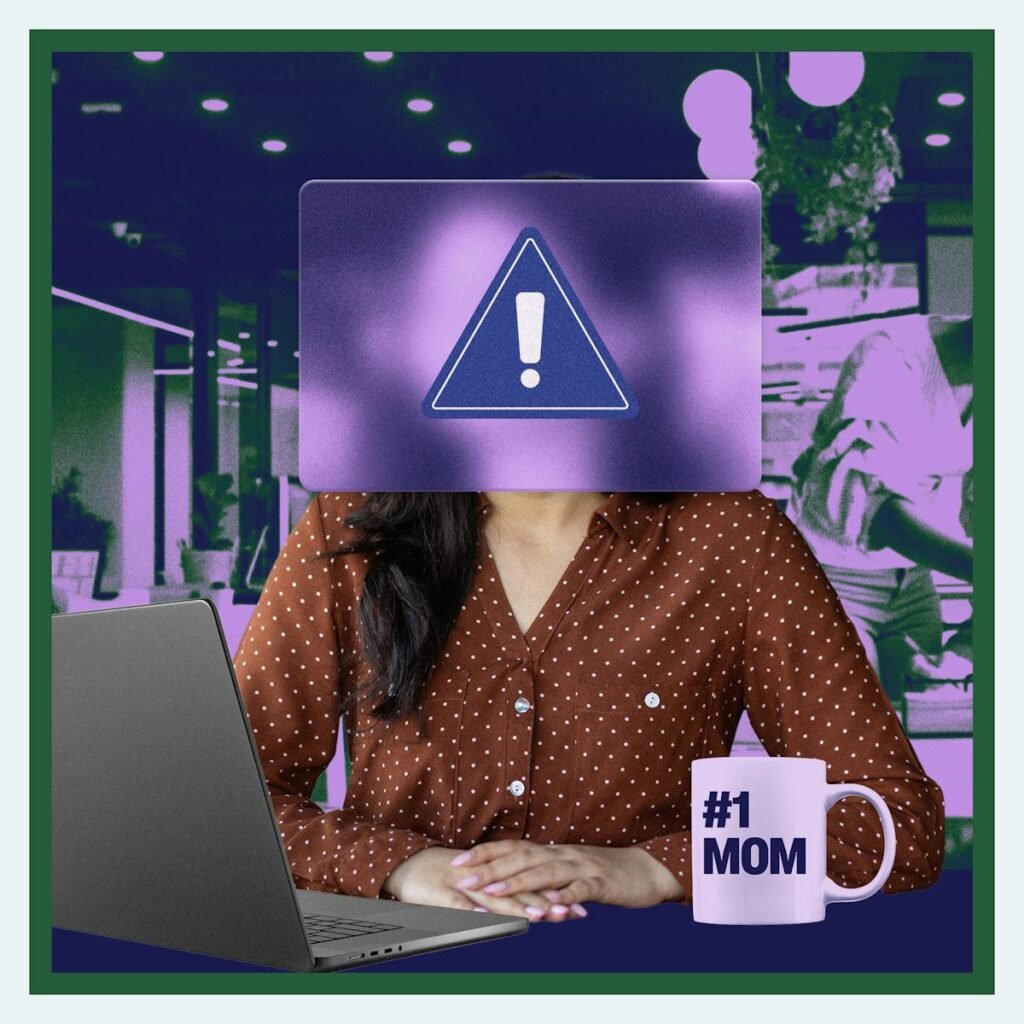
Returning to work with PPD wasn’t the clean break from motherhood that I imagined. If anything, remote work blurred the boundaries even further. I was toggling between employee, mother, patient, milk machine, scheduler, and anxious overthinker, sometimes within the span of a single hour. The world may have seemed to move on as usual, but I was becoming someone new. So no, I never fully returned to the office. But a new version of myself is still showing up to work.
Presented by BDG Studios