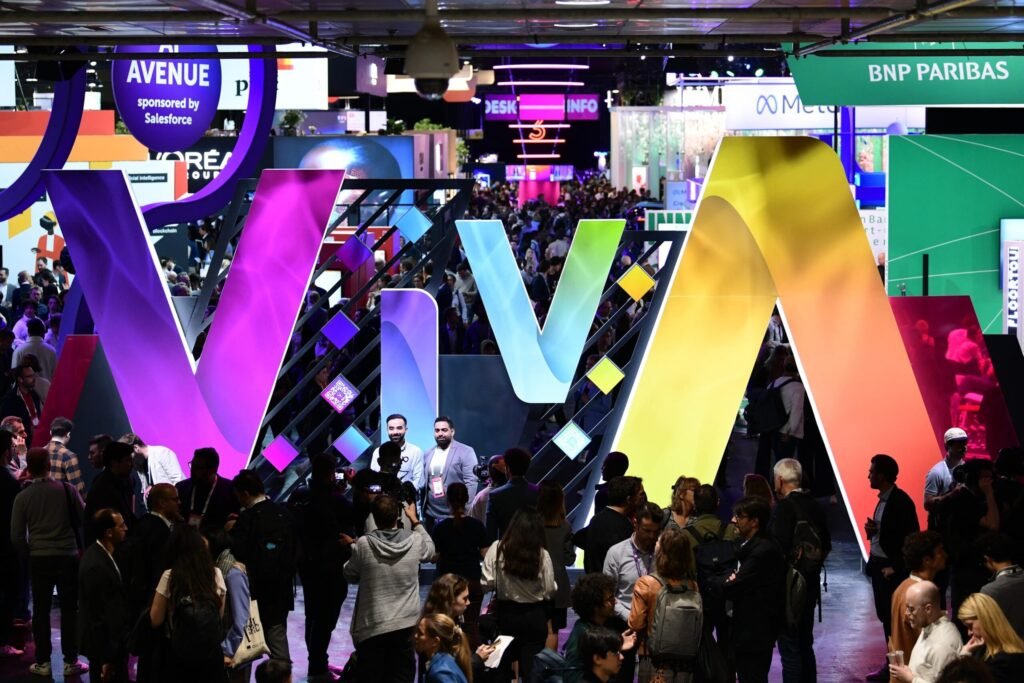

There’s a moment, usually somewhere between the opening keynote and the third unexpected product demo, when you stop thinking of VivaTech as a French trade show. You look around, at the delegations from Singapore, the startup founders who flew in from Lagos, the Silicon Valley executives shaking hands with ministers from the Gulf, and you realize you’re standing at something that has quietly, almost stubbornly, become one of the most consequential gatherings in the global technology calendar.
That didn’t happen by accident. And it didn’t happen overnight.
A bet on Europe
When VivaTech launched in Paris in 2016, the timing felt bold. The world’s tech conversation was dominated by San Francisco and Shenzhen. Europe was often described, a little unfairly, as a continent that regulated innovation rather than generated it. Starting a major tech event in this climate was a statement of intent: that Europe had something to say, and that Paris could be the room where it got said.
The founders, Publicis Groupe and Les Echos, weren’t just building a conference. They were building an argument. The argument was that Europe’s biggest tech event didn’t need to be a pale imitation of CES or SXSW. It could be something different: more curated, more international in its ambitions, and rooted in the conviction that European values, around privacy, sustainability, and regulation, were actually a competitive advantage, not a handicap.
That argument, with time, turned out to be correct.
How it grew
The early editions were energetic but modest. A few hundred startups, some big corporate names, an audience that was largely French and European. What changed the trajectory was a deliberate shift in strategy: VivaTech stopped trying to compete with American events on American terms and started doubling down on what made it distinct.
They brought heads of state to the stage alongside startup founders. They made the startup competition genuinely global, drawing applicants from over 150 countries. They carved out dedicated focus areas, Africa Tech, for instance, that signaled to emerging markets that they weren’t an afterthought.
And they bet heavily on the human side of the experience. VivaTech is famously walkable, talkable, and far less sprawling than events like CES, which can feel more like navigating a small city than attending a conference. That intimacy, counterintuitively, attracted bigger names. When you can actually have a real conversation with someone at a booth rather than shouting over a crowd, the quality of interaction improves.
What makes it matter now
By the early 2020s, VivaTech had evolved into something harder to categorize. Part trade show, part policy forum, part cultural moment. The 2023 and 2024 editions drew well over 100,000 visitors each, with representation from virtually every continent. Top executives from Microsoft, Google, Meta, and dozens of major European companies became regulars. So did presidents and prime ministers.
But perhaps the more telling sign of its status is where the conversations happen. Announcements that once would have been saved for Davos or a San Francisco press conference now land at VivaTech. Partnerships get sealed here. Investments get signaled. Policy intentions get floated in front of an audience that includes both the people who write the rules and the people who have to live by them.
That combination, industry, government, startups, and civil society in the same hall, is genuinely rare. Most events skew one way or another. VivaTech has managed to hold the tension between them in a way that makes the conversations more honest and more useful.
The bigger picture
What VivaTech has really done is make the case that the technology story of the next decade won’t be written in one place. It’ll be written in many places at once, in European regulatory chambers, in African startup ecosystems, in Asian manufacturing hubs, and yes, still in Silicon Valley. An event that understands this, and structures itself accordingly is going to keep mattering.
Paris, it turns out, was the right place to make that argument. A city that has always believed in the power of ideas as a form of national identity, hosting an event built on the premise that the best ideas don’t have a nationality.
From the banks of the Seine to every corner of the global tech map, that’s not a bad journey for ten years’ work.
The post From Paris to the World: How VivaTech Became Global Tech’s Most Important Annual Event appeared first on Android Headlines.