Interaction design determines not just how technology works, but who it works for. At the George Washington University’s Corcoran School of Arts and Design, faculty are bringing this concept directly into the classroom by centering those most excluded and impacted by design. The Interaction Design program allows students to learn whose needs are prioritized, whose voices are omitted, and how design choices create or dismantle power structures through rigorous human-centered research, prototyping, and ethical inquiry.
In emphasizing and teaching the critical design process, the Interaction Design program at the GW Corcoran is developing a pedagogy of partnerships through several of its classes, such as Engagement Lab, Collaborative Design Project, and Systems Thinking in which human-centered design is taught through practice-based learning.
Engagement Lab offers a year-long studio experience in which project teams collaborate with a real Washington, DC community partner to identify and respond to local challenges through interaction design. In the 2025-26 academic year, students worked with the DC Department of Transportation to improve safety tech recruitment, retention, and attendance. In this partnership, the students observed safety techs at their posts in different wards, interviewed DDOT staff, and mapped their insights. They also led workshops with safety techs, community members, and school representatives to further explore the safety tech job experience and school zone dynamics.
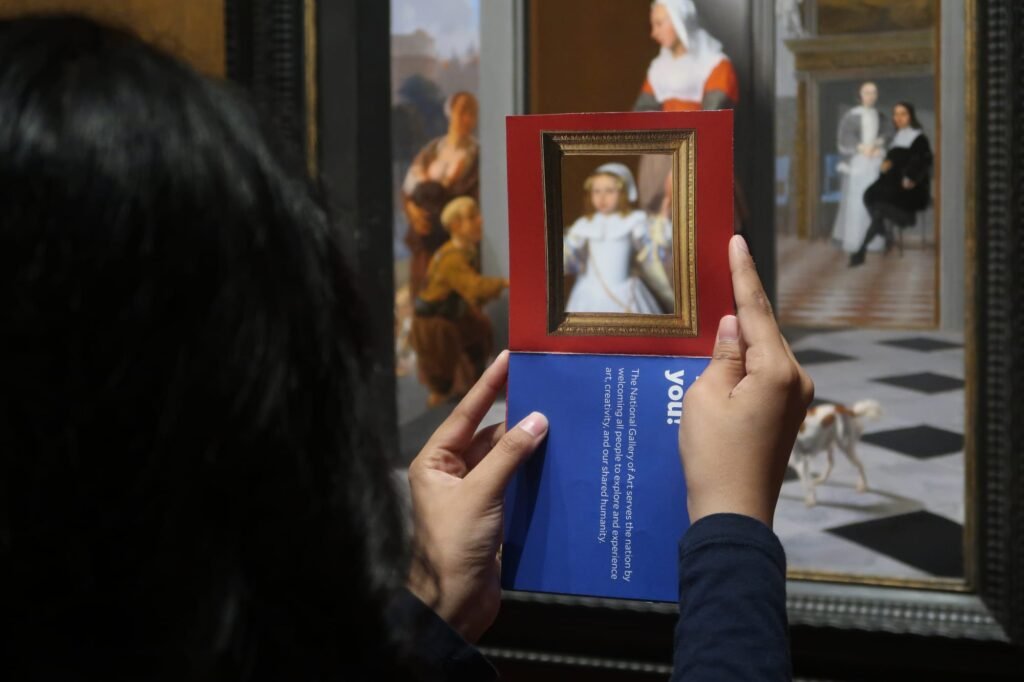
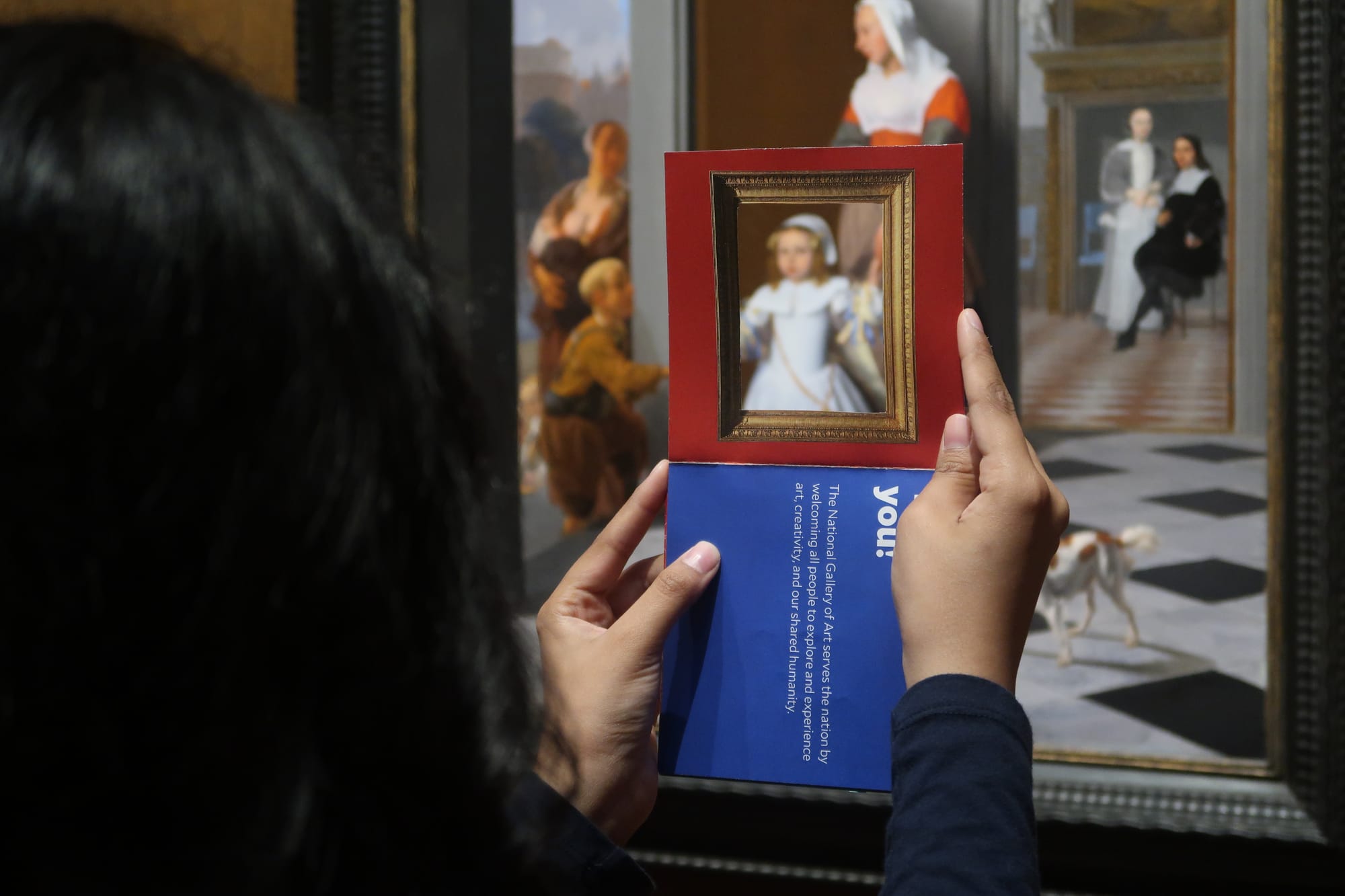
While Engagement Lab dives into the intricacies and nuances of local government and public service, the Systems Thinking class provided a theoretical-creative space for students by partnering with the National Gallery of Art (NGA) in DC. Throughout the course, students engaged in exercises including interviews, workshop design and facilitation, qualitative research, and prototyping to better understand each step of the human-centered design process. To bring pluriversality to the NGA visitor experience, the students developed prototypes spanning digital games, scavenger hunts, accessible community integrations, and physical engagement.
Washington, DC is a city of bureaucratic, cultural, and civic systems and it is also a city where the stakes of design decisions are unusually visible. The Interaction Design program at the GW Corcoran is uniquely positioned within that context, training designers who don’t just understand those systems abstractly but have sat with safety techs in school zones, workshopped with community members across wards, and prototyped new ways for visitors to encounter world-class art. That proximity to real people and real institutions is not incidental to the program’s pedagogy — it is the pedagogy. The designers coming out of this program are being shaped by DC, and in turn, are learning how to shape it.
To learn more visit corcoran.gwu.edu.