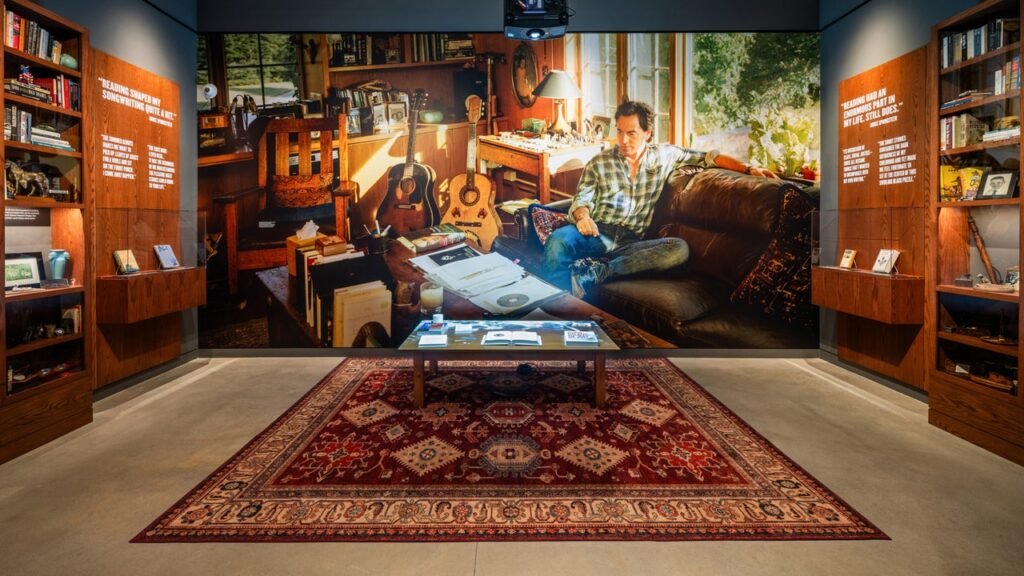
From the wood boardwalk that leads to its front doors to the weathered steel of its facade to the rough-hewn timber beams inside, there’s an unmistakable postindustrial feel to the new Bruce Springsteen Center for American Music. Opening to the public on June 13, the center is a space built to house Springsteen’s archives and exhibitions on his life and music, but also to tell the broader story of American music. It’s also a tribute to the working-class American environment so central to Springsteen’s music and life.
Naturally, the center is on the New Jersey shore near his hometown. It is located in West Long Branch on the campus of Monmouth University, where Springsteen played many of his earliest shows. It also sits just four blocks from where The Boss wrote his 1975 masterpiece “Born to Run.”
As the center’s name suggests, it’s not a museum solely about Bruce Springsteen—a distinction made at the behest of the ever-humble musician himself. The idea for the center came from Bob Santelli, a longtime Rolling Stone journalist who was among the founding curators of the Rock & Roll Hall of Fame, which opened in 1995, and several other music-related museums in the three decades since. In Springsteen’s music he saw an opportunity to explore a deep connection between the art and the place it’s from.
More than a tribute to a superstar
Santelli, who has been writing about Springsteen since 1973, reached out to him to ask if he’d be interested in creating a museum. “This was an opportunity to make sure that Bruce’s legacy is preserved and celebrated in the state that he’s synonymous with,” Santelli says. Springsteen was not keen on the idea of making a museum all about himself. “He said, my feeling is that I’m a part of the American music story. I’m a chapter of it.” So Santelli reworked the concept, and broadened it to place Springsteen within the longer arc of American music.
The architecture firm CookFox won an invited 2018 competition to design the center. Its cofounder, Rick Cook, says that although he first saw Springsteen in concert back in 1977, he was not exactly an enthusiast. “The truth was I wasn’t a Bruce fan because I’m not a music fan specifically,” he says.
But then Cook read Springsteen’s 2016 autobiography, Born to Run, and soon after went to see Springsteen on Broadway. He became a convert. “Bruce has his own magic act, and its foundation is storytelling,” he says. “So I started to view the project through that lens.”
A tribute to place
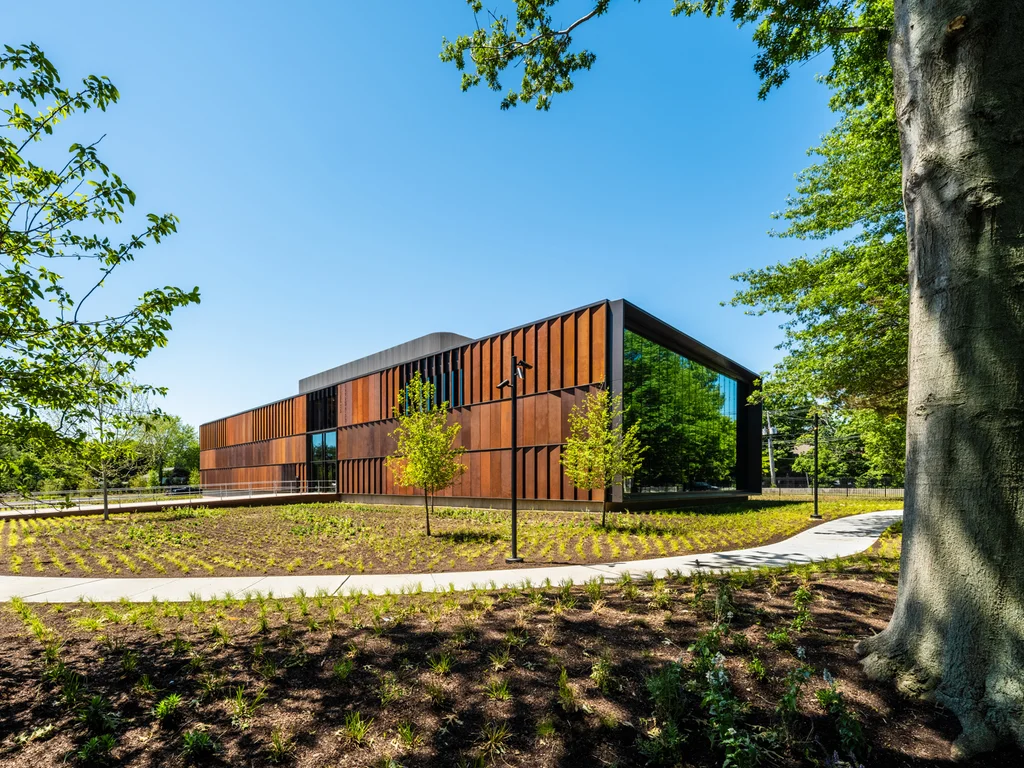
Cook’s team drew on the working-class themes of Springsteen’s music and persona to develop the center’s design concept. “We wanted it to speak about the kind of postindustrial America that Bruce writes about, the beauty and nobility of these places,” he says.
Santelli says the idea was a good fit from the start. “There wasn’t a whole lot to change, to be quite honest,” he says. “We were really, really pleased with the simplicity, but the elegance also . . . it captured the industrial workmanlike environment that Bruce wrote his songs in and writes songs about.”
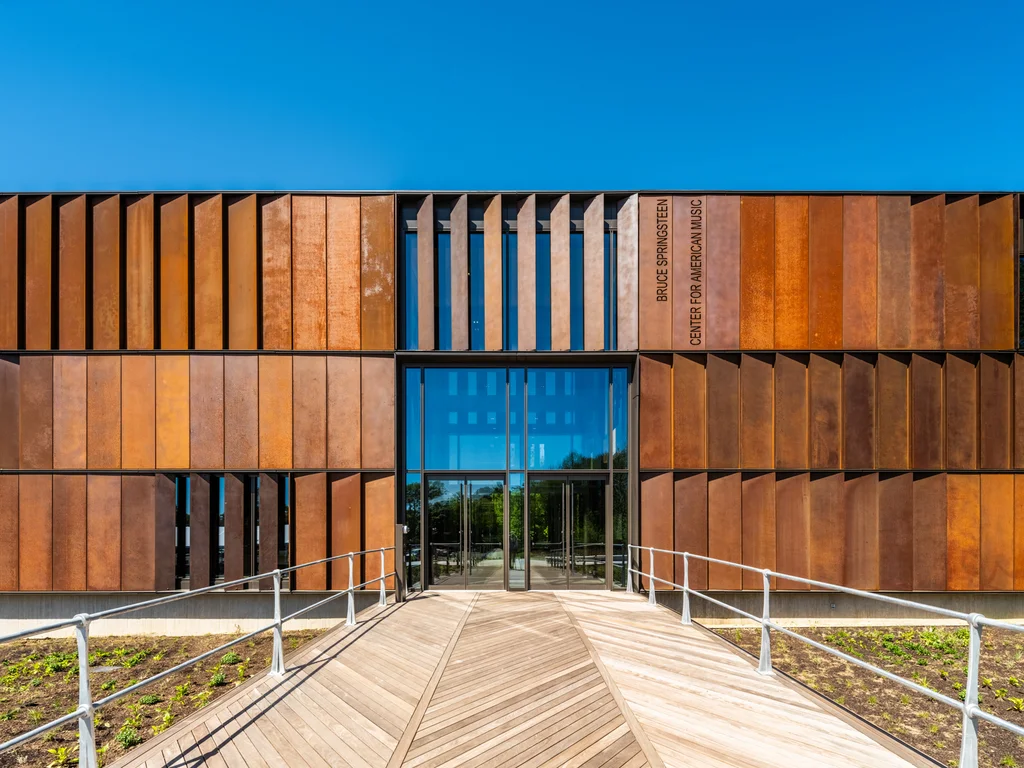
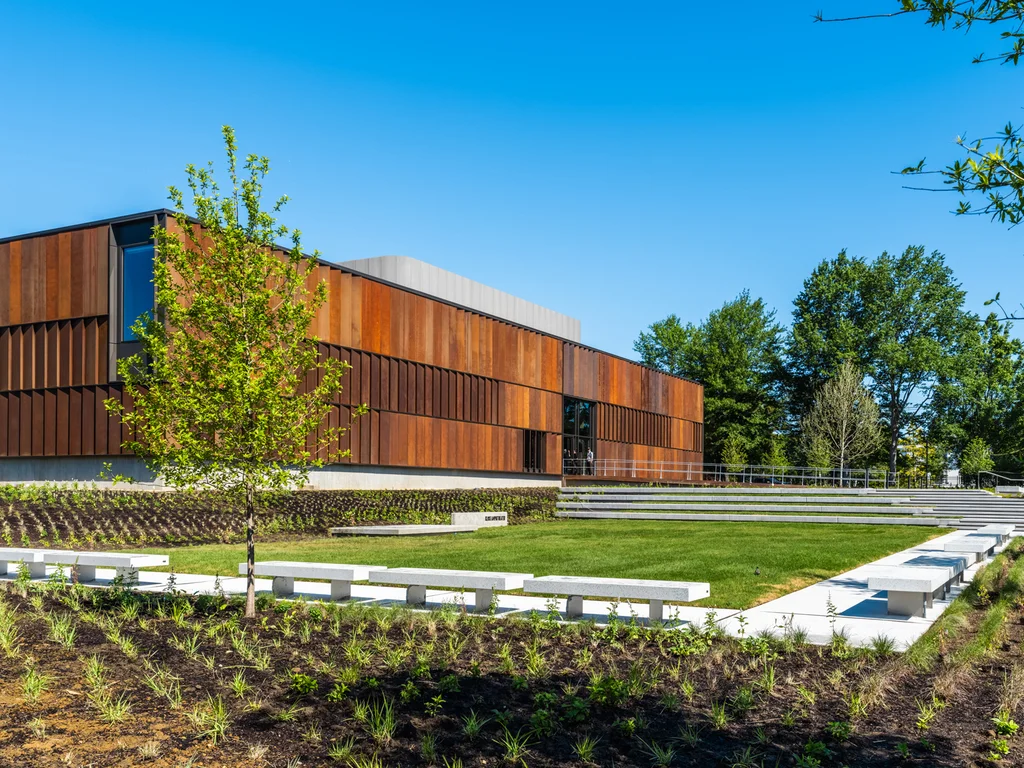
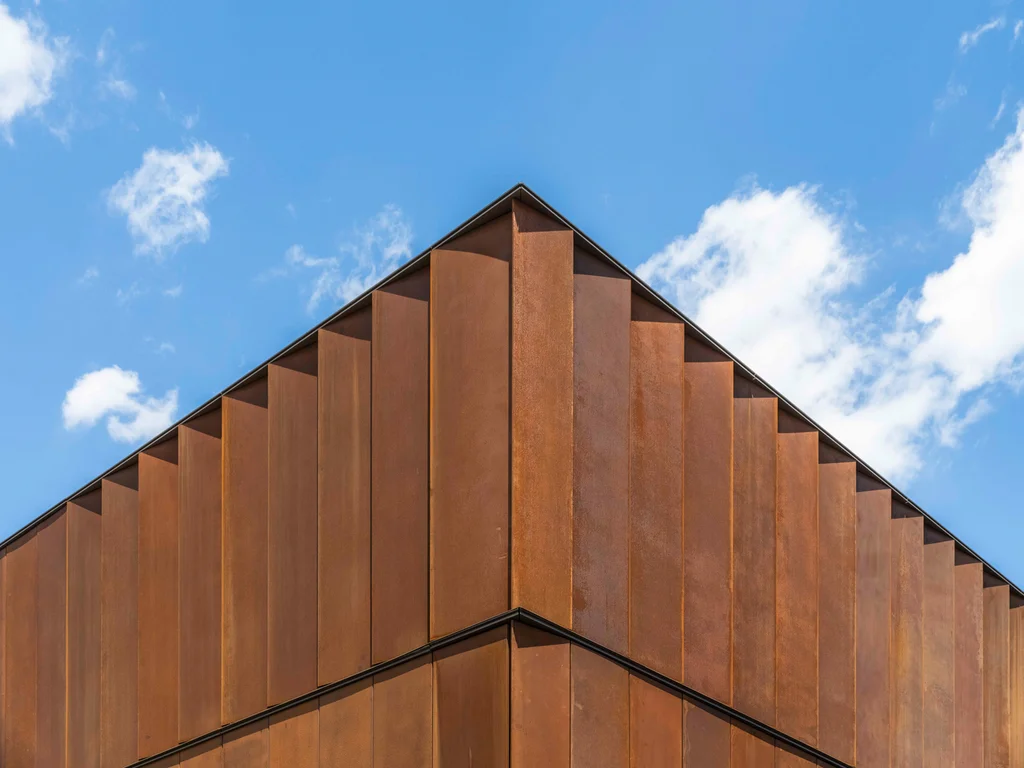
The building is a relatively simple rectangular form with its two stories clad in rusted, weathering steel. Surrounded by a meadow of grasses and flowers, it appears to float on a coastal dune. And the main entry to the museum is approached by a boardwalk, another Jersey shore reference. “The idea wasn’t so much that it was the literal representation of a boardwalk,” Cook says, “but that everybody crosses that threshold together.”
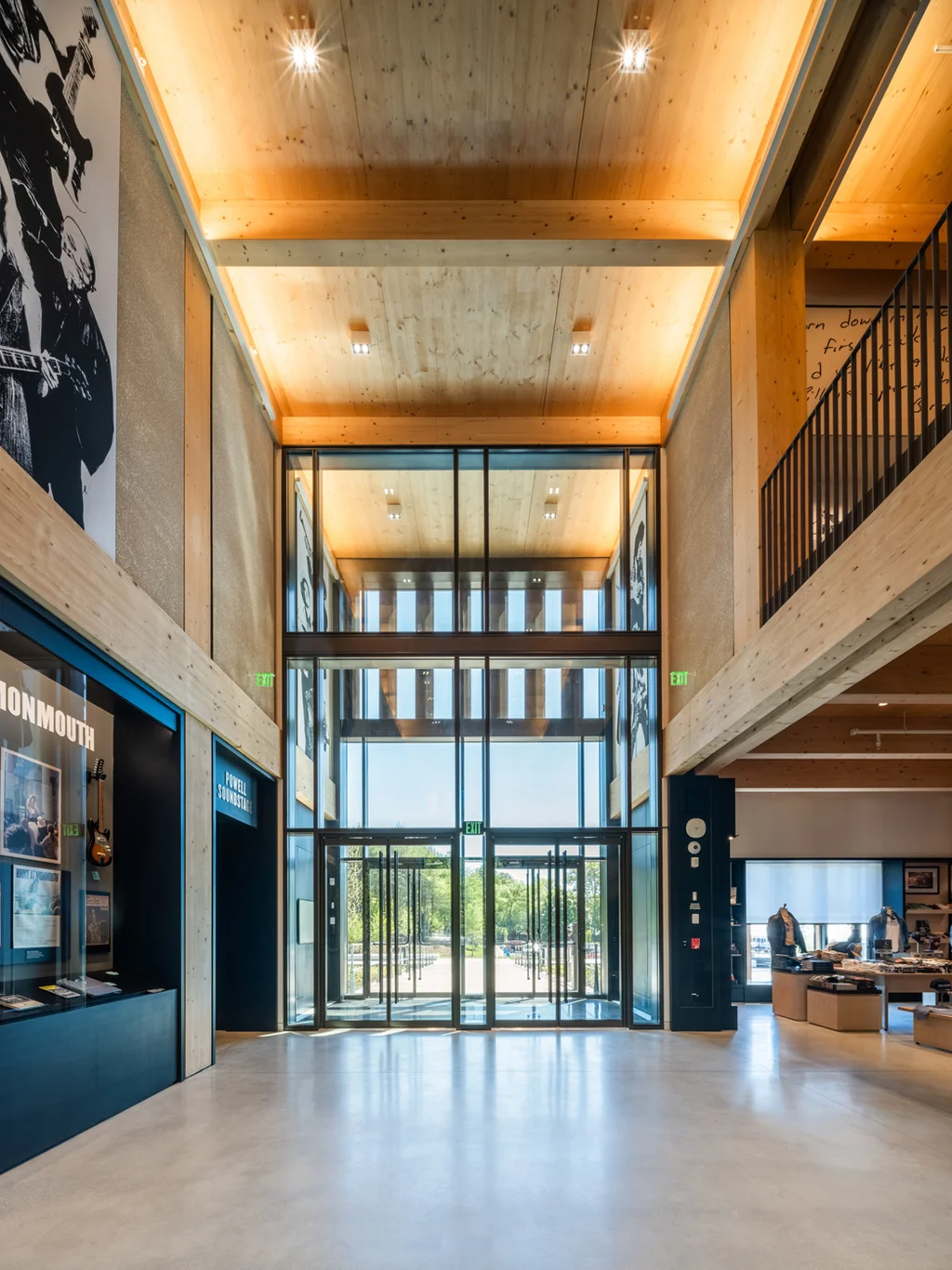
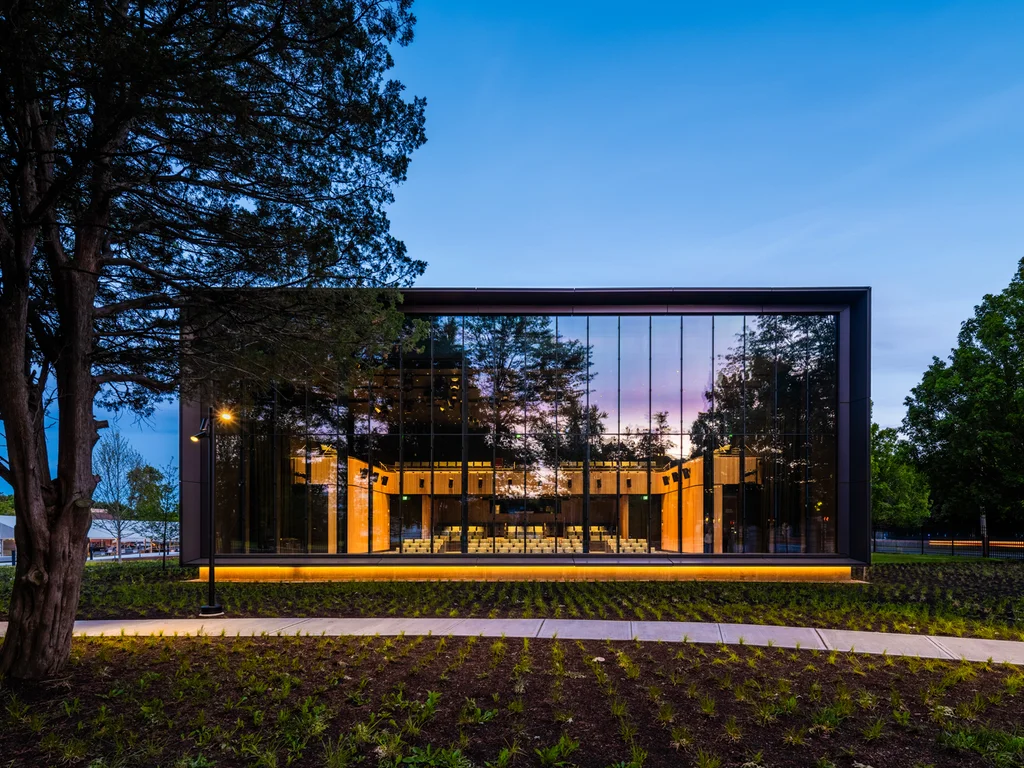
Inside its doors, the center opens up into a double-height space framed with huge pieces of rough timber. “The big wood columns and big wood beams hold the floors up. So there’s a directness to the storytelling and the architecture that we believed was consistent with the honesty and the directness of American music and Bruce’s music specifically,” Cook says.
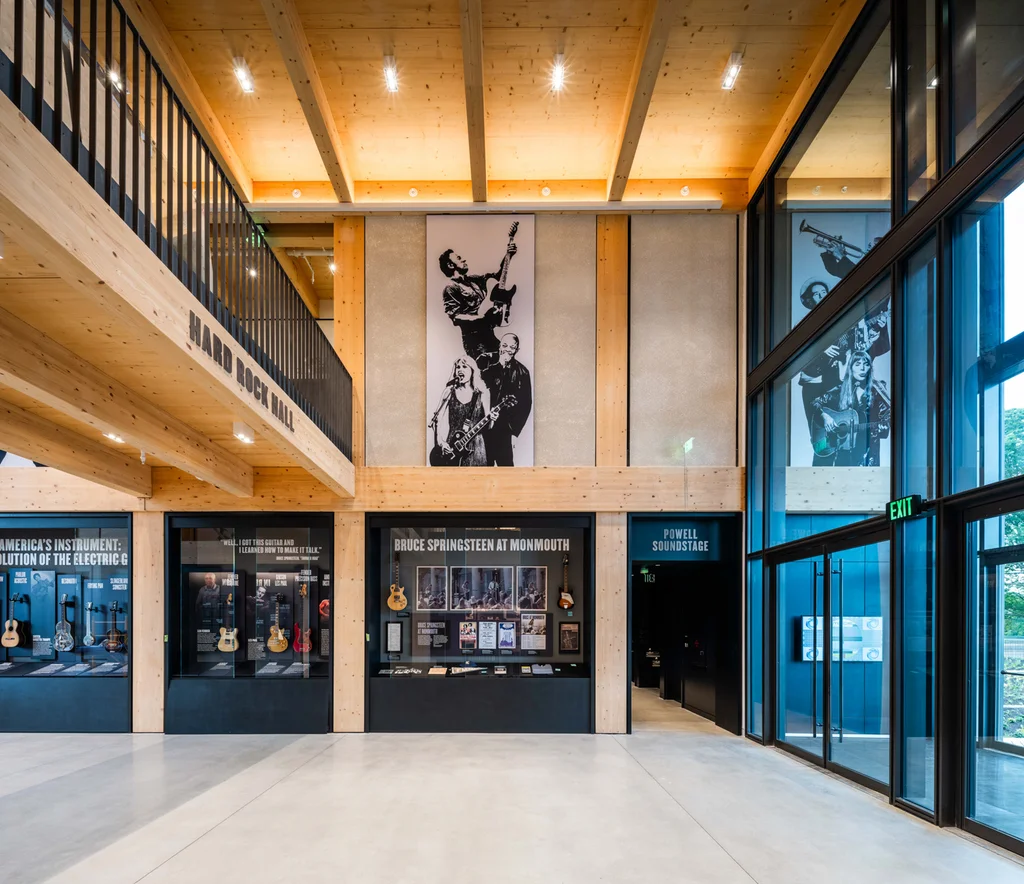
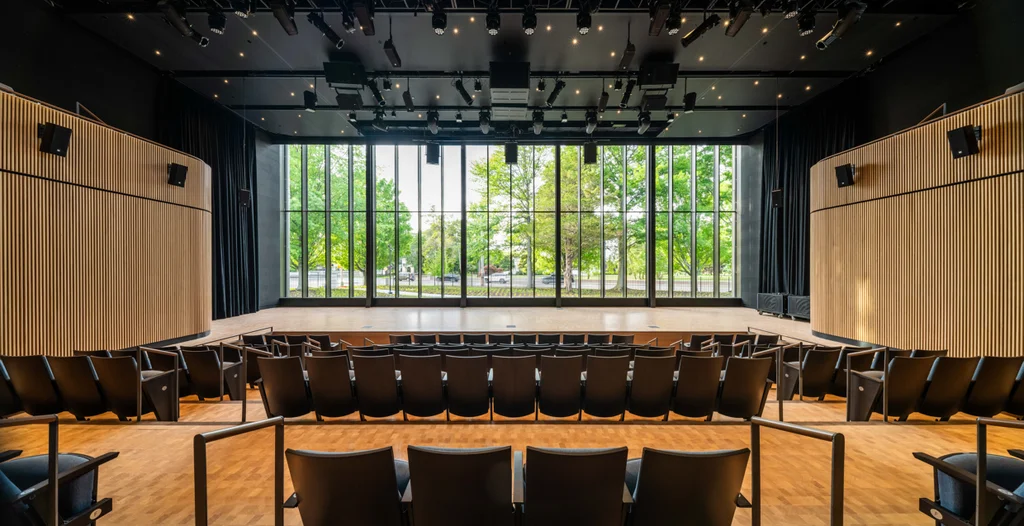
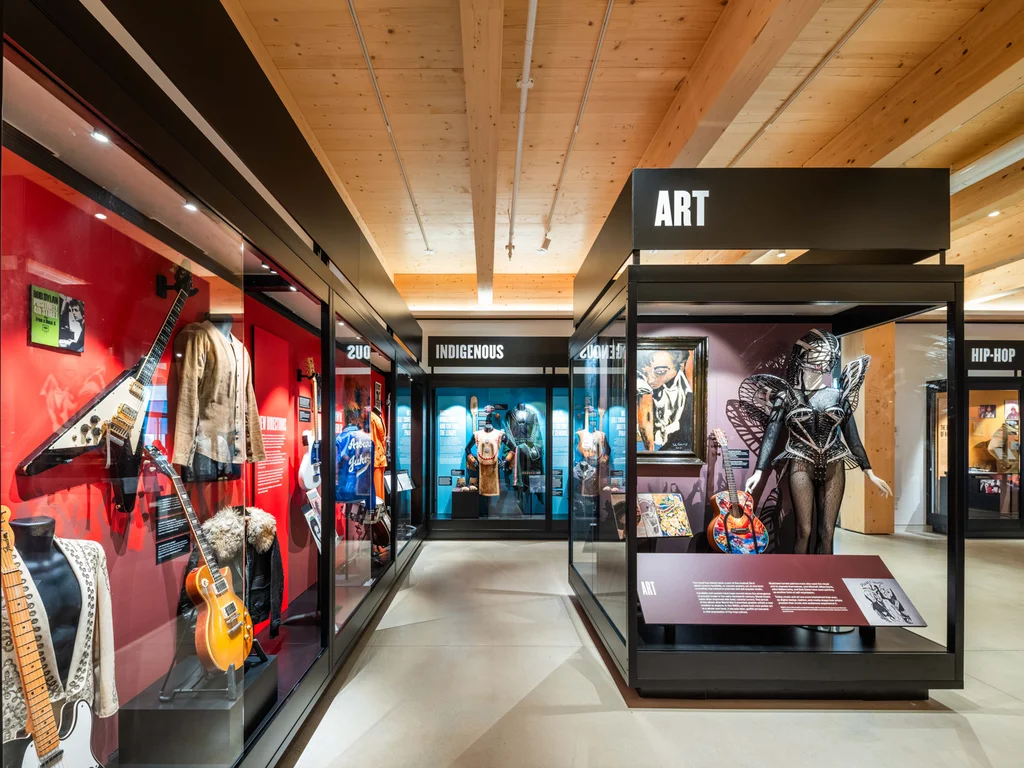
The ground floor features a 240-seat auditorium where visitors watch a 25-minute introductory overview of the center, narrated by Springsteen himself. Designed to concert-grade technical and acoustical standards, it will also be used for live performances. The rest of the floor is less Springsteen specific, with a large permanent gallery tracking the evolution of American music from Indigenous songs to contemporary recordings, a temporary gallery space with an inaugural show about protest songs, and a few smaller galleries on the history of the electric guitar, and Springsteen’s connection to Monmouth University.
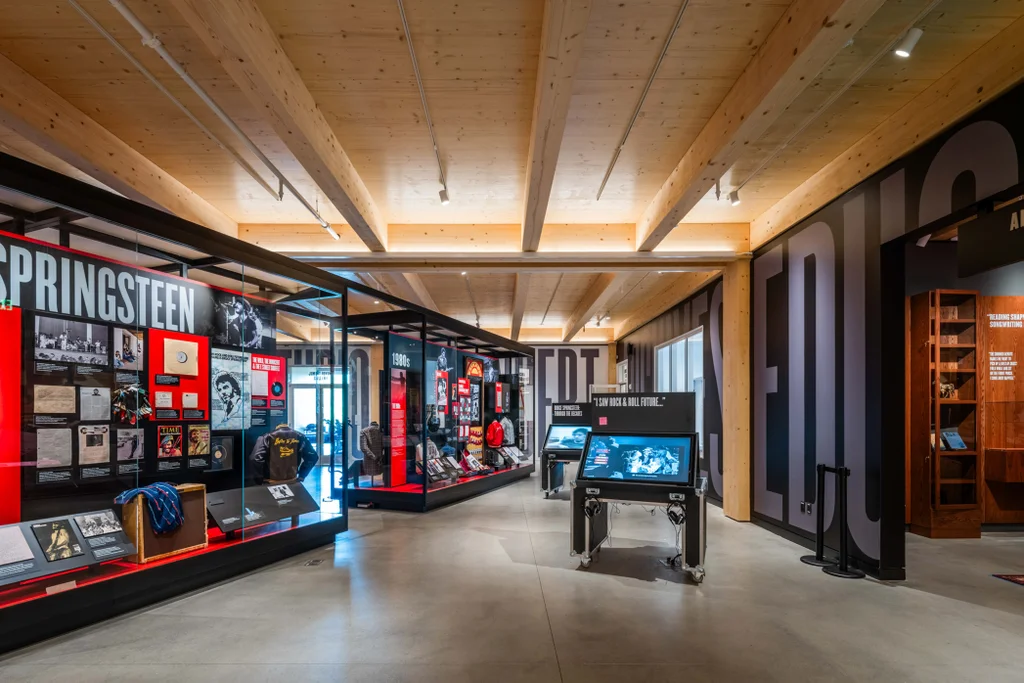
Upstairs is all Springsteen, with several galleries documenting his story, his various bands, and is long career leading the E Street Band. Interactive features include a music studio where visitors can remix “Born to Run” and a space where people can get a virtual drumming lesson from the E Street Band drummer, Max Weinberg. Much of the 4,200-square-foot floor is used to house Springsteen’s 48,000-item archive of handwwritten lyrics, concert posters, magazine clippings, and paraphernalia from tours around the world.
“It is not a biographical series of exhibitions,” says Santelli. “Rather, it is primarily a story about the creative process, about how he created the music, and what his music means to New Jersey and America in general.”
Fan service
Santelli comes to his role as executive director of the Bruce Springsteen Center for American Music after 16 years leading the Grammy Museum, and creating music museums like the Woody Guthrie Center, in Tulsa. “I’ve seen my share of egos,” he says. But the experience working with Springsteen was unlike many of the interactions he’s had with famous musicians. “We found Bruce almost too humble,” he says.
However, as a New Jersey native and a graduate of Monmouth University, Santelli knew the project would have high standards to meet. “There’s a lot of pressure when you’re dealing with someone like Bruce Springsteen in the state of New Jersey to make sure that you’ve done the legacy right, you’ve told the right story, and you’ve made it educationally relevant, which was the point,” he says.
Springsteen was mostly hands off during the design process, and only made his first visit to the space with its exhibitions installed in early June, less than two weeks before its public opening. “He gave us a double thumbs-up,” Santelli says. “Of course, I was very relieved.”
There will certainly be some scrutiny, though, especially among Springsteen’s large fan base. A fan group called the Spring-Nuts recently got a sneak peek at the center, and many more longtime fans are sure to visit. Santelli’s confident they’ll get the experience they expect. And it’s sure to win over new fans, too. After eight years working on the project, Cook, who didn’t follow music beforehand, is now a devotee to the artist. “I’m one of those Springsteen fans who knows every word,” he says.