This article is part of Hyperallergic’s 2026 Pride Month series, featuring interviews with queer and trans elder artists throughout June.
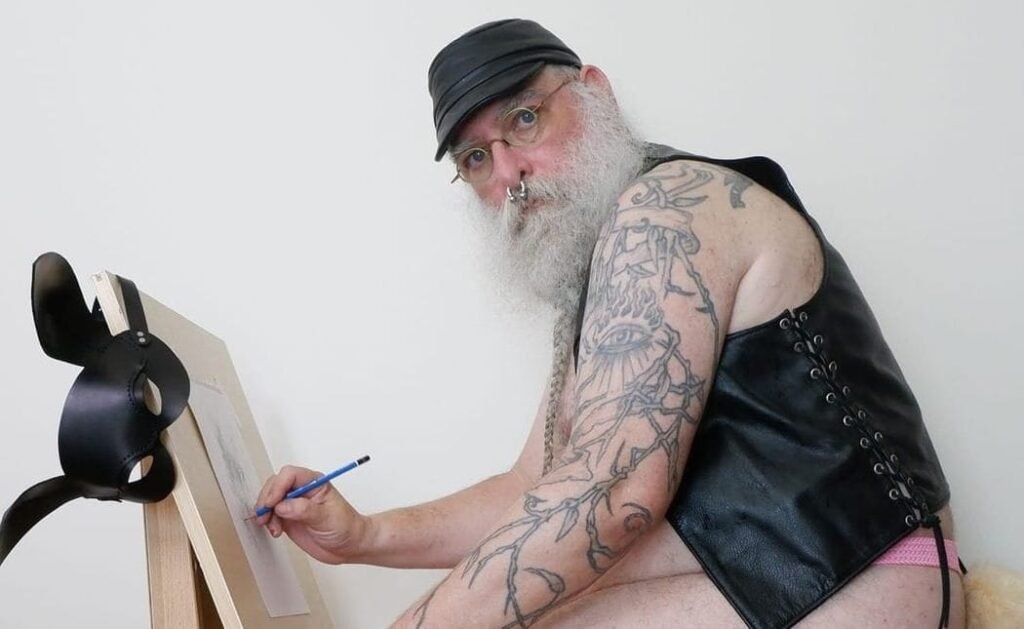
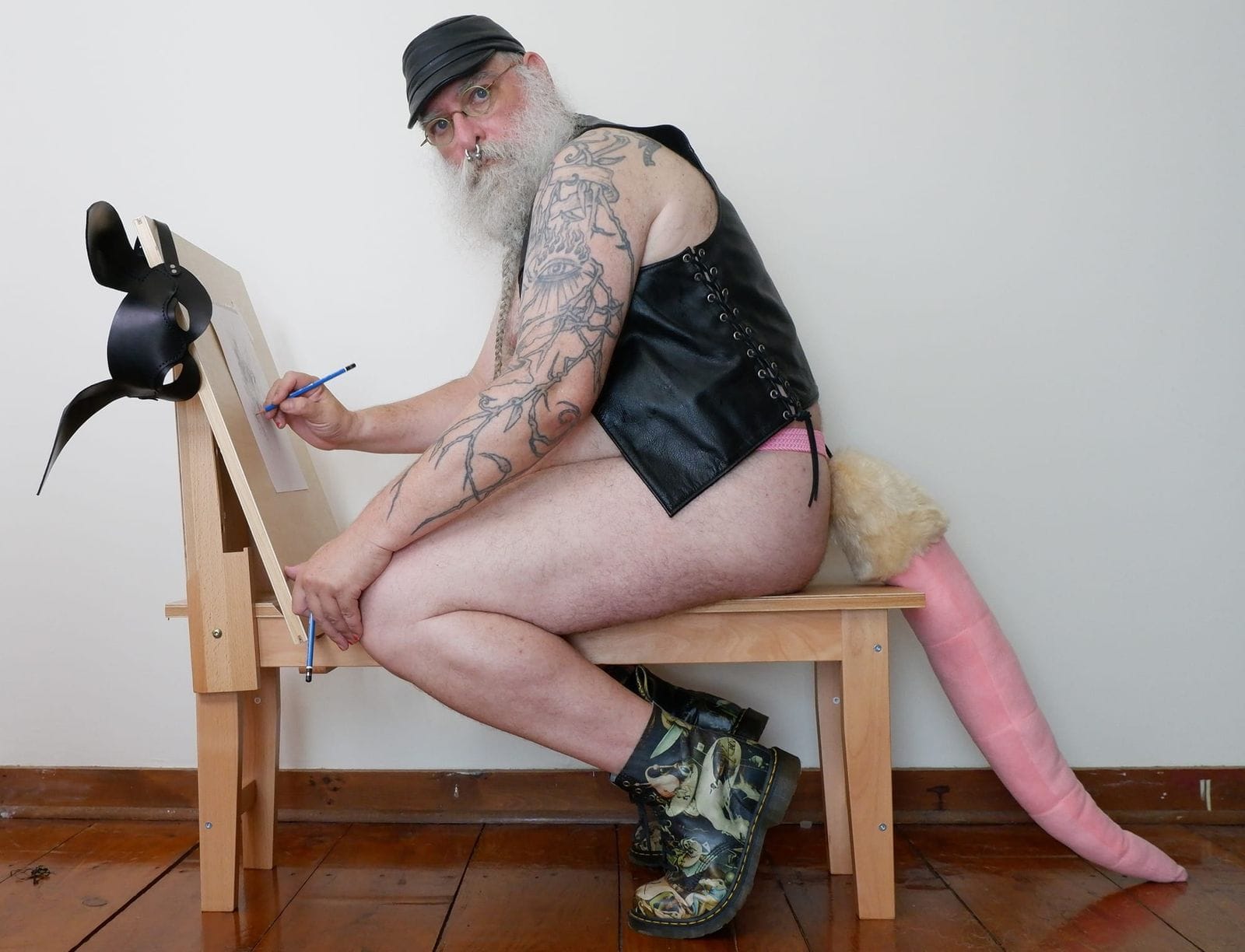
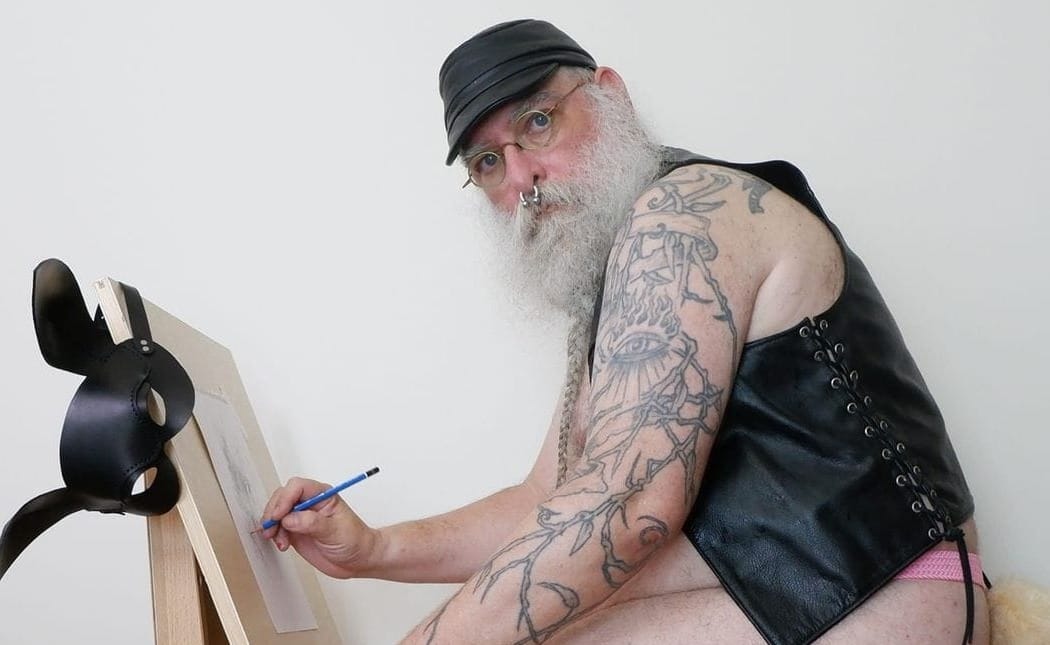
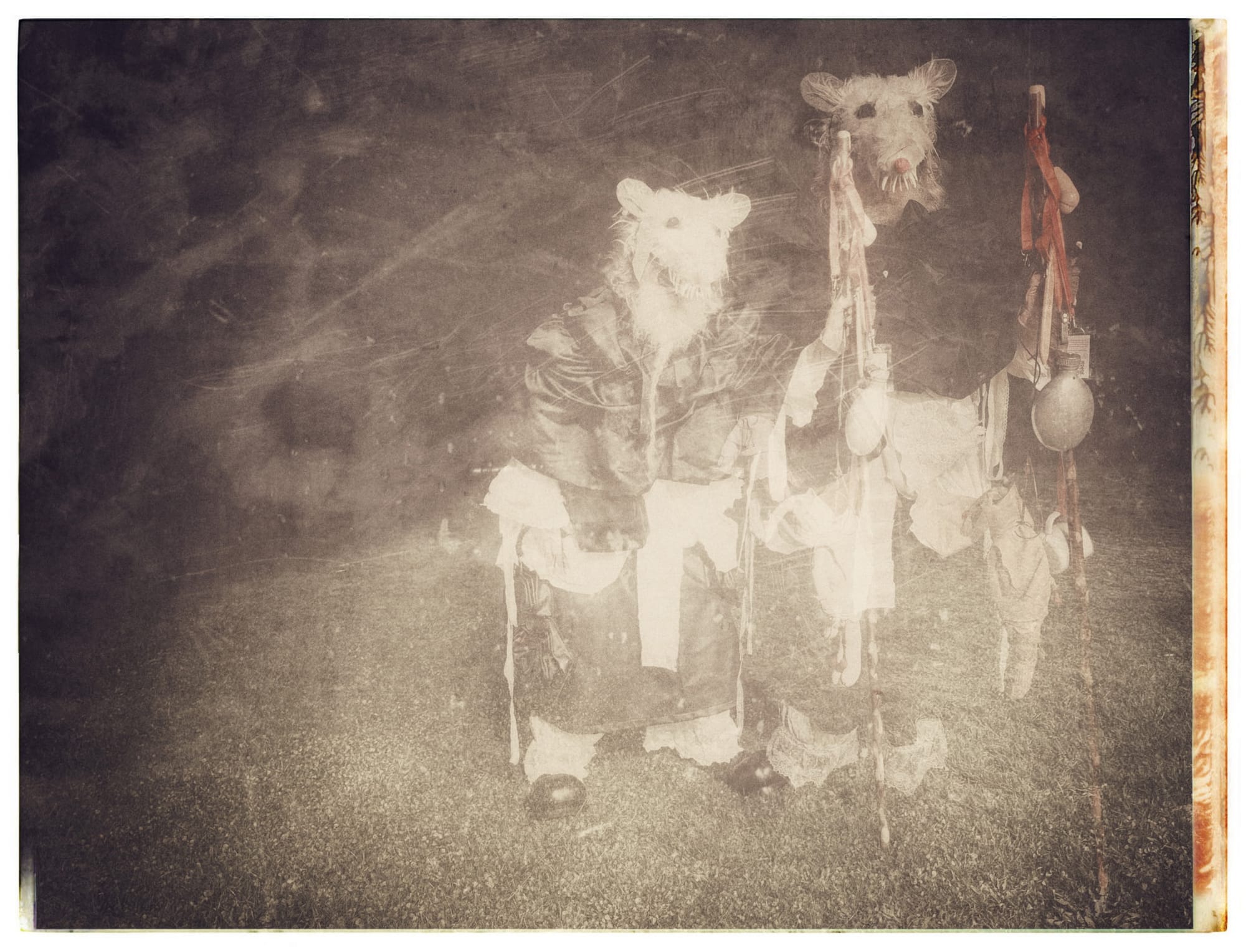
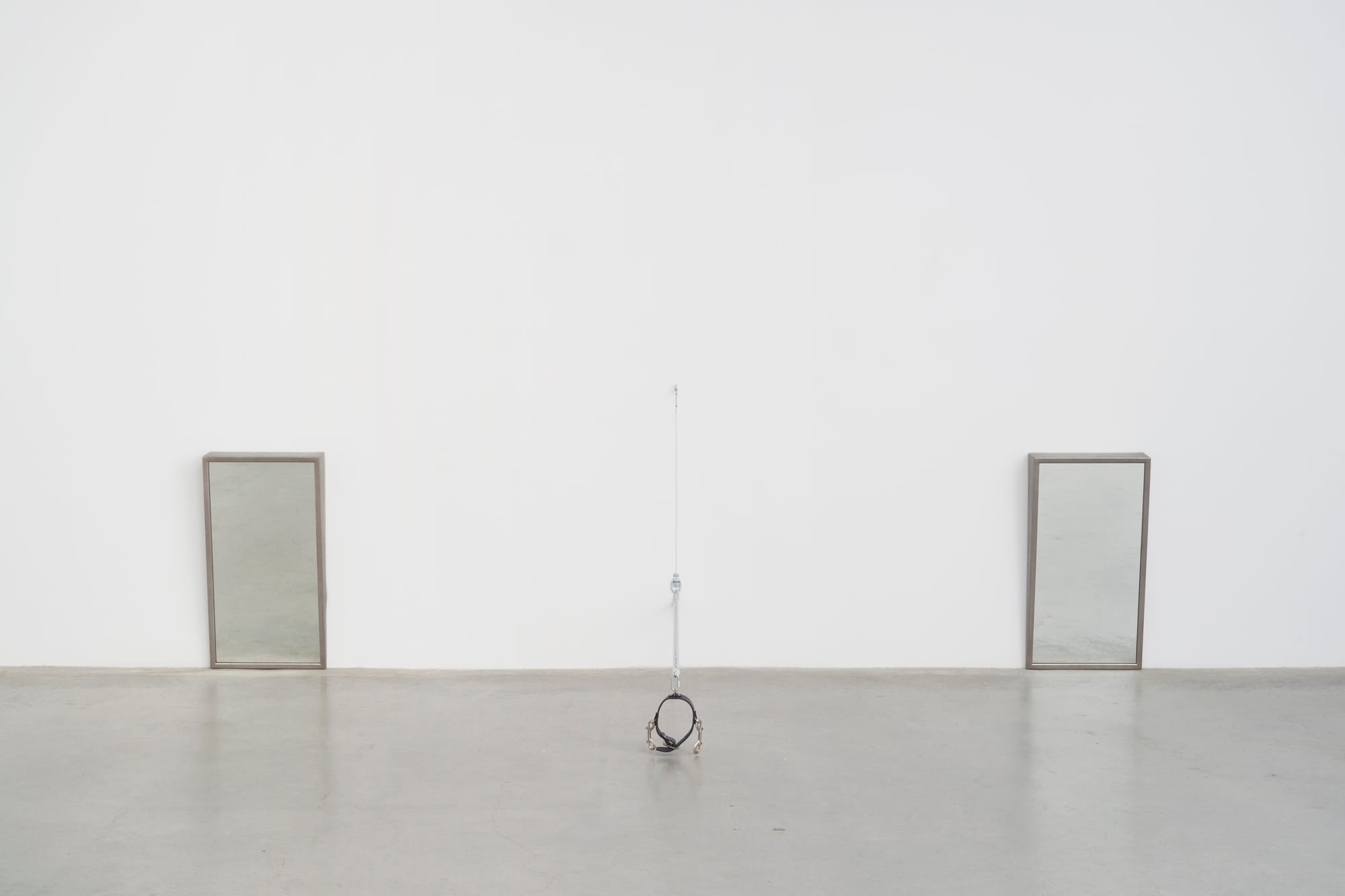
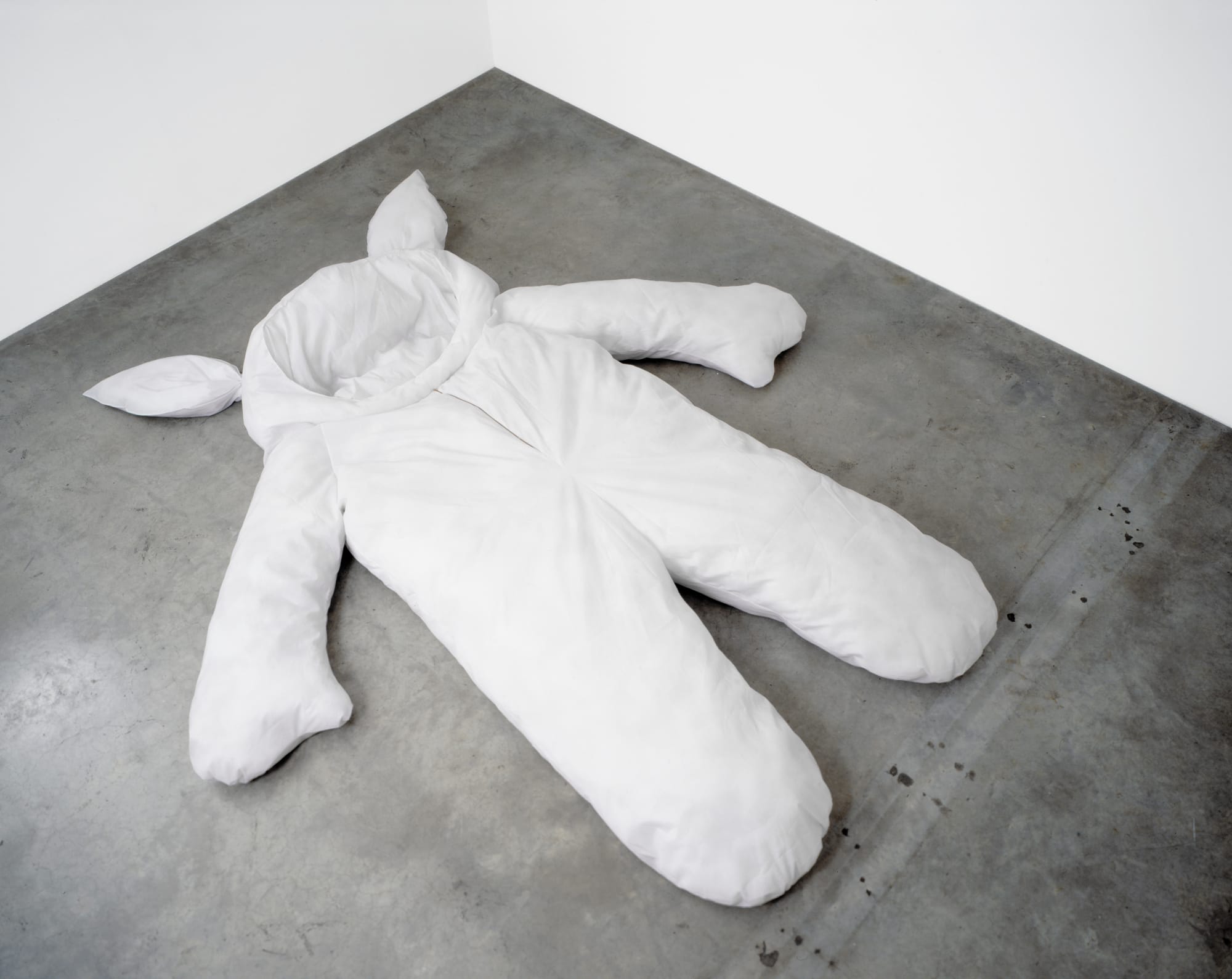
Nayland Blake kind of looks like an alt Santa Claus, with a septum piercing and a beard that ends in a braid, and this wonderful loud, braying laugh. Their work is cerebral, hilarious, charming, kinky, alarming. See the video “Negative Bunny” (1994) in which a fluffy and toxic stuffed bunny tries to convince you of its negative HIV status and cajole you into having sex with it. Or the installation “Mirror Restraint” (1988–89), a BDSM collar suspended between tilted floor-level mirrors that ensure you’ll never see yourself in them.
Currently a co-director of the Studio Art program at Bard College, where they also received their bachelor’s degree, Blake has held solo exhibitions at institutions like the San Francisco Museum of Modern Art, the Contemporary Arts Museum, Houston, and the Tang Teaching Museum at Skidmore College. Their work is in the permanent collections of the Museum of Modern Art, the Whitney Museum of American Art, the Brooklyn Museum, and many more, and they released a book of collected writings last year.
I spoke to Blake over Zoom from their home in Tivoli, New York, earlier this week. They are nonbinary and pansexual, and spoke of identity as unfixed — continually being made and remade on both individual and collective levels. What struck me, above all, is that Blake seems buoyed rather than embittered by this continuing push-and-pull of queer movement-building, state repression, and cultural forgetting. “Movement work is about building the platform,” they said, laughing, “so someone can come after you and stand on the platform and tell you what a bad job you did.”
Hyperallergic: When did you come out?
Nayland Blake: I’ve always been publicly out in my work. Very early on, I knew the sort of work that I was interested in making, and the sorts of things that were compelling to me. And then there was work that was, at that point, identifiably gay male — essentially, where the subject receiving the artist’s gaze was visibly male rather than female. And those things were very distinct from each other. That was something that I really struggled with.
The artists who have been compelling and inspiring to me have been artists for whom narrative and consciousness are fragmentary and hybridized. Where things are abstracted and unexpected. Many times, I found inspiration in things like theater and writing more so than in visual art, at least early on. Someone like Richard Foreman, or particularly the novels of Chip Delany or Kathy Acker. Writing that was classed as difficult, or weird, I guess.
H: How does your identity factor into your art, writing, and scholarship?
NB: I make what I do in order to understand my identity. Literally, I make stuff, and then I interrogate what I’ve made and ask, “What sort of person makes this?” And this leads me forward in thinking about how I might identify.
Maybe I’ll read something or see something, and I’ll get the idea for a piece, right? And making the piece is bringing together the elements toward hitting that target. Once I’ve figured out that the piece is finished, I quite deliberately ask myself the question: What was going on there? I had certain gestures or moves I made — why did those feel right to me? What parts of my own history was I engaging with there? Why does a particular material feel like it needs to go with another material? Then what happens if I flip that image to be about something else?
That’s what the mechanism is. I think the problem with the way art and most creative endeavors are taught, particularly now, is that people are taught that they have an identity. That they have some essential thing about themselves, and their job as an artist is to express that. The problem with that formulation is that we don’t know what that is, but we’re supposed to act as if we do. We’re continually duped into this search for authenticity.
It goes back to that initial problematic formulation of a particular kind of work that if you made it, you would be legible as gay. I got into upending that. Instead of saying, “This work looks like it’s gay,” what happened if you looked at the work that any gay person made, and tried to come up with some sort of understanding of what that would mean in terms of types of gayness? Suddenly, all of that looks very different.
H: Who are your mentors? Did you have queer mentors?
NB: I don’t know that I necessarily had queer mentors per se.
I mean, there were other queer artists that I really respected. I saw Jack Smith’s Flaming Creatures [1963] early on in high school, and that was an amazing moment for me. And John Waters’s films were really important to me. I did some work with AA Bronson and loved General Idea from the first time I found out about them.
There were no out faculty members in the art department where I went to undergrad, at Bard. I think there was only one out faculty member in the entire college, John Fout, who was a historian. It was myself and a fellow student named Gerry Gomez Pearlberg who were able to advocate for Bard’s first gay history/ culture course, and John taught it.
When I got to CalArts, Catherine Lord came in as the first queer faculty member that I remember working with, or had that sort of connection with.
H: Who would you consider your peers?
NB: In 1984, I moved from Los Angeles to San Francisco. One of the things that happened at that point was that you had a real generation of artists in a whole variety of locations, particularly around the US, who started making work that was engaging with queer ideas but changing the form of them.
You had people like Larry Johnson in LA or Felix Gonzalez-Torres in New York, or Bob Gober or Marlene McCarty. Jerome Caja in San Francisco. I was very much part of that generation of folks.
And then you began to have scholarship about earlier generations of artists in terms of their sexuality. That was the first time you started to actually hear about people being out.
The impetus for much of this is the AIDS crisis. It shifted the conception of what could be thought of as appropriate subject matter for gay men. Suddenly there was this [work] that was about mourning and loss, that was elegiac. You had people like Ross Bleckner, and the argument for a kind of abstraction that was also tied to a gay community undergoing trauma.
H: It must have been temporally strange to be part of this generation of artists making a new form of queer art alongside scholarship that was just coming out of an earlier generation.
NB: I think the models were the Civil Rights movement and the Women’s Rights movements — the insistence on the importance and centrality of work by women artists or, for lack of a better term, minority artists, all through the ’60s and ’70s.
To me, the lessons of those movements were: It’s not enough to just make something in your studio. You have to also be a scholar. You have to also be a writer. You have to be a person who champions other work, so that you build the context within which your work can be legible.
So the Black Arts Movement is a template — it’s people unearthing histories that had been hidden. It’s people starting galleries that showed this work. It’s people promoting each other’s work, writing about it, and also finding genealogies. I see the entire span of the 1970s as a succession of waves of people trying to build cultural power around their community identifications.
It was an exciting thing to be part of it, and it continues to this day. It’s something we still have to articulate and defend.
H: Has the history of articulating and defending queer and trans identity and art felt like a linear progression through time, or not so much?
NB: Things build and recede. That’s why learning the skills of a researcher is really crucial. Because when they recede, people act like it didn’t exist. “This gender stuff, that’s something they made up 10 years ago.” No. You go back and you’re like, “This was being written about 30 years ago. This was being written about 50 years ago. A hundred years ago.”
People’s fears are often around very specific things. Demagogues will play on those fears using the same sets of tools. We have to understand that just because the point has been made once — you know, this is a thing I learned in food service. Just because I’ve told 50 people today what the daily specials are doesn’t mean I should be mad at you because you’re asking me what the daily specials are. Even though they’re on a sign right over there and I’ve pointed to that sign 50 times. It’s like, well, I haven’t told you yet.
H: That’s very, very generous of you.
NB: [Laughs] Well, it’s the only thing that keeps me sane.
H: Do you feel related to this current or upcoming generation of queer artists and artwork?
NB: I’m lucky in that I’m the co-director of the program I started out in. I teach in the classrooms I learned in. A number of my colleagues are former students of mine. I get to see so many young people for whom their queerness is not even a question. They don’t even see the hurdles that previous generations struggled over, and they shouldn’t. That’s the whole point.
I often say that movement work is about building the platform so someone can come after you and stand on the platform and tell you what a bad job you did. We’re not grateful for where the ground is. Our eyes are fixed on where we want to go next.
Seeing the ways a number of younger artists are engaging with gender fluidity and transness is thrilling to me. It moves me closer to a world that I wanted to live in without even being able to articulate it at the time.
H: What does Pride Month mean to you?
NB: It changes so much, right? There have been times where I’ve been in Pride marches in, you know, New York City, where it’s been just beer company after beer company. But this weekend, there was a Pride parade in Kingston, New York, across the river from here. Maybe three blocks’ worth of parade. And it was super sweet.
I think that’s the power of it: It can be whatever we need it to be at the time. And the least interesting version of it is when it’s an excuse for a bunch of people to put on rainbow stuff and do a bar crawl.
One of the things I used to love about the San Francisco parade was that it went on for ages, and you would have contingents that were like, the “Lesbian Midwives of Oakland.” And being able to actually see all those people like that out in the street and share space with them, I loved that.
H: What are you working on now?
NB: I have my first large outdoor piece ever opening at Art Omi on the 27th. It’s a piece that is turning out to be about aging and, in some ways, courting obscurity. It’s about my desire to be a crone. A different kind of invisibility. I’m a failed metaphysician, I guess I would say. I’m basically building a hut in the woods. I love it. It’s another sort of coming out.