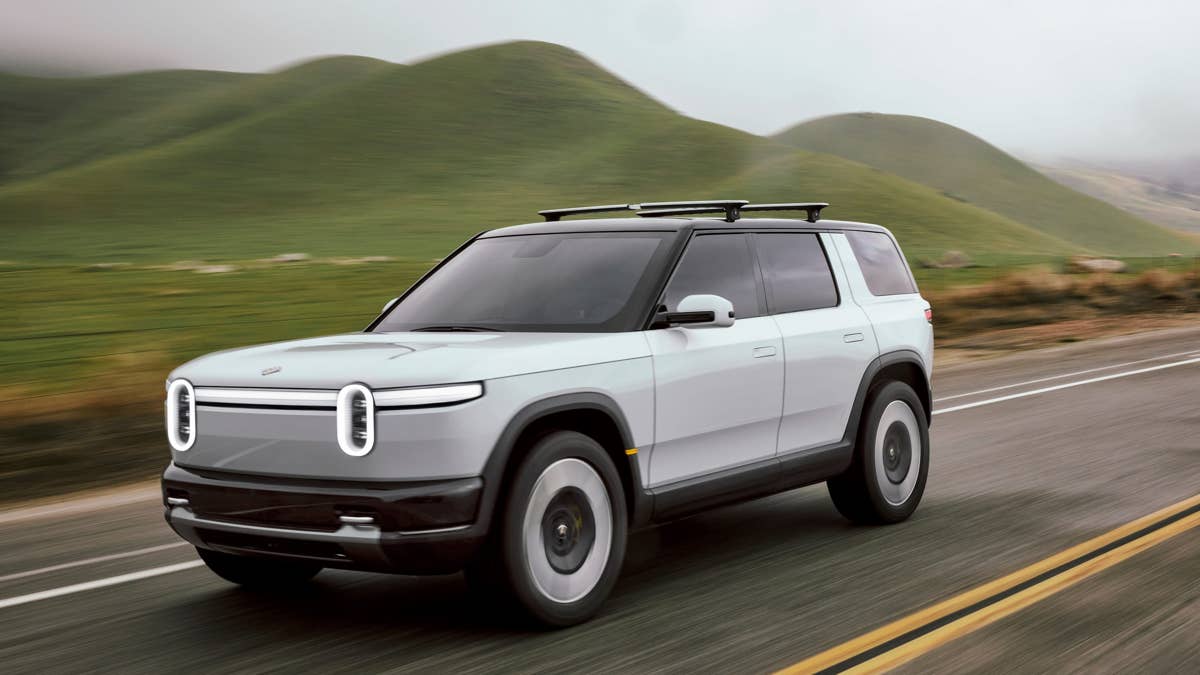
Rivian Automotive’s software boss Wassym Bensaid believes AI will completely change how drivers interact with vehicles, making screen mirroring solutions like Apple CarPlay and Android Auto—and even physical buttons—“completely obsolete.”
Speaking on The Verge’s ‘Decoder’ podcast, Bensaid, who is Rivian’s chief software officer, said that deeply integrated automotive artificial intelligence is the way forward for human-machine interfaces.
Deep AI Integration In The Car Is The Future According To Rivian
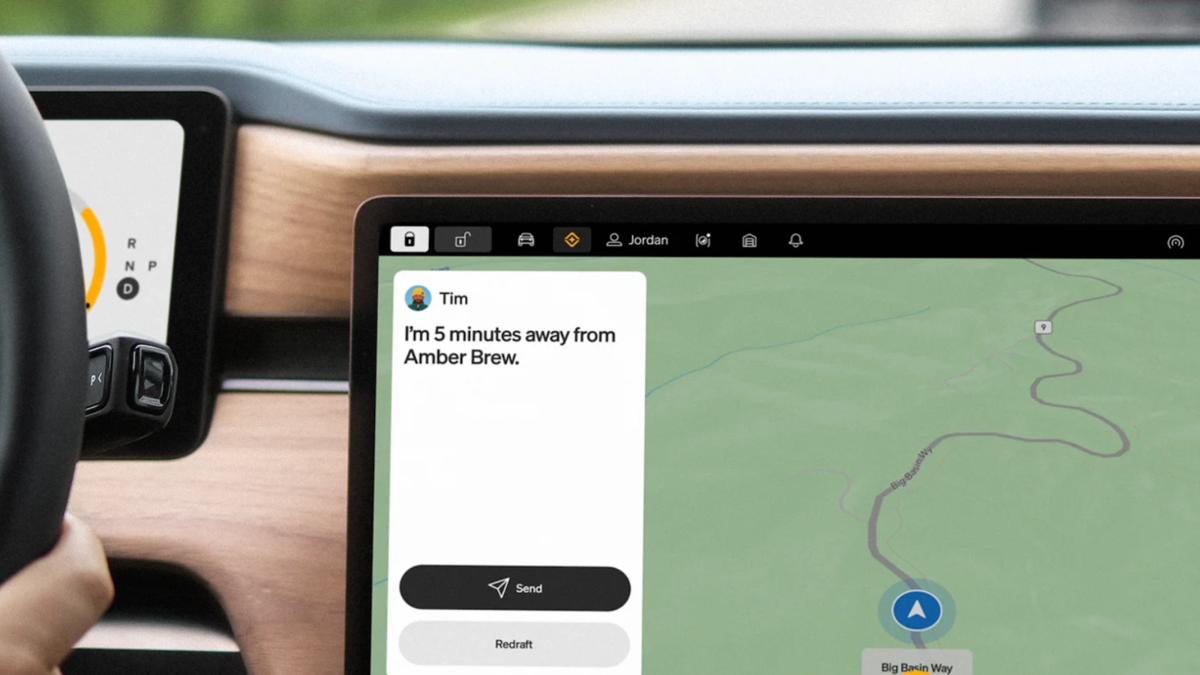
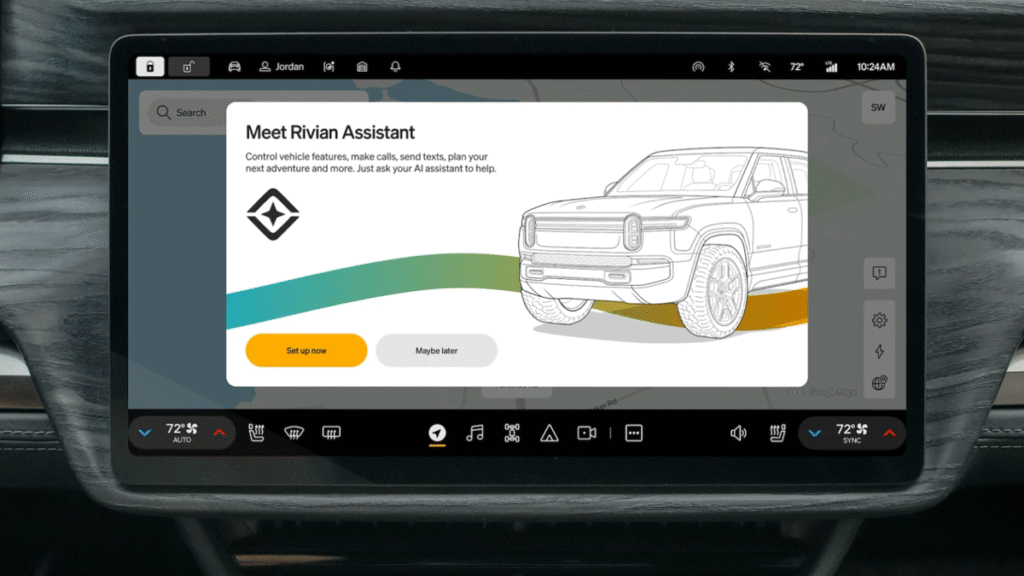
“The challenge with screen mirroring solutions is that they take over every single pixel in the car, and that’s not the way we see ourselves interacting with our users,” Bensaid said. Rather than leaving it to Apple CarPlay and Android Auto to handle the driver’s in-car experience, Rivian is trying to build its own interface around “end-to-end integration.” A first step in that direction is the Rivian Assistant.
In his opinion, “deep AI integration in the car” will eventually make the entire debate over CarPlay “completely obsolete.” How will that come to be? Well, Bensaid argued that Rivian owners will eventually use an AI agent to access the core functions of many apps rather than switching between Apple CarPlay, Android Auto or native apps.
“I really believe that the way you interact with apps which are mono-threaded, single buttons, single icons, a lot of that will be now completely reshaped into a world where it will become an agentic integration that presents itself into a wholesome user experience to the user,” Bensaid added.
That said, Rivian’s software boss acknowledged that developing an AI agent capable of making Apple CarPlay apps redundant will take some time to develop.
Bensaid also argues that Rivian owners are less interested in CarPlay than they used to be. According to him, more than 70% of customers wanted CarPlay when Rivian vehicles first launched about five years ago, but a recent survey showed that figure had fallen below 25%.
Rivian’s Software Boss Thinks Buttons Shouldn’t Be The Primary Way Of Interacting With The Car
Rivian
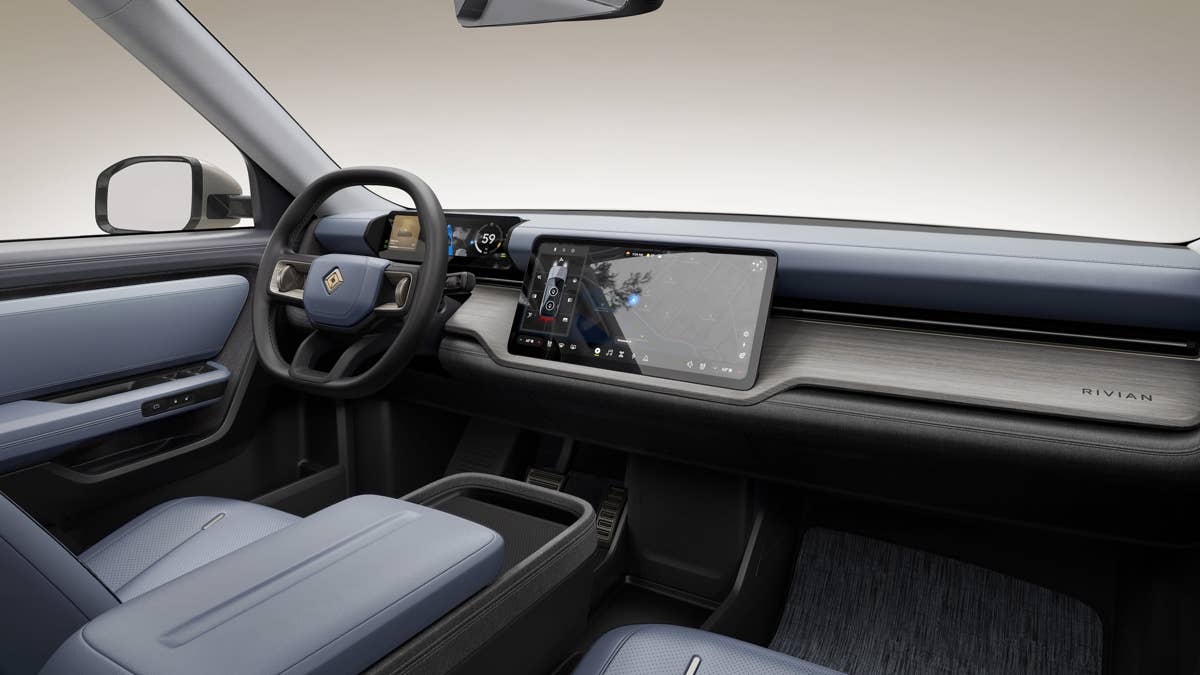
When asked if he still thinks having buttons in the car is an anomaly, as he famously stated in 2024, Bensaid declared himself an adept of the voice-first approach.
“I deeply believe that voice has the chance to be the primary interface in the car. I also think that buttons can exist, but they shouldn’t be the primary way with which you interact with the car. I think there’s more that is possible with voice since you can do more than one single function,” he said.
At this point, it’s worth noting that Bensaid appears to willingly ignore drivers who like to use physical buttons and don’t want to rely on AI-powered voice control for even the most basic car functions like turning the AC on or activating the hazards, for example.
Rivian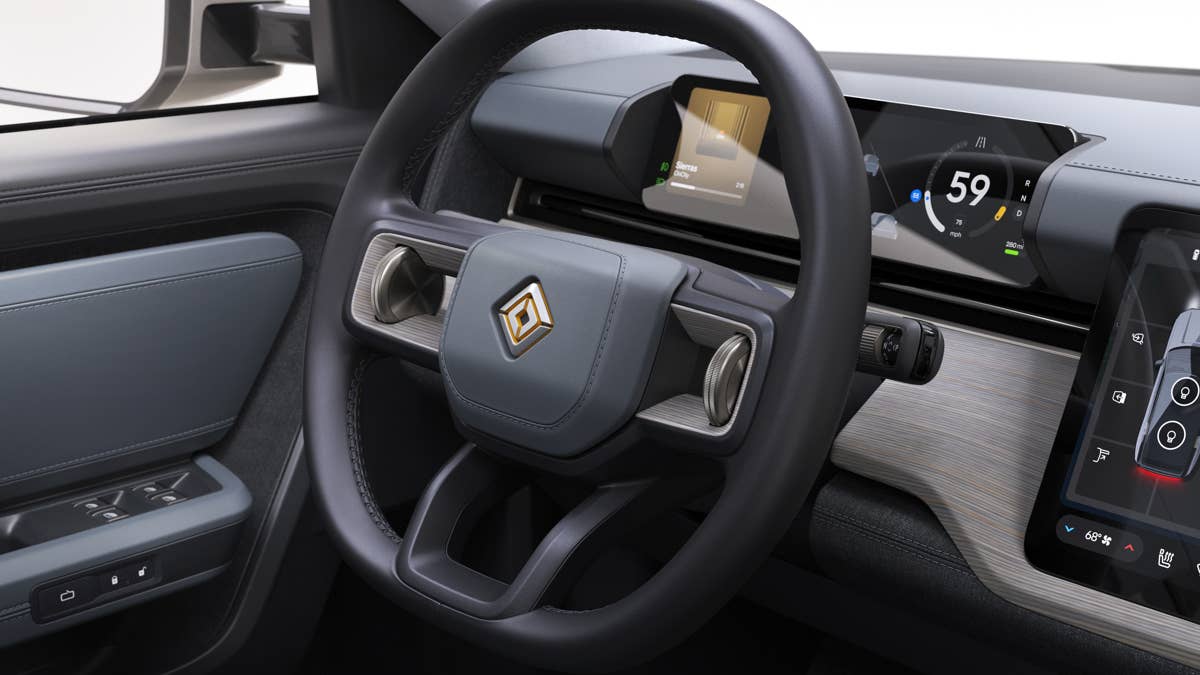
People have been using physical buttons in cars for more than 100 years and that has worked very well. The simplest solutions are always the best, and few things are simpler than a physical button: you push it, it does what it’s supposed to do, and that’s it.
You don’t need a network connection for it to work, you don’t need to speak to activate it (maybe your kids are asleep in the back and you don’t want to wake them up), and you don’t need to look for it because it’s always in the same place.
Now, tech companies have the propensity to complicate things and offer new tech for tech’s sake, and in this context this does seem to be the case—at least when it comes to Bensaid’s thesis that AI agents will eventually replace actual buttons. We’d like to hear your take on this at a time when many automakers are bringing back physical buttons.