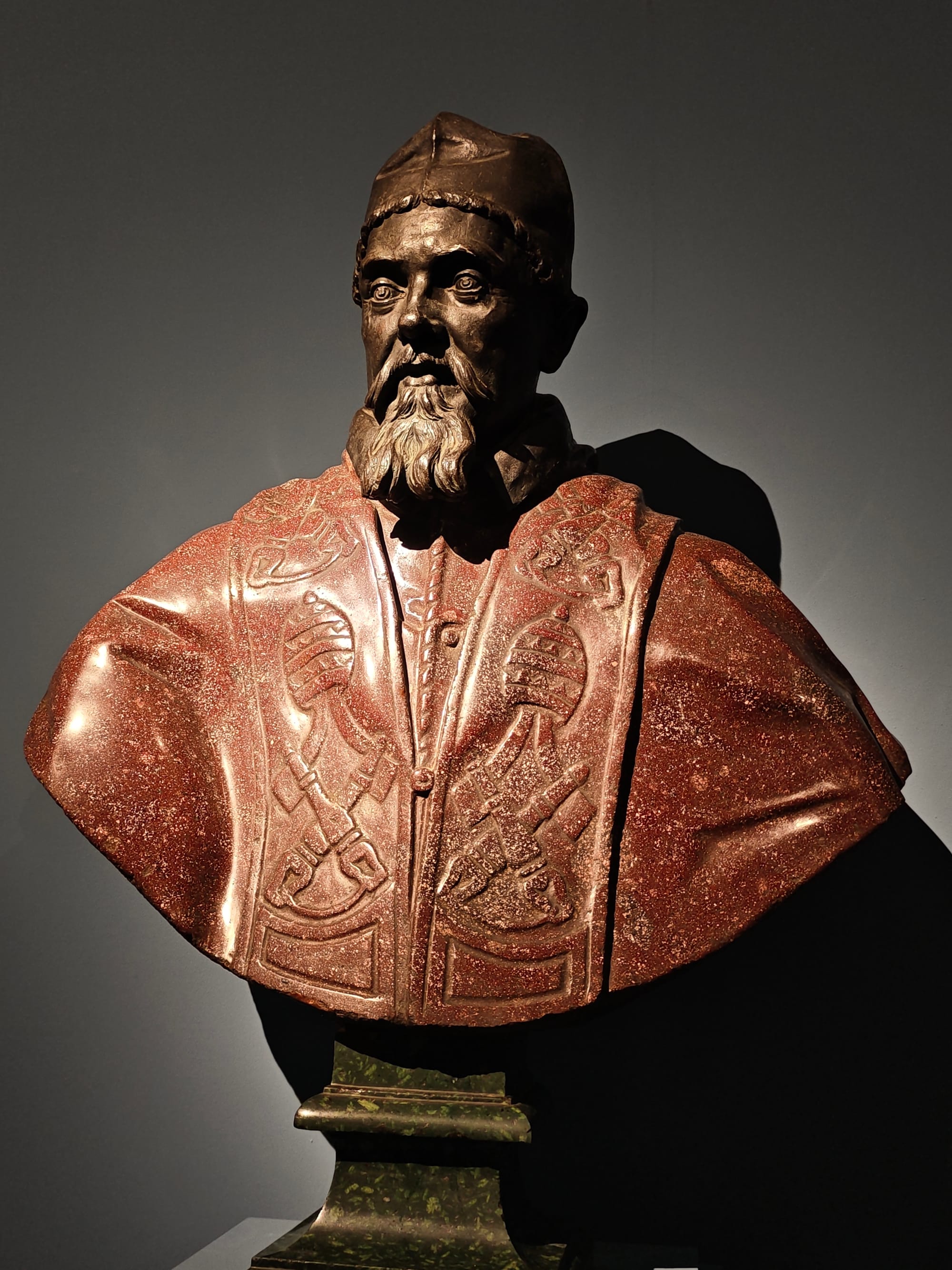
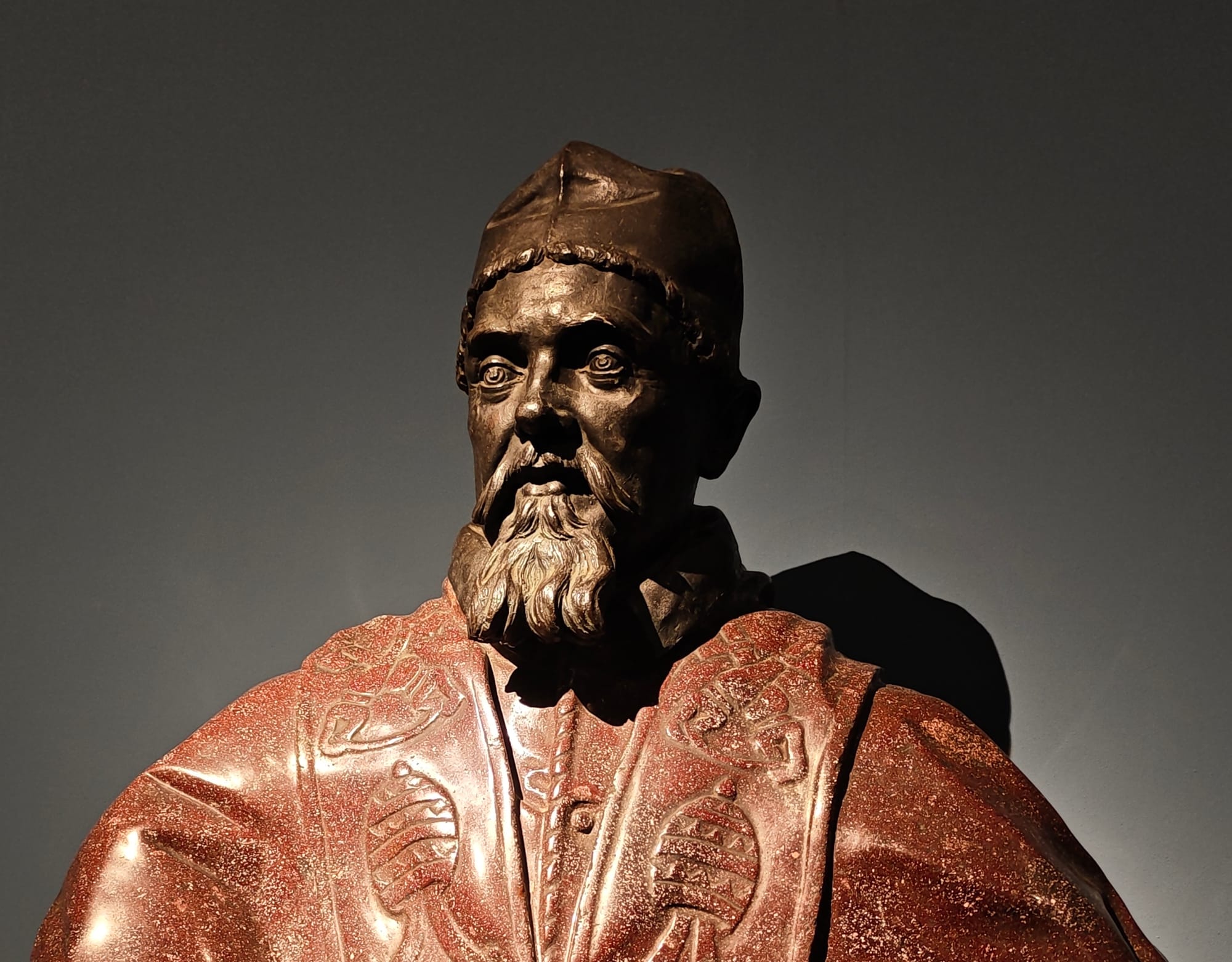
ROME — Sculptor and architect Gian Lorenzo Bernini was essential to the appearance of Baroque Rome, and Pope Urban VIII Barberini was essential to Bernini. In many ways, the exhibition Bernini e i Barberini is an echo of its predecessor, Caravaggio 2025, though with a more specific focus: the relationship between the artist and the pope, his most important patron. In this, its curators have succeeded, if incompletely. The exhibition is relatively small, fitting into the available space on the ground floor of the east wing of the Palazzo Barberini, but its themes burst outward to stretch across Rome.
The show begins with Bernini’s youthful development, though notably missing any significant reference to his first sponsor, Cardinal Scipione Borghese, leaving the mistaken impression that the artist was purely a Barberini discovery. The first room looks closely at the work of our protagonist’s father and teacher, Pietro Bernini, from whom he learned to achieve different surface effects by “painting with the chisel,” Filippo Baldinucci observes in his 1682 biography of Gian Lorenzo. Pietro’s work shows this in abundance, as well as a profound understanding of the human body, especially in the soft, pendulous flesh of the first piece we encounter, “Adam, Eve, and the Serpent” (1620–22). Here, Adam is not a muscular superhero modeled on an ancient Roman statue but an ordinary man with creases in his skin and softness in his pectorals.
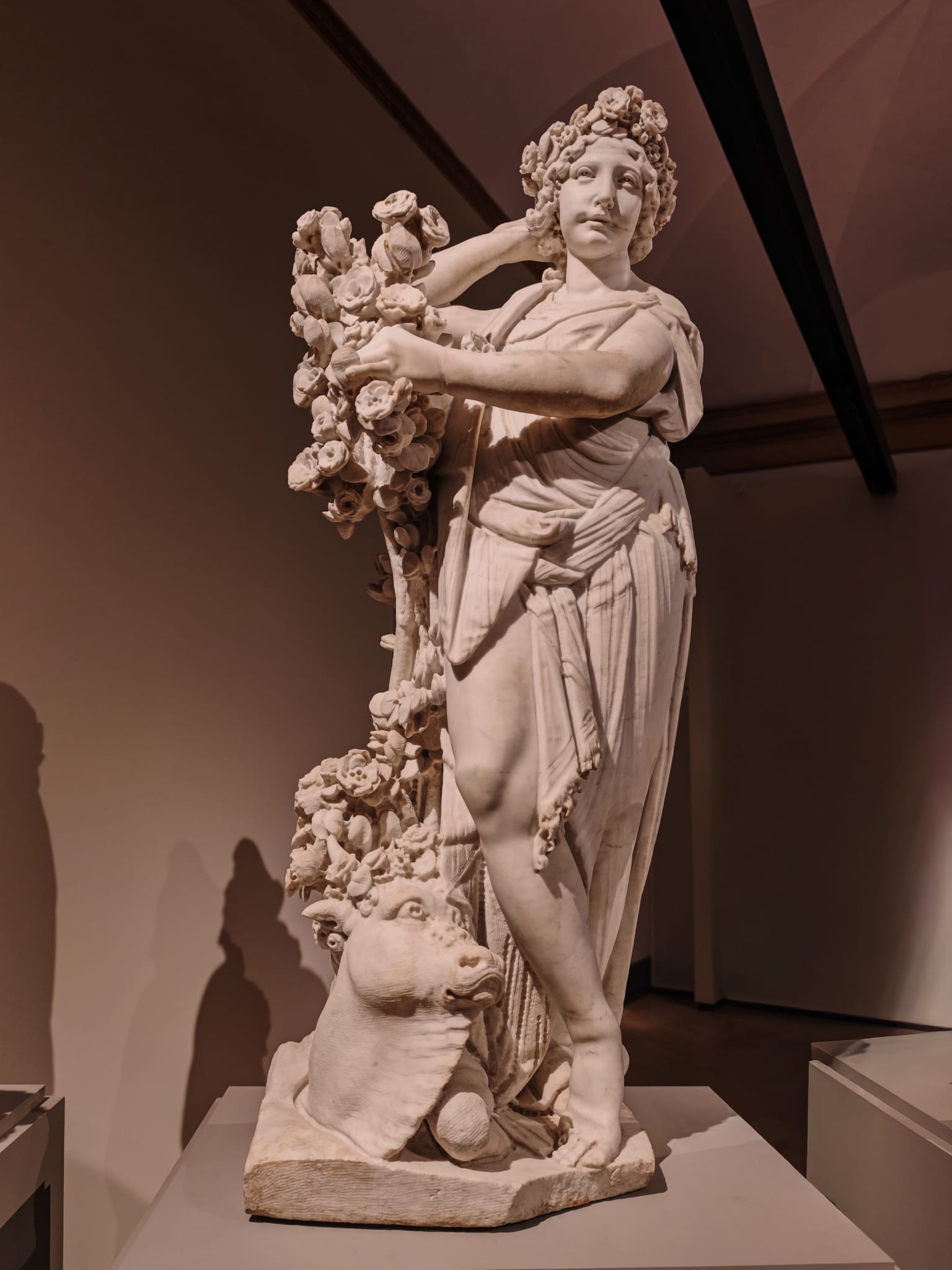
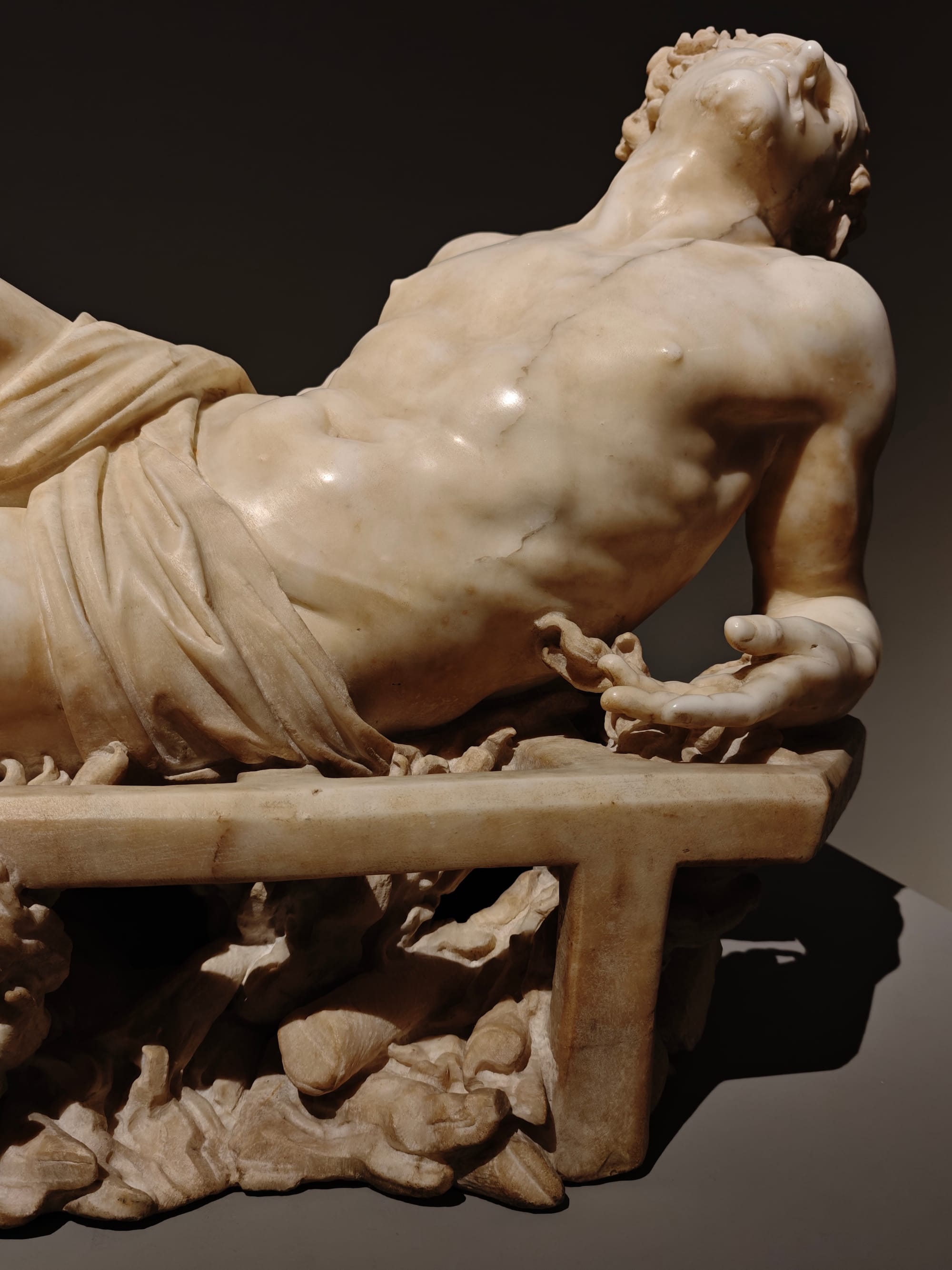
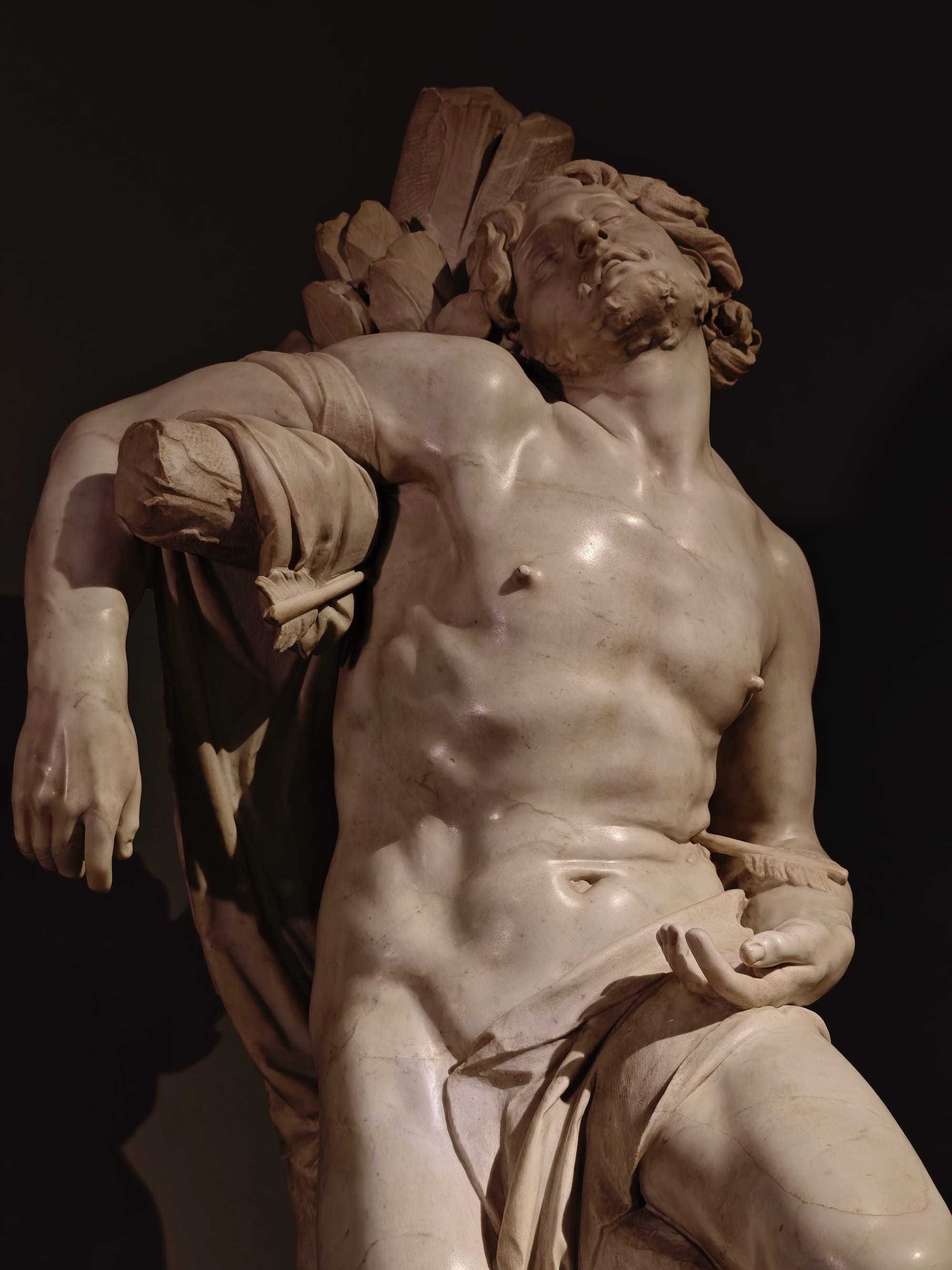
Again and again, we find the unheroic nature of the male body in Pietro’s work, with its realistic, tenderly carved defects and softnesses. This is something quite alien to Gian Lorenzo Bernini, and we find a heroic Christian masculinity in resignation in his two great pieces in this room: “Saint Sebastian” (1617–18) and “The Martyrdom of Saint Lawrence” (1616–17). These two martyrs, one shot with arrows and the other grilled to death, are languid as if in a dream, their muscular bodies releasing, not contorting. Despite their gruesome ends, there is an erotic element to the artist’s renderings, characteristic of his integration of sacred and sexual themes. (Saint Lawrence may be burning alive, but as far as his nipples are concerned, the air is chilly.) The young Gian Lorenzo had a clear idea of Christian martyrdom as a sort of athletic competition — this is theologically coherent, as martyrs are traditionally thought to receive a palm of victory that the Romans otherwise assigned to triumphant athletes — so it stands to reason that his male martyrs are muscular beauties.
Another sculpture of Saint Sebastian, taken from a church in Jouy-en-Josas in France and here proposed as Gian Lorenzo’s work, totally fails to convince. The body is unnecessarily contorted, and the nipples are soft. This might be Pietro’s work, but its original attribution to Pierre Puget, a master of late Baroque sculpture who worked in France and Genoa, does not seem as impossible to me as it does to the curators of this exhibition.
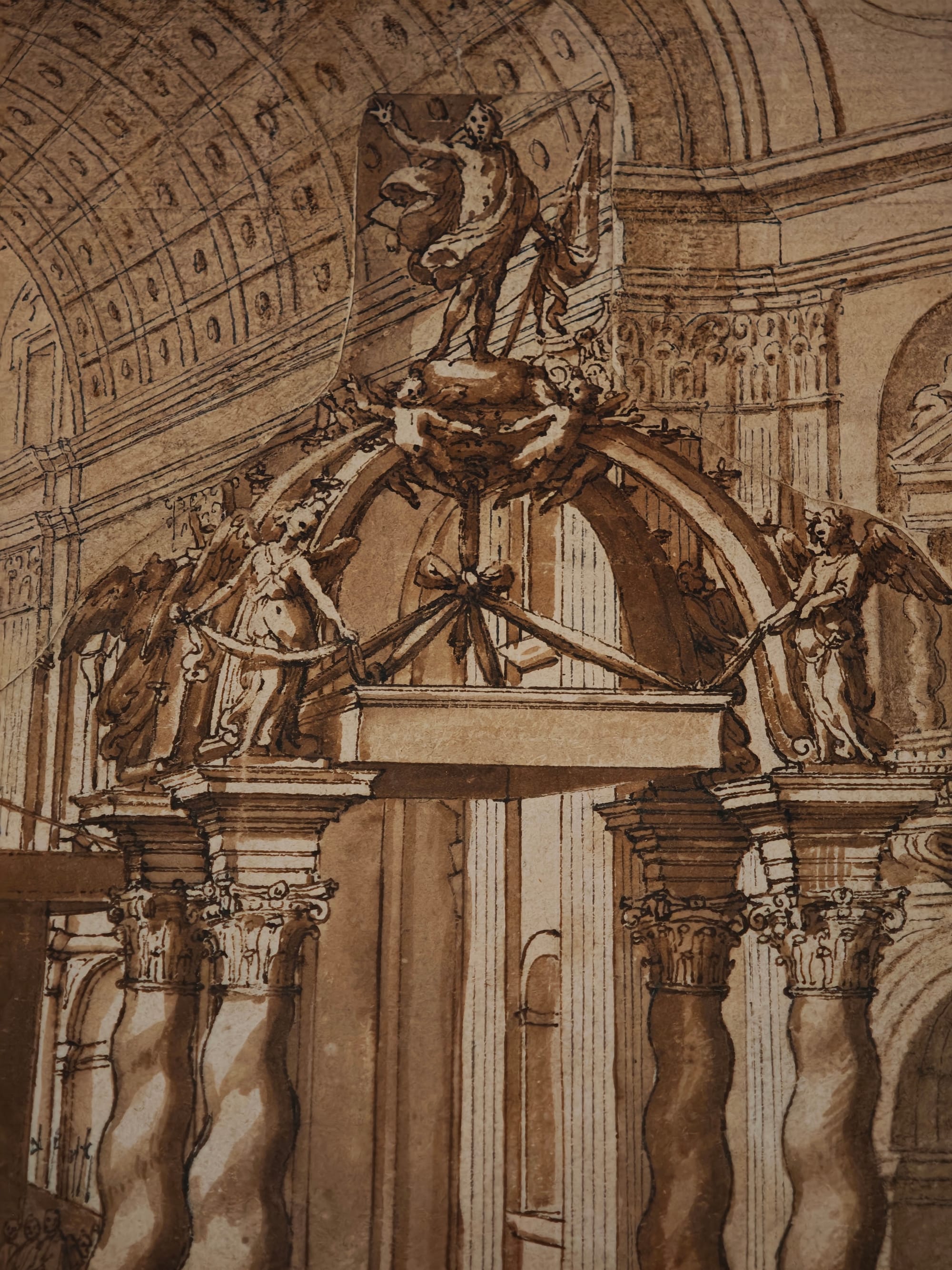
The second section, focusing on Bernini and his public commissions under Urban VIII, is underwhelming until you remember that you can travel across the city and admire the originals in Saint Peter’s Basilica at the Vatican. We move quickly into some small clay preparatory models for the figure of Charity on Urban’s tomb, and another preparatory model for Saint Longinus, but the 1624–33 bronze Baldacchino is the main focus here. Some of his drawings for this huge canopy over the papal altar are present, along with a lovely drawing by Agostino Ciampelli of Bernini’s first wooden model for it, showing a statue of the Risen Christ at the peak, which should have been impossible to make from an engineering standpoint.
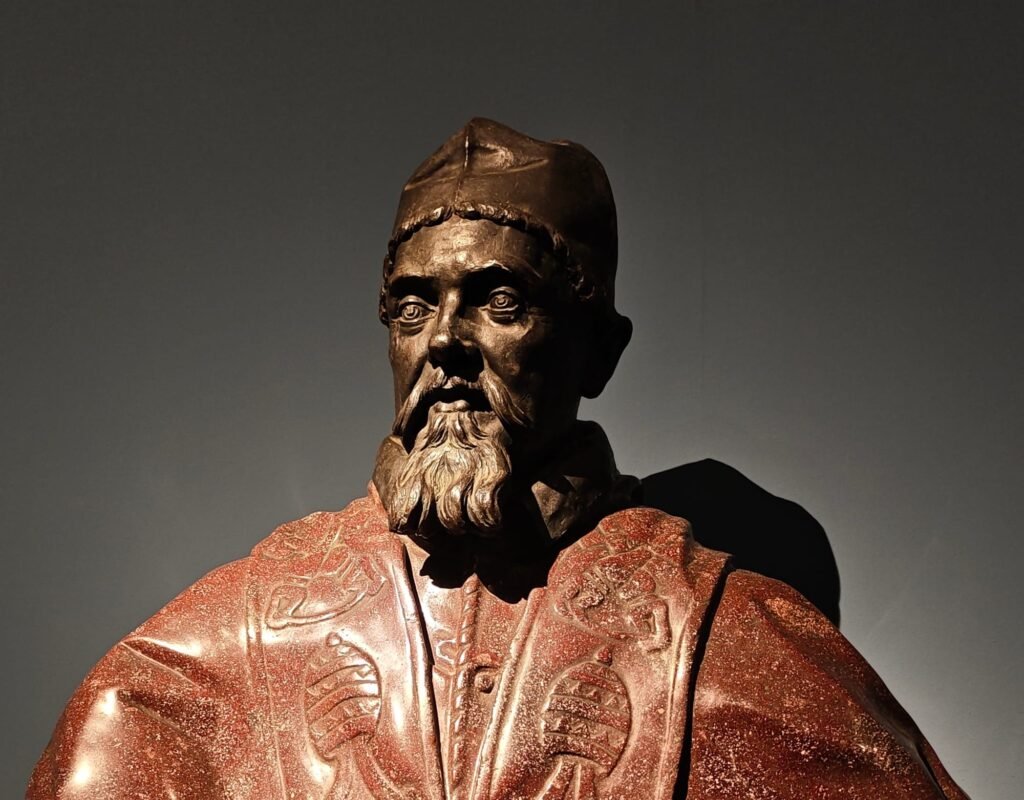
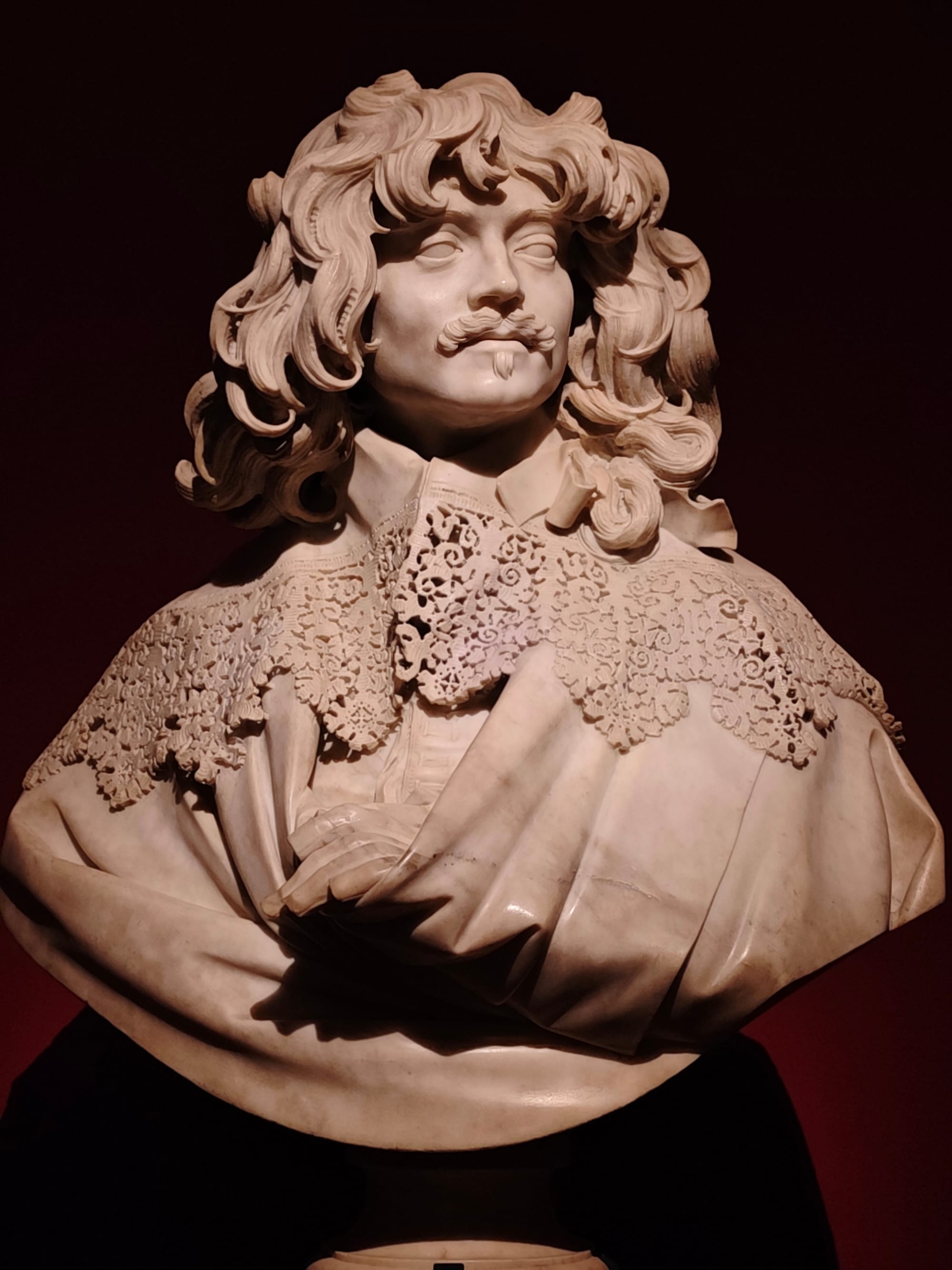
In the third and fourth rooms come the main substance of the exhibition: sculpted portraits by Bernini of the pope and his family. Though portraiture in painting had been a fixture of Italian art since the 15th century, sculptural portraits were considered merely funerary, though popes could have their portrait busts made for official spaces. Bernini’s numerous portraits of the Barberini, eight of which are on view in the third room, changed that. Other artists of his workshop and his time were quick to follow his example, and in the fourth room, the star is Giuliano Finelli’s extraordinary 1630 bust of poet Michelangelo Buonarroti the Younger. Having collaborated extensively with Bernini, Finelli was also a master of painting with the chisel.
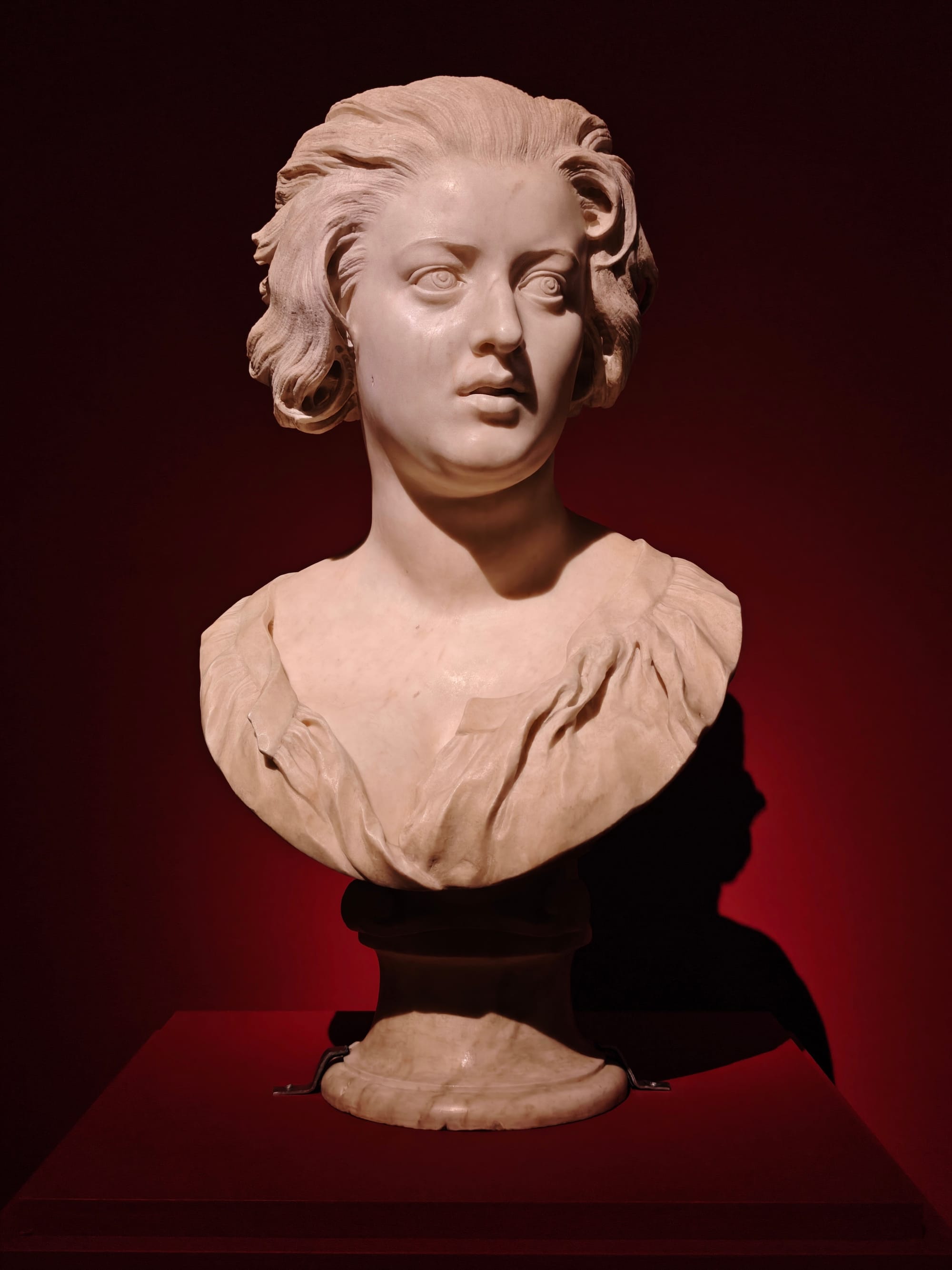
Bernini’s busts of women, by comparison, are solemn portraits weighed down by propriety and piety, with one sole exception being the fantastic 1636–37 bust of Costanza Bonarelli in the fifth room, lent by the Museo Nazionale del Bargello in Florence. Bonarelli was not a papal relative but Bernini’s lover, despite being married to a member of his workshop. At last, a truly living portrait: We see her with unbound hair, her blouse undone, her lips parted, just as Bernini sculpted men, as if about to speak. Their romance ended after Bernini caught her with his own brother, Luigi. Gian Lorenzo nearly killed his brother and had Costanza disfigured with a knife, meant to mark her as a prostitute. She was imprisoned in an institution for “adulterous” women. But with powerful friends such as the pope behind him, Bernini got away without punishment.
The fifth room also gives us some examples of Bernini’s painting, which was excellent, rather along the lines of Diego Velázquez, and the astonishing portrait of the English courtier Thomas Baker from the Victoria and Albert Museum in London rounds out the exhibition. One leaves through the bookshop, sadly without finding an English-language catalog, with a renewed awareness of Bernini’s brilliance — and an unpleasant hint of his egotism.
Bernini e i Barberini continues at the Galleria Nazionale di Palazzo Barberini (Via delle Quattro Fontane, 13, Rome, Italy) through June 14. The exhibition was curated by Andrea Bacchi and Maurizia Cicconi.