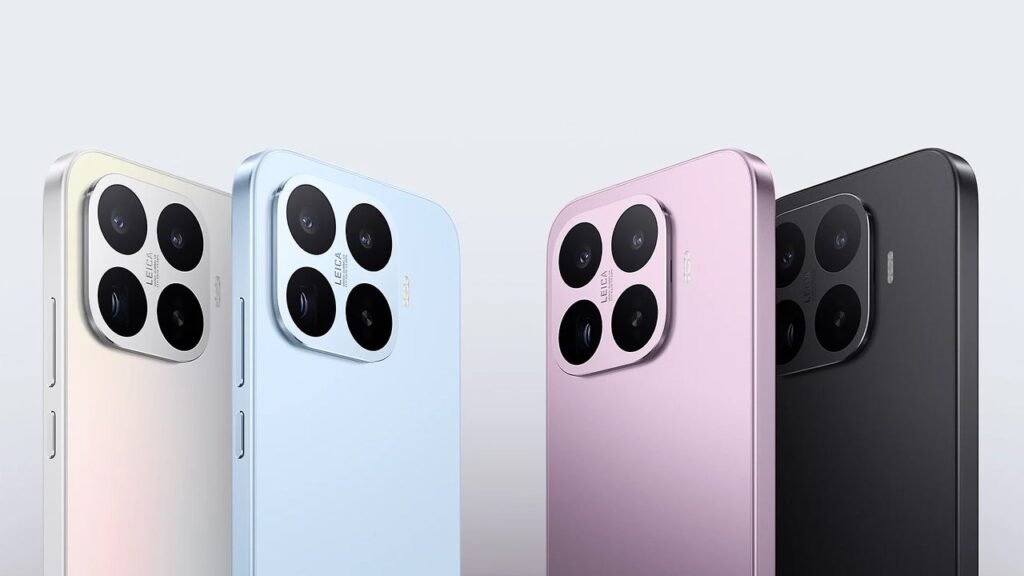
For the last few years, my favorite compact cameras haven’t been traditional cameras at all; instead, they’ve been smartphones produced by the Chinese tech giant Xiaomi. Part of that is because of the company’s work on cutting-edge mobile hardware, but a huge factor is its collaboration with legendary German camera maker Leica.
In a world of overprocessed, HDR-heavy smartphone photos, Leica contributes realistic, tasteful color science to Xiaomi devices. While all smartphones need to operate in accordance with the laws of physics, the phones that Leica and Xiaomi have been working on together take photos that really don’t look like they came from a phone.
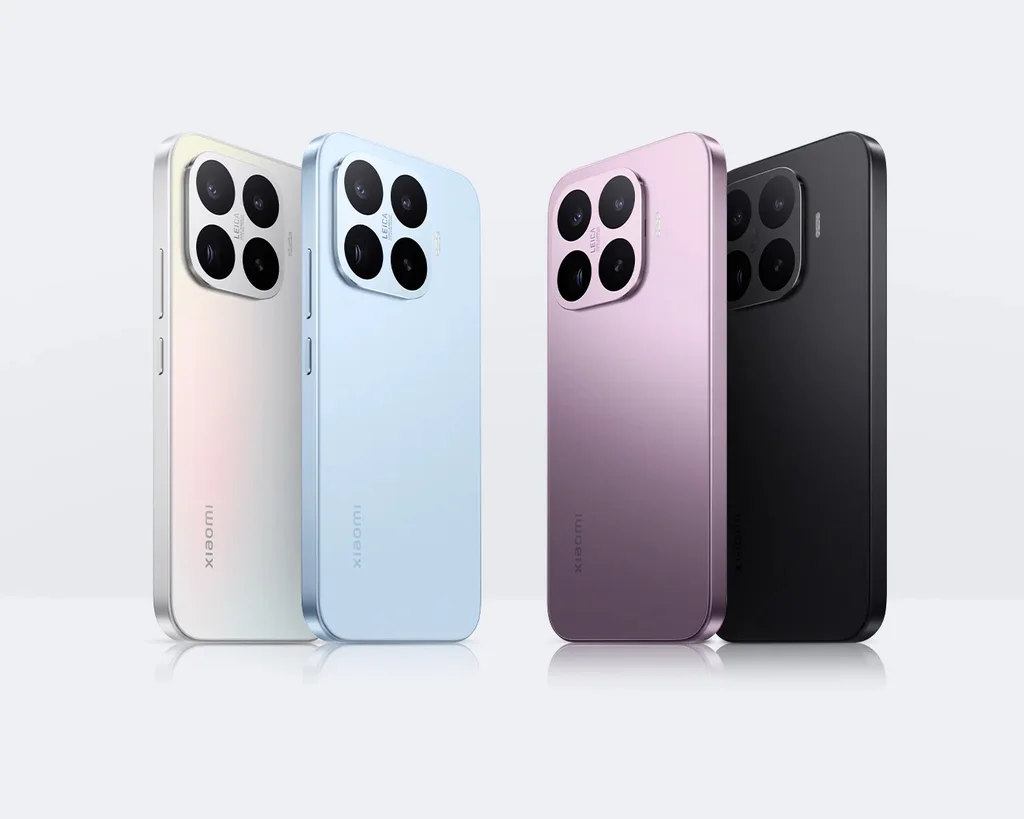
This week in Vienna, Xiaomi announced the latest in its line of collaborative Leica-branded phones, the 17T and 17T Pro. I was in attendance to talk to Leica about the philosophy and technology behind its collaboration with Xiaomi.
Two options
In Xiaomi’s camera app, the main shooting mode lets you flip between two options: Leica Vibrant and Leica Authentic. The former feels like a slightly desaturated take on typical smartphone photos, but the latter has been the real selling point for me — it gives vignetted, muted and contrasty JPEG results that are usually not that dissimilar to how I would want to edit photos from a dedicated camera.
“Leica Authentic was made more for photographers coming from the photography world,” Leica’s head of mobile development and engineering Pablo Acevedo Noda told me. “Photos coming from phones need more computational imaging because of this miniaturization of the components. Computational imaging was getting too much into the picture for our taste, and we preferred a more cleaner look, a more camera-like look with higher contrast, maybe the colors a little bit desaturated compared to the Vibrant mode.”
Acevedo Noda emphasized that both Authentic and Vibrant mode are deeply embedded in how the camera processes images right from the moment of capture; it’s a very different proposition to applying a filter to the photo after the fact. “In the end we had to do two different pipelines,” he said. “So the ISP has two different processing pipelines. One is Authentic, one is Vibrant. They share some common blocks, but the base is different.”

Authentic to the subject
One question I had was exactly what Leica Authentic is intended to be authentic to. After all, Leica photographers usually aren’t shooting JPEGs out of camera and relying on the color science; they’ll be editing files themselves or even picking the right film stock. Marius Eschweiler, Leica’s vice president of its mobile business, clarified that it was more about being authentic to the subject and the environment than to any particular Leica camera.
“The Leica Authentic mode has been created so that there’s more real colors, the real shadows and the saturation and all the technical parameters which are finally influencing the image so that it’s a little bit closer to what the real scenery looks like,” Eschweiler said. “Of course, we want to leave it open also to the customer, whether he wants to have more colorful images, then the better choice would be most likely the Leica Vibrant mode.”
“That was a very tough discussion we had with the Xiaomi engineering team at the very beginning,” he added. “Because coming from the smartphone world, these colorful, shiny images were seen as a benchmark. And then we came into play and said, ‘Yeah, but if you see it from a serious photography point of view, sometimes it’s okay that some shadows are maybe not perfectly lightened up, that you can see every detail — this gives some sort of character to the image.’”
New features
One of the biggest new features on the Xiaomi 17T series is Leica Live Moment, which is similar to Apple’s Live Photos on the iPhone, adding moving footage to provide context to a still image. Xiaomi worked to apply Leica’s processing on every extra frame surrounding the key photo, as well as enabling it for use in Portrait mode.
I was curious as to how this squares with the philosophy of traditional Leica photography. After all, the most famous street photographer and Leica shooter of all time, Henri Cartier-Bresson, was best known for his obsession with capturing “the decisive moment” — that singular fragment in time that best conveys the essence of a scene. Is this video-adjacent feature not in conflict with that?
“I wouldn’t exclude it for eternity,” Eschweiler replied when I asked whether Live Moments could hypothetically ever make it onto a dedicated Leica camera, like an M rangefinder. “But I believe it depends a little bit on the aim of the customer. It’s a different technical approach because with the M we have a rangefinder, an optical frame, which shows the photographer a little bit more than what he is finally capturing, and helps the user finally to really choose this decisive moment and then press this shutter button.”
“If you are a smartphone photographer, maybe this [Xiaomi/Leica phone] is the first time that you use one for kind of serious photography,” he added. “Maybe you are not so trained as a photographer, then this is a super helpful tool to really select this decisive moment that you wanted to catch. Two different technical approaches to finally catch this specific moment.”
I did not, of course, really think that Leica would ever add such a feature to an M rangefinder. But I think Eschweiler’s response makes perfect sense. Leica is operating within the reality of smartphone photography and contributing its expertise where it can be most relevant, while preserving its traditional values for its dedicated cameras.
Xiaomi smartphones are broadly not available in North America, which does dampen the impact of the collaboration somewhat. But if you’re able to get your hands on one of its Leica models, you’ll find that the results are quite unlike what you’ll get from anything on sale in the U.S. market.