Two years after emerging from bankruptcy, biomanufacturing specialist Amyris is not yet profitable, but is a “drastically different company” with a burn rate a “fraction of what it was” thanks to tighter operational controls, stronger cash discipline, and a revised business model, says CEO Kathy Fortmann.
The synthetic biology pioneer—which was founded in 2003, went public in 2010, and filed for bankruptcy in 2023—had an “overleveraged balance sheet, continuing trade losses, mounting litigation risk, deeply unprofitable contracts, and dwindling trade vendor support” according to court filing from August 2023.
Its consumer brands were hemorrhaging money, while its technology access business—which spanned ingredient sales, R&D collaborations, and tech licensing—had “unfavorable margin economics.”
By May 2024, having ditched its consumer brands and associated infrastructure, renegotiated some contracts, and returned to its roots as a pure biotech company, Amyris emerged as a privately held company with ownership transferred to a group of lenders tied to Foris Ventures that had loans secured against Amyris’ assets.
‘A lack of discipline around cash management’
Kathy Fortmann, a food and biotech industry veteran with leadership roles at Cargill, DuPont, IFF, and FrieslandCampina on her resumé, took the helm on May 7, 2024, and says she could quickly see where the company had run into problems.
“Brands require substantial A&P [advertising and promotion]. I’ve seen other companies compare the margins of a b2b business with a b2c business, but if you’re going to do that, you’ve got to include your A&P costs in your margin, because otherwise you’re not looking at the true profitability of the business. You can’t be in a b2c business and not spend substantial money on A&P in my opinion, because you’ve got to keep your brand healthy or else it gets displaced. So there was this movement into branded products versus sticking to the core and a lack of discipline around cash management, if I’m candid.
“Another thing I would say is that there were a lot of one-off projects, which might bring in a significant amount of cash, but there wasn’t the rigor around managing those projects to that amount versus potentially overspending. What we focus on now is recurring revenue; we’ll forego some of the upfront funding from a partner to ensure we have recurring revenue for the long run.”
Fortmann won’t share any numbers but says Amyris closed 2025 “a year ahead of plan in terms of the top and bottom line.” She adds: “Our burn rate in all of 2025 was what it was previously in a month, so it’s a huge difference.”
Despite the tale of woe outlined in the bankruptcy filings, however, Amyris’ core science was solid, says Fortmann: “One of the reasons I’m here is because every time the name Amyris came up, people would say, ‘Oh, great science.’ If you’ve got great science, there’s a huge opportunity to get the house in order and do this right. That’s why our partners stuck with us.”
The evolving business model
Amyris is “the only biotech company that goes across the whole spectrum [from strain engineering to process development to scale-up] and has successfully scaled a number of molecules and ingredients,” claims Fortmann. That said, she is no longer rigidly sticking to the approach that every collaboration has to have a line of sight to manufacturing an ingredient for a partner at scale.
“It used to be that if we were going to do strain engineering, we eventually wanted to be the manufacturer,” she says. “I broke that model.”
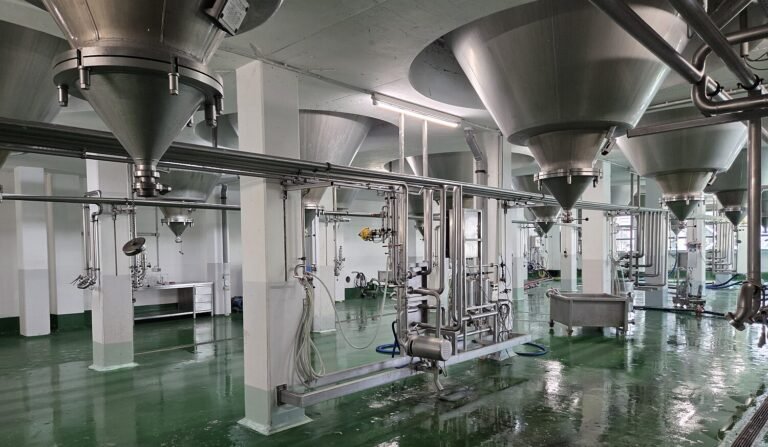
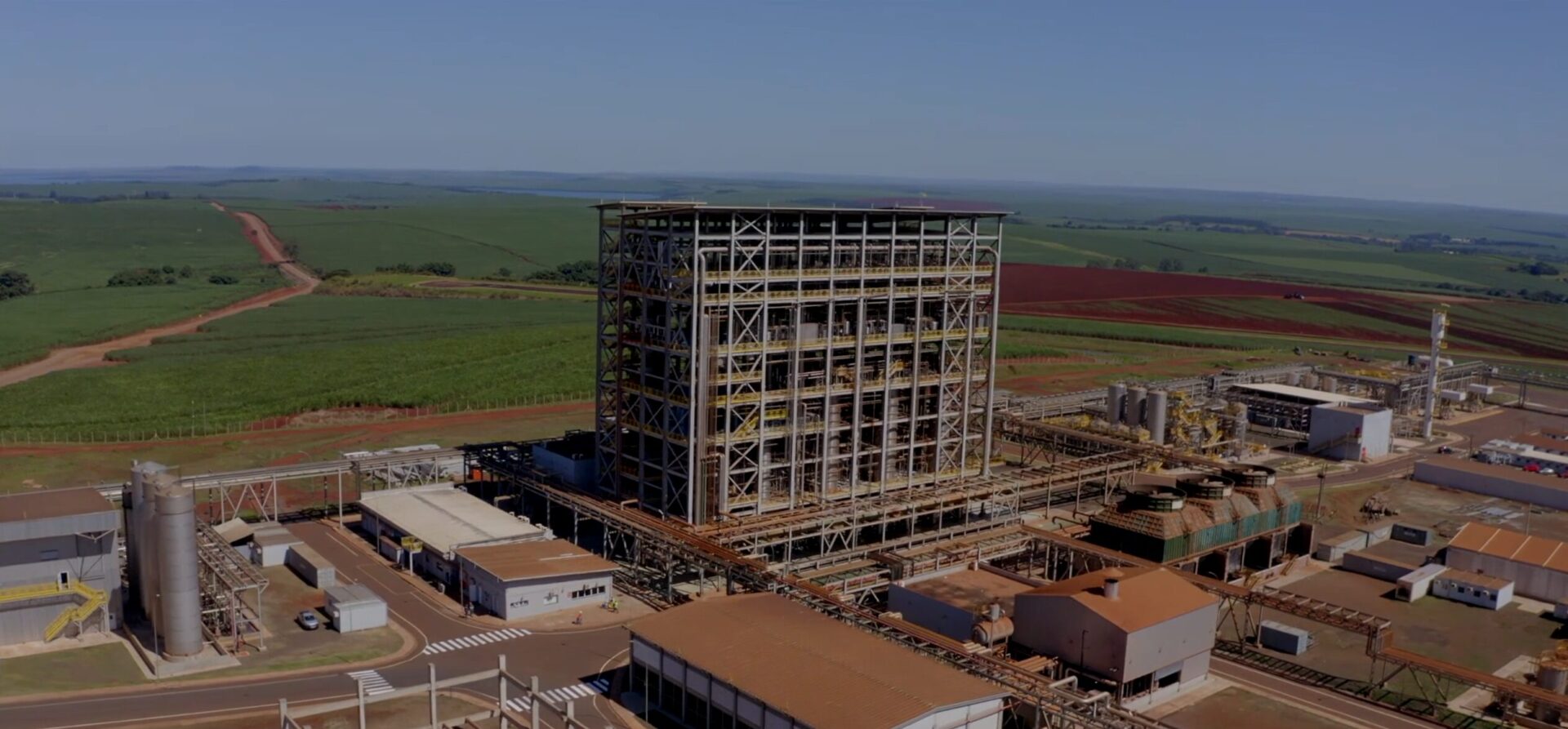
Were a partner to approach Amyris with a “commodity ingredient,” she says, “There may be a better asset [to produce it on an industrial scale] than our plant in Barria Bonita, Brazil, which is focused on specialty chemicals and molecules. When I first saw that facility, I was floored. It’s a world-class, highly flexible precision fermentation facility, so what we put on that asset is very selective.”
She adds: “Take biofuels. If somebody came to us with a strain and they wanted to fund some research, we could do that for them, but we would never put that on our asset, because it’s not going to be low cost, and it’s wasting the crown jewels on something that could be made on a much simpler asset. But we can do the R&D piece, we can do the development, and then license, so we can still generate [recurring] revenue through licensing and royalties.”
Ag biologicals
Rather than waiting to be approached by potential partners, meanwhile, Amyris is now far more proactively scanning markets for opportunities in beauty, flavors, fragrances, pharma, specialty chemicals, and agriculture, says Fortmann.
In ag biologicals, a new segment for the company, Amyris is working with startups and large incumbents that may need help with strain optimization, scale-up, or initial manufacturing, she reveals.
“One of the things I think we were missing as a company was true business development. It was more waiting to be asked to do something. So we’ve set up a very small but highly capable team, both to service our existing partners, but to really scope out those new opportunities in areas such as ag.”
She adds: “Some of the larger ag companies have made recent acquisitions in that [biologicals] space [click here, here, here and here]. That doesn’t mean that they have the internal capabilities to scale, however. Or they may have an initial concept or lab results but need further development on the strain and process development. We can help partners that want to do first proof of concept or market evaluation and could potentially manufacture for them, either through a CMO [contract manufacturing organization] or on our own asset.”
Supply chain reliability
Customers are not generally willing to pay a green premium for a bio-manufactured product, but they are looking for improved functionality, tighter specifications, consistency, and supply-chain reliability as climate change and geopolitical instability threaten traditional supply chains, says Fortmann.
Long-term opportunities may also come from designing entirely new molecules with improved performance rather than simply reproducing existing petrochemical or agricultural ingredients, meanwhile.
“Sometimes biomanufacturing is about making what’s rare in nature abundant,” she says. “It’s also about making it much more consistent than a naturally-sourced ingredient. But the real breakthrough comes from not just trying to match what’s out there, but being able to tailor make what doesn’t necessarily exist today.”
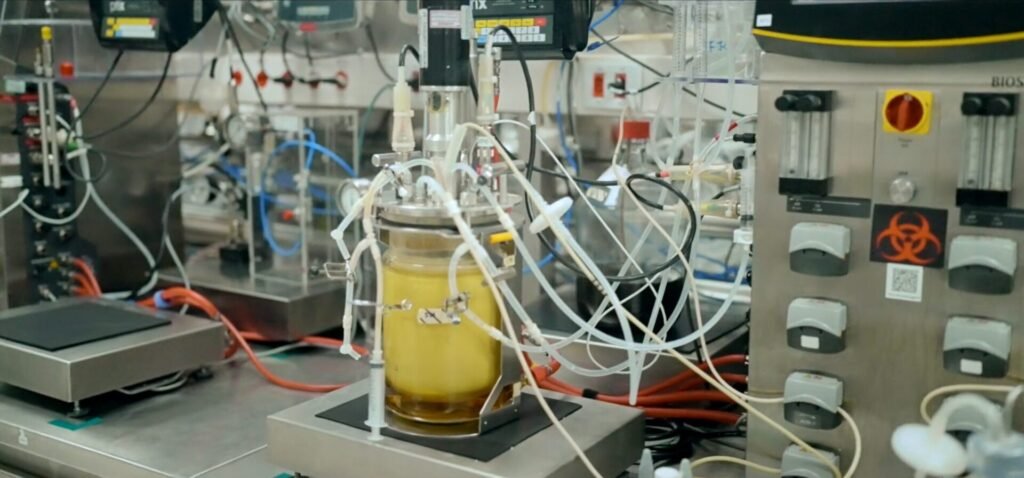
While Fortmann doesn’t point to any single enabling technology she believes will be transformative in precision fermentation, she says Amyris is exploring the potential of cheaper, alternative feedstocks and continuous fermentation. It is also particularly well-positioned to benefit from using AI to compress R&D timelines given it is sitting on two decades of proprietary fermentation and bioprocess data that can be mined to improve strain engineering and manufacturing processes, she observes.
When it comes to selling prices that Amyris and partners need to achieve if a bio-manufactured solution is to make economic sense for a given ingredient, “We don’t have a hard, fast cut off [in terms of $/kilo],” says Fortmann.
“But we evaluate much earlier in the process now. I like to say, if it doesn’t pencil on the back of an envelope, we shouldn’t be spending lots of resources on it.”
In-house molecules
Amyris generally works in partnership with large clients from Givaudan, DSM-Firmenich and Croda to Wacker, but is now developing molecules in-house as well, says Fortmann.
“We have two products in the beauty space that are making their way to market that were developed in-house with our technology and our intellectual property. In one of the cases, we’re looking at one, maybe two partners to access the broad market, and with the other one, we’re going directly to market.
“I’m very excited because it’s the first time Amyris is launching products fully developed in house and that gives us much more flexibility in how we approach the market and our freedom to operate, because historically a lot of the developments were tied up in exclusivity deals, which makes it very hard to access the market beyond one partner.”
Amyris is currently doing applications testing on the ingredients “and seeding the market a bit with one through a partner, which is still confidential,” says Fortmann. “The other ingredient is with a number of brand owners that are evaluating it.”
An inflection point for biomanufacturing?
It can be challenging when business plans are dependent on the price of highly volatile commodities such as oil, with jaundiced investors exiting the biofuels space after getting the fingers burned over the years, says Fortmann.
But recent events—from the Covid-19 pandemic to wars in Ukraine and Iran—have focused minds when it comes to security of supply, which is a key selling point for biomanufacturing, she points out.
“It’s great to see the momentum [she cites recent biomanufacturing projects funded by government-based group BioMADE] although I hope this isn’t just due to the current crisis. I worked for DuPont when they owned Conoco. I was working at the Ponca City refinery during the Gulf War [in 1990-91] and at that point people were saying OK, now we need to make a change [as oil prices surged].
“Fast forward to today and I don’t think we’ve made as much change as we aspired to at that time. But I really do believe we’re at an inflection point now. There’s fermentation capacity out there, we just need to work collectively across the industry to enable speed and success.”
The backstory
Founded in 2003 out of research at the University of California, Berkeley by a group including Jack Newman, Neil Renninger, and Kinkead Reiling, with foundational scientific work from synthetic biology pioneer Jay Keasling, Amyris engineered yeast to produce specialty molecules via fermentation.
It initially gained attention for producing an anti-malarial ingredient called artemisinin with backing from the Bill & Melinda Gates Foundation, but later expanded into ingredients for flavors, fragrances, cosmetics, and food, before aggressively moving into consumer brands such as Biossance, Pipette, JVN Hair, and Rose Inc.
After years of losses, it filed for Chapter 11 bankruptcy protection in 2023 with roughly $1.15bn in debt, sold off its consumer brands and re-emerged in May 2024 as “Amyris 2.0,” focusing entirely on b2b operations.
Amyris’ operational footprint:
- Emeryville, California, US: Strain engineering, fermentation R&D, pilot plants, and process development.
- Campinas, Brazil: Supports downstream processing and technology transfer.
- Barra Bonita, Brazil: Large-scale manufacturing hub.
- Leland, North Carolina, US: Downstream chemical processing/finishing, control, storage, and shipment.
The post Amyris CEO on the post-bankruptcy re-boot: ‘We’re a drastically different company’ appeared first on AgFunderNews.