For years, branding for high-end bottled water tried to sell consumers on the ineffable characteristics gained by dint of its origins: the purity of an Icelandic glacier, or the exoticness and vibrancy of an aquifer from a remote Pacific island.
Now, a new generation of water brands are looking to rebrand wellness, health, and luxury as drinking a product that lacks a certain invisible mystery—namely microplastics and PFAS, the “forever chemicals.” With increasing evidence showing that bottled water has significantly more microplastics than the tap, including an Ohio State University study released earlier this year, these brands are tapping into larger consumer awareness—and fear—over the long-term health aspects of these pollutants.
“The organic movement never came for water, because it’s not grown,” says venture capitalist Clara Sieg, founder of Loonen, an exhaustively tested, PFAS-free water sold in glass bottles. “It’s a category that was based on marketing claims and jargon for a very long time, and consumers got a lot of cool bottle designs, but not very much transparency on what’s in it.”
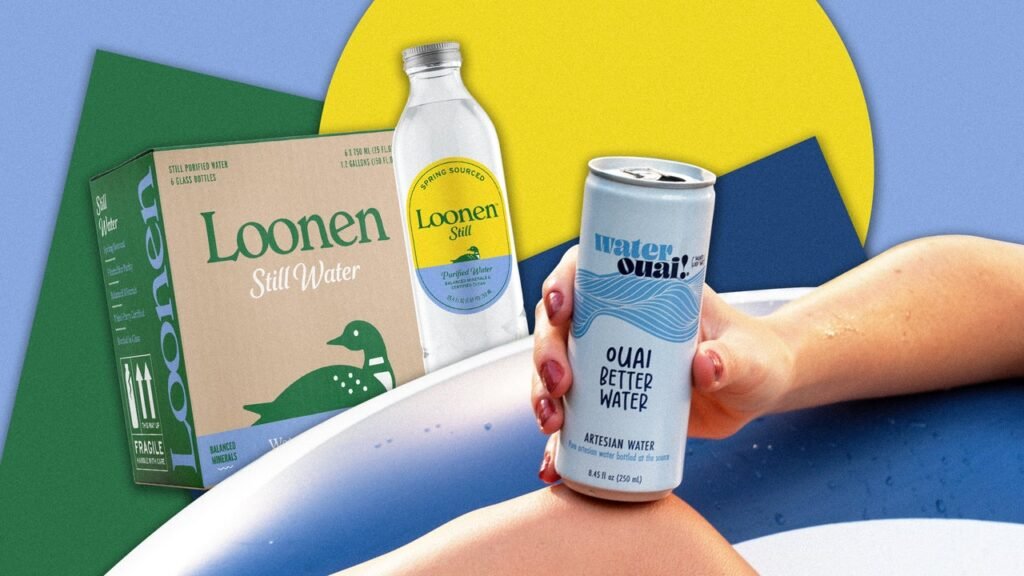
Loonen and the newly launched brand WaterOuai are positioning themselves as premium, on-the-go options in an expanding water purification market that already boasts a number of home filtration systems. Since launching in late 2025, Loonen has become an “it water” that’s found its way into the hands of influencers, on the shelves of trendy grocery stores, and celebs like Dua Lipa, without a paid influencer campaign.
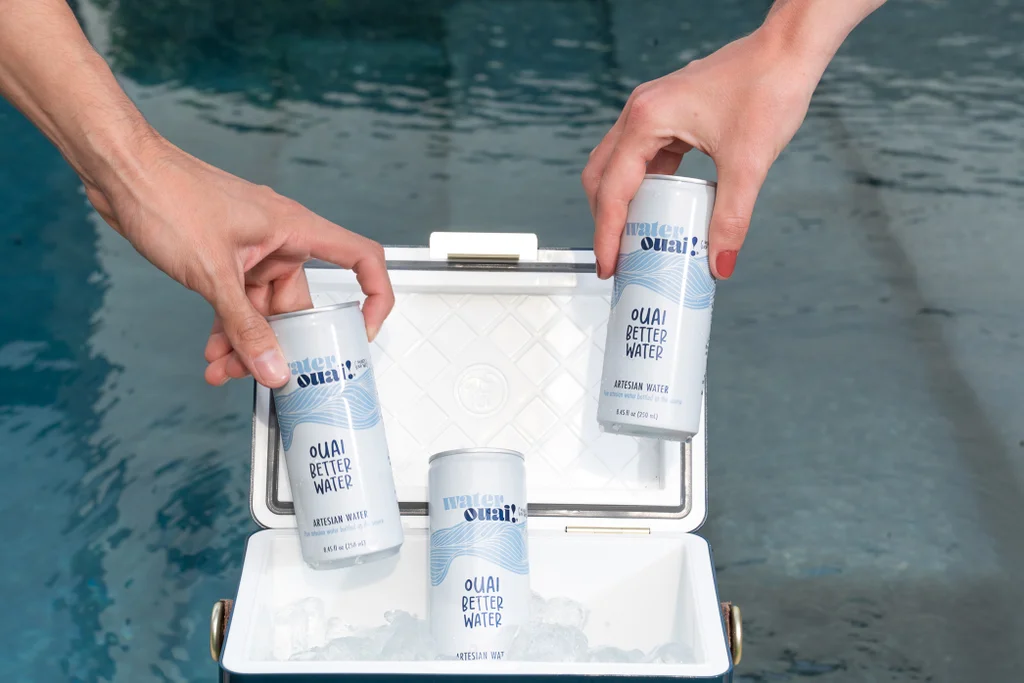
Meanwhile, WaterOuai, which was started by the founder of the cult sunscreen brand Supergoop! and her son, is positioning itself as a healthy, artisan water option that’s packaged in a Japanese-made “supercan” that eliminates microplastics.
These launches come at a time when bottled water continues to explode as a consumer category. Bottled water overtook carbonated soft drinks as the most consumed commercial beverage in the U.S. in the late 2010 and continues to grow at a fevered pace, according to the Beverage Marketing Corporation. In 2024, U.S. residents consumed 16.4 billion gallons of bottled water, creating revenues of $28.2 billion, more than double the $13.8 billion figure from 2014.
The movement toward more chemical-free hydration fits into wider shifts in the wellness space towards avoiding additives and impurities, says Joe Vennare, cofounder of Fitt Insider. Vennare says MAHA discourse and the growing prevalence of third-party testing of products are leading to a more general awareness of what’s inside our food and drinks. He could see it leading to labels or packaging that disclose the presence, or lack, of PFAS.
“It’s going to be another checkbox,” he says. “Not that long ago, you started seeing that with dietary stuff, where everything had this keto seal, or Whole 30 seal, or seed-oil free seal.”
Building a better water brand
Both Loonen and WaterOuai share somewhat similar origin stories. Both were started by mothers who wanted a healthier alternative to traditional beverages; and both feature experienced consumer goods operators.
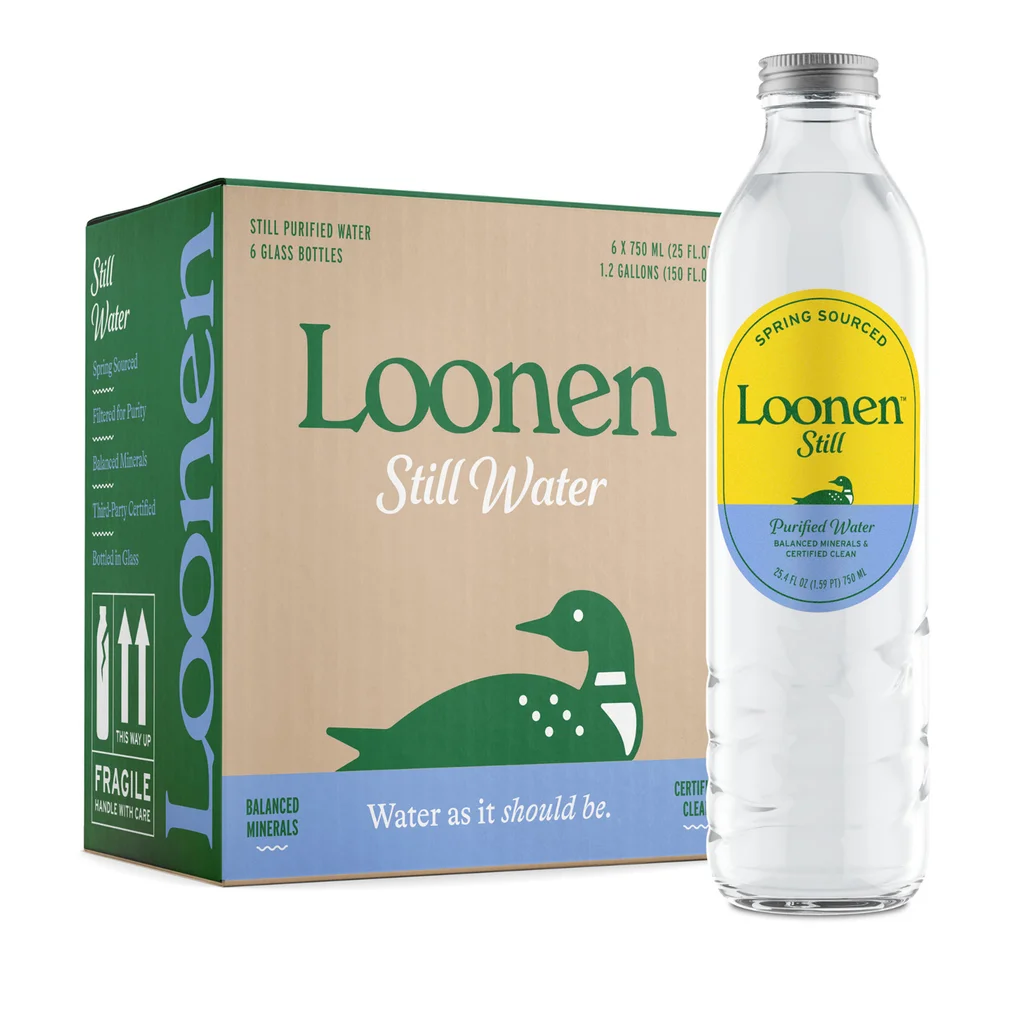
In the case of Loonen—a 6-pack of 750ml glass bottles retails for $35.99 on Amazon—Sieg had dug deep into research about the impact of PFAS and the pervasiveness of the forever chemical during a period when she was in the midst of the IVF process. She worked with David Kimmell, COO and cofounder, who was part of the team that launched Spindrift.
For WaterOuai—$48 for a 24-pack of 8.45 ounce cans—Holly Thaggard, founder of Supergoop!, worked with her 18-year-old son Will to bring the brand to life. Will was inspired to start the company after learning about microplastics pollution during a school seminar. He and Holly self-funded the launch of the water brand, which draws on Central Texas spring water.
Both brands took their own route to finding the purest water. For Loonen, Sieg tested water across the country, zeroing in on a series of springs in the Palomar Mountains outside of Los Angeles. The water is tested and shipped in special steel-lined tanks to a bespoke bottling plant where it is filtered then remineralized and placed in glass bottles. FDA standards mandate that spring waters or mineral waters can’t undergo meaningful filtration (Near the QR code that pulls up batch-by-batch testing results, notice the label says “spring sourced” with balanced minerals).
The logo, a loon, offers both a geographically indistinct brand, and a biological reference to purity; loons are revered by biologists for quickly leaving bodies of water where the water purity begins to decline, serving as sentries of sorts.
“I don’t want to be making health claims, and we don’t,” Sieg says. “That’s the main reason why we are so comprehensive in our testing, because you shouldn’t just rely on what we say about our process, or what we say about the product. You should think about our test results.”
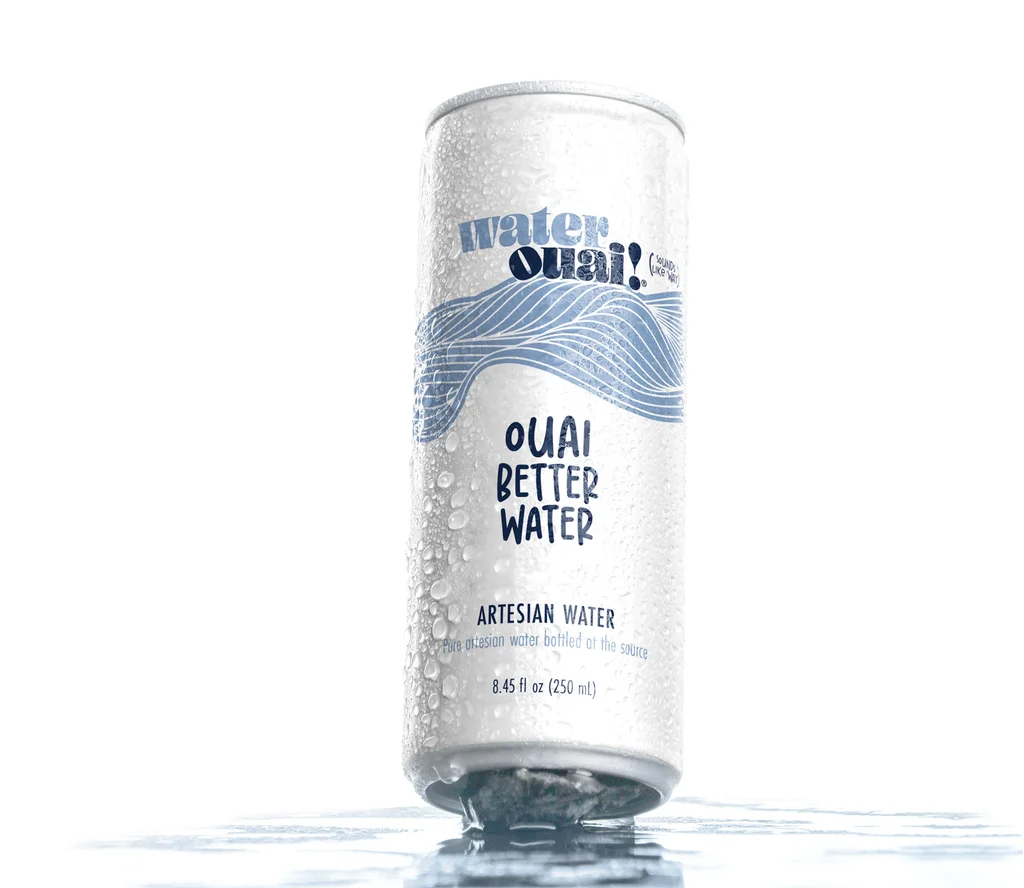
The Supercan used by Water Ouai uses a solid PET layer that is applied to the aluminum before the receptacle is formed, creating a barrier between can and water. According to Thaggard, testing shows that the process results in a more durable label that prevents chemical transfer into the water and results in zero microplastics reaching the consumer. This is the first use of the Japanese cans in the U.S. market, and will be released to select retail and resort locations.
With expanding consumer awareness of the dangers of microplastics, Thaggard says she’s seeing new entrants into the category and “validation in the space.”
“I think that conversation is going to continue to expand towards the materials part of the transparency, and the packaging,” says Thaggard. “Our goal for this is to be part of that evolution that helps to set a new expectation for how hydration can still be convenient and beautifully designed, but delivered in a healthy and clean way.”
Vennare could even see the Supercan itself becoming the product that really succeeds, sort of like the infrastructure for more high-quality beverage brands to adopt.
Sieg believes new beverage brands like Loonen represent just part of the solution, the on-the-go, bottled part of the larger clean water set, which likely includes some kind of home filtration. It certainly benefits from conversation about an issue that seems poised to continue as larger structural solutions are considered.
“I hope that the infrastructure in the U.S. starts getting upgraded, but there are almost 55,000 different community water systems in the U.S., and they weren’t designed to deal with PFAS and microplastics,” Sieg says. “I draw a lot of inspiration from the progress that can be made by changing things in your own home and trying to change things on a community level.”