Ferrari just unveiled its first electric car yesterday in Rome, and the number that matters most isn’t the 1,050 horsepower, the 2.5-second 0-100 run, or even the $640,000 asking price. It’s this: the Luce is part of Ferrari’s wider strategy to offer electric, hybrid, and combustion engine cars, rather than replacing traditional Ferraris with EVs. That point deserves more attention than it’s getting. And could have direct implications for how BMW M should be thinking about the electric M3, internally coded ZA0, coming in 2027.
Ferrari’s Real Play With The Luce

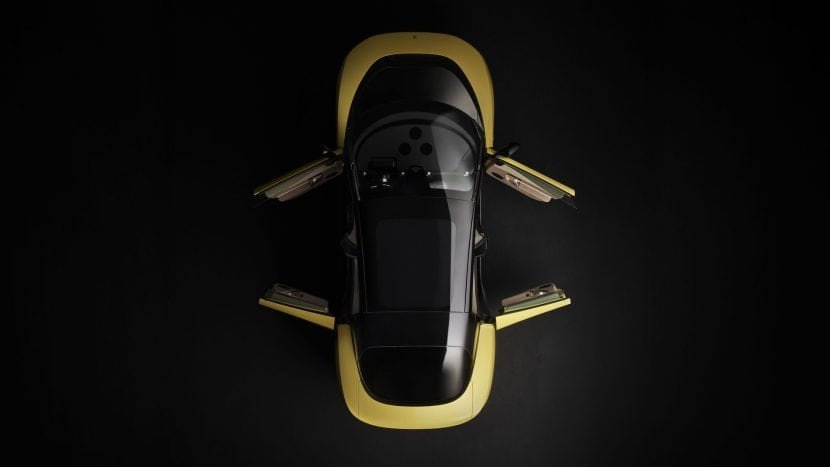
The Luce is a four-door, five-seat sports car delivering 1,050 hp from four motors, a 122 kWh battery, over 530 km of range, and a top speed over 310 km/h — built on a bespoke platform with a dedicated chassis. It is, by any measure, a remarkable piece of engineering. But what Ferrari’s chief marketing officer Enrico Galliera said at the Rome reveal is as important as much as any spec. Galliera said the Luce “was born to offer new emotion to existing” owners, and that the reaction from clients was one of “genuine excitement, real curiosity” — the car is “clearly speaking to people in a way that opens new conversations and new desires.”

In other words: Ferrari isn’t selling the Luce to the person who already owns a 12Cilindri. They’re selling it to that same person as car number four. Or number six. The Luce isn’t a replacement. It sits alongside Ferrari’s combustion and hybrid models rather than replacing them. Ferrari’s target audience for the Luce likely includes wealthy families, urban luxury buyers, and technology-focused customers in markets like California, the Middle East, and China. Ferrari wants the car to become part of daily life rather than an occasional weekend toy.
That last sentence is the important one. Not a weekend toy. A daily driver. And that repositions the conversation entirely.
Now Think About The ZA0

The electric M3, internally coded ZA0, will arrive in 2027 as part of the broader M Neue Klasse lineup, featuring four independent electric motors, one per wheel, with no mechanical differentials whatsoever. Output is estimated at somewhere between 800 and 900 horsepower, with all-wheel drive standard from launch — though drivers will be able to switch off the front motors for a pure rear-wheel-drive setup.
The anxiety in enthusiast circles is predictable and, to be fair, not entirely unfounded. The G80 M3’s S58 inline-six is one of the best engines BMW M has built in years. The sound through those four pipes is the kind of thing that makes you re-route home just to hear it on an empty road. The ZA0 won’t have any of that. The only sounds coming from the ZA0 are tire noises and some unique combustion artificial sound.
So the question becomes: who is the ZA0 actually for?
If BMW M approaches it as a direct S58 replacement — same customer, same emotional pitch, different powertrain — they’ll spend the next decade defending it against a comparison it cannot win. The G84 combustion M3 is coming in 2028 anyway, so the argument is already settled. The inline-six isn’t going anywhere.
But if BMW M takes the Ferrari playbook and positions the ZA0 as a genuinely different proposition aimed at a different moment in the owner’s life — or at someone who was never going to buy an ICE M3 in the first place — then the car has real room to succeed on its own terms.
The Case For A Different Customer Entirely

Think about who buys a performance EV today and why. It isn’t usually the person who goes to track days, knows what compression ratio means, and still has a poster of an E30 M3 somewhere in their life. That person is harder to convert and doesn’t need to be converted — the G84 exists for them.
The ZA0’s natural buyer is someone who wants a fast, practical, all-weather daily machine with no compromises around charging infrastructure or running costs, who cares about lap times but lives in a city, and who may never have seriously considered an M3 before because the ICE version felt like too much car for commuting and school runs. They might already drive a Model S Plaid or a Taycan and find those cars technically impressive but emotionally thin. The ZA0, with BMW M’s setup expertise and four-motor torque vectoring replacing the mechanical differential entirely, could offer something those cars don’t.
That is the Luce argument, applied to Munich. Not a Prancing Horse in a second garage — but an M badge that earns its place in the life of someone who parks next to a G80 and calls them both necessary.
Building Up To The Reveal

Ferrari spent three years setting up the Luce’s positioning before the car appeared in Rome. The technology reveal in October 2025, the Jony Ive interior unveil in February, the full reveal yesterday — each step was framed explicitly around the “new emotion for existing clients” thesis. Ferrari’s marketing chief was in Rome saying it out loud.
BMW M, so far, has released official Nürburgring footage and let the spy shot community do the positioning work. But we expect the company to tackle this very same topic very soon as we get closer to the production series M3 electric. BMW M will solve the lap times. Convincing the right buyer that those lap times are for them — that’s on marketing.
[Photos: Ferrari Media Center]


First published by https://www.bmwblog.com