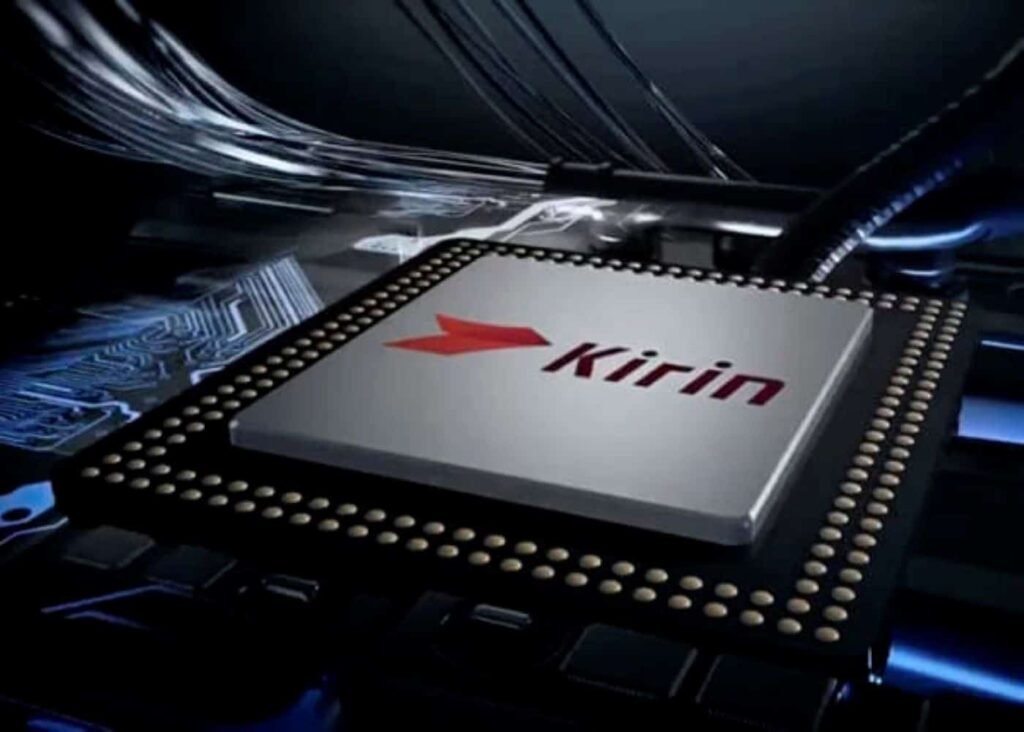

Huawei has just managed to show everyone, as the company announced a 1.4nm Kirin chip technology breakthrough. Huawei seemingly managed to achieve this without TSMC, which is unexpected.
The US ban is hurting Huawei, but the company just announced a significant breakthrough
As many of you know, Huawei is forbidden from using advanced chips due to the US ban. That creates huge problems for the company. Huawei’s smartphones and tablets are limited to using Kirin chips, which are based on old technology.
Well, that may not be the case for much longer, following the announcement of this breakthrough. Still, Huawei cannot exactly start producing such chips immediately or anything like that.
What exactly happened? Well, He Tingbo, who is a hidden face behind Huawei’s chip advancement efforts, made an appearance at the IEEE International Symposium on Circuits and Systems (ISCAS). There, she said that the company has achieved a new path to semiconductor development.
A new scaling tech is here
That path is based on the replacement of geometric scaling with time scaling as the new guiding principle for semiconductor and electronic systems. She revealed the new technology principle in this regard – LogidFolding structure. That tech could compress signal propagation delay and steadily improve transistor density.
He Tingbo said that the new time scaling has been tested on more than 381 chips over the past six years. Those chips covered various sections of the industry, including smartphones and AI for mass production.
What was even more surprising is that she announced that Huawei plans to launch the first LogicFolding-architecture Kirin chip with the new flagship in the fall of 2026. That chip will offer performance improvements.
Huawei plans to start making 1.4nm chips by 2031
That’s not 1.4nm, though, what about that? Well, Huawei is also planning to unveil a high-end chip design that will improve transistor density to a level equivalent to a 14A (1.4nm) process by 2031. So that level is still not as close, but 1.4nm chips are still not a thing in general, so… there you go. Qualcomm’s flagship chip, the Snapdragon 8 Elite Gen 5, is a 3nm chip, for example.
Either way, this is a huge step forward for Huawei. The company has been working tirelessly to close the gap.
The post Huawei Just Announced a 1.4nm Chip Breakthrough — Without TSMC appeared first on Android Headlines.