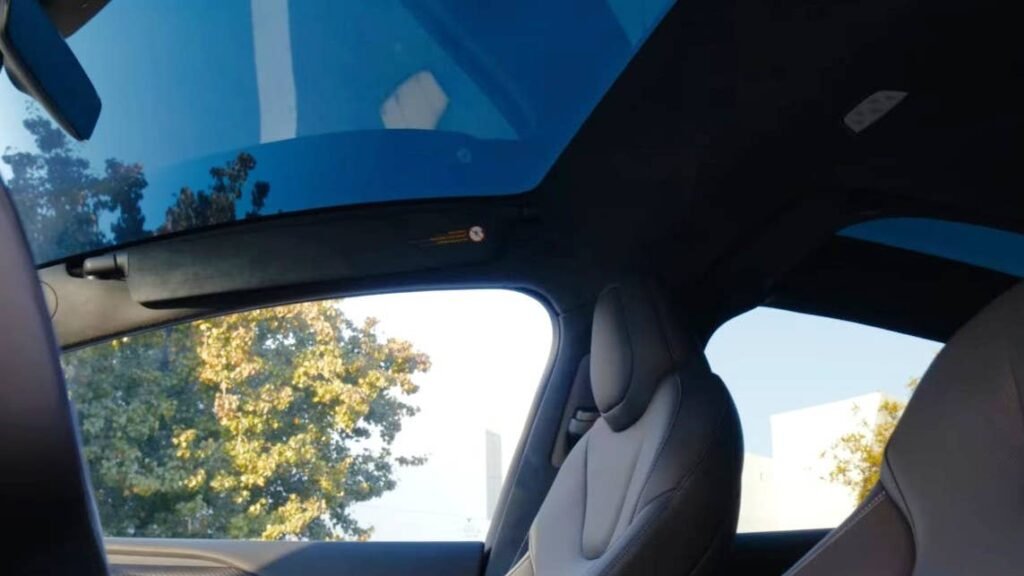
Tesla is rarely short of new ideas, and as an EV manufacturer, finding small efficiencies is particularly important. The company’s latest published patents (of some 3,300 globally) show just how far Tesla is willing to go in search of these improvements, with the company filing to protect designs for a glass roof that literally has holes in it to help cool the cabin and a separate system for literally sucking warm air from the interior. We’ll start with the first.
It’s an interesting idea; glass roofs make car cabins feel more airy, and this one could make that feeling a real sensation, as described by the filing with the United States Patent and Trademark Office. The patent was filed back in 2019 and has now been published, and it’s titled “Automotive perforated glass structure.” Let’s take a closer look before discussing the other recent climate control patent Tesla has filed.
The First of Tesla’s Cabin-Cooling Ideas
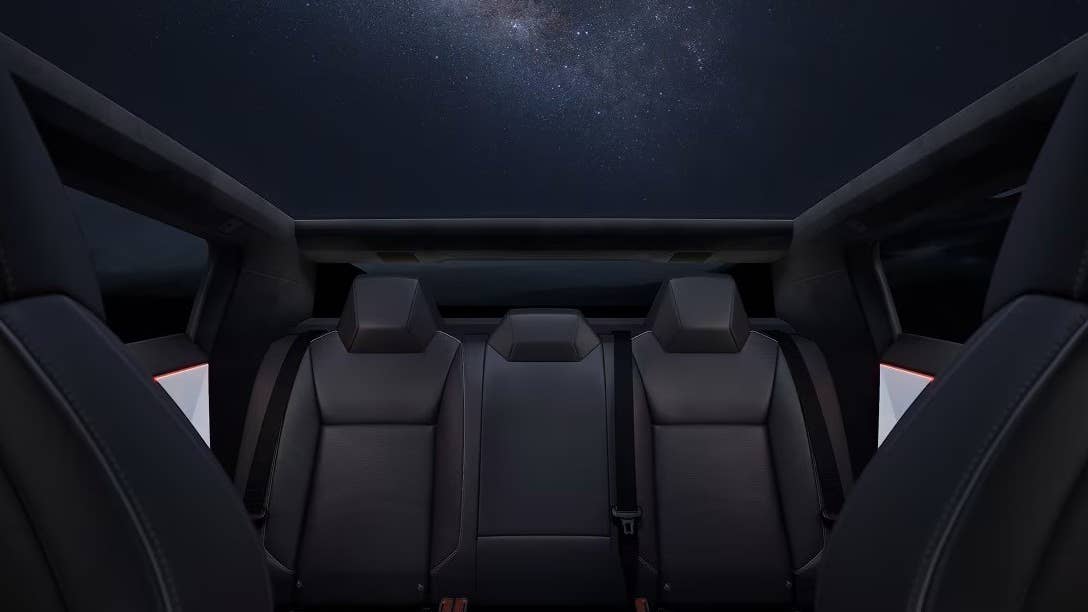
The new patent describes a multi-layer panoramic glass roof that looks conventional from the outside but has a perforated layer separated from the outer layer by a honeycomb structure. This structure creates an air gap that insulates from both heat and noise, and its holes aim to allow the vehicle to bleed cool air from the climate control system, spreading it over the surface of the roof. The idea is that this could be more effective at insulating heat, thus reducing energy consumption from the A/C system, as the cool air diffuses down to the occupants; as lower-density hot air rises, it is met by this falling cool air, helping maintain a comfortable atmosphere.
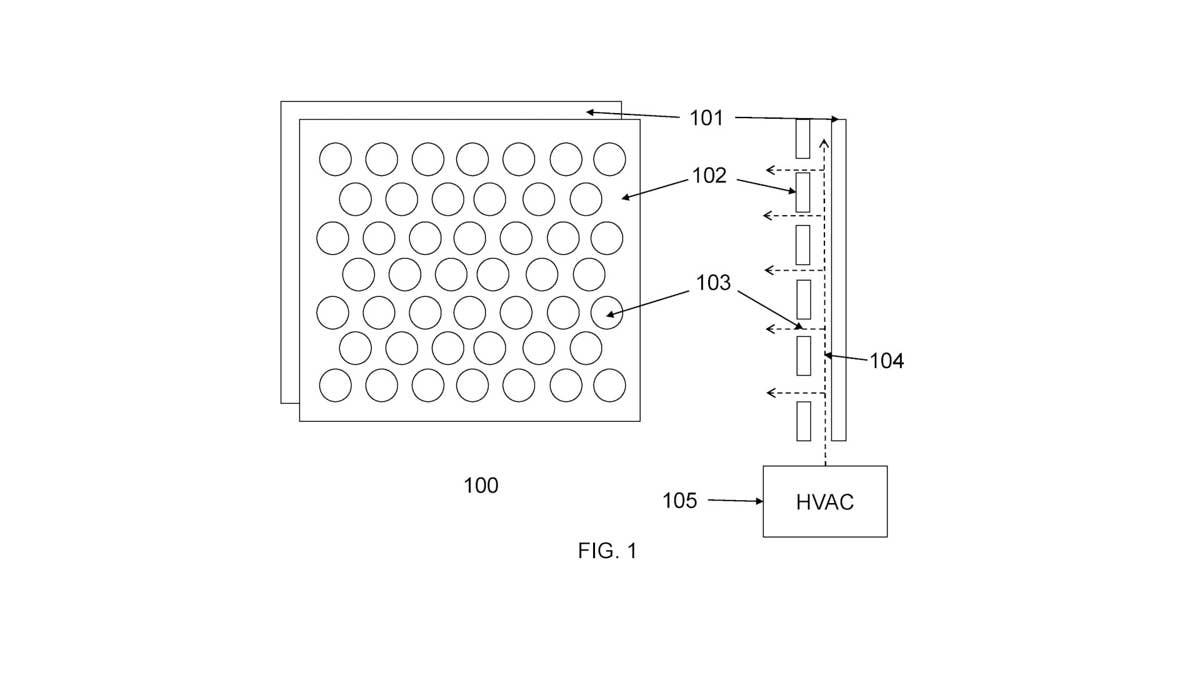
Another reason sending cool air to the roof through the dashboard vents could reduce overall energy consumption is that the traditional vents blowing air at occupants would be less necessary, or could operate at a lower speed to reach the same targeted cabin temperature. It should feel more pleasant, too. Finally, the patent indicates that Tesla would pump hot air into the roof, perhaps as a more efficient means of removing heat from the car. But this isn’t the only recent patent Tesla has filed in this vein, and both aim to reduce energy consumption, with real-world range improvements likely.
Tesla’s Second Idea Uses Vacuum Suction to Cool the Car
Tesla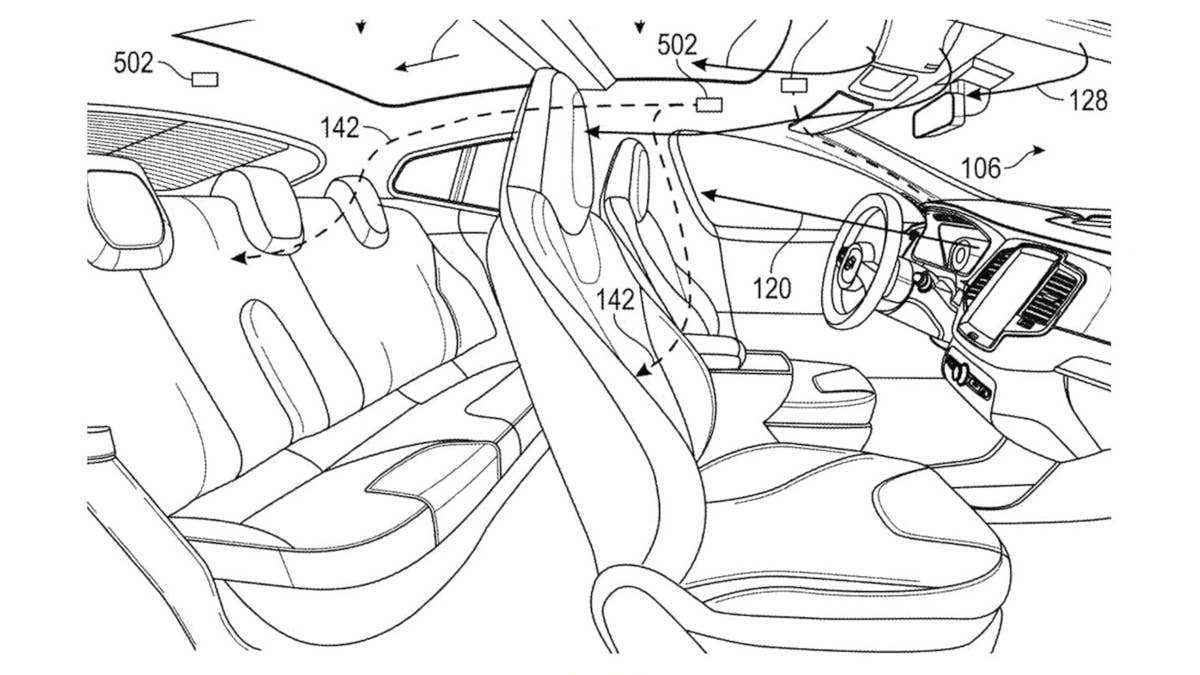
Another patent was discovered earlier this month, reports InsideEVs, and it discusses the fitment of a suction device into the car’s HVAC system to create negative pressure that can be applied to vents in the car that are near pockets of hot air. Instead of blowing cold air into the cabin, this system would suck hot air out of it, mixing with the cooler air in the HVAC system before being recirculated. For example, dashboard vents could suck hot air from the upper part of the cabin and mix it with cooler air, perhaps that which is conditioning the footwells. Tesla calculates that this could reduce energy consumption by 7.4 percent. That may seem like a small amount, but it’s these tiny improvements that contribute to big overall gains. In fact, a study from Recurrent found that on a 100-degree day, A/C use reduces EV range by up to 18 percent.
Related: Tesla Roadster Is Delayed Again, But Do We Even Care Anymore?
If Tesla were to combine the ideas of both patents into a single system, its EVs could dramatically reduce power draw on hot days, and we imagine there’s probably a way to reverse elements of these systems to find similar benefits on cold days. Of course, not every patented idea reaches production, but we wouldn’t bet against Tesla introducing either or both of these ideas, perhaps on a future iteration of its Cybercab. Regardless, Tesla’s obsessive attention to minuscule efficiency gains is why the Model S evolved into a vastly better car by the end of its life cycle than the already impressive EV it was when it launched in 2012.