More than 30 states across the country have had at least one case of someone sick with Salmonella so far in 2026.
Many of those cases are believed to be caused by contact with outdoor poultry, like ducks and chickens. But separately, there’s also been a wave of food recalls for Salmonella contamination, tied to milk powder used in snack seasoning.
Salmonella isn’t an uncommon bacteria; each year, the U.S. sees some 1.35 million Salmonella infections, according to the Centers for Disease Control and Prevention (CDC). Most of those stem from food.
If it seems like Salmonella is becoming more common, though, there are a few reasons why—related to how we detect such outbreaks, and how climate change affects our environments.
Better outbreak detection
One reason you may notice more Salmonella recalls or news about infections is that we’ve simply gotten better at detecting outbreaks, even in the last decade, says Craig Hedberg, an epidemiologist and professor at the University of Minnesota’s School of Public Health.
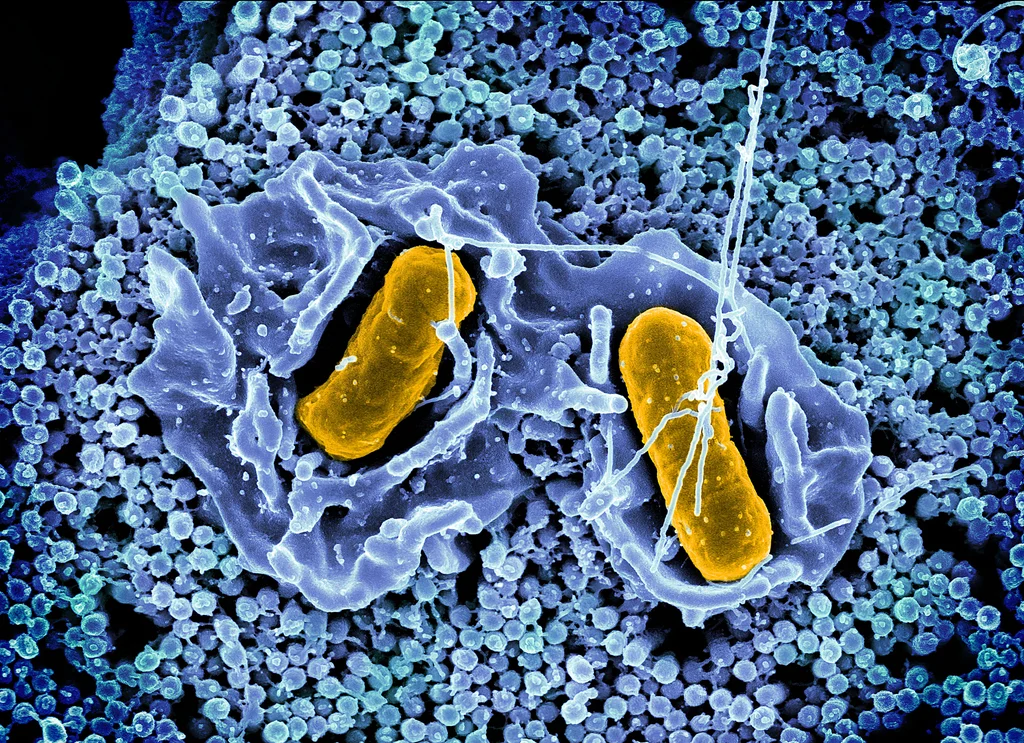
Advances in laboratory practices mean food safety experts can “fingerprint” the bacteria, which helps identify when two Salmonella cases might be related to each other—even if they’re far apart.
Scientists do this through whole genome sequencing, analyzing samples from people who have gotten sick with Salmonella and linking cases together.
But we only started using whole genome sequencing for salmonella surveillance as a nation as of 2019. “That has really improved our ability to detect outbreaks,” Hedberg says.
Each state does this and then gives their data to the CDC, which looks for clusters of related cases and then investigates the source.
More frequently asked questions
To do those investigations, officials interview people who have been infected to find commonalities, like if they’ve had contact with any backyard chickens, for example.
“Every year, we’re having outbreaks associated with people getting young chickens or other water fowl [like ducks],” Hedberg says. “Those practices started to get more common particularly around COVID. People started to get more interested in having their own egg source in their backyard.”
As public health officials learn about more Salmonella sources, they also ask about them more frequently when investigating cases. So with Salmonella from backyard poultry, Americans’ behavior may be changing, but public health officials are also more attuned to this source.
“Some things became more common. But we also became more aware that those were potential problems,” Hedberg says, “so they get high on the list of suspicious activities that we wanted to make sure we were asking about.”
More ingredients means more risk
Separately from the backyard poultry-related outbreaks, there’s been a recent wave of recalls for Salmonella contamination in foods from Kroger’s cheese garlic croutons to Williams Sonoma’s white cheddar Fireworks popcorn to Ghirardelli’s powdered drink mixes.
These cases are all tied to a common source: powdered milk from California Dairies, which is often an ingredient in flavorings.
Regulatory agencies are often sampling products for outbreaks. But these recalls seem so widespread because the same flavoring ingredients could be in dozens or hundreds of consumer products.
“If you identify contamination early in the distribution process, then we may see a whole series of recalls occurring,” Hedberg says. “As they figure out more of what products could have contained that contaminated milk powder, [the scope of recalls] continues to increase.”
This has happened before; a 2008 Salmonella outbreak was tied to peanut butter and peanut paste. Because that peanut paste was then an ingredient in all sorts of other food products, there ended up being thousands of different products recalled.
“We have a lot of food items that contain a lot of ingredients, and the more ingredients you put into food, the more there are opportunities that something with one of the ingredients could be a problem,” he adds.
The role of climate change
These are examples of the things that have made Salmonella contamination more visible. But “whether the problem of Salmonella is increasing or not is more difficult to really put a good answer to,” Hedberg says, “partly because there are so many different possible sources.”
Salmonella infections have been linked to chicken, pork, beef, turkey, fruit, vegetables, and nuts. But “any food can become contaminated, even processed foods (such as flour),” the CDC notes.
Outside of food, Salmonella has also been linked to lizards (like pet chameleons), aquatic invertebrates, farm animals, and wildlife.
And in the background of all this is the fact that climate change is potentially a contributing factor.
“Salmonella are bacteria that grow when it is warmer out, and so you can have enhanced survival in the environment, and more rapid amplification, along certain transmission routes,” Hedberg says.
Broadly, climate change is altering the populations of all sorts of bacteria, and intensifying infectious diseases. (As the Earth warms, bacteria also produce more CO2, worsening climate change in a feedback loop.)
A 2025 study found that climate change is amplifying pathogen evolution, and even antimicrobial resistance, for everything from cholera to E. coli to Salmonella.
That increase isn’t just from hotter temperatures, though. It’s also exacerbated by heavy rainfall, and climate change is fueling heavier, and more intense rain.
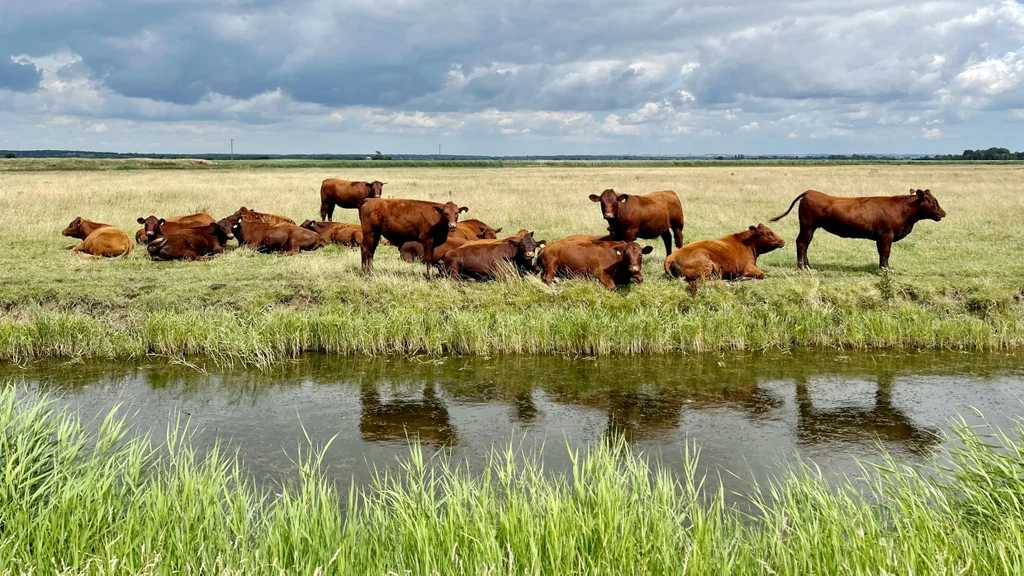
Heavy rain and flooding can spread Salmonella by moving the bacteria around an environment. In an area with a lot of cattle, for example, fresh produce is also often grown nearby.
“The manure from the cattle could move in the environment by way of water,” Hedberg says. “Intense rainfall events can facilitate some of that.”
Generally, climate change disrupts all our normal production cycles, whether because of flooding or even drought. That makes it more challenging for farmers to maintain their usual planting and harvesting schedules, and that opens up room for problems.
“Every time you start disrupting normal systems, you increase the likelihood that something can go wrong,” Hedberg says.
Hand washing, proper food storage, and a funded public health system
To mitigate this, Hedberg suggests separating animals from produce. But it will always be a challenge, he adds, “because we’re growing fresh produce out in nature, and nature is incredibly complex.”
When it comes to Salmonella broadly, he encourages people to be aware of the potential for infection anytime they bring food into their homes. That means properly preparing, storing, and cooking foods, and washing your hands.
Salmonella infections are more common in the summer, the CDC notes, again because warmer weather creates ideal conditions for the bacteria to grow. Experts encourage people to refrigerate or freeze their perishables to reduce that risk.
And outside of personal behavior, we need to ensure we have a strong public health system across the country, including maintaining its funding and regulations.
The Trump administration has attacked our public health system, gutting CDC staff and funding for public health programs. The Food and Drug Administration (FDA) is currently undergoing a leadership restructuring.
Disease surveillance costs money, and any threat to public health agencies, Hedberg says, “represents a threat to our ability to conduct surveillance, and that surveillance is really important for prevention.”
“The instability in the system itself is a potential risk for letting things slip through the cracks,” he adds, “and potentially undermining the safety of our food systems.”