Arsenic-contaminated groundwater affects more than 230 million people living in 108 countries. About 180 million of these people live in the Indian subcontinent (which includes Bangladesh, Nepal, and Pakistan, in addition to India) and Southeast Asia. The Indian state of Bihar, which borders Nepal, has several regions with extremely high levels of naturally occurring arsenic in their groundwater.
In Bihar, silt from the Himalayas containing arsenic and other heavy metals is routinely deposited in floodplains and seeps into the groundwater below. This phenomenon puts up to 21 million residents in Bihar at risk of consuming arsenic-contaminated water each day. Arsenic is a carcinogen that has also been linked to diabetes, pulmonary disease, cardiovascular disease, and infant mortality.
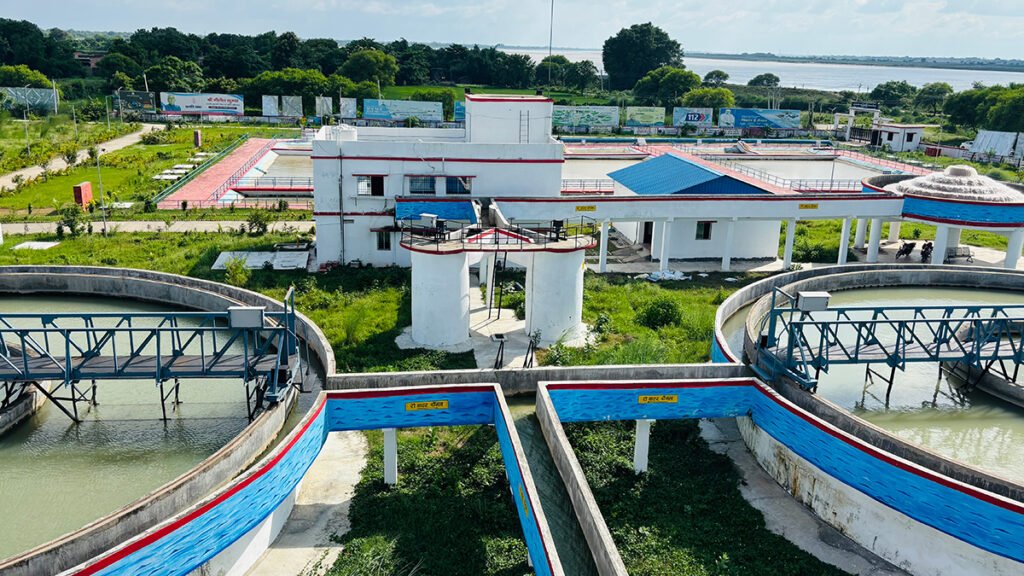
Though Bihar has close to 600 groundwater treatment units designed to filter out arsenic, a recent study of 98 units found that 90% of them were installed in parts of the state where groundwater arsenic levels were within the World Health Organization’s permissible limits (below 10 parts per billion)—which means almost all the communities that need these units the most still do not have access to them. The research was published in Groundwater for Sustainable Development.
“Some of the areas with these units had reported a higher prevalence of gallbladder cancer, which is associated with arsenic poisoning. But we found that it was the food that was the main source of arsenic exposure, not groundwater,” said Arun Kumar, a study author and senior scientist at Mahavir Cancer Sansthan & Research Centre in Patna, the state’s capital city. “In the last decade, we have observed drastic changes in groundwater arsenic levels in Bihar. Along with that, the cancer burden has also reduced in some parts of the state.”
In another city, Buxar, Kumar and his colleagues observed levels of arsenic of up to 1,900 parts per billion in the groundwater in 2015. But when the researchers retested that region’s water samples last year, the arsenic levels had gone down to 100–200 parts per billion.
“We hypothesize that because Bihar is prone to earthquakes, the seismic activity might have changed the properties of sediments and silt in groundwater. And perhaps, at some stage, those regions with the groundwater treatment units had experienced arsenic contamination,” added Kumar. “It is still a mystery to us” why the levels changed so drastically.
Ditching Groundwater for River Water
Kumar acknowledged that in the past few years, there has been a mushrooming of public and private groundwater arsenic treatment units in regions located within 10 kilometers (6.2 miles) of the Ganges River in Bihar. The majority of the 98 units included in the study were installed by the state government from 2016 onward. The researchers observed that privately owned units underwent regular maintenance, unlike many of the government-run units.
“Much of the previous large-scale groundwater testing conducted in Bihar was limited to the 6-mile stretch on either side of the Ganges River.”
The corresponding author of the study, Laura Richards, a professor of water resources and geochemistry at the University of Manchester, explained that regions close to the Ganges River may have been given higher priority mainly because they are situated along major roads and highways, making them easier to access than inland Bihar.
“Much of the previous large-scale groundwater testing conducted in Bihar was limited to the 6-mile stretch on either side of the Ganges River. The issue with that is that the regions selected for arsenic remediation units were likely based on nonrepresentative spatial sampling of the state, and those locations might not have necessarily covered all areas with arsenic contamination in the groundwater,” said Richards. “Arsenic distribution across the state is really quite heterogeneous.”
The researchers further found that in 10% of the locations where groundwater arsenic treatment units were installed by the state government, high levels of fluoride posed a greater public health risk than arsenic, suggesting that governmental policies were rolled out without site-specific water quality monitoring and testing.
“Alluvial or sand-rich aquifers are the main culprits of arsenic-contaminated water in Indian terrains.”
In addition to arsenic and fluoride, the groundwater in different parts of Bihar has high levels of manganese and iron. Currently, the state has more than 3,000 groundwater treatment units for arsenic, fluoride, and iron. However, Kumar said a better solution would be to look to other sources for drinking water and to ensure water treatment centers are properly maintained.
“People would be a lot safer if they stopped consuming groundwater altogether,” Kumar said. “This is why the state government has started treating and supplying water from the Ganges River to villages. They have already started doing it in two districts and plan on expanding the supply of river water.”
“Alluvial or sand-rich aquifers are the main culprits of arsenic-contaminated water in Indian terrains,” said M. Santosh, a professor at the China University of Geosciences in Beijing who was not involved in this study. “This study clearly shows how we can rectify remedial measures on a local level. We should encourage more such studies on how to tackle this problem.”
—Anuradha Varanasi, Science Writer
Citation: Varanasi, A. (2026), In Bihar, groundwater treatment units were installed in regions that didn’t need them, Eos, 107, https://doi.org/10.1029/2026EO260168. Published on 21 May 2026.
Text © 2026. The authors. CC BY-NC-ND 3.0
Except where otherwise noted, images are subject to copyright. Any reuse without express permission from the copyright owner is prohibited.