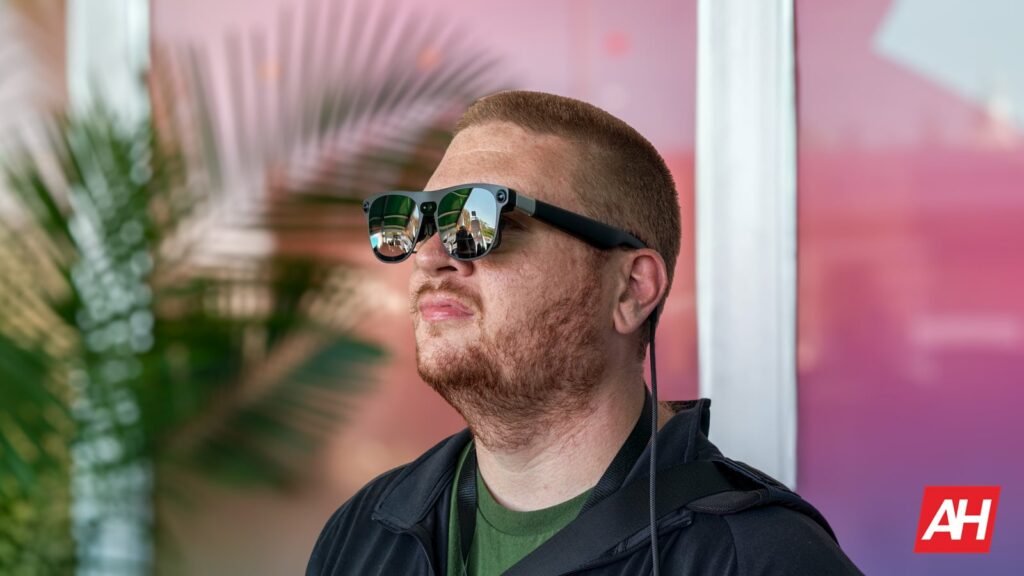

Ahead of Google I/O, I was told that XREAL would be there, showing off Project Aura. And it was immediately the most important demo for me, at Shoreline Amphitheater. Unfortunately (or maybe fortunately?) I wasn’t alone. I spent most of the afternoon trying to get a demo of Project Aura, and boy, was it worth it.
Last year, XREAL first announced that they were working on a pair of glasses powered by Android XR. Making them really the only brand that’s not Samsung or Google, working on Android XR. At least publicly. While Samsung is working with Gentle Monster and Warby Parker, their name is also on those glasses. While XREAL is working with Google.

When XREAL first announced these, I immediately knew that these would be the AR glasses I was going to want. That hasn’t changed a whole lot, though. I do think that I’d wear Google’s glasses (they’re still a prototype, but aren’t the new Samsung ones because they have the display) almost daily. But XREAL’s Project Aura is going to be the glasses I wear for entertainment, to watch YouTube, watch HBO Max, etc., sort of like the XREAL 1S already does for me right now.
After spending roughly five minutes with Project Aura, that is still true.
XREAL does have a tethered puck for Project Aura
Unsurprisingly, these are tethered glasses. It’s not surprising at all, because unlike the XREAL 1S, these do need a more powerful processor, more RAM, more storage, and of course a battery. But the puck is very different from what Samsung and Apple have done with their headsets.
While the Apple Vision Pro and Samsung Galaxy XR have a ‘puck’, it is actually just a battery. That’s fine, but it doesn’t alleviate any of the weight from your face, or in their case, your head. XREAL has opted to put as many of those internals into the puck, which can clip onto your pocket, making the glasses as light as possible. XREAL says that these weigh under 90g. By contrast, the Meta Ray-Ban Displays, which are sort of similar but also not really similar, are 69g. The XREAL 1S weighs in at about 82g, while the One Pro weighs 87g.

Of course, we’d love to have it untethered. So you can just put these on and watch your videos on the go, without any wires. But XREAL, and other companies in this space, have to hit a happy medium of making the glasses lightweight, while also giving decent battery life. For now, the puck is the best way to do this, but that could change in the very near future. Talking with some of the engineers behind Android XR, the ultimate goal for this specific product is Android XR. Is to get rid of the puck at some point.
XREAL’s hand-tracking is unreal
Much like when I demoed Galaxy XR last year, before it was released, XREAL’s Project Aura’s hand-tracking is quite good. There are no controllers needed, and because the cameras on the glasses are closer to your face, the range that it can see your hands is much larger than, say, the Galaxy XR. They are also using cameras with a wider angle. Once you get the hang of navigating the OS with your hands and the pinching gesture, it really does become second nature.
XREAL is not giving us official battery life numbers yet. But I was told they are generally able to hit 4 hours on a single charge. Keep in mind that the software is still very far from being finished. There are still a few features that don’t work 100% yet. So that number could definitely improve before Project Aura starts shipping.
When can you buy the XREAL Project Aura?
XREAL is pretty tight-lipped on details about when you can buy Project Aura, but we have been told that it’ll be available later this year. Dev kits are currently available for developers to start building for Project Aura, which is super important, even though it’s Android XR; there’s only one Android XR product on the market today. So, giving developers another product to test their apps on is huge.
As far as pricing goes, we have no idea. But I’m very certain it’ll be much cheaper than the Galaxy XR, likely more than the XREAL ROG R1 that went up for pre-order last week, though.


The post I Tried XREAL Project Aura and this is the Best Android XR Form-Factor (so far) appeared first on Android Headlines.