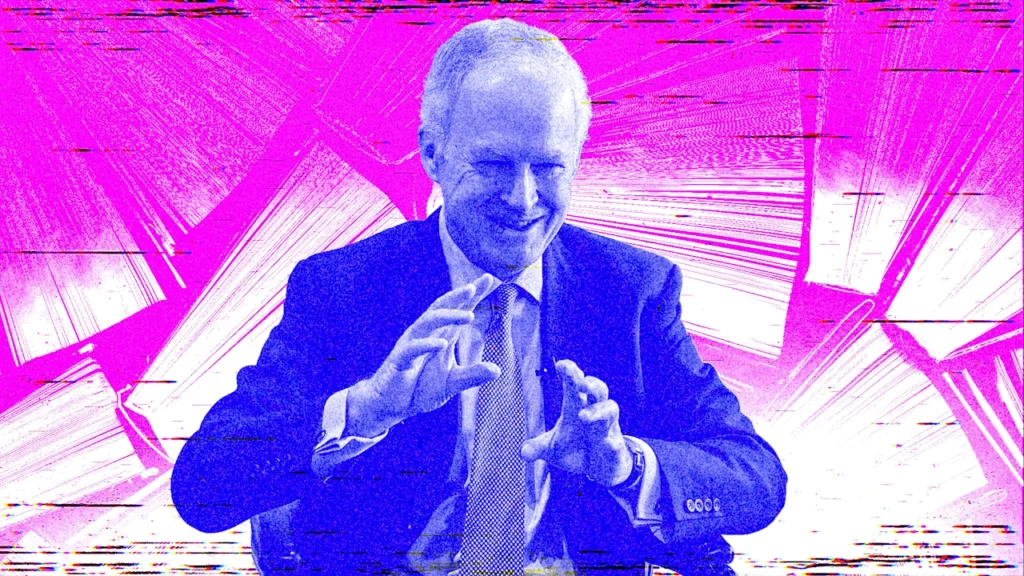
Barnes & Noble has an incredible comeback story. In 2019, the American bookstore chain was facing bankruptcy, but it’s since returned to a position of growth: In 2025, the franchise opened 67 new stores across the United States, and 60 more are slated to open throughout 2026.
But recent comments from the brand’s CEO have some social media users convinced Barnes & Noble is wasting all its good will.
James Daunt, who took over the company in 2019, shared how he plans for Barnes & Noble to adapt to the AI era—and those plans have some book lovers rethinking their relationship to the brand.
‘We will stock them’: Barnes & Noble opens its arms to AI
In an interview for NBC News, Daunt said that he’s more than willing to stock AI-written books on Barnes & Noble’s shelves.
“I have actually no problem selling any book, as long as it doesn’t masquerade or pretend to be something that it isn’t, and that it has an essential quality to it, and that the customer, the reader, wants it,” Daunt said.
The key, Daunt continued, is to make it clear to consumers if a book was written by a human or by AI.
“As long as an AI-written book says it’s an AI-written book and doesn’t pretend to be something else and isn’t ripping off somebody else, as long as that’s clearly stated and the customer wants to buy it, then we will stock them,” he said.
But Daunt also acknowledged that not all books created with AI will disclose that fact. He even said that within the company’s extensive catalog of 300,000 titles, AI-generated content may already be for sale under the Barnes & Noble brand.
“Do we think that some of those [titles] may be AI? The chances are that they are, but we’re not really conscious of them,” Daunt said.
Still, Daunt remains unfazed by the apparent threat of AI content flooding his shelves. “At the moment, it seems unlikely to us that these AI-generated books are going to get much commercial traction,” he said. “So I think it’s something that one should treat with common sense and acceptance.”
‘RIP B&N’: Book lovers balk at Daunt’s comments
When Daunt’s comments made their way to social media, they were immediately met with resistance from book lovers and AI critics.
Several users wondered why Daunt would take a pro-AI position in the first place, considering its unpopularity particularly among creatives, with 53% of U.S. adults expressing concern that AI will worsen people’s ability to think creatively.
“Barnes and Noble has had so much growth and gained so much goodwill and they’re throwing it away,” one user lamented.
“RIP B&N,” wrote another. “You had a chance to brand yourselves as unwilling to sell slop and you blew it.”
Meanwhile, there seems to be little demand for AI-generated literature. Earlier this year, Hachette Book Group cancelled its planned publication of horror novel Shy Girl over suspicions that the book contained AI-generated writing, with online book enthusiasts already tearing the novel to shreds for its assumed use of AI.
“The thing I don’t understand is there can’t be that much demand for books that actual writers aren’t already meeting,” one commenter wrote, pointing out that the publishing industry is already oversaturated with more than 600,000 traditionally published books and 3.5 million self-published books releasing in the United States in 2025 alone. That’s not to mention all the previously published books curious readers could pick up. With so much supply already in circulation, what demand is there for AI-generated literature on top of it?
Several users cited Daunt’s comments as a reason to ditch Barnes & Noble in favor of other booksellers. “All the more reason to shop at local, independent bookstores,” one commenter wrote.
“I am going to have to stop defending Barnes & Noble,” echoed another user. “I did appreciate the idea of a large bookstore, but if they want to sell AI-generated books, I am out. There are other places to buy books.”
“Now is a good time to get a library card,” recommended a third.
Barnes & Noble has not replied to Fast Company’s request for comment.