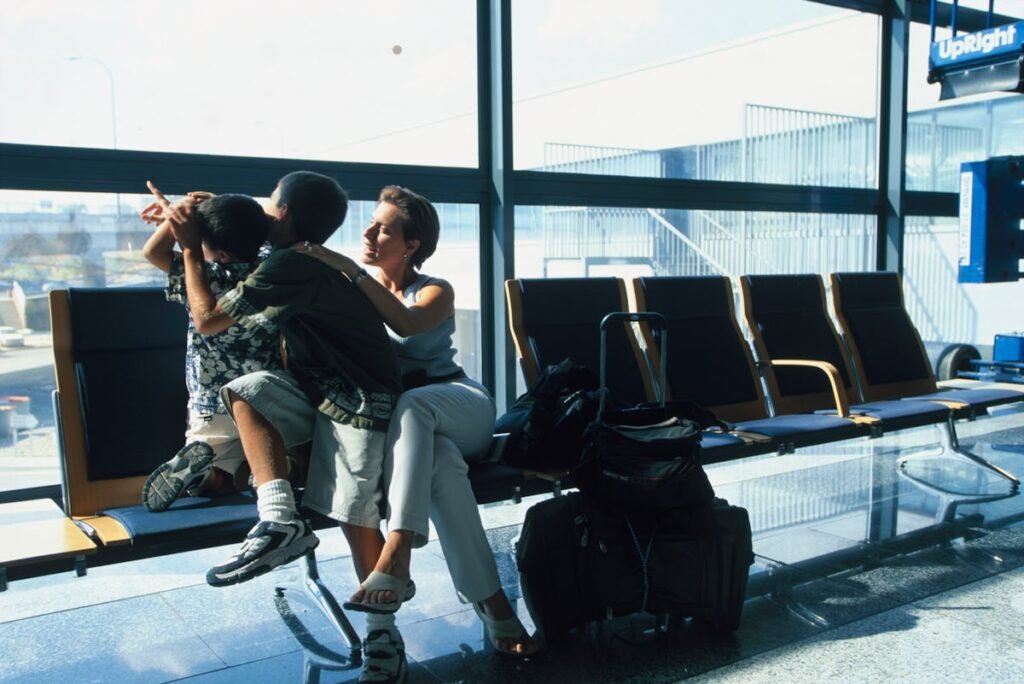
It’s a thing I’ve shouted at my children, a thing I’ve begged them to do, a thing I’ve whispered when I’m completely overstimulated and trying so hard not to lose my cool: “Read. The. Room.”
Honestly, enough of us have probably had to say this to adults we know — our loud friends, or boomer parents — but there’s something extra tough about saying it to your kid. Because how do you teach situational awareness? How do you effectively communicate “now is not the time, my dude” to a kid who still needs help wiping? What about older kids? There’s a layer of teaching them that the world doesn’t revolve around them in “read the room” awareness, and it can sometimes feel like criticism in disguise as a lesson.
But in the words of Bandit Heeler, it’s “gotta be done.”
One parent on Reddit asked how other parents are teaching their kids this valuable — and necessary — lesson. In the subreddit /parenting, the original poster (OP) wrote, “My 5-year-old is a typical kid — bright, sensitive, intelligent, and also self-absorbed. I want to explain situational awareness and understanding the room atmosphere, but in ways that don’t include yelling or screaming.”
They went on to describe a specific moment of dealing with a baby’s diaper blowout and having to clean baby in the tub, only for their 5-year-old to come into the room constantly to ask to play.
“Sometimes I just wanna say, ‘read the damn room!’ What are some phrases or ways to teach him to do this as he gets older?”
What is situational awareness?
You know when you walk into a room and immediately clock the “vibe”? That’s situational awareness. When you’re super excited and pumped to tell your best friend something at a restaurant, but you walk in and realize they look deeply upset about something — so you hold off. Or when you want to have a serious conversation with your husband about your budget, but you see that he’s stressed trying to fix the lawnmower, so you know now is not the time.
And it makes sense why everyone — but especially little kids — have a hard time seeing all of this. Kids are self-absorbed. And not in a mean way, but they are only responsible for their needs at this time, and they have to learn to think of others, help others, and be aware of situations — and they learn through us.
Why is it important for kids to learn situational awareness?
Not only is it important for a child to be able to “read the room” so they learn how to be empathetic and patient, it’s also a must for keeping your own sanity as you parent and do a million other things all at the same time. Kids who have zero situational awareness may end up being kids who feel scolded a lot or ignored or criticized because they often hear you losing your mind when they interrupt you in the middle of a shower to ask for Goldfish crackers.
Again, we all know a million adults who haven’t learned this yet — and maybe it’s because they never had a parent tell them to do it. “Read the room” honestly sounds like the most obvious phrase to say to a kid when they’re trying to get your attention for a yogurt during an emergency or when they see you elbow-deep in laundry and ask if you can drive them to the library right now for a project due tomorrow. But like OP pointed out, often the default response to this is for a parent to yell, “Can’t you see that I’m busy?” or “Please look at what I’m doing and ask yourself if your request is necessary at this very moment.”
No? Just me?
The thing is, asking a kid to “read the room” also means you’re probably in a very overstimulating moment. There’s baby shit everywhere or dinner is boiling over or the dog just got out or you’ve got a heavy family moment happening while you’re on the phone. Maybe it’s even a longer week of stress, of days more hectic than the last, and your kid just can’t see any of it (because you’ve been such a good parent at shielding them from it) — but they need to.
Five Tips To Teach Your Kids Situational Awareness
It sounds like a big undertaking, but honestly, a lot of teaching a child how to “read the room” is just the normal parenting stuff you’re already doing.
- Teach them what an emergency is, and to only interrupt if an emergency is happening.
- Remind them of their own senses and ask them to identify what they can see and hear. Based on what they can see and hear, is now an appropriate time to ask for something?
- Instead of telling them what to do — “You’re about to knock that bowl over, can you please move it?” — ask them if they notice the area around them being an issue. This gives them the chance to use their own critical thinking and put a strategy into place.
- Offer an arm hold or an elbow tap as a way to acknowledge that you know they need you, and they’ll feel better knowing they’ve asked for what they need — and you’ll get to it when you can.
- Remind them how important it is to “observe” before talking. Sometimes simply looking around a room and taking note of what’s there before launching into whatever they need is enough for them to realize.
Like so much social etiquette, it really does take some level of understanding and a whole lot of “Oops, missed that mark, try again.” How many times have you said something and as soon as it was out of your mouth, realized it was the wrong thing to say? Or interrupted a friend because you were excited about something on your mind, or walked into a space with a very different vibe than the situation called for? It happens.
But by teaching your kids patience, teaching them how to notice the world around them (and other people’s facial reactions and cues), and to have empathy for people and situations, you can hopefully save yourself from yelling, “DUDE are you serious right now?” when they ask you if they can have McDonald’s for dinner while you’re changing a blown tire on the side of the road.