One of the best decisions Japanese automakers ever made was to create North American branches, and they have traditionally been a reliable source of cash for these companies when things in the rest of the world are challenging, but Toyota North America has posted a $1.21 billion loss for the 2025 fiscal year. After a $681.4 million profit the year before, what is the cause of this decline? There are several: Trump tariffs, investing in EVs, and the war in Iran. However, new CEO and former CFO Kenta Kon has a plan to right the ship.
More Hybrids, a Revised Lineup, and Shared Costs for Toyota
Toyota
To improve operating profits, which have already fallen and are set to decline another 20 percent to $18.79 billion, Kon wants to review the Toyota model range, reports Automotive News, not only in terms of which nameplates are being produced, but also how many thereof. “As we pursue the multipathway, that naturally increases the number of models, and that means an increase in the number of parts and specifications, which makes things more complex for customers,” said Kon. “If we can review that complexity, it would have a major impact.” In other words, while Toyota still wants to produce all-electric, mild-hybrid, plug-in hybrid, hydrogen-powered, and combustion vehicles, it can’t afford to overcommit to vehicles that occupy small niches and have a low forecast for near-term growth.
Related: Toyota Vs. Honda Reliability: One Clear Winner
Chief Financial Officer Yoichi Miyazaki admitted that “[Toyota’s] business in America is very challenging,” and the numbers show it, with the automaker accumulating an $8.64 billion tariff bill each fiscal year. While Toyota could bear the brunt of this burden in the previous fiscal year, it now intends to work with its suppliers to share the strain. Efficiency will be key for Toyota after it announced a $1 billion investment in its Kentucky and Indiana assembly plants, which will both be responsible for a trio of new EVs – the first of which will be the now electric-only Highlander – and increased output of the gas-powered Grand Highlander three-row SUV.
Toyota Is Cautious But Optimistic
Toyota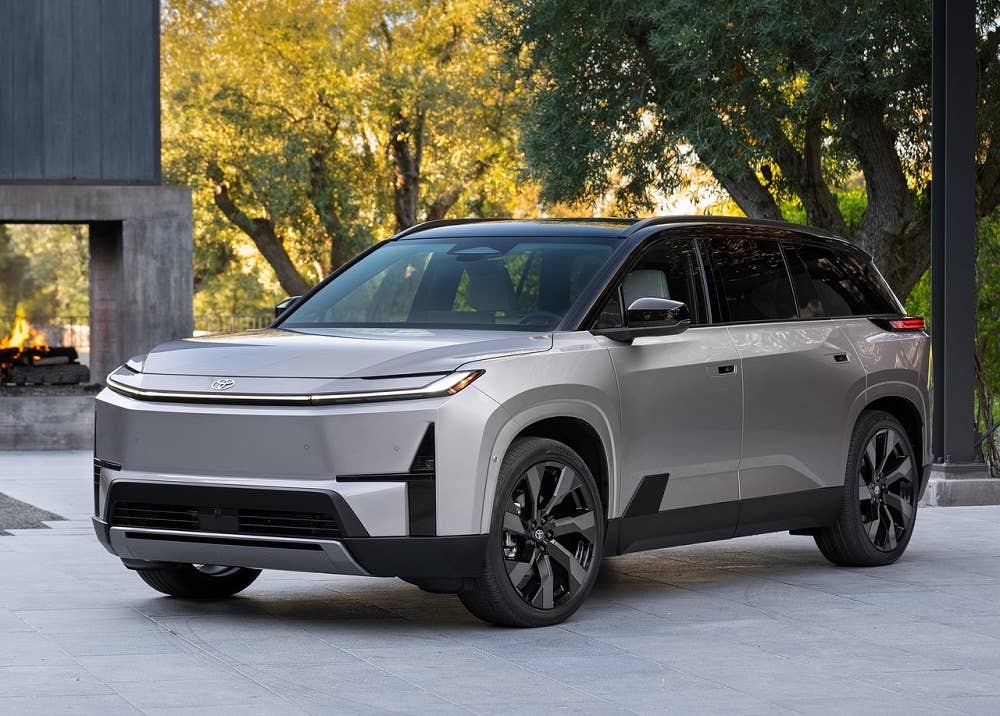
While the likes of Nissan have already had to trim the workforce and scale back production, Kon believes that Toyota does not need to be aggressive and reactive in its cost-cutting. “We do not have to apply the brakes on our growth strategy despite the environment,” said Kon. “We will remove waste one by one and restructure the business.” Caution is arguably the best attitude to take right now, with Toyota reporting that the conflict in Iran is likely to result in a $4.2 billion earnings hit for the fiscal year ending March 31, 2027, and if it continues, disrupted shipments could nearly halve the automaker’s annual exports to the Middle East, some 500,000 to 600,000 vehicles. If things stabilize, Toyota should be able to improve on its actual net income of around $24.11 billion, which is slightly better than the $23.49 billion that was previously forecast.