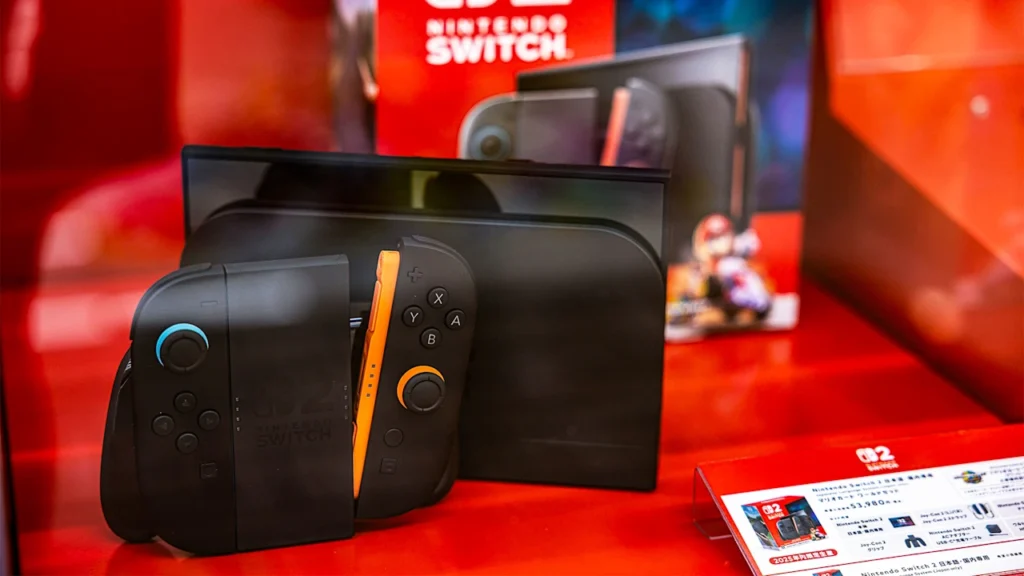
If you’ve been debating whether or not to pick up a Nintendo Switch 2 then you’ll want to act soon.
Nintendo says it is raising the Switch 2’s price from $450 to $500 in the U.S. due to “changes in market conditions,” most notably the global shortage of random access memory (RAM). The change is set to go into effect on September 1.
Similar price increases will simultaneously occur in Canada ($630 CAD to $680 CAD) and Europe (€470 to €500). In Japan, the system’s MSRP (manufacturer’s suggested retail price) will rise a bit earlier, going from ¥49,980 to ¥59,980 on May 25.
Nintendo blames the widespread change on the fact that market condition changes are likely to have an impact “over the medium to long term.” Sony pointed to similar factors in March when it raised the PlayStation 5’s price by up to $150.
“We sincerely apologize for the impact these price revisions may have on our customers and other stakeholders and we deeply appreciate your understanding,” Nintendo stated in its announcement.
The news came alongside Nintendo’s earnings report for fiscal 2026, which ended on March 31. The company reported 19.86 million units sold for the fiscal year—the Switch 2 arrived about one quarter in on June 5, 2025. In contrast, it predicts the sale of 16.5 million units for all of fiscal 2027.
Nintendo points to both the price increase and “strong launch-year sales” as reasons for the expected decline.
What’s going on with chip shortages?
The Switch 2 needs memory chips to run, the same ones that are facing huge shortages and price increases. That situation is thanks to AI companies, which require a tremendous amount of memory to run their data centers and respond to billions of daily requests for chatbots.
Memory makers like Micron Technology and Sandisk Corporation are seeing incredible demand for their products. The share prices for those companies reflect it, with Micron (Nasdaq: MU) up 653% and Sandisk (Nasdaq: SNDK) up 3,450% year-over-year (YOY).
These companies are not only supplying a great deal of memory to AI data centers, but also potentially diverting resources toward that endeavor, rather than consumer products.
Nintendo, Sony, and more face higher prices for memory chips, along with a smaller quantity available.