VENICE – Artists and cultural workers made history at the Venice Biennale today as they launched a major strike that disrupted the pre-opening of the international exhibition. It is the first cultural strike in the biennale’s 131-year history.
At least 27 of the exhibition’s 100 national pavilions were partially or fully shut down this morning, May 8, while some artists draped or altered their works in the main exhibition In Minor Keys as part of a 24-hour strike for Palestine and for workers’ rights.
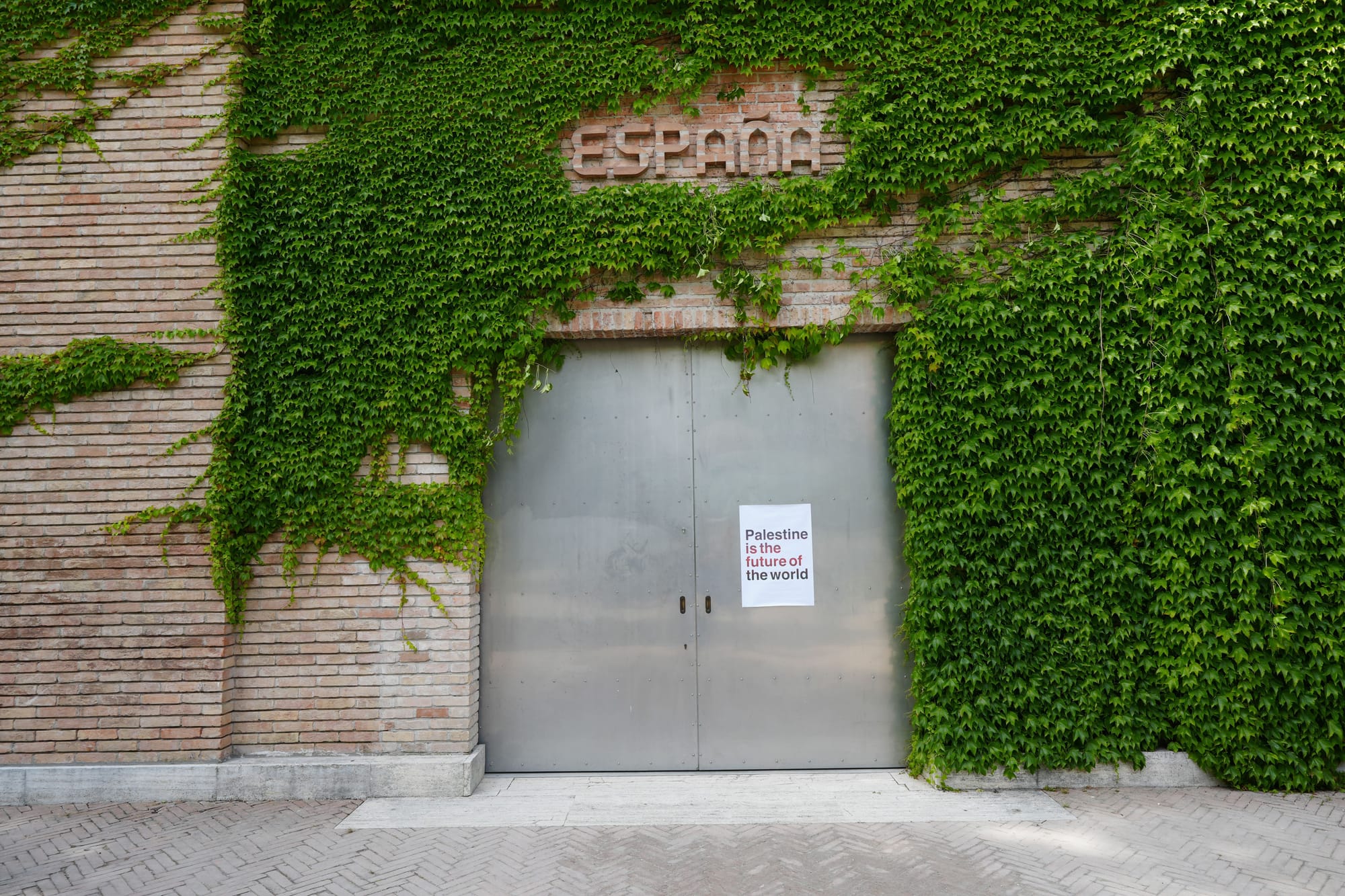
The fully or partially shuttered pavilions include Austria, Belgium, Finland, France, Iceland, Italy (performers only), Ireland, Japan (performers only), Korea, Lebanon, Luxembourg, Malta, Netherlands, Catalonia, Cyprus, Czech Republic and Slovakia, Ecuador, Egypt, Estonia, Poland, Portugal, Slovenia, Spain, and Turkey.
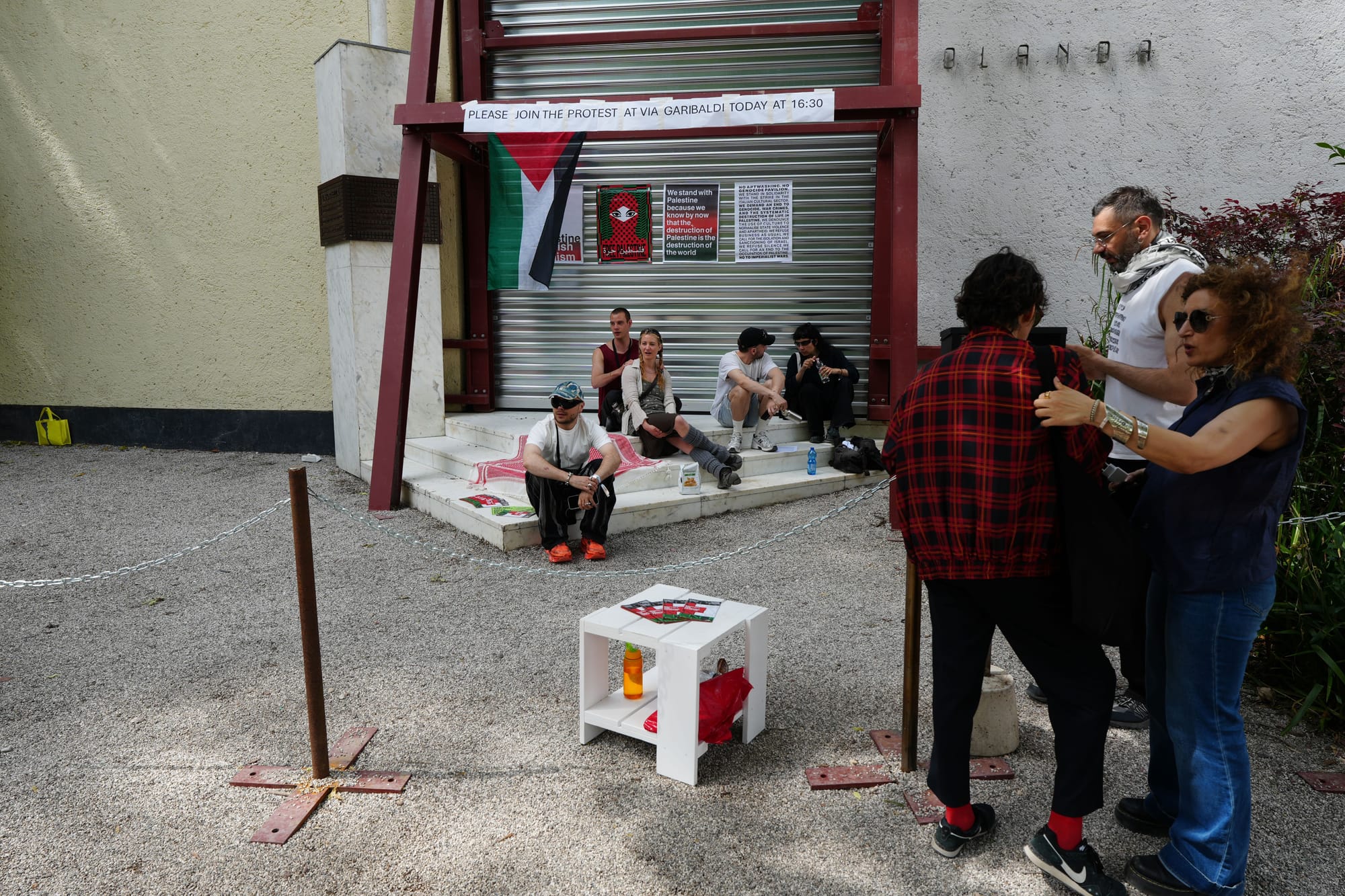
The strike is the outcome of months of organizing by the Art Not Genocide Alliance (ANGA) together with local activist groups including Sale Docks, Mi Riconosci?, and Biennalocene. At least three Italian unions joined the strike, guaranteeing protection to striking members.
“No artist or cultural worker should be asked to share a platform with a state
perpetrating genocide,” the striking parties said in a joint statement today. They noted that the strike is also an expression of workers’ indignation over “appalling” labor conditions in the cultural sector.
Members of the art world class who were roaming the Giardini to see and be seen were welcomed with shuttred pavilions and statements such as, “We stand with Palestine because we know by now that the destruction of Palestine is the destruction of the world.”
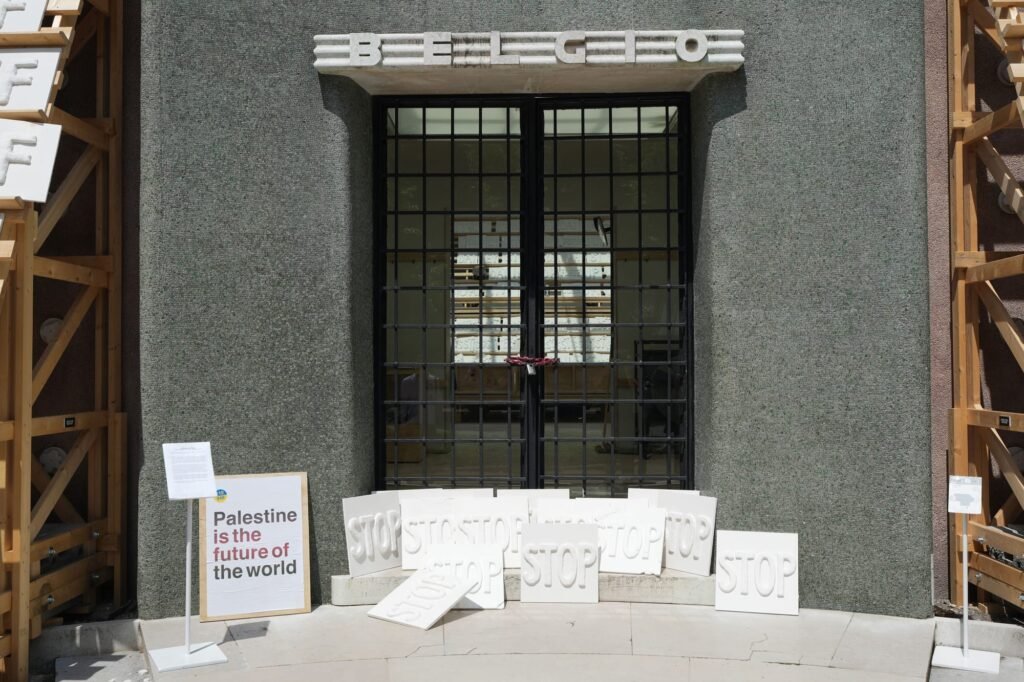
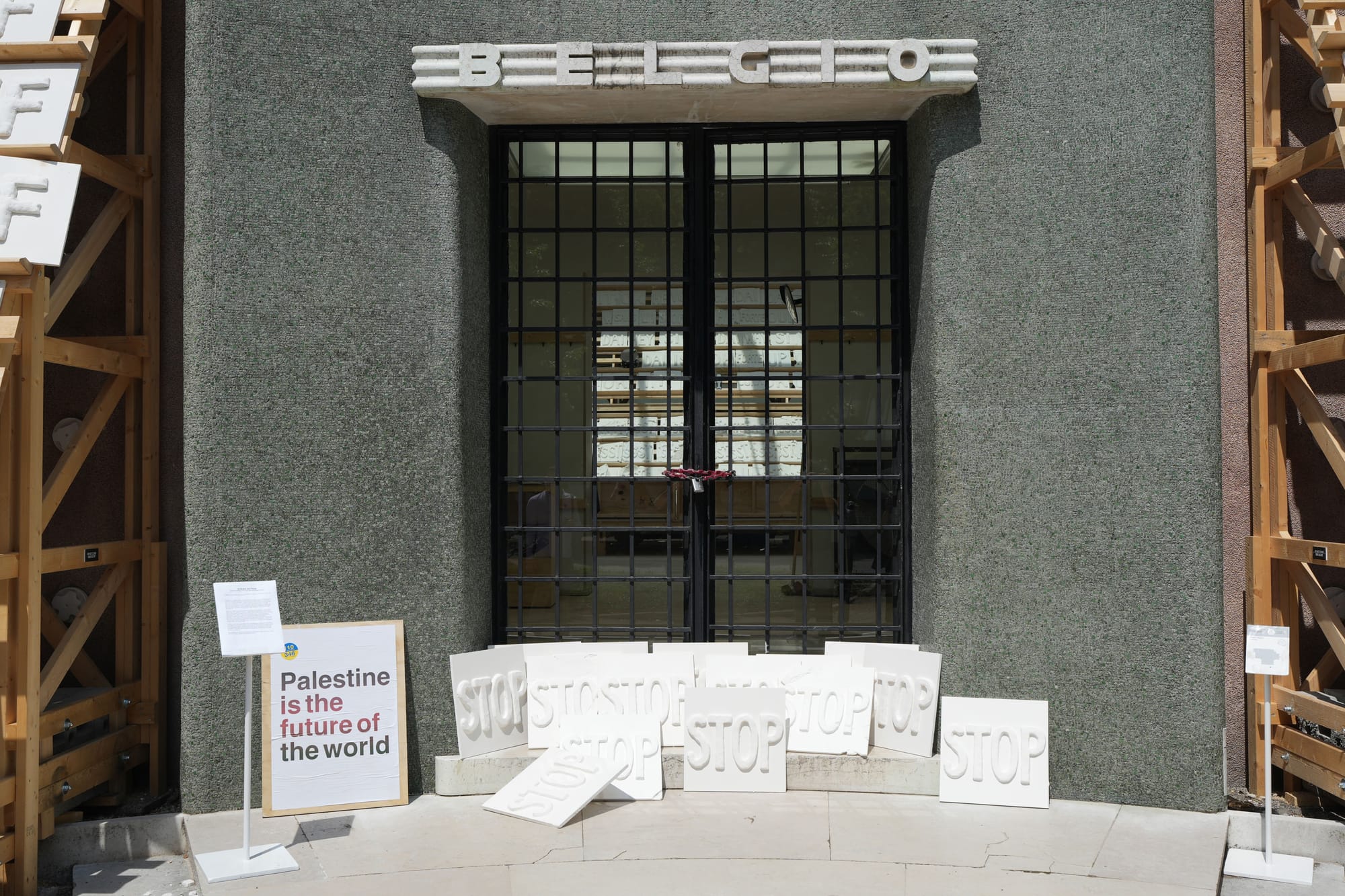
The Belgian pavilion blocked its entrance with a row of white plaques with the word “STOP.”
The Japanese Pavilion posted a statement on its steps that partially reads, “No artwashing. No genocide pavilion.”
“Genocide pavilion” refers to the Israeli pavilion in the activists’ parlance.
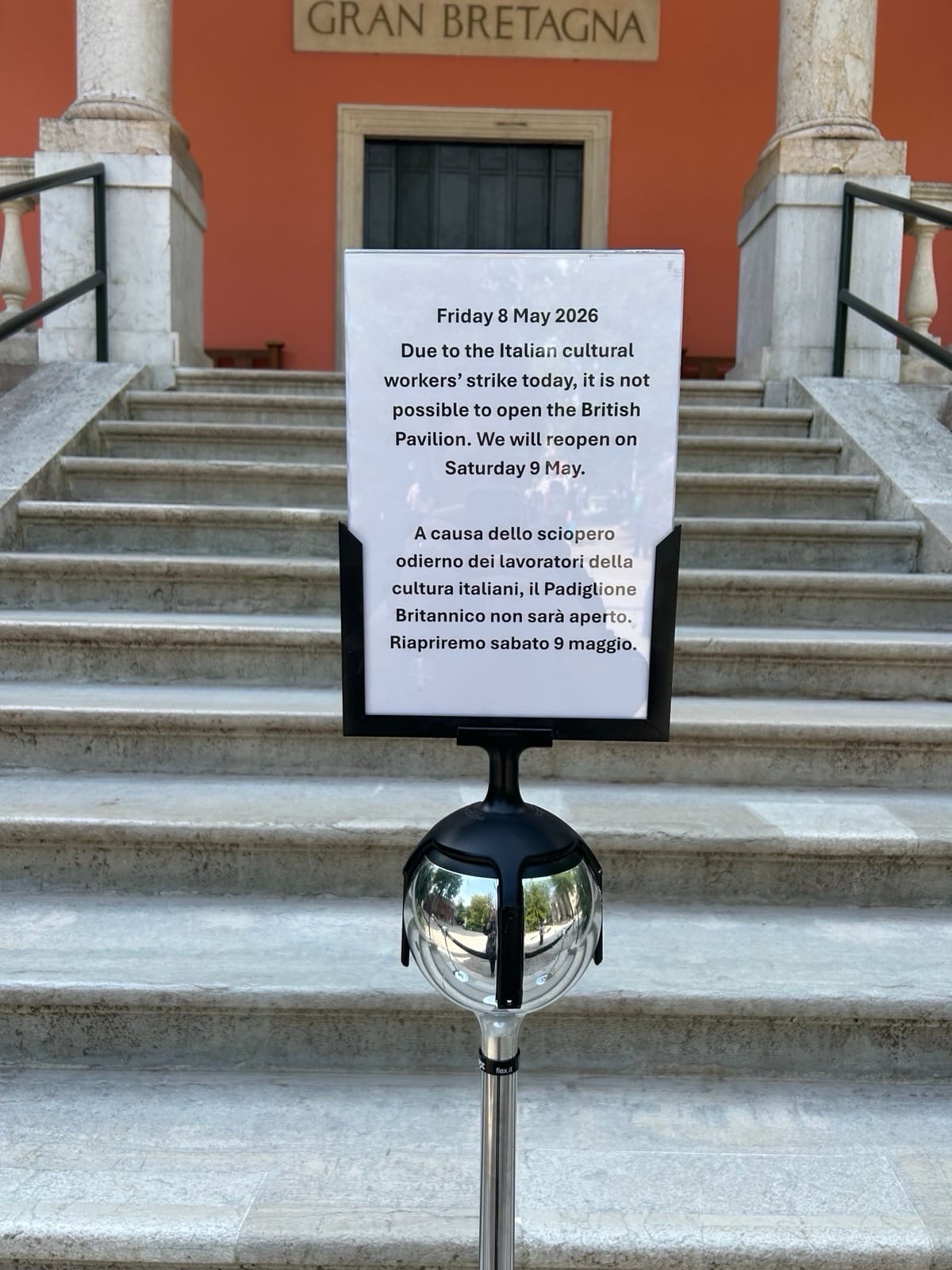
The British Pavilion was also closed today, but it posted a more neutral statement attributing the closure to “the Italian cultural workers’ strike.”
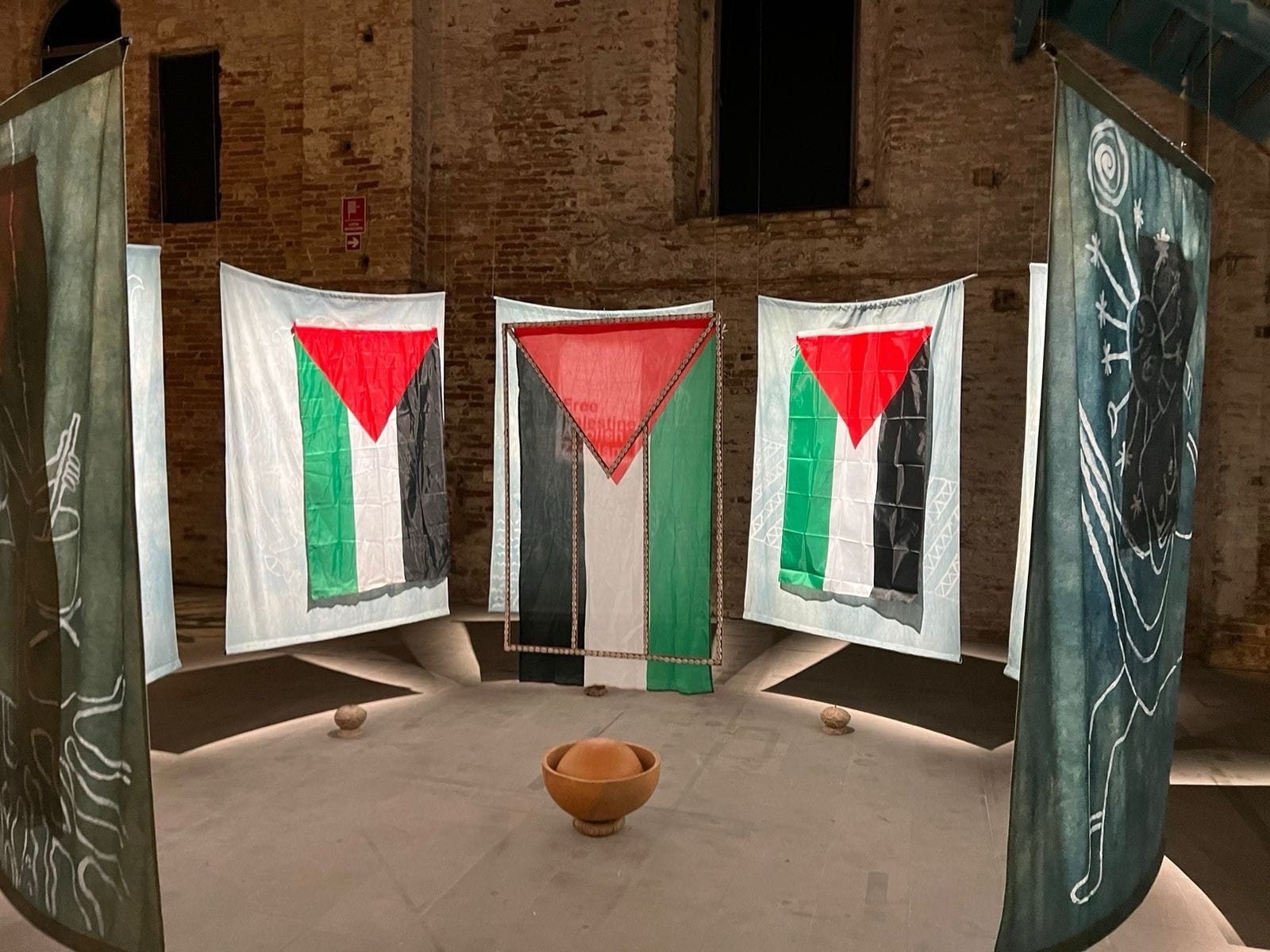
At the Arsenale section of In Minor Keys, the Biennale’s main exhibition, French Guianese artist Tabita Rezaire altered her installation Omo Elu and Mother Trinity (2024) to include several Palestinian flags. Chilean artist Alfredo Jaar displayed a poster that reads “Palestine is the future of the world.”
The strike follows a loud but peaceful demonstration in front of the Israeli pavilion on Wednesday, May 6, joined by hundreds.
“The Biennale and the Italian government continue to support Netanyahu’s government,” said ANGA in a statement, and wondered: “Why is the red carpet being rolled out for a state responsible for genocide, apartheid, and ethnic cleansing?”
Editor’s note: This is a developing story. Check back for updates to this article as the event unfolds.