A Crossover for Everyone
Is there a crossover segment that Mazda hasn’t entered? There’s the CX-30 at the lower end of the market, and there’s the CX-5 and CX-50 for just about everyone. One can choose the CX-60 if they’re looking for a junior X3/Q5/GLC alternative, along with the CX-70 for empty nesters who like the size of the CX-90 but don’t need an extra row of seats.
More recently, Mazda filed a trademark for the CX-40, and the next-generation CX-30 is coming soon. An even smaller crossover is underway, too, likely to be called CX-10 or CX-20. Also, in markets that have deemed the CX-90 too large, there’s the CX-80.
Mazda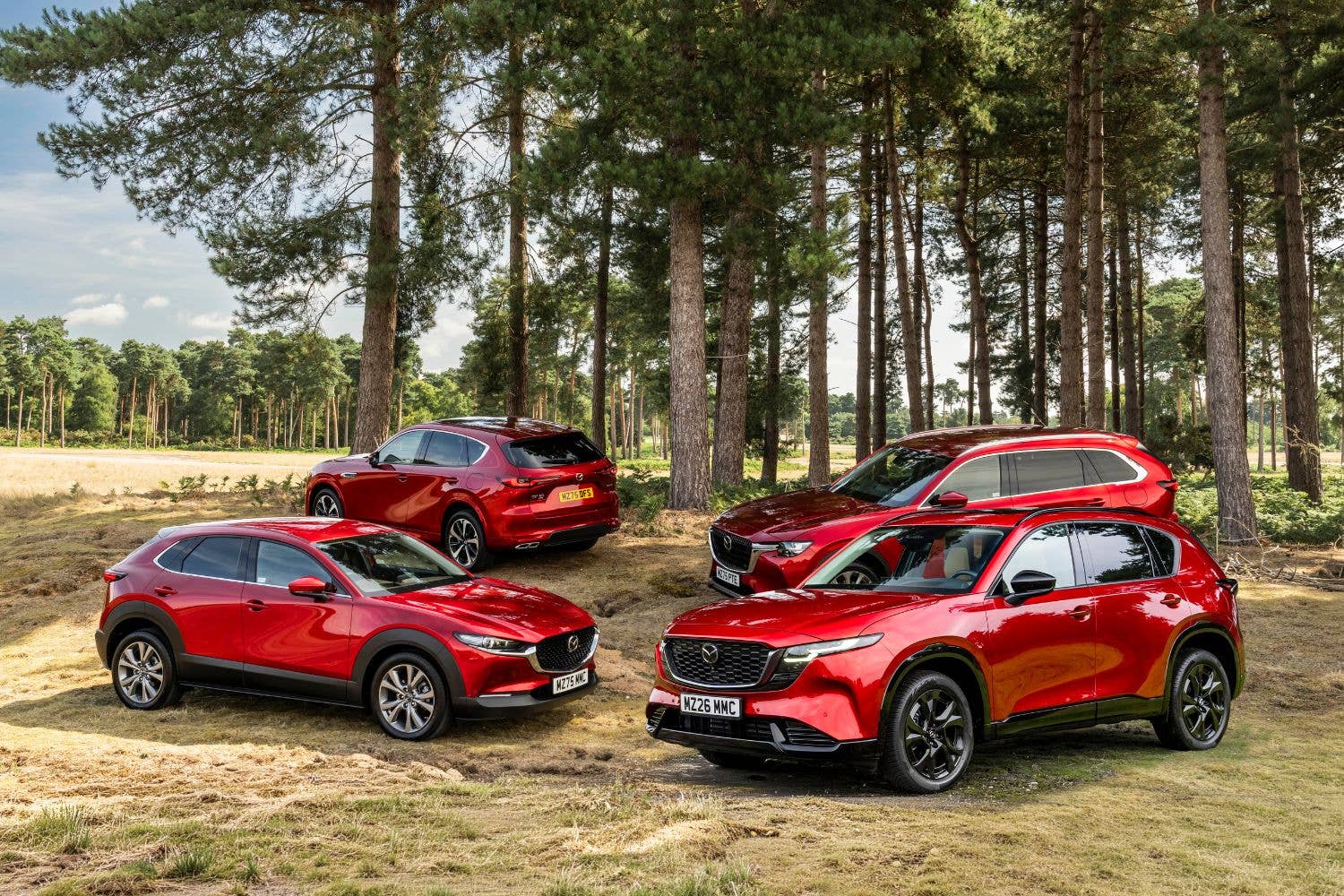
Potential New Model for the U.S.
As it is, Mazda’s U.S crossover lineup is pretty well-stocked. However, it seems like there’s just enough of a gap between the CX-70 and CX-90. Judging by a fairly recent trademark filing by the company, it seems the CX-80 might be considered for stateside release.
The document was filed on February 27, 2026, in the U.S. Patent and Trademark Office. Making this more interesting is the fact that it’s for a national trademark application. Granted, Mazda could simply be protecting the name in more territories, given the Luce dispute with Ferrari, but it also opens up the possibility of the CX-80 coming to America.
Mazda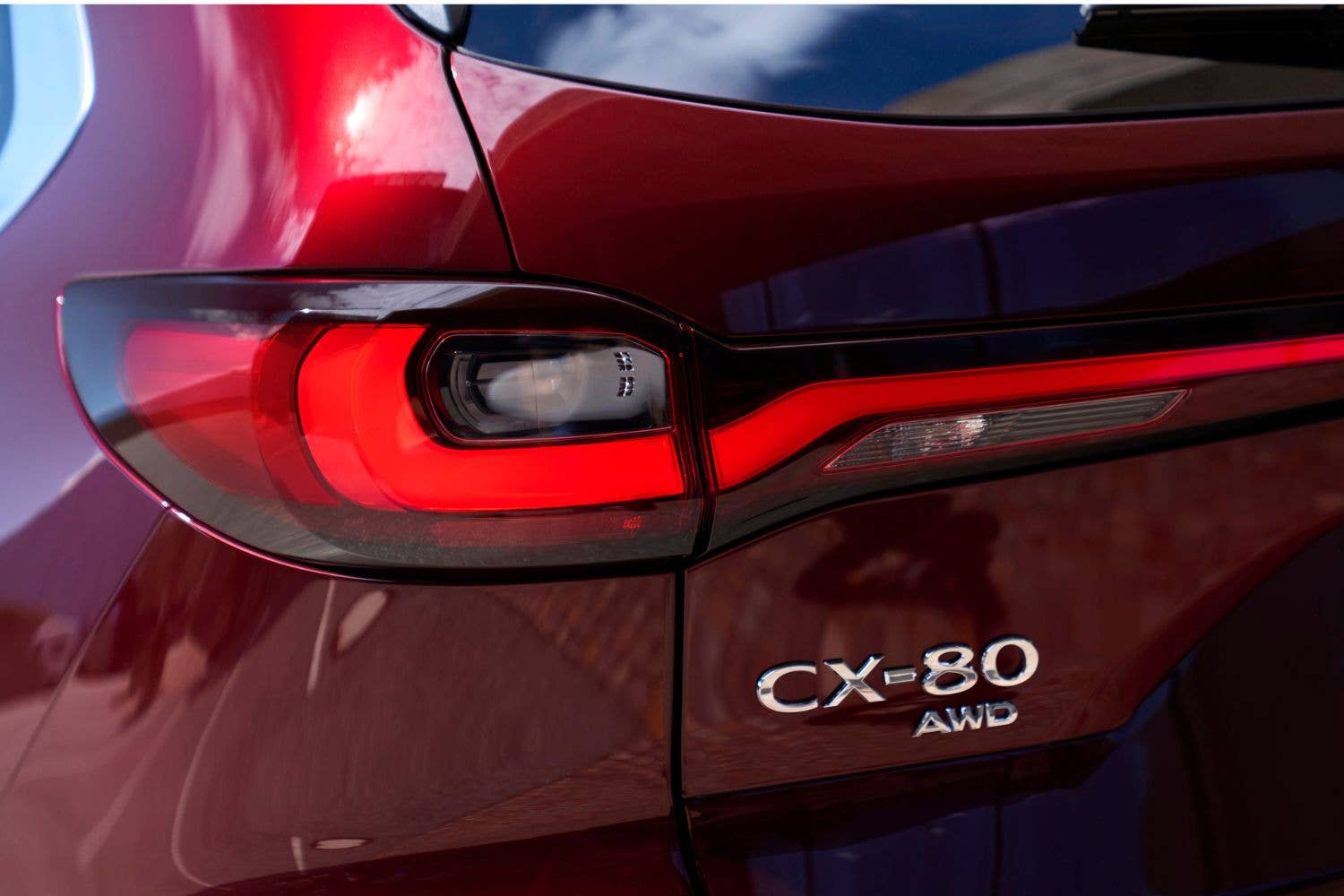
The Mazda CX-80 in a Nutshell
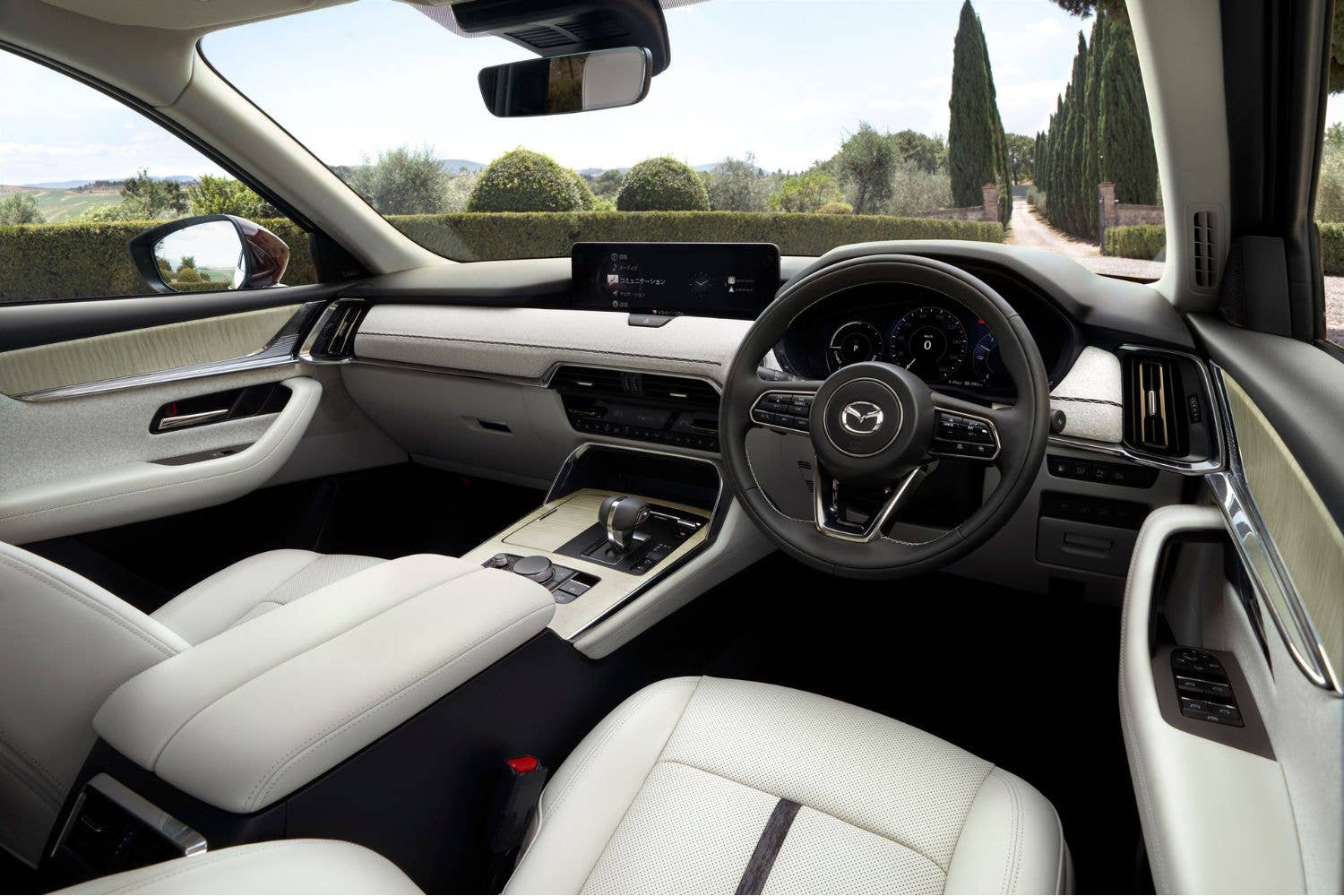
To oversimplify the CX-80, it’s a stretched CX-60 with a third row thrown in. It’s primarily aimed at markets that don’t get the CX-90, although it is offered in some countries that have the larger model. For instance, Mazda Australia and New Zealand have both models, with the CX-80 serving as the successor to the CX-8, a model that appears to be an elongated CX-5 but is actually based on the CX-9.
The CX-80’s main markets are Europe and Asia, which is just right given the tighter roads in those markets. Well, there’s a need for three-row vehicles in many parts of the world, but these don’t need to be large by certain market standards. The CX-80 measures 196.7 inches long, 74.4 inches wide, 67.3 inches tall, and has a wheelbase of 122.8 inches.
In comparison, the CX-90 is 201.6 inches long, 77.6 inches wide, 68.2 inches tall, and also has a 122.8-inch wheelbase.
There are three powertrain choices. There’s the familiar 3.3-liter turbo inline-six with 280 hp and 332 lb-ft, but also a 3.3-liter inline-six turbodiesel that’s good for 254 hp and 405 lb-ft. Of course, a plug-in hybrid version is also offered, pairing a 2.5-liter, four-cylinder engine with a single electric motor to deliver a combined output of 323 hp and 369 lb-ft. All-wheel drive is the standard layout.
Mazda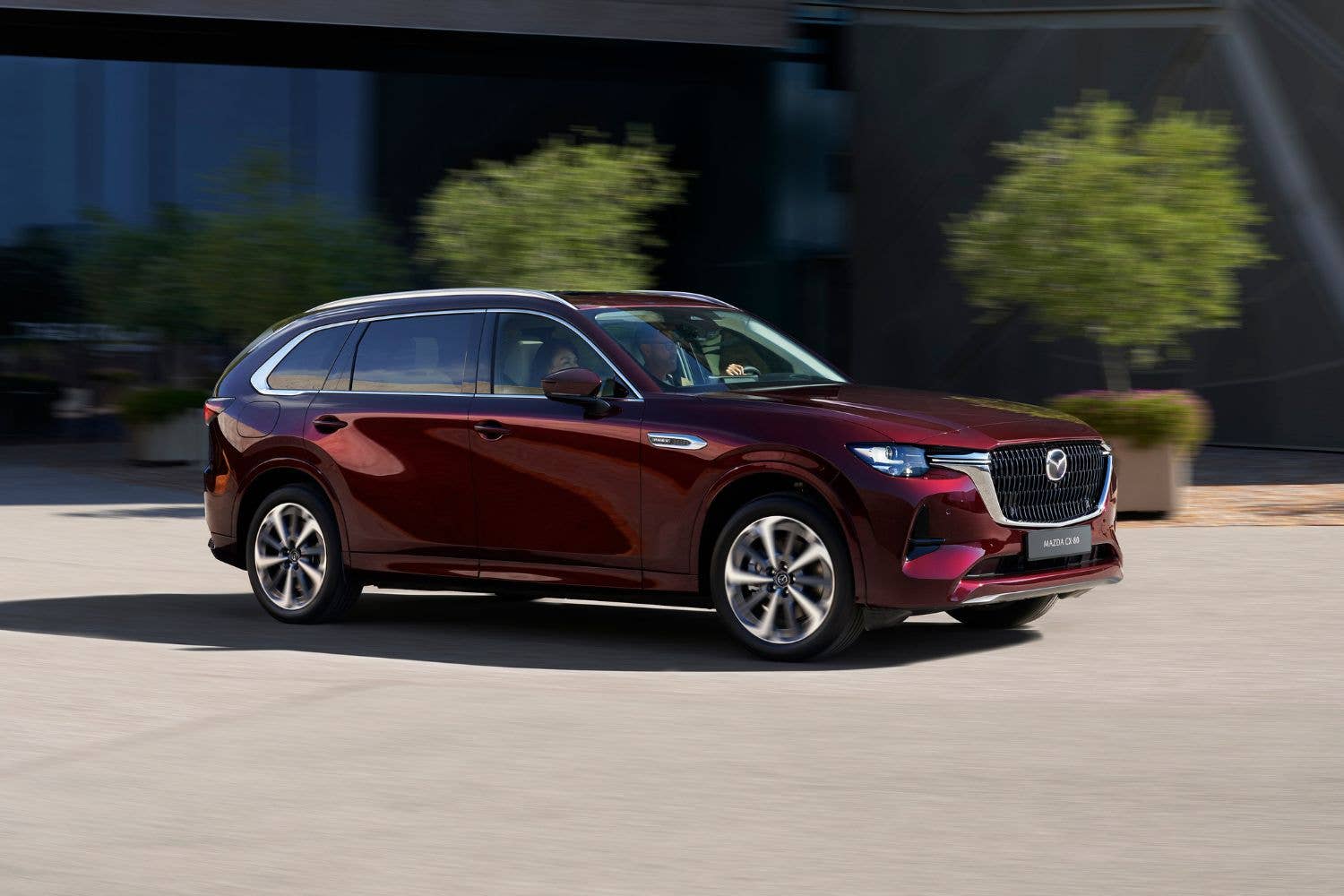
Should the U.S. get it?
On one hand, the CX-80 might be a bit of an odd addition to the U.S., given the preference towards larger crossovers. There’s also the CX-60, itself a ‘right-sized’ five-seat crossover that meets most needs. The CX-90 already does a fine job as Mazda’s three-row crossover in the U.S., and adding another one might make the point moot.
Then again, there are markets that have proved the CX-60, CX-80, and CX-90 can peacefully co-exist. At the same time, Mazda makes the two-row CX-70 for the U.S and Canada, catering to a rather specific set of buyers. So, perhaps, there is room for the CX-80 in America, particularly for those who’d like a seven-seater with smaller exterior dimensions. Perhaps it can be a fuel-fed alternative for Highlander buyers now that the Toyota will become an EV come next year.
Mazda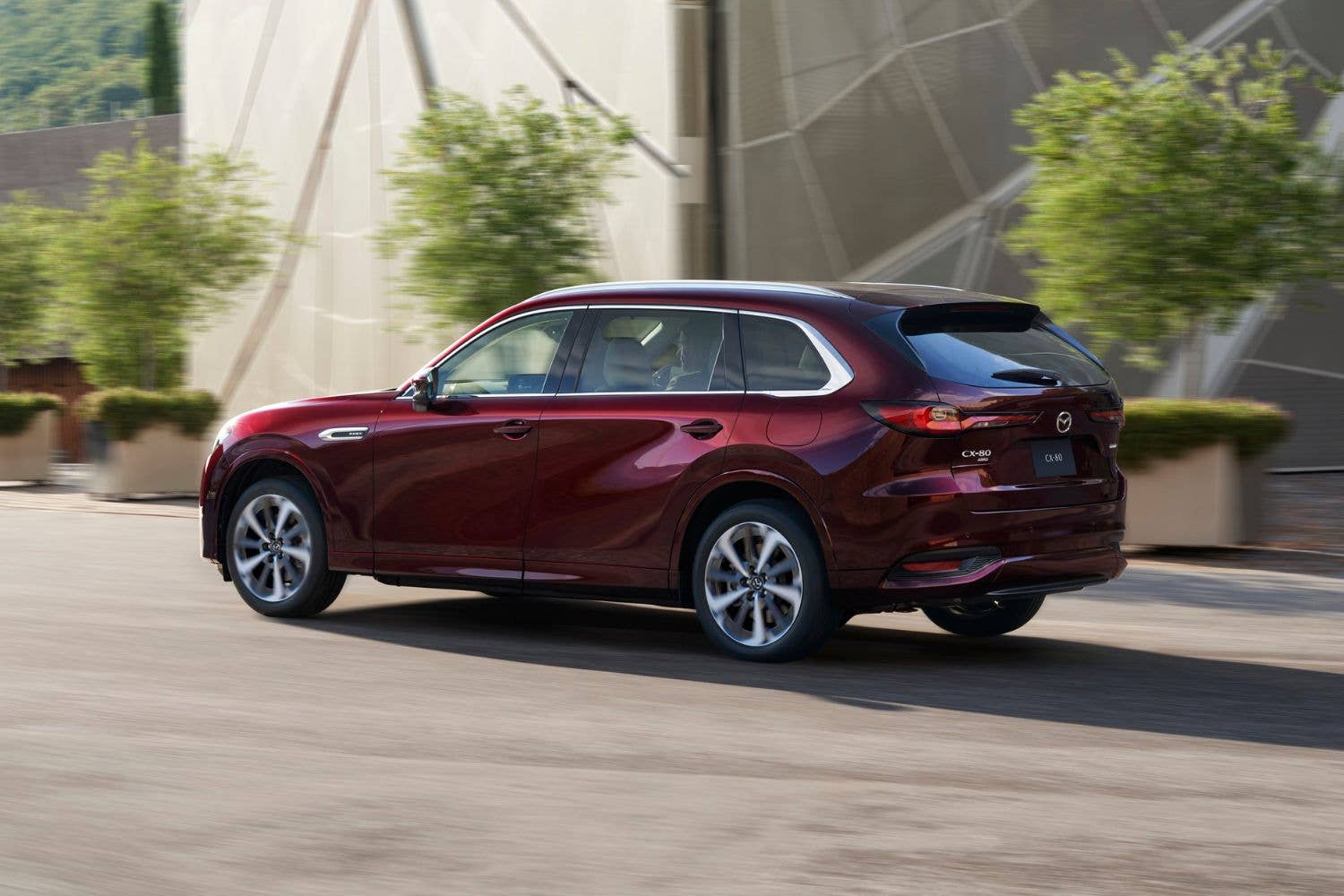
Mazda