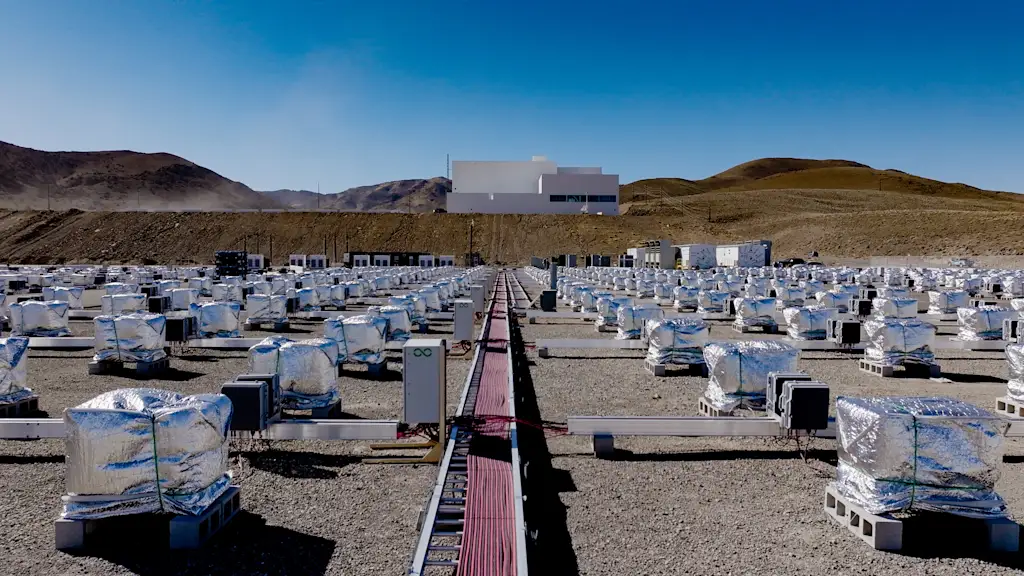
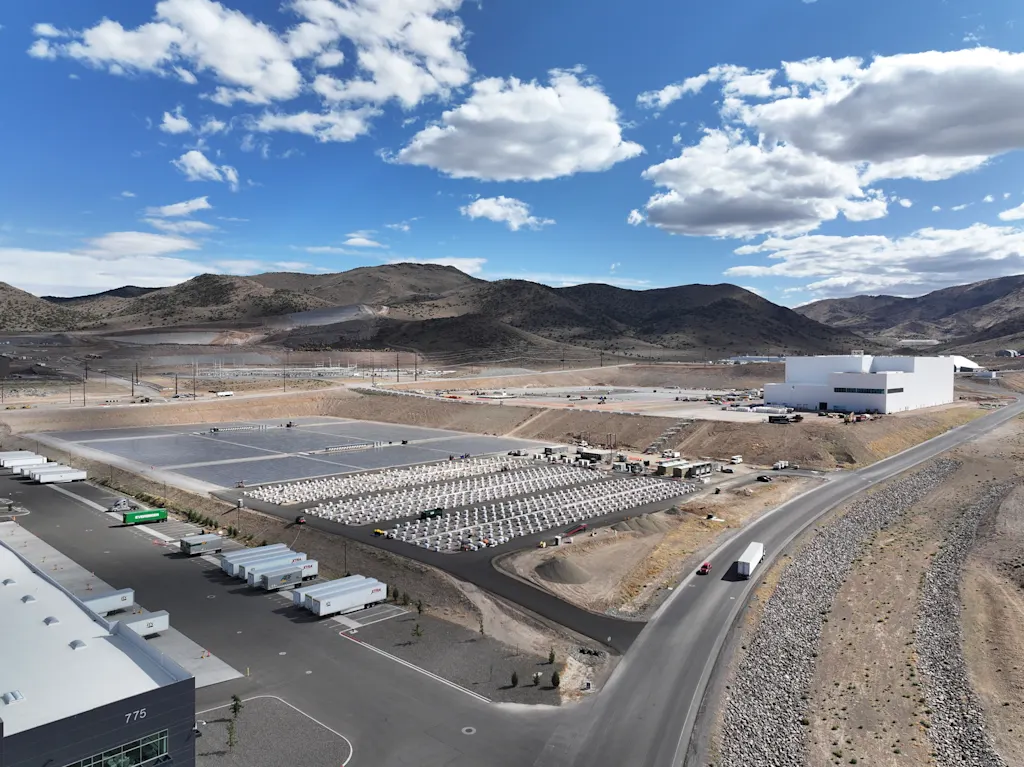
In the rolling hills near Reno, Nevada, in a field filled with solar panels, something unexpected is nestled into the landscape: a data center that isn’t blowing up its neighbors’ electric bills. In fact, the modular data center, built by Crusoe, essentially doesn’t rely on the electric grid at all.
It runs on solar power and an unlikely source: hundreds of second-life EV batteries. At a time when data centers are driving up electricity demand—and facing intense political pushback over potential impacts on energy bills and the environment—the batteries offer a flexible way to add power without leaning harder on the grid.
The astonishing setup is the handiwork of $6 billion startup Redwood Materials and its founder and CEO, JB Straubel, who’d seen a new opportunity in the flood of used EV batteries.
His new vision for the electric grid was sparked by the sheer volume of electric vehicle batteries that still hold significant financial and functional value. This made a new and more lucrative business case feasible: Instead of manufacturing new batteries—an expensive process dependent on global supply chains—the team could use the energy left in secondhand EV batteries to make cheap, quickly deployed, cost-effective energy storage at a large enough scale that they could be used by electric utilities or in microgrids like the one in Nevada.
“I have kind of an aversion to waste, personally. It pains the engineer in me to watch that happen, even though we certainly could recycle these packs, and we do every day,” Straubel continues. “That was the impetus for thinking that there must be a better way. There’s got to be some way we can take advantage of that and be one of the first to really scale it up.”
The insight—presciently—came just as the energy storage market was poised to boom. In the U.S., a record 18.9 gigawatts of energy storage capacity were added last year, enough instantaneous power for roughly 15 million to 20 million homes. California recently set a record when 43% of the total power in the state was being supplied by batteries. And between now and early 2027, the U.S. Energy Information Administration expects battery storage to surge again by more than 50%, driven both by the need to store renewable energy and by surging demand for electricity due to the massive build-out of new data centers.
As some data centers plan to rely on new gas plants that could collectively emit more pollution than some countries, Redwood’s low-cost batteries make renewable energy more viable. For data center developers, they offer a way to avoid long waits with utility companies—and to comply with the White House’s demand to bring their own power to new projects. For utilities, they’re a lower-cost method to store renewable energy. At factories, they can store grid power when it’s cheapest for later use.
Redwood, flush with the batteries Straubel saw were coming, is on pace to deploy hundreds of megawatt hours of its systems, equivalent to the capacity of some power plants; next year, it aims to deploy gigawatt hours of storage. In a moment defined by grid bottlenecks and soaring demand, Redwood is rethinking how energy infrastructure can be built—and reused.
For Straubel, the former CTO at Tesla, it’s just the latest unconventional bet in a career built on them. And it might just save the electric grid before it’s too late.
Early adoption finds success
Redwood’s strategy reflects Straubel’s history of pursuing ideas in energy and transportation that initially seemed early, but later became essential. As a student at Stanford University in the 1990s, where he designed his own major in energy systems engineering, he started building electric cars.
Before his work at Tesla, he spent the early 2000s pitching investors on the idea of an electric sports car that used lithium-ion batteries to increase range. Most investors passed. Elon Musk, though, recognized the potential and brought Straubel into the company soon after he led the Series A investment in 2004. (A settlement from a lawsuit about Tesla’s early days allows five people, including Musk and Straubel, to call themselves “cofounders.”)
As Tesla grew, Straubel was the internal champion for building the Supercharger network and the company’s own battery factories, not just the cars themselves. He later saw the opportunity to build energy storage for renewables using lithium-ion batteries, another idea that faced skepticism from the energy industry but soon became widely accepted.
Cal Lankton, Redwood’s chief commercial officer, worked on charging infrastructure and energy sales at Tesla. At first, he says, utilities argued that grid-scale batteries wouldn’t work and that they wouldn’t use the technology. But over time, as solar and wind power created more need for energy storage, and the cost of batteries came down, they began deploying more. The technology proved itself on the grid and has now been widely adopted.
In 2017, after Tesla reached the milestone of mass-producing the Model 3, Straubel began work on Redwood on the side, and officially left the automaker in 2019 to begin launching Redwood. (He was elected to Tesla’s board in 2023.)
As with his electric car pitches, investors were initially skeptical about his new project. “[They were] maybe a little bit confused, in a way, like, ‘You’re starting a garbage company? Shouldn’t you be focused on one of these more obvious and trendy and sexy topics?’” Straubel says. Most investors thought the idea was too early: EVs were still in the early stages of acceptance, and most other automakers hadn’t yet scaled up production. So there was still a relatively small supply of batteries to recycle, and a relatively small demand for new materials to make more.
But Straubel, after years immersed in battery technology at Tesla, had identified two major challenges. The critical materials used to make batteries were likely to become much harder to source in the future. And as the EV market expanded, there would eventually be a growing pile of battery waste.
Recycling EV batteries could solve both problems, offering a new domestic supply of critical materials while keeping batteries out of landfills. He saw that there weren’t good solutions for recycling at the time; automakers didn’t have the bandwidth to focus on it. For the future he wanted to exist, he realized that he’d need to build it himself.
Breakthrough Energy Ventures, the Bill Gates-backed VC fund, became one of the first investors, with $40 million in funding in 2020. Its team had already been thinking about future shortages of critical materials.
A decade later, that scarcity has “played out the way we imagined,” says Carmichael Roberts, chief investment officer at the fund. The investors also saw that the company had the right leadership to take on the work. “Who would know more about where the future of battery materials was going than JB did at that moment?” Roberts says.
Straubel also had the right qualities to be an entrepreneur. He was shrewd, with “that ability to assess a circumstance and then to be creative and capitalize,” Roberts says. “He wants to work on things that are unsolved, and when solved, are transformational. You can see it in him—he gravitates toward that. He’s a tremendous leader; his leadership style is literally by example. He’s the kind of person you would follow into the fire. He’s not a big ‘rah rah’ kind of guy. He’s still motivational and just [because of] his purpose, his intent and his depth.”
Controlling the battery recycling market
Nine years later, the company—now having raised $2.25 billion from investors ranging from Goldman Sachs to Nvidia’s NVentures—says that it is the largest recycler of lithium-ion batteries in the U.S. Some other startups in the young market have struggled, such as Li-Cycle, which filed for bankruptcy in 2025 as it dealt with higher-than-expected costs for building its recycling hub and slower-than-expected demand for materials for EVs, along with falling prices for battery materials that make recycling less profitable. Ascend Elements, another competitor, lost a Department of Energy grant shortly after Trump took office and filed for bankruptcy last month.
Some legacy players remain, like Cirba Solutions, a 35-year-old company that was the first to recycle lithium-ion batteries. But Redwood has taken over the market, and says that it now controls roughly 90% of lithium-ion battery recycling in the U.S.

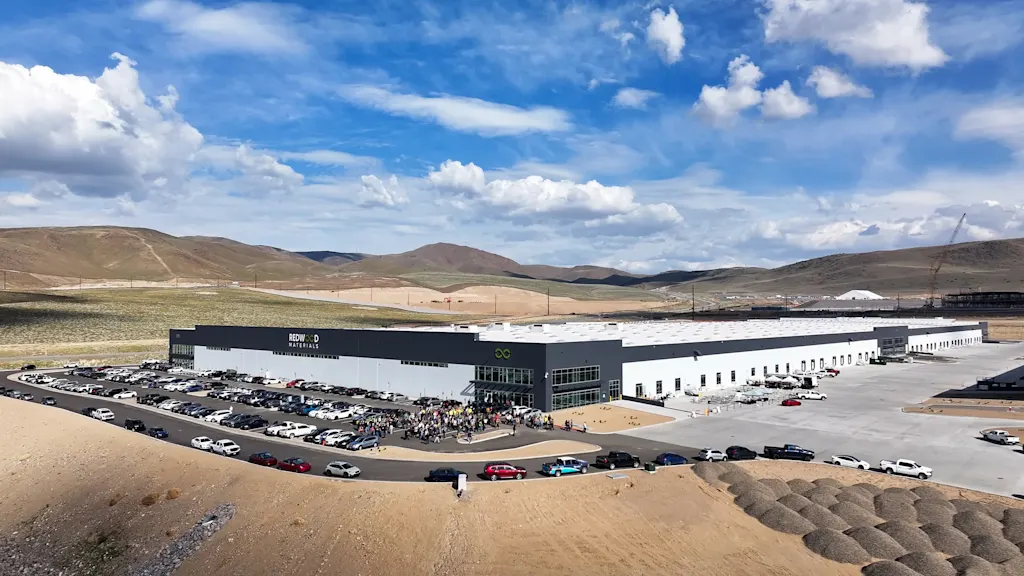
At a facility in Nevada and a new factory in South Carolina, Redwood produces as much lithium and cobalt from recycled batteries as the country’s largest mines extract from the ground. Most battery materials are still produced outside the U.S., but Redwood’s aim—to create a domestic supply of critical materials through “urban mining”—is beginning to take shape.
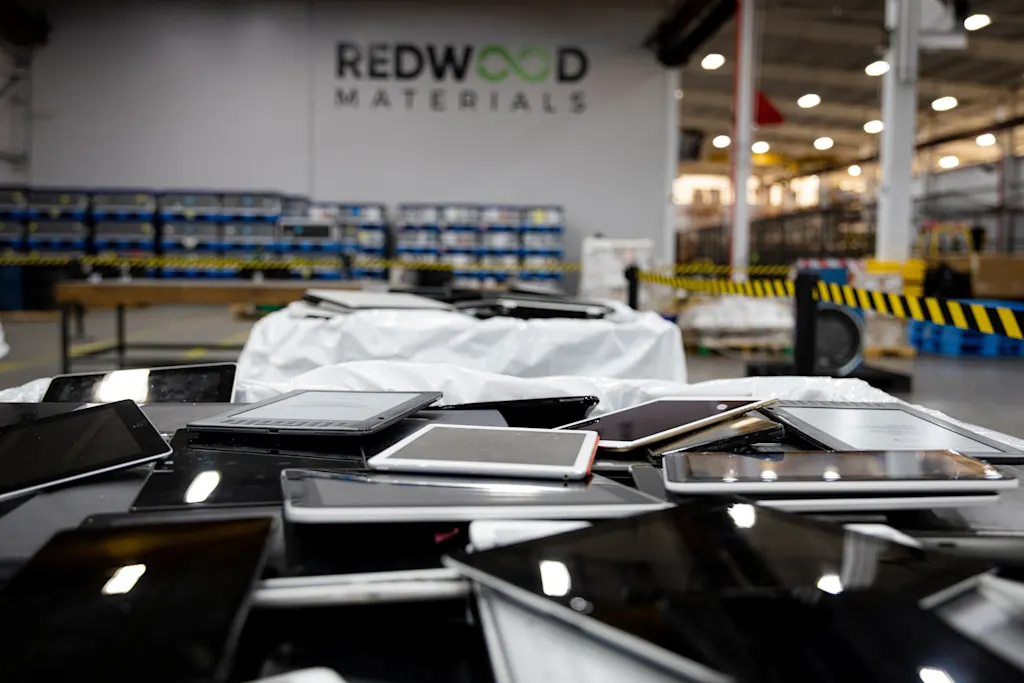
The company receives EV batteries through agreements with automakers—from Tesla and Rivian to Ford and General Motors—some of whom also make batteries for energy storage. At its recycling plant, Redwood also takes in a wide variety of other lithium-ion batteries of all sizes—from laptops and other electronics, even electric toothbrushes. (In San Francisco, the company recently started testing new bins to make it easier to collect old batteries directly from consumers.)
In 2024, Redwood generated $200 million in revenue (the company declined to share more recent numbers). Though EV sales have slowed—meaning demand for EV battery materials is still growing, but not as quickly as projected—the company’s move to grid storage has protected its bottom line as the broader battery market continues to strengthen. Grid storage has emerged as a much larger source of demand for battery materials, making overall demand even more robust—and reinforcing Straubel’s realization that putting batteries to work on the grid could be even more lucrative than simply recycling their material
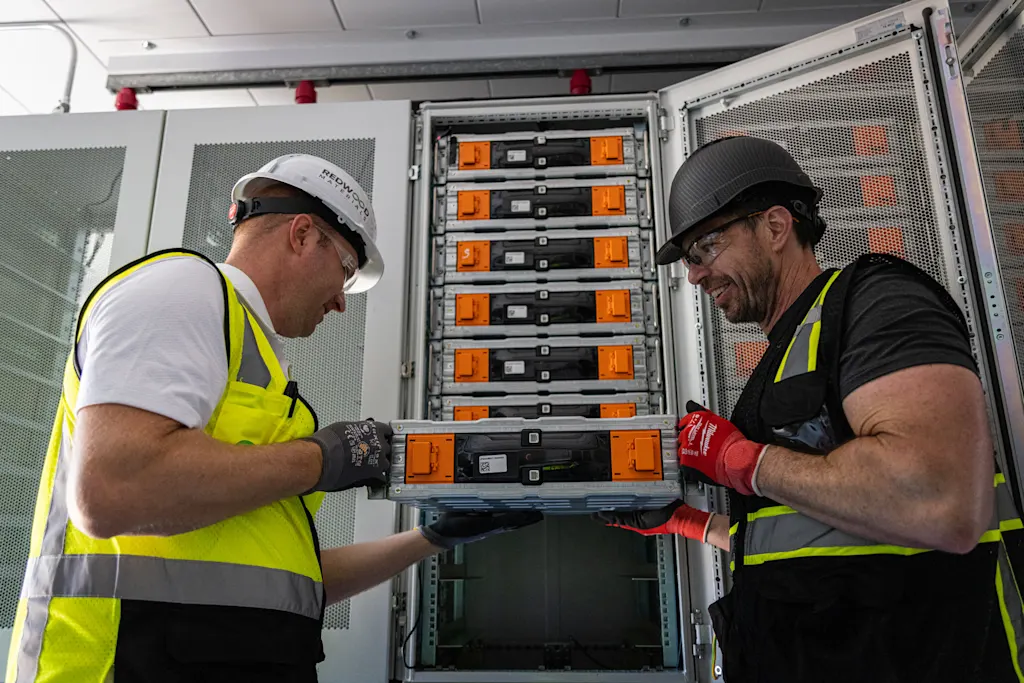
Other companies had piloted similar ideas, but Straubel realized that it could make the concept economically feasible by creating a system that could manage hundreds or thousands of EV batteries of any type, from any manufacturer, in the same shipping container. After weatherizing the batteries and placing them in a simple layout on a field next to the tech that controls them, the system can perform like other large-scale batteries at half the cost.
At first, the innovation might not seem obvious. After a battery is too depleted to be used in a car, you might assume that it needs to be recycled. “When we first started this, there was a little more skepticism, [with people] saying, ‘Okay, aren’t there enough new batteries? Why would you want to do this?’” Straubel says.
Though the approach is unconventional, the tech is already proven. “Effectively, it’s a field of cars plugged into a centralized control system,” Lankton says. “Just take the vehicle away, the part with the wheels, and that’s what you have.”
While some news stories called the energy storage business a pivot when it was announced in 2025, both parts of the business are connected. When EV batteries used for energy storage are depleted, Redwood will recycle the materials at that point. “It actually helps our recycling business, because we have more visibility and more predictability of the flow of material into material recovery and remanufacturing materials,” Straubel says. In the meantime, those same batteries are already being deployed with customers, storing energy on the grid and proving their value in real-world use.
Fast power for the data center surge
Like other data center developers, Colorado-based Crusoe has a major energy challenge. To build a new data center, it usually has to get in line with a utility to get approval to connect to the grid—a process that takes years because of bureaucracy and backlogs, and that doesn’t guarantee the company will be able to access power in the end.
That’s why Crusoe became the first to partner on Redwood’s new battery solution: It offered a new, affordable option to build off-grid power for data centers, which meant the company didn’t need to wait for approval from the utility. In 2025, Crusoe and Redwood pioneered the first solar- and EV-battery-powered data center at Redwood’s headquarters in Nevada, using Crusoe’s own modular design for small shipping-container-size units with the data center infrastructure.
“The constraint of going 100% renewable off-grid has always been the cost of the batteries,” says Crusoe cofounder Cully Cavness. By cutting the cost of battery storage roughly in half, Redwood has made 24/7 renewable power “economic and scalable,” he adds. (Cavness and Straubel met, somewhat improbably, on LinkedIn. Straubel, who has an insatiable appetite for new technology, reached out early in Crusoe’s existence to learn about the startup, and the companies saw the chance to work together years later.)
With the traditional process, “the timelines just continue to widen,” Cavness says. “You’re five-plus years, and not even with certainty that at the end of that timeline you’ll have availability of power or approval to connect. By contrast, here we have very high certainty of the ability to do the thing we want to do.”
It also avoids the supply chain disruptions that can slow the manufacture (or raise the price) of newly made batteries. Closing the Strait of Hormuz, for example, has already affected battery material manufacturing. “In this case, it’s a stream of batteries that already exists that are coming back out of use on the roads,” Cavness says. Because most EV batteries still have life in them and don’t immediately need to be recycled, Redwood currently has nearly 3 gigawatt-hours of batteries in inventory that are ready to deploy.
As with other grid-scale batteries, the system can be used with any power source. Some data centers plan to use them with gas turbines or connect to the grid. Because power demand from a data center can quickly spike and fall, and turbines or the grid can struggle to adapt, batteries can help buffer those swings. But solar has advantages, “and not even just from a sustainability point of view,” Straubel says. “Solar is the cheapest and fastest energy that you can deploy today. The data shows that in every way you look at it. The one challenge, of course, is how you make it stable and how you buffer through the variability. That’s what our systems are deploying into.”
And while data centers and their power needs occupy much of the news, utilities are also eager for Redwood’s help. At the company’s Nevada campus, Lankton and Straubel take turns playing the part of tour guide, showing customers how the system powers the modular data center 24/7. The usual questions are not whether it will work, but about things like whether there will be a supply of batteries over time. That’s not a concern, Straubel says. “It’s so much bigger even than our current ability to process,” he notes. “That almost keeps me up at night, because I’m, like, geez, we have to scale by 10 times just to be able to do what’s in the market now even if [EV] sales stayed flat for the next 10 years.”
Rivian, the EV manufacturer, recently announced that it’s working with Redwood to install the system—using Rivian’s own used batteries—in a field next to the automaker’s factory in Illinois.
By using the batteries to store energy from the grid when it’s cheapest, along with excess power from Rivian’s own on-site wind turbine and solar panels, the company can save significantly on electric bills. The system does take space; Rivian will install it near its wind turbine, on land that it wouldn’t otherwise use. “It’s a perfect application in a factory setting where we have the land available,” says Andrew Peterman, director of advanced energy solutions at Rivian.
“An engineer’s engineer”
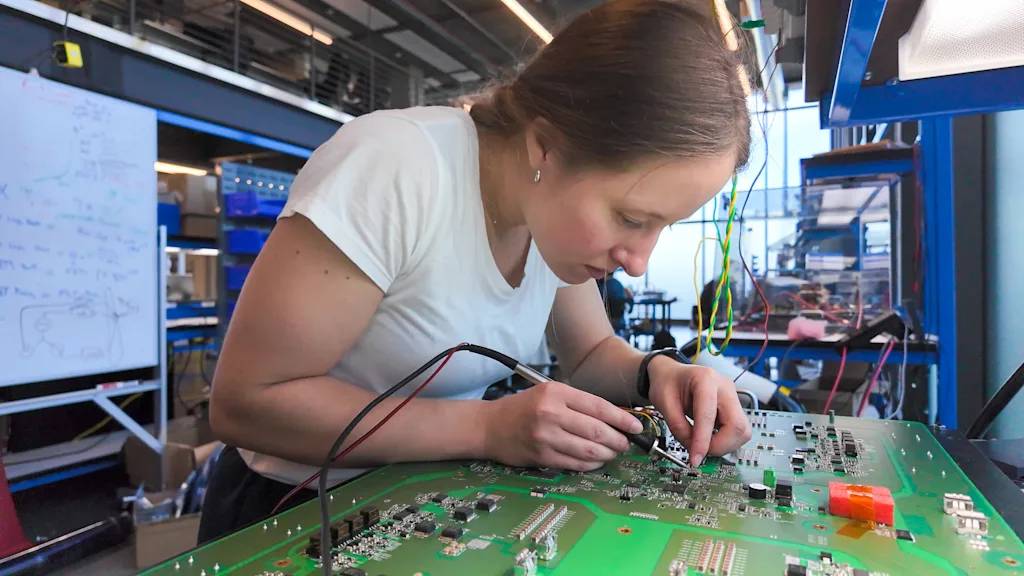
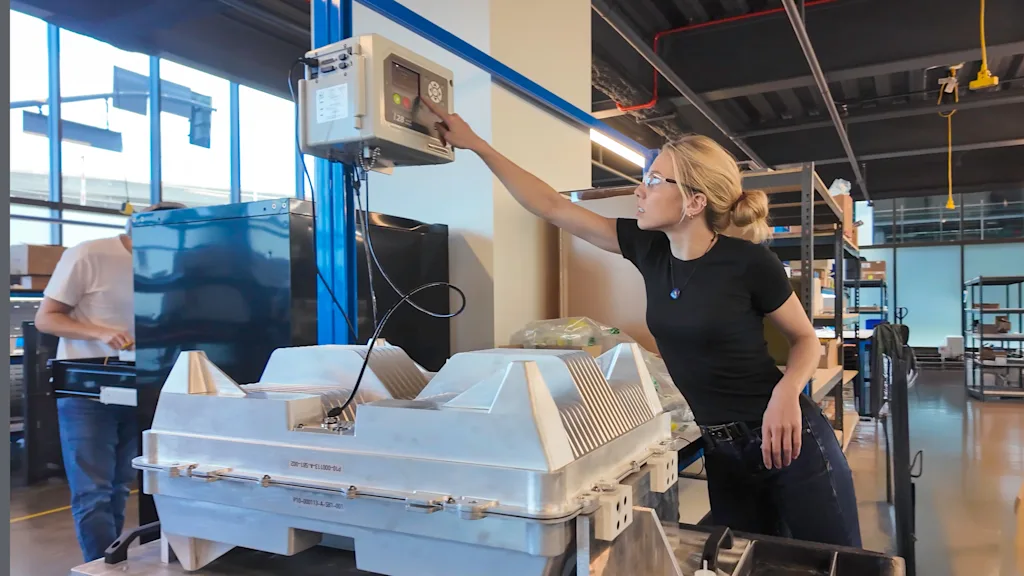
At Redwood, as the technology begins to roll out more widely, the team continues to look for new ways to expand it. That includes Straubel, who still finds time to dive into hands-on engineering work. It’s similar to how he worked at Tesla, says Mateo Jaramillo, now CEO of Form Energy, who worked with Straubel in Tesla’s energy division. (Form Energy now makes “iron-air” batteries that can store energy for long periods, and that will be used in projects such as a new Google data center in Minnesota.)
Straubel’s ideas grow out of his intense curiosity and the way he thinks. “He spends his time immersed in details, and he’s an engineer’s engineer,” Jaramillo says. “And so in many ways, the visionary aspects of what he does are a natural output of who he is.”
At Tesla, that leadership style was notably different from Elon Musk’s. “JB is very much in the weeds on the front lines of any technical project, and on a sustained basis as well,” Jaramillo continues. “Elon, of course, was famous for literally jetting in and jetting out. That’s not JB’s approach. He’s consistently pushing the technical details and through the complexities of a project.”
In a 2022 Time article, Jaramillo shared the story of Musk learning about a battery project years after it had been underway; Musk wanted it to stop, but Straubel kept it going without the CEO’s permission. “There were enough gaps in the organization that we could go get that done,” Jaramillo says. “And it speaks to the fact that JB and I were there every day pushing that project.”
In his own work at Form Energy now, Jaramillo says he has drawn from what he learned watching JB hold a team to high standards, set aggressive goals, and dive into the details to make sure the results came out right. “All those things I saw JB do day in and day out,” he says.
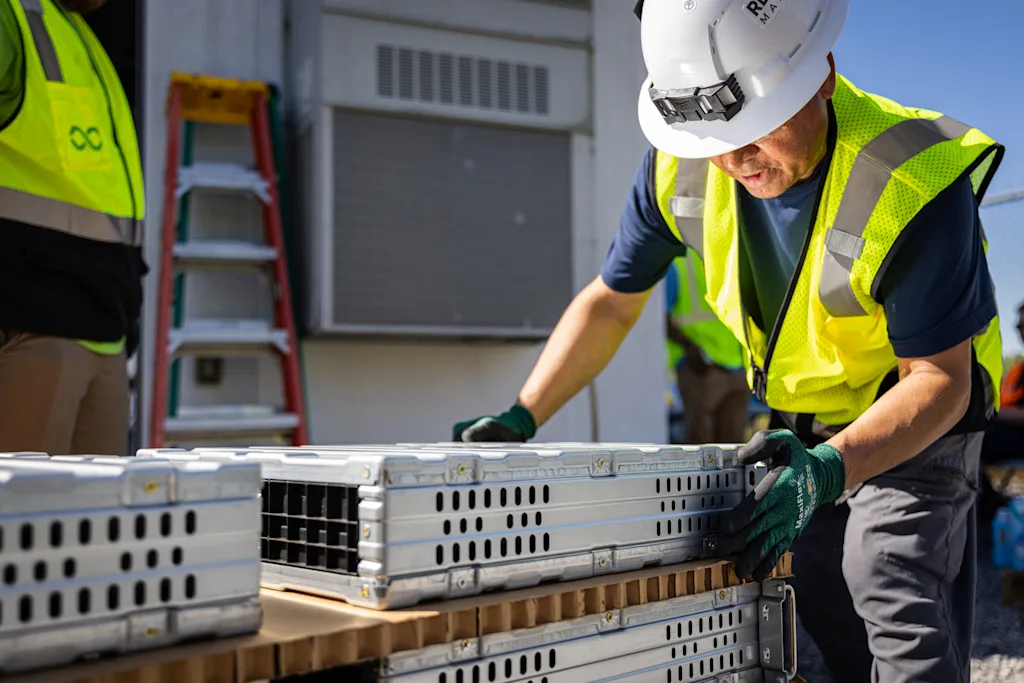
Now, Redwood is racing to meet the demand from data centers, utilities, and other customers for energy storage. By 2030, the company estimates that it’s feasible for end-of-life batteries to supply more than half of the energy storage market.
Redwood is not without its own challenges. The company, which currently employs around 1,000 people, had two recent rounds of layoffs, which Straubel has pinned on expanding too fast. But in a note to employees in April, when 135 employees were laid off, Straubel wrote that the company had “successfully adapted to changes in the market that have bankrupted many of our competitors,” and that the materials part of the business was “well on its way to profitability.”
The work “is very much a team sport now,” Straubel says. But he’s still closely involved in hands-on engineering work—Redwood employees describe him as still trading notes on design and implementation and building new prototypes on his own—and that’s continuing to push new innovation forward in a way that should let him again see the next energy pivot before the rest of the industry.
“I love the engineering work, personally,” he says. “I derive a lot of fun from that. So A, it’s fun. And B, I do think it’s actually really useful to stay close to things and be able to kind of see where technology is going—and have an intuition on how these projects work.”