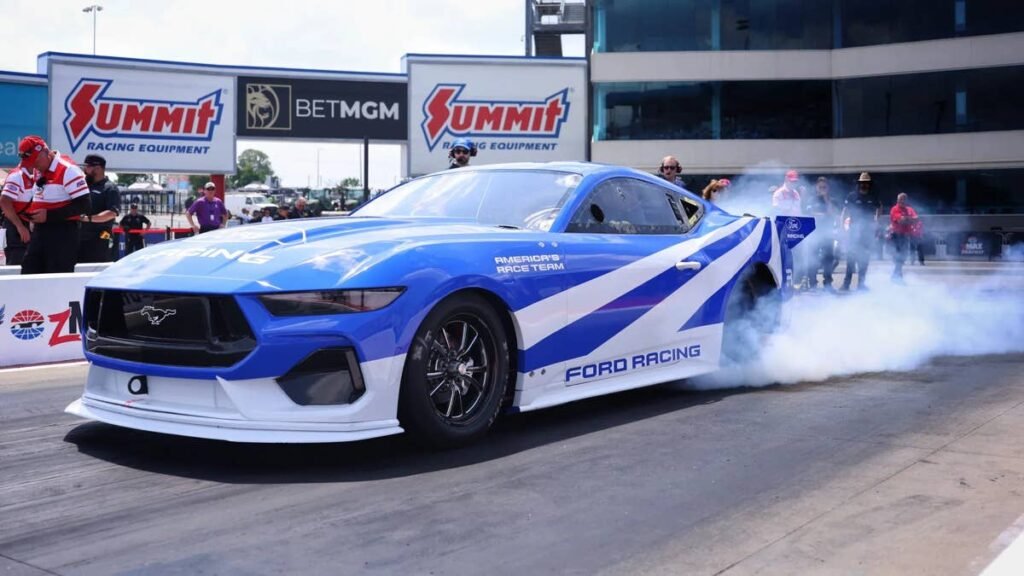
The internal combustion engine just lost another motorsport stronghold. Ford Performance has officially pushed the boundaries of battery-electric capability on the drag strip, with the entirely newly developed Mustang Super Cobra Jet 2200, shattering the quarter-mile record by running a 6.87-second quarter mile at 221 mph at the NHRA Nationals in Charlotte this past weekend, defeating their own record of a 7.623-second pass with the Cobra Jet 1800 back in September 2024.
Heritage Name, All-New Engineering
Historically, Ford has used the ‘Cobra Jet‘ brand to signify brutal, straight-line supremacy, a tradition dating back to the late 1960s. That lineage transitioned to electricity with the 1,400-horsepower prototype and the subsequent Super Cobra Jet 1800. This latest iteration ditches incremental updates for a significant bump in output. Developed strictly for the strip, the custom twin-motor 2,200-horsepower electric monster proves that Dearborn is actively investing in its EV motorsport presence.
Ford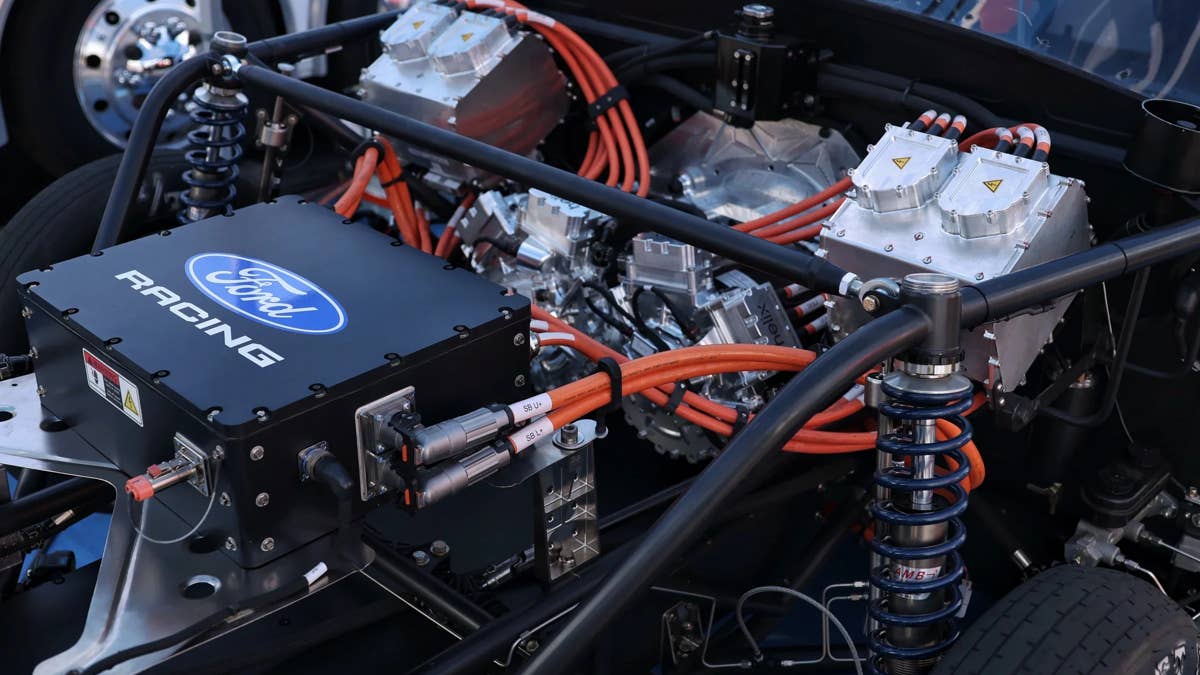
A major step up from the Cobra Jet 1800, the Cobra Jet 2200 uses two motors rather than four. Each has an attached inverter, producing 600 more horsepower while reducing weight due to fewer motors, making for a major increase in energy density. Motors aside, the Cobra Jet 2200 also uses a patented centrifugal clutch. Yes, a clutch in an EV. It is designed to allow slip upon initial delivery and then switch to a “direct drive” where there is no slip, and power is delivered with maximum efficiency. The car also has a geared transmission, and Ford says that the gearing took about a second off the Cobra Jet’s quarter-mile time, as EV motors deliver maximum power at the highest revs.
Are EVs Still Relevant?
The timing of this run is critical, with legacy automakers constantly scrutinized over the cooling consumer demand for passenger EVs, Ford is redirecting the narrative toward raw, unapologetic performance. Pushing roughly 2,200 horsepower through a heavily revised, advanced battery system and a custom high-voltage inverter setup, the electric dragster crossed the quarter-mile threshold in a gravity-warping pass that leaves traditional combustion rivals outclassed.
The domestic auto industry has to reckon with the sheer speed of this technological escalation. While traditional V8 dragsters spend decades chasing fractions of a second through mechanical forced induction and volatile fuel tuning, Ford is finding massive power gains simply by rewriting the thermal management software and upgrading the electrical architecture. The rapid turnaround time from the previous 1,800-horsepower variant to this 2,200-horsepower record-breaker underscores the terrifyingly fast development cycle of performance EVs.
Ford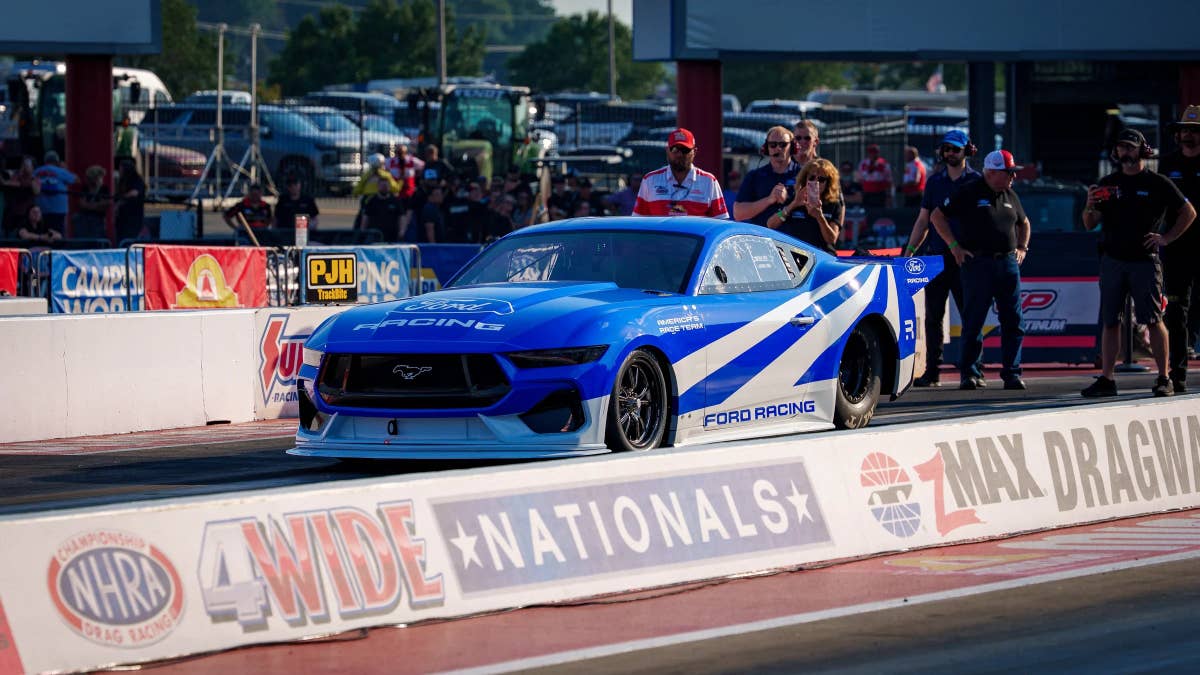
The takeaway for the American enthusiast is stark. The eventual sunset of the V8 doesn’t mean the end of hyper-aggressive, domestic drag racing. While the strip might be losing the deafening roar of a supercharged engine, the sheer violence of a 2,200-horsepower electric launch is quickly proving that the future of straight-line speed may belong to the battery. Detroit’s performance divisions aren’t stepping away from the quarter-mile—they are just changing the fuel.