Hyundai has unveiled the Ioniq 3, the smallest member of its all-electric model family, at the Milan Design Week in Italy today.
Dubbed an “Aero Hatch,” the Ioniq 3 is said to combine aerodynamic efficiency—the targeted drag coefficient is a class-leading 0.263—with generous interior space for a compact car. As with the most recent models from the brand, the Hyundai Ioniq 3 adopts the ‘Art of Steel’ design philosophy and draws inspiration from last year’s Concept Three show car.
Less Sporty Than Concept Three, But Still Striking
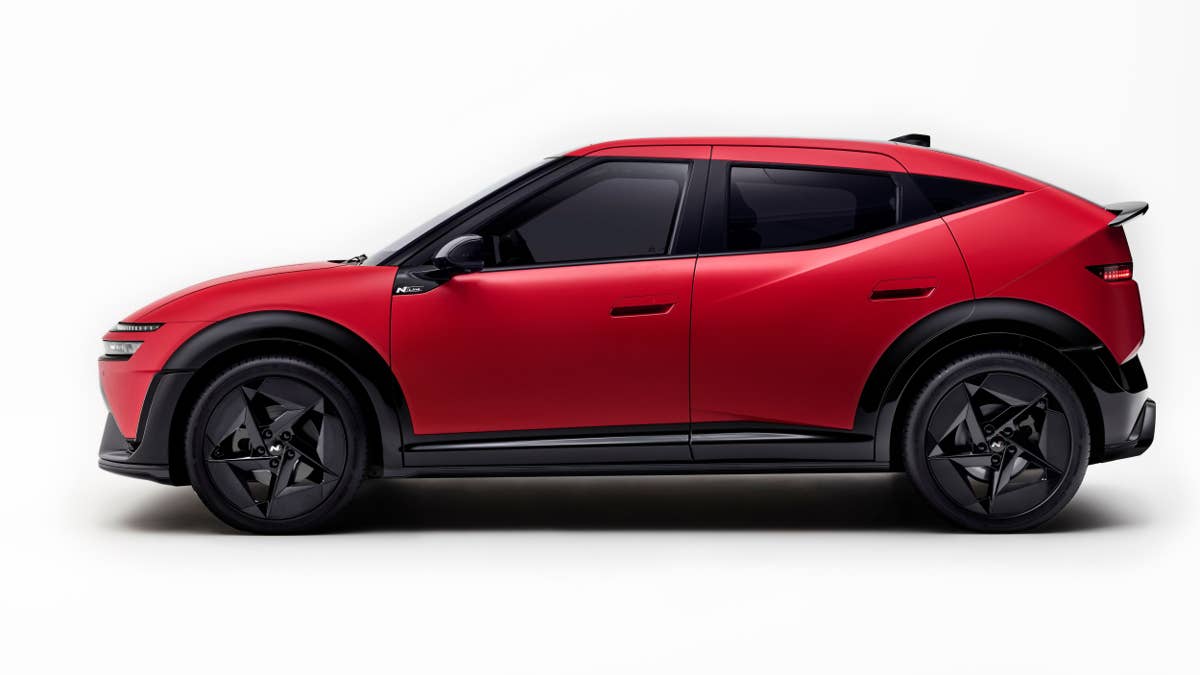
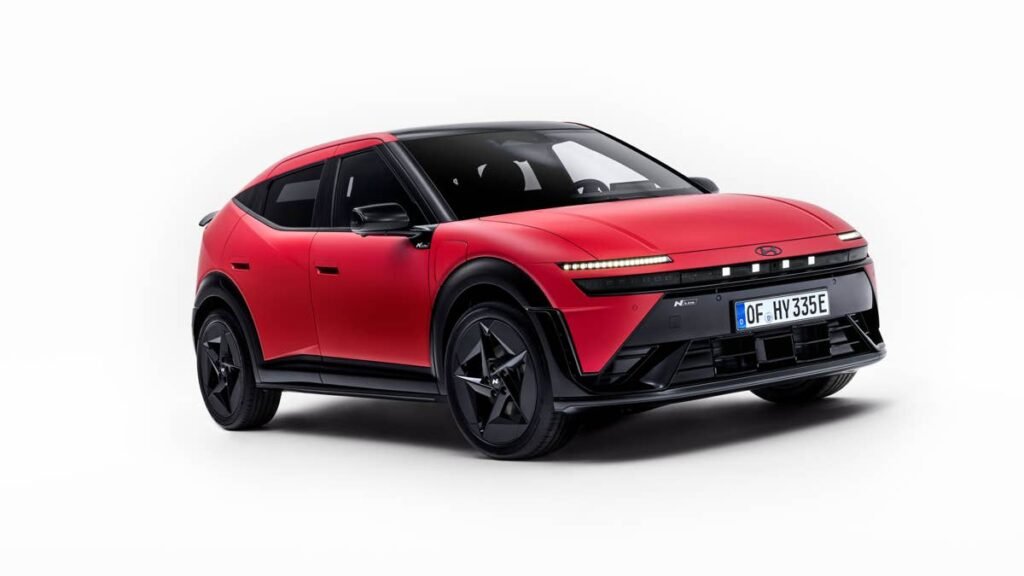
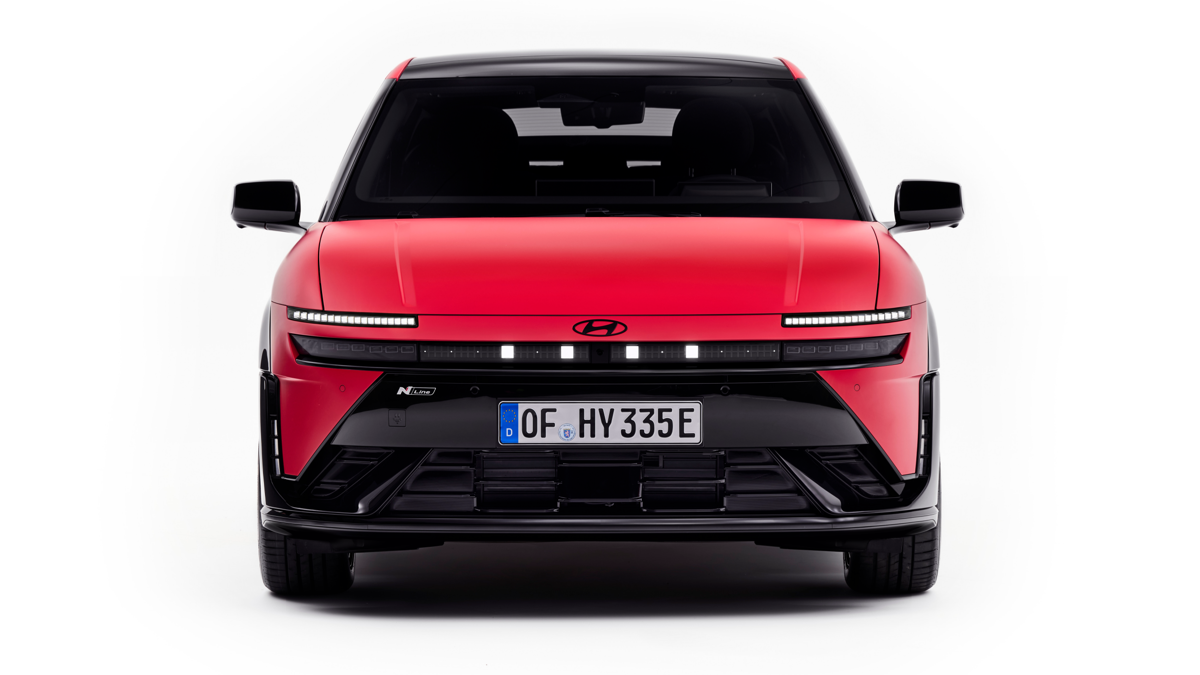
While the striking design study was lower and sportier, the Ioniq 3 looks like a mix between a hatchback and a crossover due to the jacked-up, taller body and the black wheel arches, side sills and lower bumpers, at least in the sporty N Line trim pictured here.
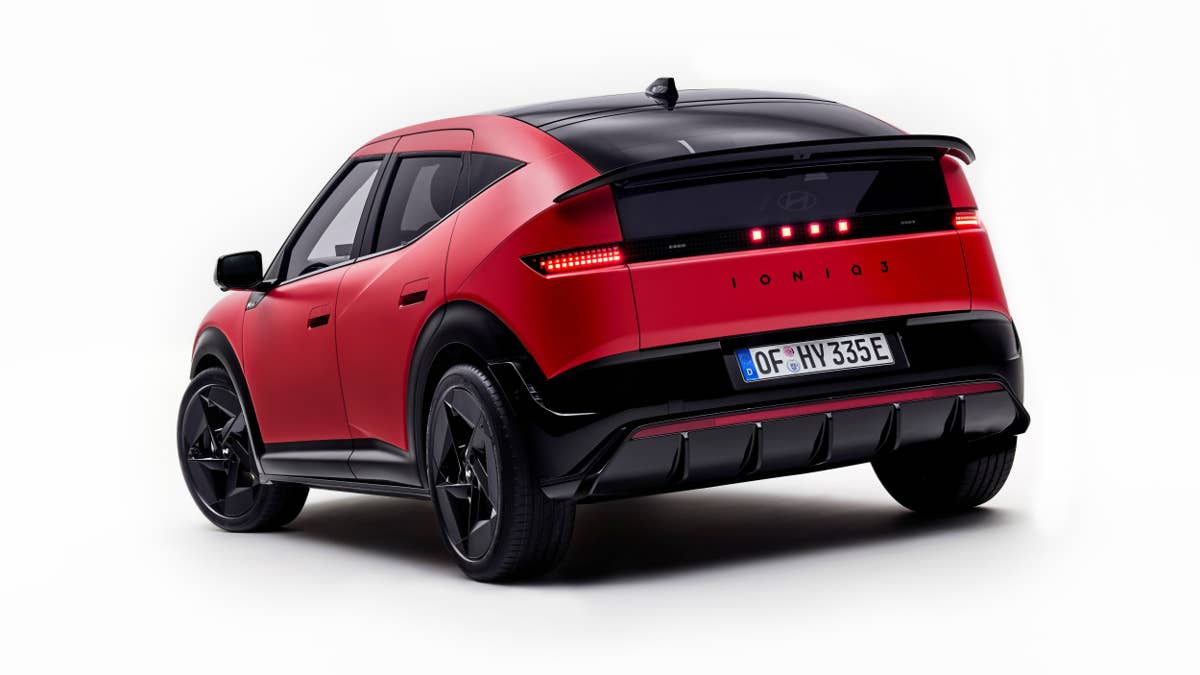
Design highlights include the low, sleek front-end, the sloping roofline that merges with the rear spoiler, the helmet visor-like glasshouse, and the signature pixel lighting front and rear. Oh, and if you wonder what’s with the four central dots, they reference the letter “H” in Morse code.
Customers will be able to choose from 11 exterior colors, multiple interior schemes, and wheels sized from 16- to 19-inch.
Interior Offers Hyundai’s Pleos Connect Infotainment and Room for Five Adults
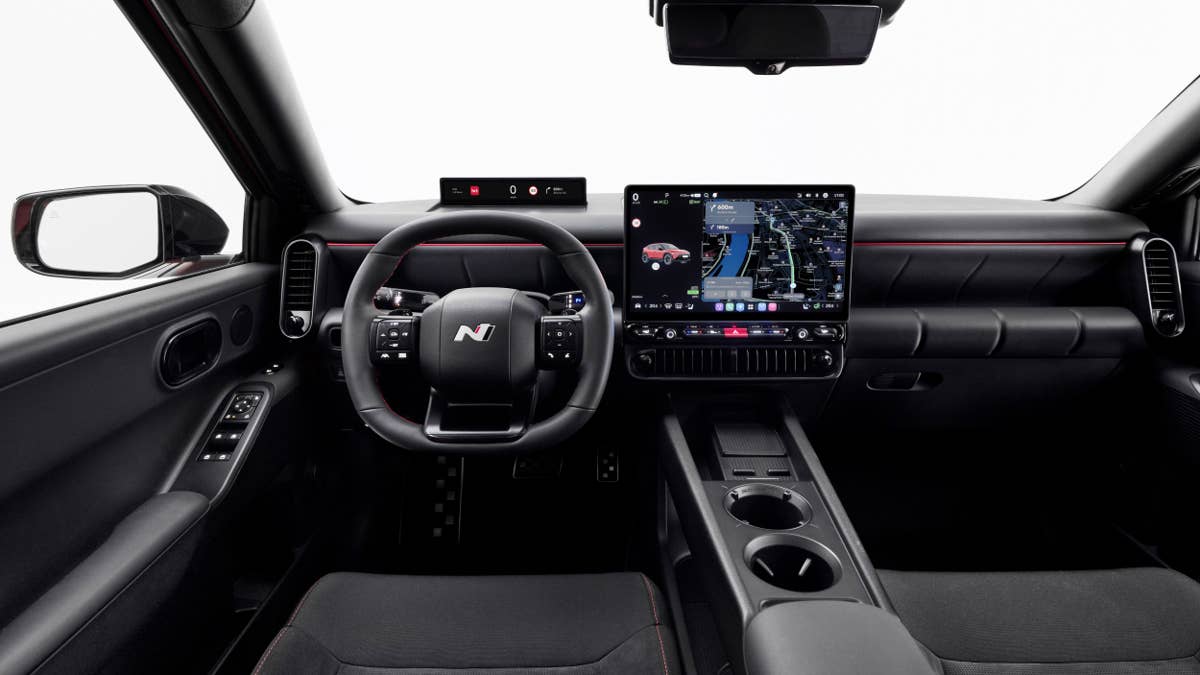
Thanks to the long wheelbase and flat-floor layout, as well as the “Furnished Space” interior packaging where elements are arranged like furniture, the five-seat cabin is said to offer upper-segment roominess, with the three adults in the rear benefitting from “notable headroom and improved comfort.”
Up front, Hyundai’s new Pleos Connect infotainment system based on Android Automotive OS (AAOS) makes its debut in Europe with a central touchscreen that comes in two sizes—12.9 inches or 14.6 inches—and features physical buttons at the bottom for key vehicle functions.
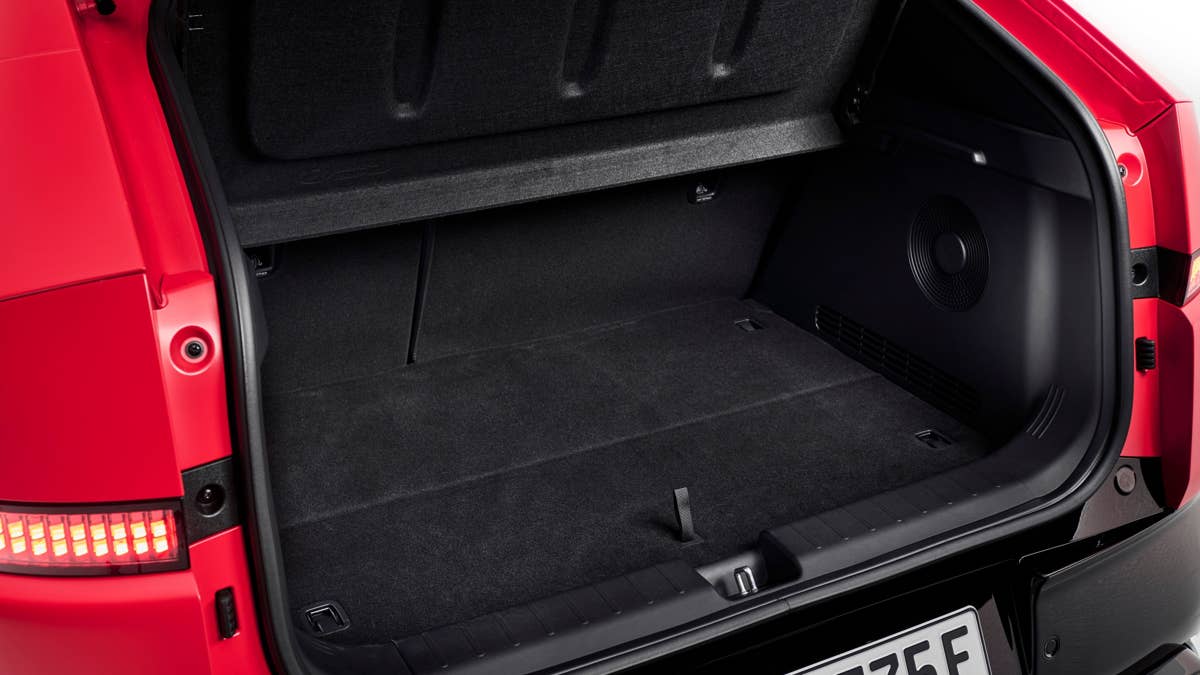
The trunk has a cargo volume of 441 liters (15.6 cubic feet) and is complemented by a Megabox concealed storage space under the floor.
Depending on specification, the Hyundai Ioniq 3 offers features like Relaxation Seats, heated and ventilated seating, and textile materials inspired by natural landscapes and 1970s Italian furniture design. A Bose premium sound system, dual-zone automatic climate control, and ambient lighting round off the interior.
Up to 308 Miles of Range but No Dual-Motor Option
As with the Kia EV3, the Ioniq 3 is built on Hyundai Motor Group’s Electric-Global Modular Platform (E-GMP) with a 400-volt electrical architecture. It offers two battery options with projected WLTP ranges of 344 km (214 miles) for the Standard Range pack and 496 km (308 miles) for the Long Range pack.
Hyundai mentions only a single-motor front-wheel-drive variant that delivers 145 hp and 184 lb-ft of torque. In this configuration, the Ioniq 3 is capable of reaching a top speed of 105 mph. Charging the battery at a DC fast charger from 10 to 80% takes around 29 minutes, with the Ioniq 3 also offering AC charging capability of up to 22 kW.
On the tech front, the compact EV gets the Hyundai SmartSense ADAS suite including Highway Driving Assist 2, Remote Smart Parking Assist, Blind-Spot View Monitor, Memory Reverse Assist, and Surround View Monitor. The Hyundai Digital Key 2 enables keyless access via smartphone or wearable devices, with Plug & Charge, an integrated EV route planner, and interior and exterior Vehicle-to-Load (V2L) functionality also on offer.
Built at Hyundai’s Izmit plant in Turkey, the Ioniq 3 will be available across Europe and has also been confirmed for Australia. The US market will not get it, but Americans will be able to buy the Kia EV3 platform sibling soon.