If you’ve ever watched a BMW commercial or passed one of their German dealerships, you’ve seen it: Freude am Fahren. Three German words that translate, roughly, to “Sheer Driving Pleasure” or more exactly, “Joy of Driving” in English — and for over fifty years, that phrase has been BMW’s way of telling you exactly what the brand is about. The brand isn’t selling safety or luxury or fuel economy — it’s selling the experience of being in the car.
For anyone who lives and breathes BMW, “Freude am Fahren” is as familiar as the roundel itself — yet the history behind those three words is something most fans have never really thought about.
What it means and when it started

Freude means joy or pleasure. Fahren means driving. Put together, it’s a simple claim: that getting behind the wheel of a BMW should feel like something worth doing, not just a way to get from A to B.
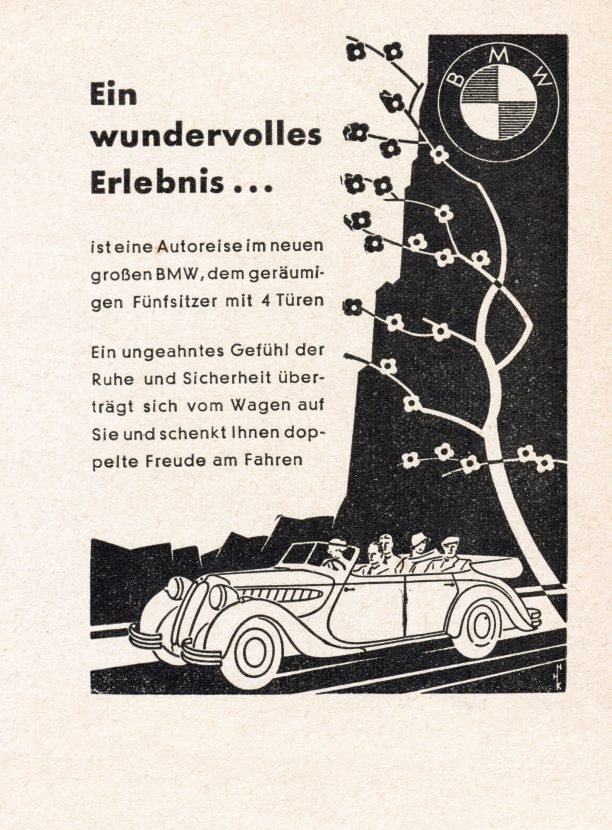
The word “pleasure” appeared in BMW advertising as far back as 1936, when the brand launched the 326 and 328 — two driver-focused cars with 6-cylinder engines that gave the concept something real to stand on. A period ad for the 326 Cabriolet described the experience as giving drivers “a double pleasure to drive.” Not the most elegant copy, but the idea was there.

The phrase “Freude am Fahren” itself entered official BMW advertising in 1965, after market research confirmed that consumers still associated BMW with those sporty prewar models rather than the more comfort-oriented cars that followed in the 1950s. The brand took the hint and leaned into performance and driving dynamics — and the slogan came with it.
In 1972, BMW made it the single, standardized company slogan used across all markets worldwide. It was also used on the livery of BMW Motorsport racing cars in the 70s which made it even more relevant.
How it translates around the world

Getting the feeling right in other languages wasn’t straightforward. Before 1972, various translations had been floating around — “For the joy of motoring,” “La joie de conduire,” even “BMW puts pleasure back into motoring.” After standardization, French became “Le plaisir de conduire,” Spanish became “El placer de conducir,” and English settled on “Sheer Driving Pleasure.”
The U.S. was the exception. When BMW took over its American import operations in 1975, it chose a different line entirely: “The Ultimate Driving Machine.” The UK eventually followed. Both are arguably better fits for their respective markets, but the sentiment is the same.
Does it still hold up?

With BMW now selling electric cars and driver assistance systems that take over many of the inputs a driver used to control, it’s a fair question. The brand’s answer has been consistent during the launch of the new Neue Klasse: Freude am Fahren was never about combustion engines. It was about whether the car responds honestly, whether the steering communicates, whether driving it feels like something more than just transportation.
Whether EVs fully deliver on that is a conversation BMW fans are still having. But fifty-plus years in, the three words haven’t gone anywhere.
[Photos: BMW Group Press / BMW Archives]


First published by https://www.bmwblog.com